Perceptual-Motor Coordination: Syncing Mind and Body
Scientifically Reviewed · Dr. Marwa Abd-Alazim · September 1, 2026
Review Criteria & Clinical Standards
This content undergoes rigorous scientific peer-review and medical editorial standards at Arab Psychology Network to ensure clinical accuracy, validity, and compliance with evidence-based guidelines from leading psychological and healthcare authorities (APA / WHO).
PERCEPTUAL-MOTOR COORDINATION
Perceptual-motor coordination (PMC) represents a foundational concept in cognitive and motor psychology, defined fundamentally as the organized and continuous employment of perceptually-gathered data in the management of continuing motions. This complex process is not merely the sequential execution of perception followed by action, but rather a dynamic, closed-loop feedback system where sensory input constantly informs, adjusts, and refines motor output. It is the sophisticated mechanism that enables an organism to differentiate between complete and incomplete behavioral processes detected through their own senses, thereby determining the necessity and manner of continued engagement in a specific behavior. PMC is essential for virtually every functional activity, ranging from the highly precise demands of catching a ball to the complex spatial planning required for navigating a crowded environment, unifying sensory interpretation with biomechanical execution into a coherent and goal-directed performance.
The essence of perceptual-motor coordination lies in its integrative nature. It demands rapid and accurate processing across multiple sensory modalities—primarily vision, proprioception, and audition—and the seamless translation of this processed information into appropriate motor commands. If sensory data suggests an action is incomplete, or if environmental conditions shift, the motor system must instantaneously adapt; for example, adjusting grip strength when perceiving a slight slip, or modifying trajectory when visually tracking a moving target. This continuous adjustment mechanism highlights why PMC is often studied in terms of motor learning and skill acquisition, as proficiency in coordination is directly proportional to the efficiency and speed with which the individual can execute this sensory-motor loop. A failure in coordination, conversely, often stems from a breakdown in the speed of perception, the accuracy of sensory integration, or the efficacy of motor command execution.
Furthermore, understanding PMC requires acknowledging the role of internal models and predictive coding. The nervous system does not simply react to incoming stimuli; instead, it generates internal models of the environment and anticipates the necessary motor response before the action is fully executed. This predictive capacity allows for actions to be smooth, timely, and economical. When an action is initiated, the system compares the predicted sensory consequences of that action with the actual sensory feedback received. Any discrepancy between the prediction and the reality triggers an immediate corrective motor adjustment, demonstrating the profound interdependence of perception and action. This continuous internal calibration is what grants humans the capacity for highly skilled, nuanced, and adaptable movements necessary for survival and sophisticated interaction with the environment.
The Components of the Perceptual-Motor Loop
The functional architecture of perceptual-motor coordination can be deconstructed into several distinct, yet rapidly interacting, components that together form the operational loop. This loop begins with Sensation and Transduction, where raw physical energy (light, sound, pressure) is converted into neural signals. This initial step is critical, but it is merely the raw data feed. The subsequent, and perhaps most crucial, step is Perceptual Processing and Integration. Here, the brain interprets the incoming neural signals, conferring meaning, context, and spatial attributes. For instance, visual signals are analyzed not just for light and shadow, but for velocity, distance, and shape, integrating this visual information with data derived from the vestibular system (balance) and proprioceptors (body position).
Following integration, the system engages in Motor Planning and Decision Making. Based on the perceived state of the environment and the body’s current position, the central nervous system selects the appropriate motor program required to achieve the desired behavioral outcome. This stage involves complex cognitive functions, including attention, working memory, and inhibition of irrelevant movements. The decision to act, or to refrain from acting, is predicated entirely on the interpretation of sensory feedback regarding the completeness or necessity of the ongoing process. If the perception dictates that a process is incomplete—such as needing to apply more pressure to stabilize an object—the motor plan is instantaneously formulated and dispatched.
The third component is Motor Execution, involving the dispatch of commands through the efferent pathways to the muscles, resulting in observable movement. However, even during execution, the loop remains active. The fourth component, Feedback and Adjustment, operates simultaneously. As the action unfolds, sensory receptors—particularly proprioceptors in the muscles, tendons, and joints—transmit real-time information back to the central nervous system regarding the effectiveness and accuracy of the movement. This constant flow of concurrent feedback allows for micro-adjustments in muscle tension, joint angle, and movement speed, ensuring that the motor output remains aligned with the initial perceptual goal, often occurring far too rapidly for conscious awareness.
The efficiency of this feedback mechanism heavily relies on Proprioception, often dubbed the “sixth sense.” Proprioceptive information provides continuous data about the relative positions and forces of body segments, independent of vision. This internal data stream allows the motor system to maintain spatial accuracy and stability, even when visual input is absent or conflicting. Effective perceptual-motor coordination thus requires the masterful synchronization of external sensory data (exteroception) with internal body awareness (proprioception), ensuring movements are both externally relevant and internally controlled.
Neurobiological Foundations
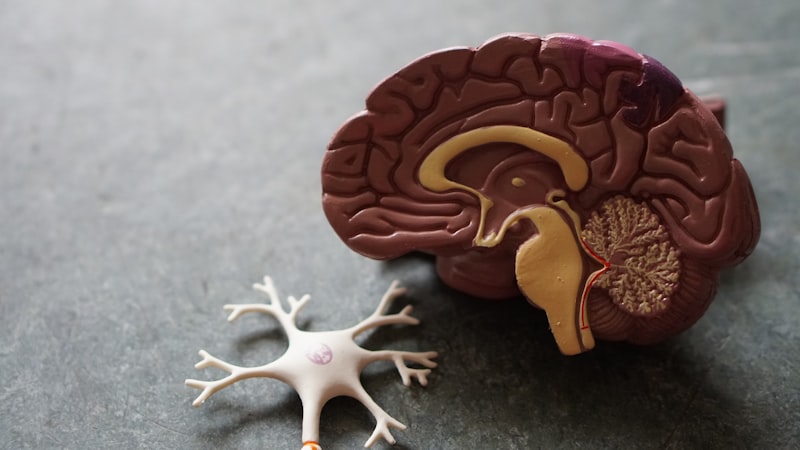
The neural substrate underlying perceptual-motor coordination is highly distributed, involving intricate pathways that span the entire neuraxis, though specific regions are critically involved in the integration and execution phases. The Cerebellum, often referred to as the “little brain,” plays a predominant role in fine-tuning movement, ensuring temporal accuracy, and coordinating complex, multi-joint actions. It acts as a massive comparator, receiving input regarding the intended movement from the motor cortex and parallel sensory feedback from the periphery. By comparing the ‘intent’ with the ‘result,’ the cerebellum generates corrective signals that are transmitted back to the motor cortex and brainstem, allowing movements to be smooth, precise, and well-timed—a process crucial for skills like handwriting or maintaining dynamic balance.
The Parietal Lobe, particularly the posterior parietal cortex, serves as a critical hub for spatial awareness and the integration of diverse sensory inputs necessary for action planning. This region integrates visual and somatosensory information to create a coherent map of the body in space and the location of targets relative to the body. This visuospatial integration is essential for reaching, grasping, and maneuvering, effectively transforming the perceptual representation of the environment into a framework for motor action. Damage to the parietal lobe often results in apraxia or spatial neglect, severely impairing the ability to translate visual perception into appropriate, coordinated motor behaviors.
The execution of the motor command originates primarily in the Primary Motor Cortex, which houses the neural representations for specific body movements. However, the initiation and sequencing of complex actions are governed by associated areas, including the premotor cortex and the supplementary motor area. These areas are responsible for selecting and organizing motor plans based on perceptual goals. Furthermore, the Basal Ganglia are instrumental in modulating the initiation and termination of movements, regulating muscle tone, and automating learned motor sequences, contributing significantly to the fluid and automatic quality of highly practiced perceptual-motor skills, such as cycling or typing.
The seamless nature of PMC relies heavily on the integrity of White Matter Tracts that facilitate communication between these distributed brain regions. The connections between visual processing areas (occipital lobe), spatial integration areas (parietal lobe), and motor execution areas (frontal lobe) must be rapid and robust. Myelination and the development of efficient neural circuitry throughout childhood are direct determinants of increasing coordination abilities. Any disruption to these pathways—whether through developmental delay, trauma, or neurodegenerative disease—can severely compromise the body’s ability to use perception to manage ongoing motion, leading to clumsiness or specific movement disorders.
Developmental Stages and Acquisition
Perceptual-motor coordination is not innate in its fully complex form but develops progressively throughout the lifespan, beginning in infancy. Early development is characterized by reflexive movements, which gradually give way to voluntary, goal-directed actions as the nervous system matures. The first significant milestones involve Gross Motor Skills, such as rolling, sitting, and walking, which require managing balance and coordinating large muscle groups based on vestibular and visual input. During this foundational period, the infant is learning basic gravity compensation and developing fundamental internal models of how their body interacts with forces and surfaces.
As the child moves into the preschool and early school years, the emphasis shifts toward refining both gross and Fine Motor Skills. This includes the emergence of hand-eye coordination necessary for object manipulation, drawing, and cutting. The child learns to accurately judge distances and velocities (perceptual component) and translate these judgments into precise movements (motor component). For example, learning to catch a ball requires the visual system to predict the ball’s trajectory, and the motor system to intercept that trajectory by positioning the hands and adjusting timing based on the continuously received visual feedback—a sophisticated coordination that requires significant practice and neural maturation.
Adolescence and early adulthood typically mark the refinement and specialization of perceptual-motor skills. During this stage, general coordination systems become highly efficient, allowing individuals to acquire complex, specialized skills rapidly, such as those required for high-level athletic performance, playing musical instruments, or operating complex machinery. This level of coordination often transcends simple reaction time; it involves expert utilization of predictive coding, where environmental cues are processed rapidly, allowing the motor system to initiate action before the stimulus is fully processed, known as anticipation. The mastery of PMC in adulthood is defined by the automation of these complex loops, freeing up cognitive resources for strategic planning rather than moment-to-moment motor management.
Types and Examples of Perceptual-Motor Skills
Perceptual-motor skills can be broadly categorized based on the muscles involved and the environmental stability. Gross Motor Skills involve large muscle movements and overall body coordination, such as running, jumping, or swimming. These skills require robust integration of visual and vestibular information to maintain dynamic balance and navigate space. Conversely, Fine Motor Skills involve precise movements utilizing small muscle groups, typically in the hands and fingers, requiring exquisite hand-eye coordination and high tactile acuity, exemplified by tasks such as threading a needle, performing micro-surgery, or playing the piano. Both types rely heavily on the continuous perceptual feedback loop to ensure accuracy and economy of motion.
A second critical distinction separates skills based on the predictability of the environment. Closed Skills are performed in a stable, predictable environment where the performer dictates the pace and timing of the movement. Examples include sinking a golf putt, performing a ballet routine, or throwing a dart. The perceptual demands here focus primarily on internal alignment and execution consistency. In contrast, Open Skills are performed in dynamic, constantly changing environments, requiring continuous adjustment to external variables. These skills place immense demands on the perceptual system for rapid decision-making and motor adaptation.
Classic examples of open perceptual-motor skills include:
- Driving a Vehicle: Requires continuous visual tracking, depth perception, auditory monitoring, and the rapid translation of these inputs into steering, braking, and acceleration adjustments.
- Team Sports (e.g., Soccer, Basketball): Demand real-time processing of the movement of teammates, opponents, and the ball, requiring instantaneous modification of running speed, direction, and limb movement based on shifting spatial relationships.
- Catching or Hitting a Pitched Ball: Requires highly accurate perception of velocity and trajectory, integrated with extremely precise timing to initiate the motor response to intercept the object successfully.
These examples underscore that the complexity of PMC increases exponentially when the environment is unpredictable and the motor response must be generated under strict time constraints.
Furthermore, skills can be analyzed by the specific sensory modality dominant in the loop. While vision is often primary (hand-eye coordination), Auditory-Motor Coordination is critical in activities like drumming or reacting to a warning siren, where the timing and rhythm of auditory input dictate motor output. Tactile-Motor Coordination is essential when manipulation requires feedback primarily through touch and pressure, such as buttoning a shirt or using tools in low visibility. The ability of the central nervous system to prioritize and integrate relevant sensory streams while suppressing distracting information is a hallmark of highly developed perceptual-motor control.
Assessment and Measurement
Assessment of perceptual-motor coordination is crucial in clinical, educational, and sports psychology settings to identify deficits, track development, and evaluate intervention effectiveness. Standardized tests often focus on isolating components of the loop to pinpoint areas of weakness. One widely utilized instrument is the Beery-Buktenica Developmental Test of Visual-Motor Integration (VMI), which measures the degree to which visual perception and motor capabilities are integrated, typically through geometric copying tasks. Deficits identified here can indicate challenges in translating visual information into controlled motor actions.
Other specialized assessments target specific aspects of coordination. For instance, tests of Reaction Time measure the speed of the sensorimotor response, differentiating between simple reaction time (response to a single stimulus) and choice reaction time (response selection based on multiple stimuli). Dynamic balance tests, such as those involving standing on unstable surfaces or single-leg balance, assess the efficiency of integrating vestibular, proprioceptive, and visual feedback to maintain postural stability. Manual dexterity tests, often used in occupational therapy, measure the speed and precision of fine motor manipulation, providing insight into the integration of tactile perception and finely graded muscle control.
In research contexts, measurement often involves sophisticated technology to quantify performance objectively. Motion capture systems track joint angles and movement kinematics, providing detailed data on trajectory smoothness and timing accuracy. Electromyography (EMG) measures muscle activation patterns, revealing the neurological efficiency of the motor command. Critically, assessors must consider Ecological Validity—ensuring that tests reflect real-world demands. A person may perform well on a static lab test but struggle profoundly with coordination during a dynamic, real-world task like crossing a busy street, highlighting the difference between isolated skill execution and complex, environmentally driven coordination.
Clinical Significance and Dysfunction
Dysfunction in perceptual-motor coordination has significant clinical implications, affecting academic performance, daily living skills, and occupational capacity. A primary diagnosis related to these deficits is Developmental Coordination Disorder (DCD), formerly known as Dyspraxia. Individuals with DCD exhibit significant difficulties in acquiring and executing coordinated motor skills, manifesting as clumsiness, poor handwriting, difficulty with self-care tasks (e.g., tying shoes), and challenges in sports, despite otherwise typical intellectual development. DCD results from a failure in the accurate and efficient planning and execution stages of the perceptual-motor loop.
Neurological damage can also severely impair PMC. Lesions to the Cerebellum, often resulting from stroke, trauma, or disease, typically lead to Ataxia, characterized by uncoordinated, jerky movements, staggering gait, and intention tremor, demonstrating a breakdown in the crucial cerebellar role of comparing intent and outcome. Similarly, damage to the posterior parietal cortex can lead to optic ataxia—an inability to accurately reach for visually guided targets—showing a failure in integrating spatial perception with the motor system. These clinical presentations powerfully underscore the reliance of smooth movement on intact neural integration.
Sensory processing challenges, particularly those related to Sensory Integration Dysfunction, often manifest as poor coordination. If the brain misinterprets or struggles to filter proprioceptive or vestibular input, the resulting motor commands will be based on inaccurate internal models, leading to movements that are too forceful, too weak, or poorly timed. For example, a child hypersensitive to touch might avoid certain textures, inadvertently limiting the practice necessary to refine fine motor coordination skills reliant on tactile feedback.
The functional impact of poor coordination extends beyond physical performance. Children and adults struggling with PMC deficits often experience lower self-esteem, reduced participation in social activities, and increased risk of injury. Addressing these deficits through targeted therapy is essential not only for improving motor execution but also for fostering psychological well-being and promoting full engagement in educational and social environments. Early identification and intervention are paramount for mitigating the long-term consequences of these coordination difficulties.
Training and Rehabilitation
Training and rehabilitation for perceptual-motor deficits focus on enhancing the efficiency of the sensory-motor feedback loop and improving the quality of the internal predictive models. Rehabilitation often employs principles of Motor Learning, which emphasizes repetition, feedback, and task specificity. Occupational therapists (OT) and physical therapists (PT) utilize structured practice sessions to improve specific coordination skills, often breaking down complex tasks into manageable sub-components.
Key strategies in PMC training include:
- Task-Oriented Training: Focusing practice directly on the functional task that is impaired (e.g., practicing handwriting or stair climbing) rather than generalized exercises, promoting skill specificity and retention.
- Feedback Modulation: Systematically adjusting the type and frequency of feedback provided to the learner, moving from frequent external feedback (e.g., verbal cues) to self-generated, internal feedback (relying on proprioception) as proficiency increases.
- Environmental Modification: Gradually introducing variability and challenges to the practice environment to improve adaptability, essential for mastering open skills. For instance, starting target practice slowly, then introducing distractions or moving targets.
The goal of these interventions is to automate the processing stages, reducing the cognitive load required for motor tasks.
Recent advancements in training methodologies leverage technology, such as virtual reality (VR) and interactive gaming. VR systems allow for highly controlled, customizable, and motivating environments where complex coordination tasks can be practiced safely. These tools are particularly effective because they provide immediate, high-fidelity visual and auditory feedback, accelerating the learning process by quickly highlighting discrepancies between the intended action and the actual outcome, thus optimizing the continuous adjustment phase of the perceptual-motor loop. Effective rehabilitation ultimately aims to improve the individual’s ability to use their senses precisely to manage and sustain appropriate motor behaviors.
Conclusion and Future Directions
Perceptual-motor coordination is the indispensable bridge between sensory input and behavioral output, representing a peak achievement of neural integration that permits skilled interaction with a dynamic world. It is a vital system that enables the organism to assess the completeness of ongoing processes via sensory data and subsequently manage the continuation or termination of behavior. From basic locomotion to the execution of highly technical professional skills, the efficiency of PMC dictates the quality and success of human action. Continuous research in this area deepens our understanding of how sensory streams are integrated, how predictive models are formed, and how the nervous system achieves remarkable temporal precision in movement.
Future research directions are increasingly focused on leveraging advanced neuroimaging techniques (fMRI, EEG) to map the dynamic real-time communication between cortical and cerebellar structures during complex coordination tasks. This will provide unprecedented detail into the neural timing and flow of information within the perceptual-motor loop, allowing for more precise diagnosis and targeted, individualized therapeutic interventions for disorders like DCD and ataxia. Furthermore, the principles derived from the study of human PMC are being applied extensively in robotics and artificial intelligence, aiming to create robotic systems capable of human-like adaptability, feedback utilization, and skilled manipulation in unpredictable environments.
In summary, perceptual-motor coordination remains a central pillar of psychology, motor control, and neuroscience. Its complexity lies in its seamless, cyclical nature: perception drives action, and the sensory consequences of that action immediately refine the next perceptual judgment, ensuring a continuous, adaptive interaction between the self and the environment. Mastery of coordination is synonymous with mastery of the physical world, offering a powerful testament to the brain’s capacity for complex sensory-motor integration.