Proprioception: Your Brain’s Internal GPS for Movement
Scientifically Reviewed · Dr. Marwa Abd-Alazim · October 6, 2026
Review Criteria & Clinical Standards
This content undergoes rigorous scientific peer-review and medical editorial standards at Arab Psychology Network to ensure clinical accuracy, validity, and compliance with evidence-based guidelines from leading psychological and healthcare authorities (APA / WHO).
The Core Definition of Proprioceptive Stimulus
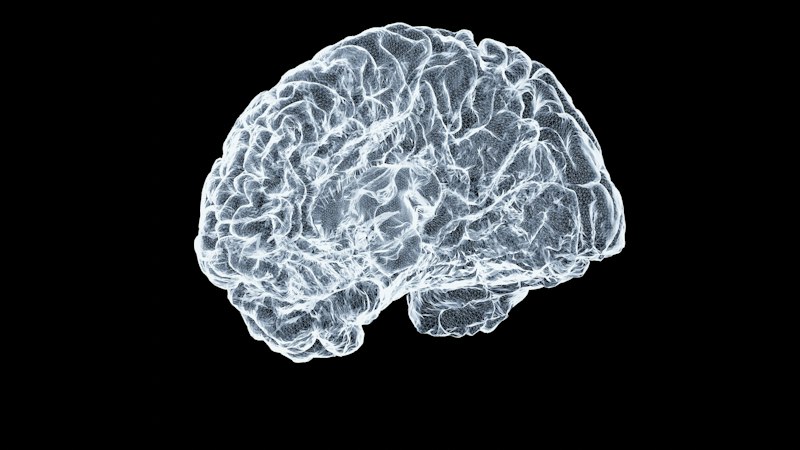
Proprioception, often referred to as kinaesthesia, represents a sophisticated sensory system that provides the brain with continuous, real-time information regarding the position and movement of the body in space. At its most fundamental level, it is the unconscious sense of where one’s body parts are located relative to each other, without relying on visual input. This internal awareness allows individuals to navigate their environment, perform complex motor tasks, and maintain stability without conscious effort. The term “proprioceptive stimulus” specifically refers to the myriad internal signals generated within the body that are detected by specialized receptors and transmitted to the central nervous system for processing.
These intricate stimuli are crucial for fundamental physiological processes, acting as a vital component of the body’s internal feedback loop. The brain constantly interprets these signals to construct a coherent model of the body’s configuration, enabling seamless execution of movements and precise spatial orientation. Without this intricate sensory input, simple actions like reaching for a cup, walking on uneven terrain, or even maintaining an upright posture would become exceedingly difficult, if not impossible. It is the foundation upon which balance, coordination, and refined motor skills are built, distinguishing proprioception as an indispensable aspect of human physiology and perception.
The Mechanisms of Proprioceptive Stimulus
The generation of proprioceptive stimuli is orchestrated by a diverse array of specialized sensory receptors known as mechanoreceptors, strategically embedded within muscles, tendons, ligaments, and joint capsules. These receptors are exquisitely sensitive to mechanical deformations such as stretch, tension, and pressure, translating these physical forces into electrical signals that are relayed to the brain. The three primary types of mechanoreceptors contributing to proprioception are muscle spindles, Golgi tendon organs, and Pacinian corpuscles, each playing a distinct yet complementary role in providing comprehensive sensory feedback about the body’s state.
Muscle spindles are arguably the most critical proprioceptors, intricately woven into the belly of skeletal muscles. These fusiform (spindle-shaped) sensory organs are responsible for detecting changes in muscle length and the rate at which that length changes. When a muscle is stretched, the muscle spindles are activated, sending signals to the central nervous system that provide precise information about the extent and speed of the stretch. This information is vital for maintaining muscle tone, initiating stretch reflexes, and enabling fine motor control, allowing for smooth and controlled movements.
Complementing the function of muscle spindles are the Golgi tendon organs (GTOs), which are encapsulated receptors situated at the junction between skeletal muscles and their tendons. Unlike muscle spindles, GTOs are primarily sensitive to changes in muscle tension or force. When a muscle contracts forcefully, the tension generated in the tendon activates the GTOs, sending inhibitory signals to the motor neurons supplying that muscle. This protective mechanism prevents muscles from generating excessive force that could lead to injury, while also contributing to the precise regulation of muscle force during voluntary movements.
Furthermore, Pacinian corpuscles, along with other joint receptors such as Ruffini endings and free nerve endings, contribute to proprioceptive awareness, particularly concerning joint position and movement. While Pacinian corpuscles are widely known for detecting deep pressure and vibration, especially in the skin, they are also present in joint capsules and ligaments, where they contribute to the sense of joint angular velocity and acceleration. These receptors, working in concert, provide a rich tapestry of sensory feedback that allows the brain to form a comprehensive and dynamic map of the body’s physical state.
Historical Context of Proprioception
The concept of an internal body sense, distinct from the traditional five senses, has a rich history in psychology and neuroscience, evolving significantly over centuries. While ancient philosophers touched upon intrinsic body awareness, a more scientific understanding began to take shape in the 19th century. Early pioneers in sensory physiology, such as Sir Charles Bell and Moritz Heinrich Romberg, made observations that hinted at a dedicated system for body awareness, noting how individuals with certain neurological conditions struggled with coordinated movement despite intact touch and sight.
However, it was the pioneering work of Sir Charles Sherrington, a Nobel laureate British neurophysiologist, who formally coined the term “proprioception” in 1906. Sherrington, whose extensive research focused on the integrative action of the nervous system, recognized the existence of specialized receptors within muscles, tendons, and joints that provided information about body position and movement. He differentiated proprioceptors from exteroceptors (sensing external stimuli like sight and sound) and interoceptors (sensing internal organ states), establishing proprioception as a distinct and crucial sense for motor control and body schema. His detailed studies laid the foundational framework for understanding the reflex arcs and sensory pathways involved in this intricate system.
Sherrington’s insights were revolutionary, shifting the paradigm from a purely reflex-based view of movement to one that incorporated complex sensory feedback. His work elucidated how proprioceptive signals are not merely passive inputs but are actively integrated by the central nervous system to orchestrate voluntary movements, maintain balance, and adapt to environmental changes. This historical development underscored the complexity of human perception and action, highlighting the brain’s remarkable ability to synthesize diverse sensory information into a coherent experience of self in space.
Proprioception in Daily Life: A Practical Example
To truly grasp the ubiquitous importance of proprioceptive stimuli, one need only consider the myriad unconscious actions performed throughout a typical day. Imagine the seemingly simple act of walking across a room in a dimly lit environment, reaching for a light switch, and then pouring a glass of water. Each of these actions, executed without conscious thought about muscle tension or joint angles, relies heavily on the continuous flow of proprioceptive information to the brain.
Consider the scenario of walking across a slightly uneven floor in the dark. As your foot lands, the subtle variations in the surface trigger immediate proprioceptive feedback from your ankle and foot joints, as well as the muscle spindles in your leg muscles. These stimuli instantaneously inform your central nervous system about the precise angle of your ankle, the degree of stretch in your calf muscles, and the amount of pressure being exerted. Your brain processes this information almost instantly, making micro-adjustments to your limb movements and trunk posture to prevent a stumble and maintain balance. This entire corrective feedback loop occurs subcortically, often before you are even consciously aware of the uneven surface, demonstrating the efficiency and automatism of proprioceptive motor control.
The “how-to” of proprioception in this example unfolds in several steps:
- Initial Contact and Sensory Input: As your foot makes contact with the floor, pressure receptors in your foot (like Pacinian corpuscles) and joint receptors in your ankle and knee send signals about the initial impact and joint angles.
- Muscle Stretch and Tension Detection: If the surface is uneven, certain muscles will stretch more than others, activating their muscle spindles. Simultaneously, increased tension in other muscles to stabilize the joint will activate Golgi tendon organs.
- Neural Integration and Processing: These diverse proprioceptive stimuli travel via afferent nerve pathways to the spinal cord and then ascend to various brain regions, including the cerebellum and somatosensory cortex, where they are rapidly integrated with vestibular (inner ear) and visual information (even in low light, some visual cues might exist).
- Motor Output and Adjustment: Based on this integrated sensory data, the brain generates efferent signals that descend to the appropriate muscles, instructing them to contract or relax to fine-tune joint angles, adjust muscle tone, and shift body weight. This leads to an immediate and unconscious adjustment of your gait and posture, ensuring you maintain balance and continue walking smoothly.
This intricate, rapid interplay of sensory input and motor output underscores proprioception’s essential role in adaptive movement and everyday functioning.
Significance and Broad Impact in Psychology
The conceptualization and understanding of proprioception hold profound significance in psychology, extending far beyond the realm of mere physical movement. It is fundamental to the formation of our internal body schema or body image, which is the mental representation of our body’s physical characteristics and spatial orientation. This internal map is crucial for self-awareness, personal space, and the distinction between self and non-self. Disruptions in proprioceptive processing can lead to fascinating and often debilitating psychological phenomena, such as phantom limb sensations, out-of-body experiences, or difficulties in recognizing one’s own body parts.
Moreover, proprioception plays a critical role in cognitive psychology, particularly in areas related to embodied perception and action. It informs theories about how our physical interactions with the world shape our thoughts and cognitive processes. For instance, the ability to mentally rotate objects or understand spatial relationships often draws upon an internal simulation of physical movement, which is inherently linked to proprioceptive experiences. This connection highlights how our sensory-motor system is not merely a passive receiver of information but an active participant in shaping our cognitive landscape and understanding of reality.
The practical applications of understanding proprioceptive stimuli are vast and diverse. In clinical settings, insights into proprioceptive function are leveraged in various therapeutic approaches. For example, individuals recovering from neurological injuries, such as stroke or spinal cord damage, often undergo targeted proprioceptive training to regain lost motor skills and improve functional independence. In the field of sports medicine, enhancing proprioceptive awareness is a cornerstone of injury prevention programs and performance optimization, allowing athletes to develop superior balance, agility, and reaction times. Furthermore, in areas like occupational therapy, education for children with developmental coordination disorder, and even virtual reality design, the principles of proprioception are applied to optimize human-environment interaction and facilitate learning.
Clinical Applications and Therapeutic Interventions
The profound understanding of proprioception has paved the way for numerous vital clinical applications, particularly within the domains of physical therapy, rehabilitation, and sports medicine. These applications harness the body’s innate capacity for sensory feedback to restore function, improve performance, and prevent injury. Proprioceptive training, often involving specific exercises designed to challenge and refine the body’s internal sensing capabilities, is a cornerstone of many therapeutic protocols.
In physical therapy, proprioceptive interventions are extensively used to address a wide range of musculoskeletal and neurological conditions. For instance, after an ankle sprain, the proprioceptors in the damaged ligaments and joint capsule may be compromised, leading to instability and an increased risk of re-injury. Proprioceptive exercises, such as standing on an unstable surface (e.g., a wobble board or foam pad), single-leg stands with eyes closed, or controlled movements through a range of motion, are employed to re-educate the nervous system. These activities enhance the sensitivity of remaining proprioceptors, improve the brain’s ability to interpret these signals, and ultimately lead to improved joint stability, balance, and coordination, thereby reducing the likelihood of future injury.
Within rehabilitation, particularly for individuals recovering from stroke, traumatic brain injury, or spinal cord injury, the integration of proprioceptive stimuli is critical for regaining functional mobility. These neurological conditions often impair the pathways that transmit proprioceptive information, resulting in difficulties with gait, posture, and the execution of purposeful movements. Therapists utilize various techniques, including weight-bearing exercises, patterned movements, and sensory stimulation, to stimulate proprioceptors and facilitate neural plasticity. The goal is to help patients reconstruct their body schema, improve their spatial awareness, and enhance their ability to control their movements, ultimately leading to greater independence in daily activities.
Furthermore, in sports medicine, proprioceptive training is not merely for recovery but also for enhancing athletic performance and preventing injuries in healthy individuals. Athletes often incorporate advanced proprioceptive drills into their routines to sharpen their sense of body position and movement, which is paramount for sports requiring rapid changes in direction, precise movements, or dynamic balance. By improving the speed and accuracy of proprioceptive sensory feedback, athletes can react more quickly to unpredictable situations, refine complex motor skills, and reduce the incidence of sprains, strains, and falls, thereby optimizing their overall physical capabilities and resilience.
Connections and Relations to Other Concepts
Proprioception does not operate in isolation but is intricately interwoven with other sensory systems and broader psychological theories, forming a holistic framework for understanding human perception and motor control. It is a fundamental component of the larger somatosensory system, which encompasses all sensations from the body, including touch (tactile sense), temperature (thermoception), and pain (nociception). Proprioception’s unique contribution within this system is its focus on internal body state, rather than external contact or environmental conditions.
One of the most significant connections is with the vestibular system, located in the inner ear. While proprioception provides information about the relative position of body parts, the vestibular system provides information about the position and movement of the head relative to gravity. Together, these two systems are critical for maintaining balance and spatial orientation. When you close your eyes and stand on one leg, it is the combined input from your proprioceptors (telling you about your leg and trunk position) and your vestibular system (telling you about your head’s orientation) that allows you to maintain stability. The integration of these two sensory streams in the central nervous system is paramount for fluid movement and preventing falls.
Furthermore, proprioception is a cornerstone of sensory integration theory, a framework developed by A. Jean Ayres, which posits that the brain must effectively organize all sensory input for optimal learning, behavior, and motor development. Difficulties in processing proprioceptive stimuli, alongside other senses, can manifest as developmental coordination disorder, clumsiness, or challenges in body awareness. Therapeutic approaches based on sensory integration often incorporate activities designed to provide strong proprioceptive input to help individuals improve their body awareness, motor planning, and self-regulation.
In a broader psychological context, proprioception falls under the umbrella of cognitive neuroscience and motor control. It is essential for theories of embodied cognition, which argue that our cognitive processes are deeply rooted in our bodily experiences and interactions with the environment. It also plays a role in developmental psychology, as infants gradually learn to control their bodies through exploring movement and receiving proprioceptive feedback. Understanding this sense helps explain how humans develop complex motor skills from rudimentary reflexes, highlighting its foundational role across various subfields of psychology, from experimental to clinical.
Conclusion
In summary, proprioception, driven by continuous proprioceptive stimuli, is an indispensable sensory system that furnishes the brain with crucial information about the body’s position, movement, and effort. Originating from specialized mechanoreceptors such as muscle spindles, Golgi tendon organs, and Pacinian corpuscles, these stimuli enable the seamless execution of daily activities, from maintaining balance to performing intricate motor skills. Its historical recognition, largely attributed to Sir Charles Sherrington, underscored its distinct role in an integrated nervous system.
The practical implications of a robust proprioceptive system are evident in our ability to adapt to environmental challenges and interact with our surroundings effortlessly. Clinically, the principles of proprioception are extensively applied in physical therapy, rehabilitation, and sports medicine to restore function, enhance performance, and prevent injury. Furthermore, its deep connections with the vestibular system, sensory integration theories, and broader fields like cognitive neuroscience highlight its foundational importance in shaping our body schema, perception, and overall psychological well-being. A thorough understanding of proprioceptive stimuli remains crucial for advancing both scientific inquiry and therapeutic practices aimed at optimizing human movement and sensory experience.