Perceptual Interfaces: Tech That Understands Your Mind
Scientifically Reviewed · Dr. Marwa Abd-Alazim · August 28, 2026
Review Criteria & Clinical Standards
This content undergoes rigorous scientific peer-review and medical editorial standards at Arab Psychology Network to ensure clinical accuracy, validity, and compliance with evidence-based guidelines from leading psychological and healthcare authorities (APA / WHO).
PERCEPTUAL USER INTERFACE
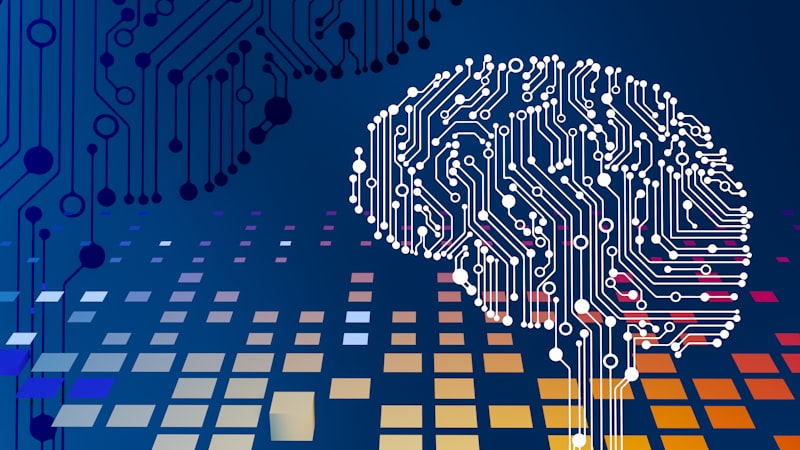
A Perceptual User Interface (PUI) represents a fundamental paradigm shift in Human-Computer Interaction (HCI), moving away from explicit command structures towards implicit, natural communication channels. Fundamentally, a PUI is defined as an interface designed to allow a computer system to perceive, comprehend, and subsequently react adequately and appropriately to the complex, perceptually-based trends of correspondence common among users. This encompassing perception includes recognition and interpretation of subtle human cues such as facial expressions, vocal inflections during talking, intricate gestures or motions of the body, and other biometric or environmental data streams. The overarching objective of implementing such sophisticated systems is to supply authentic, highly interactive experiences that closely mirror the nuanced and intuitive interactions encountered between humans in the real world, thereby making technological engagement feel seamless and intuitive rather than mechanical and structured. Perceptual user interfaces are often referred to in the technology community simply by the acronym, PUI.
The core innovation of PUI lies in its aspiration to elevate the computer system from a passive tool requiring explicit input to an active, context-aware participant in the interaction loop. Unlike traditional Graphical User Interfaces (GUIs), which rely heavily on deliberate user actions—such as clicks, keyboard entries, or touch commands—the PUI seeks to understand the user’s intent and emotional state implicitly, often without requiring conscious articulation of a command. This is achieved through the integration of multiple sensory inputs, processed by advanced algorithms rooted in artificial intelligence and machine learning, which fuse diverse data streams—visual, auditory, and often tactile—to build a rich, real-time model of the user’s current state and attention. This holistic approach significantly reduces the cognitive load placed upon the user, allowing for more fluid and natural engagement with digital environments and devices.
Historically, the trajectory of interface design has consistently pursued greater naturalness, beginning with command-line interfaces, transitioning to the graphical desktop, and evolving into touch and mobile interfaces. The PUI represents the next logical phase in this evolution, aiming for an interface that is virtually invisible and relies on the same sensory apparatus and communicative methods humans use daily. This ambition necessitates rigorous engineering in areas such as computer vision for gesture and gaze tracking, sophisticated speech recognition capable of discerning prosody and emotion, and powerful fusion engines that can synthesize these disparate pieces of information into a coherent understanding of the user’s momentary need or desire. Achieving this level of seamless interaction is critical for future applications in areas ranging from virtual and augmented reality to intelligent environments and personalized assistance systems.
Core Principles and Objectives of PUI
The design and implementation of Perceptual User Interfaces are guided by several fundamental principles aimed at maximizing naturalness and minimizing interaction friction. One paramount principle is multi-modality, which dictates that the system must accept and process input across several sensory channels simultaneously, much like human communication. A PUI should not rely solely on voice, or solely on gestures, but should interpret the combination of a user’s spoken words, the concurrent movement of their hands, and the subtle changes in their facial expression to infer complete meaning. This fusion of input modalities allows the user to communicate in the manner most convenient and contextually appropriate, offering a richer and far more robust interpretation of user intent than single-modal systems can achieve. If a user points at an object while expressing frustration verbally, the system must interpret the full context—both the target object and the negative affective state—to generate a meaningful response.
A second core objective is achieving contextual awareness, meaning the system must understand not only *what* the user is doing, but *why* and *where* they are doing it. A truly perceptive interface must maintain a comprehensive model of the environment, the user’s history, their current task, and the state of the interface itself. For instance, a PUI deployed in an automotive setting must recognize that a user’s sudden glance to the side is related to traffic hazards and prioritize safety alerts, whereas the same glance in a virtual reality training simulation might indicate curiosity about a virtual element. This requirement for deep contextual understanding demands sophisticated reasoning engines that go beyond simple pattern matching, employing machine learning techniques to prioritize and filter information based on real-time environmental data and predefined knowledge graphs pertaining to typical human behaviors and task structures within that specific domain.
Furthermore, PUI systems prioritize non-explicit interaction, seeking to reduce the need for deliberate commands. The ultimate goal is for the computer to anticipate needs or respond to inherent human behavior. This principle is often associated with the concept of ubiquitous computing, where devices fade into the background and interaction becomes part of the natural flow of life. For example, rather than explicitly clicking a “pause” button, a user looking away from a media screen might automatically trigger a pause function, indicating a shift in attention. This inherent responsiveness requires extremely high accuracy and low latency in perception, as false positives—known as the “Midas Touch” problem—can quickly lead to frustration and distrust. The system must be adaptive, learning individual user idiosyncrasies and filtering out unintentional movements or noises to maintain a smooth, seamless flow of interaction that feels natural rather than invasive or overly sensitive.
Historical Context and Evolution of PUI
The conceptual foundations of Perceptual User Interfaces emerged from early work in artificial intelligence, cognitive science, and Human-Computer Interaction dating back to the late 1980s and early 1990s. While the term PUI gained traction later, the underlying research focused on breaking free from the constraints of the WIMP (Windows, Icons, Menus, Pointer) paradigm, which dominated computing throughout the 1980s. Pioneers in the field, particularly researchers at institutions like the MIT Media Lab, began exploring ways to make computers responsive to the physical world, introducing concepts such as “ubiquitous computing” and “smart rooms.” Early experiments involved using basic computer vision to track head movement or simple sensors to detect proximity, attempting to map these physical actions to digital commands. This period marked the critical realization that input should not be limited to dedicated devices but should encompass the rich communicative bandwidth inherent in human behavior.
The true acceleration of PUI research came with significant advancements in two key technological areas: computer vision and speech recognition. Prior to the 2000s, processing complex visual data or robust, continuous speech in real-time required prohibitive computational resources. However, algorithmic improvements, coupled with the exponential increase in processing power (Moore’s Law), enabled the development of systems capable of tracking body kinematics, identifying subtle facial Action Units (AUs) associated with emotion, and parsing complex, noisy conversational speech. Projects like Microsoft’s Project Natal (which became the Kinect sensor) brought depth-sensing camera technology and full-body motion capture into the consumer space, providing researchers and developers with accessible platforms to experiment with large-scale, real-time perceptual computing, proving the viability of gesture-based interaction outside specialized laboratory settings.
The current era of PUI is heavily influenced by the rise of deep learning methodologies, which have provided unprecedented accuracy in pattern recognition across all perceptual modalities. Modern PUI systems leverage convolutional neural networks (CNNs) for highly accurate image and video analysis, recurrent neural networks (RNNs) for sequential data interpretation like speech and dynamic gestures, and advanced fusion architectures to combine these probabilistic outputs. This shift has allowed systems to move beyond simple command recognition (e.g., “show me the map”) to genuinely interpretative capabilities (e.g., recognizing the user is confused, frustrated, or focused). The evolution has thus progressed from reactive sensing, where the computer merely registers a defined action, to proactive comprehension, where the system attempts to infer the psychological and cognitive state underlying the user’s communication.
Key Components of PUI Systems
A functional Perceptual User Interface is inherently a complex system requiring the seamless integration of three primary layers: the sensory input layer, the processing and interpretation layer, and the response output layer. The sensory input layer encompasses all the hardware components responsible for capturing the raw physical data from the user and the environment. This typically includes high-resolution cameras (often stereoscopic or depth-sensing, such as LiDAR or Time-of-Flight sensors) necessary for precise 3D tracking of gestures and posture, highly sensitive microphone arrays designed to isolate speech from background noise and determine speaker location, and various biometric sensors (e.g., thermal cameras, heart rate monitors) used for detecting physiological states that correlate with emotional stress or cognitive load. The reliability and bandwidth of this input layer are crucial, as any noise or latency introduced here will cascade through the rest of the system, compromising accuracy.
The central nervous system of the PUI is the processing and interpretation layer, where raw sensory data is transformed into semantic meaning. This layer is dominated by sophisticated algorithms and AI models, including computer vision pipelines for object recognition, segmentation, and tracking; natural language processing (NLP) models for transcribing and understanding spoken content; and affective computing models specifically trained to classify emotional states based on facial expressions, vocal tone (prosody), and physiological signals. The critical function within this layer is sensor fusion, which involves merging the data from multiple modalities into a single, cohesive model of the user’s behavior and intent. Fusion algorithms must manage timing discrepancies, resolve conflicts between modalities (e.g., a user saying “yes” while subtly shaking their head “no”), and maintain a continuous, dynamic context model of the interaction state.
Finally, the response output layer is responsible for translating the system’s interpretation into an appropriate, perceptible action or feedback for the user. Unlike traditional interfaces where output might be limited to screen changes, PUI responses are often multi-modal themselves. This can include visual feedback (altering the display, highlighting objects, providing visual confirmation of a perceived gesture), auditory feedback (spoken responses, contextual sounds), or haptic feedback (vibrations, force feedback in control devices). The design challenge here is ensuring that the system’s response is not only accurate but also timely and non-intrusive. For instance, if the system perceives a user is having difficulty with a task, the output might be a subtle visual cue or a gentle spoken suggestion, rather than an abrupt intervention, maintaining the illusion of natural, helpful interaction and supporting the core objective of non-explicit engagement.
Modalities of Perception in Detail
The success of a Perceptual User Interface hinges on its ability to accurately analyze and interpret several distinct modalities of human communication, each presenting unique computational challenges. Gesture Recognition is one of the most visible modalities, involving the capture and interpretation of movements of the hands, arms, head, and entire body. This analysis is categorized into static gestures (e.g., holding a specific hand shape, like a peace sign) and dynamic gestures (e.g., waving, pointing, signing). Advanced PUI systems utilize kinematic models derived from depth sensors to track the 3D position and orientation of joints and calculate movement trajectories. Interpretation requires mapping these physical movements to semantic commands or communicative intents, often relying on Hidden Markov Models (HMMs) or deep learning sequence models to recognize patterns of movement invariant to individual differences in speed or size.
Another crucial modality is Speech and Prosody Analysis, which extends beyond simple automatic speech recognition (ASR) to understand the full communicative content of vocalizations. A PUI must transcribe the semantic content (the words spoken) but also analyze prosodic features, including pitch, rhythm, volume, and speaking rate. These features carry crucial information about the speaker’s emotional state (e.g., excitement, anger, fatigue) and their emphasis or intent. For example, the stress placed on a particular word can entirely change the meaning of a sentence. Furthermore, advanced systems incorporate speaker identification and localization, allowing the interface to filter inputs in multi-user environments and focus attention on the intended speaker. The integration of NLP with acoustic analysis ensures that the system comprehends not just the vocabulary, but the underlying affective and pragmatic meaning conveyed through speech.
Finally, Facial Expression and Gaze Tracking provide direct windows into a user’s cognitive and emotional engagement. Affective computing focuses on analyzing micro-expressions and macro-expressions—often using the Facial Action Coding System (FACS) developed by Ekman and Friesen—to classify basic human emotions (e.g., joy, sadness, surprise). Gaze tracking determines where the user is looking, serving as a powerful indicator of attention and interest. By monitoring eye movements, the PUI can infer which objects on a screen or in the physical environment are relevant to the user’s current task. Fusion of gaze data with facial expression analysis is particularly powerful; for example, seeing a furrowed brow combined with a focused gaze on a specific interface element strongly suggests confusion or difficulty, prompting the PUI to offer contextual assistance automatically.
Technological Challenges and Limitations
Despite rapid advances, the deployment of robust Perceptual User Interfaces faces significant technological and practical hurdles. One of the most pervasive challenges is ensuring robustness and reliability across diverse, real-world operating conditions. PUI systems rely heavily on sensors that are highly sensitive to environmental variables. For instance, computer vision systems suffer dramatically under poor or fluctuating lighting conditions, which can obscure facial features or confuse depth sensors. Similarly, microphone arrays struggle with background noise, crosstalk, and varying acoustics, making accurate speech and prosody analysis difficult in public or noisy settings. Overcoming this requires sophisticated filtering, normalization techniques, and often, redundant sensing mechanisms, adding complexity and cost to system design.
The issue of computational cost and latency presents another major limitation, especially for pervasive PUI applications. Real-time processing of high-definition video streams, complex 3D gesture tracking, and simultaneous deep learning inference for multiple modalities demands substantial computational power. If the system’s perception and response cycle introduces noticeable delay (latency), the interaction feels unnatural and frustrating, breaking the illusion of seamless human-like communication. Developing lightweight, highly optimized AI models capable of running on embedded, low-power devices—such as smartphones or smartglasses—while maintaining high accuracy remains a critical area of research. This optimization is essential for moving PUI from high-end lab environments into everyday consumer electronics.
Perhaps the most nuanced challenge is dealing with cultural variability and ambiguity in human communication. Gestures, vocal inflections, and even facial expressions are not universally consistent; a gesture that signifies agreement in one culture might be offensive in another, and emotional expression can be heavily modulated by cultural display rules. Furthermore, human behavior is inherently ambiguous; a user might scratch their head out of habit, not confusion. Training PUI models requires vast, diverse datasets that account for global variations and statistical probabilities of intent versus unintentional movement. If models are trained predominantly on a homogeneous population, the resulting PUI will exhibit significant bias and perform poorly or inappropriately when interacting with users from underrepresented groups, compromising the authenticity and fairness of the interaction.
Applications and Use Cases of PUI
The potential applications for Perceptual User Interfaces span numerous sectors where natural, intuitive interaction is paramount. In the realm of entertainment and gaming, PUI technology has transformed user engagement through motion tracking and expressive control. Systems like modern gaming consoles and virtual reality (VR) headsets utilize depth cameras and advanced kinematics to track player movements, allowing physical actions to directly influence the game environment. Beyond mere movement, PUI enables affective gaming, where the system monitors the player’s fear, excitement, or frustration (via facial expression or physiological input) and dynamically adjusts the game difficulty or narrative pacing to maintain optimal engagement and immersion.
In the field of automotive and transportation safety, PUIs are rapidly becoming integral to the cockpit. Driver monitoring systems utilize gaze tracking and facial expression analysis to detect signs of fatigue, distraction, or impairment. If the system perceives the driver’s eyes lingering off the road or detects micro-sleep cues, it can trigger alerts or even safely intervene. Furthermore, the PUI allows for context-aware dashboard controls, where a driver can interact with navigation or climate control using simple, glance-based controls or subtle hand gestures, minimizing the need to physically interact with buttons and keeping the driver’s attention focused on the primary task of driving, thereby significantly enhancing safety.
Furthermore, PUI holds profound promise for accessibility and assistive technologies. For individuals with limited mobility or speech impairments, PUI offers alternative, highly flexible means of interacting with computing systems. Advanced gesture recognition can translate subtle head movements or eye blinks into complex commands, providing control over environments, communication devices, and personal computers. In educational settings, PUI can monitor student engagement and emotional states during remote learning, providing real-time feedback to educators about attention levels and confusion, allowing for personalized, automated tutoring interventions tailored to the student’s immediate cognitive needs. This capacity for implicit understanding makes PUI a powerful tool for bridging communication gaps and promoting digital inclusion.
Future Directions and Ethical Considerations
The future development of Perceptual User Interfaces is projected to focus heavily on achieving true seamless multi-modality fusion and pushing toward anticipatory, personalized systems. Current PUI often treat modalities semi-independently before fusion; future systems will need to integrate these streams earlier and more deeply, creating systems that fluidly switch between relying on speech, gaze, or gesture based on the user’s immediate context and personal preferences. Research is moving toward creating systems that can model human cognitive load in real-time, allowing the interface to modulate its complexity and verbosity to prevent overwhelming the user when they are stressed or distracted, ultimately aiming for a truly symbiotic relationship between human and machine.
However, the expansive capabilities of PUI raise serious ethical considerations, particularly concerning data privacy and surveillance. A system that continuously perceives and interprets a user’s facial expressions, emotional state, location, and physiological responses is inherently a pervasive surveillance mechanism. The collection and storage of such highly sensitive biometric and affective data necessitate stringent security protocols and clear transparency regarding data usage. Users must have explicit control over what is being sensed, how long the data is retained, and how it is processed, particularly when the data could be used to infer sensitive personal information or behavioral patterns that might be exploited commercially or socially.
Another critical ethical challenge relates to algorithmic bias and manipulation. PUI systems trained on non-representative datasets may perpetuate and amplify societal biases, potentially leading to inaccurate or unfair interpretation of expressions or gestures across different demographics. Furthermore, as PUI becomes more adept at reading and responding to human emotion, there is a risk of systems being designed to subtly manipulate user behavior—for example, by optimizing interface elements to exploit moments of low cognitive load or emotional vulnerability. Therefore, future PUI development must prioritize the design of transparent, explainable AI models and adhere to ethical guidelines that ensure these powerful technologies are used solely to enhance human well-being and autonomy, rather than to control or exploit user behavior.