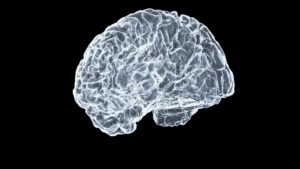
Perirhinal Cortex: The Hidden Architect of Your Memories
Scientifically Reviewed · Dr. Marwa Abd-Alazim · September 5, 2026
Review Criteria & Clinical Standards
This content undergoes rigorous scientific peer-review and medical editorial standards at Arab Psychology Network to ensure clinical accuracy, validity, and compliance with evidence-based guidelines from leading psychological and healthcare authorities (APA / WHO).
PERIRHINAL CORTEX
The perirhinal cortex (PRC) is a crucial cortical structure situated within the medial temporal lobe, anatomically positioned adjacent to the hippocampus and forming a vital component of the parahippocampal region. Its designation stems from its location, enveloping the rhinal sulcus, and it serves as an indispensable interface that bridges complex sensory interpretation, particularly visual perception, and the processes of long-term memory formation. Functionally, the PRC is recognized as a high-level processing center, acting as the ultimate convergence point for the cortical streams that process object identity and feature binding. It is fundamentally responsible for encoding the “what” of an experience—the specific items, objects, and entities encountered—a function critical for the fundamental human ability to recognize previously encountered stimuli. This specialized role distinguishes it within the mnemonic network, positioning it as the primary gateway through which highly processed sensory information must pass before potentially being integrated into the hippocampus for contextual and relational encoding. Consequently, the structural integrity and efficient operation of the perirhinal cortex are foundational to normal declarative memory systems, particularly recognition memory, allowing organisms to rapidly and efficiently discern novel stimuli from familiar ones without necessarily recalling the specific context of the initial encounter.
Anatomically, the PRC is characterized by distinct cytoarchitectural divisions, typically comprising Brodmann areas 35 and 36, which receive extensive, highly processed input from the surrounding visual association cortices, notably the inferotemporal cortex. This strategic positioning ensures that the PRC handles information that has already undergone multiple levels of abstraction regarding shape, color, and object identity. The flow of information is highly organized: sensory data converges upon the PRC, which subsequently relays it to the adjacent entorhinal cortex, and from there, it enters the hippocampus proper. This progression highlights the PRC’s role as the first major step in translating raw or abstracted sensory input into a format suitable for mnemonic encoding. The deep integration between the PRC and the entorhinal cortex suggests a concerted effort in memory processing, where the PRC specializes in item-specific representations, while the downstream structures handle spatial, temporal, and relational bindings. Understanding the perirhinal cortex necessitates appreciating its placement within this hierarchical pathway, emphasizing that it is not merely a relay station but an active computational hub where the complex features that define an object are consolidated into a stable, retrievable memory trace before being distributed across the broader memory system.
The specialized nature of the perirhinal cortex means that its neural architecture supports a rapid form of encoding essential for identifying objects in a dynamic environment. Unlike the hippocampus, which often requires complex conjunctive encoding involving multiple features and spatial cues, the PRC is optimized for the representation of single items. This functional specialization is reflected in its cellular properties, which exhibit high degrees of plasticity necessary for quickly establishing new item representations. The ability of the PRC to sustain these item memories, even when the hippocampus is compromised, underscores its autonomy in certain aspects of recognition. This anatomical and functional differentiation forms the basis for current theories differentiating the components of recognition memory, placing the PRC at the forefront of the process responsible for generating a sense of familiarity. This initial, rapid judgment of prior exposure is crucial for daily functioning, enabling individuals to navigate their surroundings efficiently without requiring exhaustive retrieval of specific, detailed episodic memories for every object encountered.
The Perirhinal Cortex and Recognition Memory
The most robust and extensively studied function of the perirhinal cortex centers on its critical role in recognition memory, particularly the component known as familiarity. Recognition memory is classically defined as the ability to correctly identify an item or event as having been previously encountered. Within the framework of the dual-process theory of recognition, this ability is typically fractionated into two distinct cognitive processes: recollection, which involves the retrieval of specific contextual and spatiotemporal details associated with the learning event, and familiarity, which is a faster, context-free assessment that an item is ‘known.’ A substantial body of neurophysiological and lesion evidence overwhelmingly supports the hypothesis that the perirhinal cortex is the primary neurological substrate for the latter, the feeling of familiarity. When an individual instantly recognizes a face in a crowd or identifies a common tool without recalling where or when they last saw it, this rapid, high-confidence judgment is largely mediated by the neural activity within the PRC, reflecting its stored representations of item-specific features.
This specialization for item memory arises from the PRC’s convergence of highly processed sensory information. It integrates complex features—such as the unique texture, shape, and structure of an object—into a consolidated, multi-modal representation. Unlike general sensory cortices, the PRC binds these features across modalities, creating a unified neural code for the object itself. When this item is encountered again, the current sensory input matches this consolidated representation in the PRC, triggering the signal for familiarity. Research utilizing functional magnetic resonance imaging (fMRI) in humans and single-unit recording in non-human primates consistently demonstrates heightened activity in the PRC specifically during tasks requiring item recognition based on familiarity, even when contextual cues are deliberately absent or insufficient to support full recollection. This mechanism allows for rapid memory decisions, conserving cognitive resources that would otherwise be dedicated to full episodic retrieval, thereby highlighting the efficiency and adaptability of the PRC in managing the flow of recognition information.
Furthermore, the integrity of the perirhinal cortex is essential for associative recognition, specifically the ability to link two different items together, such as recognizing a pair of pictures that were presented simultaneously, even if the contextual background is forgotten. While the hippocampus excels at binding items to spatial locations (item-in-context memory), the PRC is pivotal for item-item binding, a function that is necessary for forming complex conceptual structures. Damage isolated to the PRC frequently impairs this ability, leading to deficits where subjects can identify individual items but fail to recognize the established relationship between them. This finding solidifies the view of the PRC as a hub for representing complex objects and simple associations between objects, operating at a level of complexity beyond mere sensory feature extraction but preceding the integration of full contextual and temporal details handled by the hippocampal formation. The sophisticated mechanism of the PRC thus governs the foundational ability to differentiate and identify the specific entities that populate our mnemonic landscape.
Interaction with the Hippocampal Formation
The perirhinal cortex is not an isolated memory structure; it is intricately linked with the broader hippocampal formation, forming the critical initial segment of the canonical trisynaptic loop. Information flows into the hippocampal system primarily through the parahippocampal region, which includes the PRC and the adjacent parahippocampal cortex (PHC). The PHC primarily processes spatial layout and contextual features (“where” information), whereas the PRC specializes in item features (“what” information). These two distinct streams converge upon the entorhinal cortex (EC), which acts as the major input gateway to the dentate gyrus, CA3, and CA1 fields of the hippocampus. The PRC’s projection to the EC, particularly to the lateral entorhinal cortex (LEC), is central to this pathway, ensuring that object identity information is relayed efficiently for further processing and integration into episodic memory traces. This anatomical organization dictates a functional division of labor where the PRC provides the essential raw material—the item representation—upon which the hippocampus builds detailed, contextual episodes.
Disruption of the communication between the PRC and the entorhinal cortex or hippocampus severely compromises memory function. Studies involving disconnection lesions—where the PRC is intact but its connections to the hippocampus are severed—demonstrate profound deficits in complex recognition tasks, reinforcing the necessity of this pathway for successful memory encoding. The PRC’s output into the EC is critical for the generation of stable, long-lasting item memories. Furthermore, the interplay between the PRC and the hippocampus suggests a competitive or complementary mechanism in memory encoding. During initial exposure to novel stimuli, the PRC rapidly updates its representations, driving familiarity signals. If the item is associated with novel contextual information, the hippocampus becomes strongly engaged to encode the full episode. However, if the item is repeatedly encountered, the memory trace may become increasingly independent of the hippocampus and rely more heavily on stable representations within the PRC and neocortex, suggesting a process of systems consolidation where item information is gradually transferred out of the medial temporal lobe system.
This functional dissociation is key to understanding amnesia. Patients with damage largely restricted to the hippocampus often retain a relatively preserved sense of familiarity, enabling them to correctly guess which item they have seen before, though they cannot recall the specific circumstances of the viewing. Conversely, damage encompassing the PRC typically results in a much broader and more devastating impairment, severely limiting the ability to even recognize the object itself. This clinical distinction underscores that while the hippocampus is critical for the recollection of context, the perirhinal cortex is foundational for the very ability to register and recognize the individual components of the world. The integrity of the PRC is therefore paramount, as it represents the necessary precursor for all subsequent hippocampal processing of object-based episodic content.
Perirhinal Cortex and the Ventral Visual Stream
The perirhinal cortex occupies a unique position at the apex of the brain’s ventral visual stream, often referred to as the “What” pathway. This pathway originates in the primary visual cortex (V1) and progresses through a hierarchy of cortical areas (V2, V4, and the inferotemporal cortex), where visual information is progressively abstracted from simple lines and edges to complex shapes and object identities. By the time visual data reaches the PRC, it represents highly refined, invariant representations of complex objects—meaning the object representation remains stable regardless of changes in viewing angle, size, or lighting. This final stage of visual processing is where perceived objects are functionally integrated with the memory system. The sheer complexity of the visual input handled by the PRC necessitates its sophisticated computational capabilities, enabling it to manage the vast number of potential object identities an individual encounters throughout life.
The organization of the PRC reflects this high-level visual specialization. Neurons within the PRC exhibit selectivity for complex visual stimuli, responding strongly to specific configurations of features rather than simple sensory inputs. Crucially, these neurons are thought to encode the conjunction of features that define an object, providing a mechanism for differentiating between objects that share many similar features. For example, the PRC is essential for distinguishing between a specific breed of dog and a highly similar breed, or between two different models of the same type of car. This capacity for fine-grained discrimination is directly related to its role in preventing interference between memory traces. If two objects are highly similar, the PRC must generate distinct neural codes for each to ensure that recognizing one does not erroneously activate the memory for the other. This process of pattern separation at the level of object identity is a key feature of PRC function.
The close functional relationship between the PRC and the visual system explains why certain lesions affecting this region result in profound deficits in object recognition, sometimes bordering on visual agnosia. While pure visual agnosia is often associated with damage to the inferotemporal cortex, PRC damage specifically impairs the ability to link the perceived visual input to a previously stored memory trace, resulting in an inability to interpret the significance or identity of an object based on sight alone. This is not a failure of vision itself, but a failure of mnemonic interpretation. Therefore, the PRC serves as the critical bridge, transforming sophisticated visual percepts into enduring memory representations, thereby ensuring that the objects we see are meaningful entities rather than merely collections of lines and colors.
Clinical Implications and Lesion Studies
Lesions or atrophy affecting the perirhinal cortex have profound clinical consequences, particularly in patients suffering from amnesia, neurodegenerative disorders like Alzheimer’s disease, and following specific strokes or viral infections (e.g., herpes simplex encephalitis). Damage to the PRC consistently leads to severe deficits in item recognition and the ability to distinguish between similar objects, offering compelling evidence for its critical role in object discrimination. A classic example illustrating this profound deficit involves the inability to discern common objects as separate identities from one another, indicating a failure to maintain distinct neural representations for similar entities. As an illustrative case, damage to the perirhinal cortex has resulted in Nancy not being able to discern common objects in her surroundings as being separate identities from one another. This scenario perfectly captures the functional failure of the PRC: the stored representations lack the necessary specificity or stability to allow for correct identification and differentiation when faced with visually related distractors.
In animal models, selective lesions targeting the PRC consistently impair performance on delayed non-matching-to-sample tasks (DNMS), a gold-standard test for recognition memory in primates. In these tasks, subjects must identify the novel object out of a pair, distinguishing it from an object previously seen. Animals with PRC lesions show significantly impaired performance, particularly as the delay between exposure and testing increases, demonstrating a failure to retain the item memory. Importantly, these deficits are observed even when the hippocampus remains intact, confirming that the recognition of the item itself is primarily dependent on the PRC, independent of contextual recall. These experimental findings mirror the clinical observations in humans, where bilateral damage to the perirhinal and entorhinal cortices often results in severe dense amnesia, specifically characterized by an inability to form new item-specific declarative memories.
The PRC is also one of the earliest cortical areas affected by Alzheimer’s disease (AD) pathology. The accumulation of neurofibrillary tangles and amyloid plaques often begins in the entorhinal cortex and rapidly spreads to the perirhinal cortex. Clinically, this early pathological involvement corresponds to the initial cognitive symptoms experienced by AD patients, which frequently include subtle but persistent deficits in object recognition, naming, and, critically, the inability to efficiently use familiarity cues. Since the PRC is essential for differentiating between objects, its degradation contributes significantly to the progressive cognitive decline, leading to confusion and an increasing difficulty in navigating the environment and identifying everyday items. Understanding the vulnerability of the PRC is paramount for developing early diagnostic markers and therapeutic interventions aimed at slowing the progression of memory failure in these devastating neurodegenerative conditions.
Perirhinal Cortex and Semantic Memory Formation
While the primary focus of the perirhinal cortex is often placed on episodic memory and familiarity, accumulating evidence suggests a profound, albeit indirect, role in the formation and organization of semantic memory—the network of facts, concepts, and general knowledge independent of personal experience. Semantic memory relies on stable, durable representations of objects and their associated conceptual meaning. Because the PRC is responsible for integrating and consolidating the complex features of an object into a unified neural code, it is ideally situated to initiate the process by which specific item memories transition into general conceptual knowledge. Repeated exposure to an object, mediated by the PRC, strengthens the item representation, gradually stripping away the irrelevant contextual details (which are processed by the hippocampus) until only the core identity and associated semantic knowledge remain.
This transitional function is particularly evident in the process of learning new categories or concepts. When an individual learns that a novel object belongs to a certain class, the PRC is involved in encoding the defining features of that object. Through repetition and generalization, these feature representations are thought to be stabilized in the PRC before being transferred to the adjacent neocortical regions for long-term storage as semantic knowledge. Therefore, the PRC acts as a crucial staging area for the creation of stable, generalizable knowledge structures. Without the initial, robust item representation provided by the PRC, the foundation for building complex semantic categories would be severely compromised, suggesting that the integrity of the PRC is necessary not only for recognizing what was seen before but also for understanding what that item is and what it means conceptually.
Further support for this role comes from studies indicating that the PRC plays a vital role in processing information about highly complex visual stimuli, such as faces and scenes, which require extensive conceptual classification. Lesions affecting the PRC can impair the ability to acquire new semantic knowledge, even if the ability to retrieve old, established semantic facts remains relatively intact. This distinction emphasizes the PRC’s involvement in the *acquisition* phase of semantic memory—the initial creation of the conceptual link—rather than the long-term *storage* of the semantic knowledge itself, which is ultimately distributed across the temporal and parietal cortices. The perirhinal cortex thus facilitates the essential transformation of sensory experience into enduring, abstract conceptual understanding, making it indispensable for both rapid item recognition and the slower, integrative process of semantic learning.
Developmental Aspects and Synaptic Plasticity
The functionality of the perirhinal cortex is underpinned by high levels of synaptic plasticity, the capacity of synapses to strengthen or weaken over time in response to activity, which is the cellular basis of memory and learning. The PRC exhibits robust forms of long-term potentiation (LTP) and long-term depression (LTD), mechanisms that allow the neural circuits to rapidly adjust and encode novel item representations. LTP, in particular, is crucial for strengthening the synaptic connections between converging sensory inputs, ensuring that once an object is viewed, its neural signature is quickly consolidated and made retrievable. The efficiency of these plastic changes in the PRC is directly correlated with the speed and accuracy of familiarity-based recognition.
Developmentally, the perirhinal cortex undergoes significant maturation throughout adolescence, suggesting that its role in complex object recognition and associative memory evolves over time. Unlike some subcortical structures that mature early, the PRC’s sophisticated function in handling abstract visual concepts and non-spatial associations continues to develop into early adulthood. This protracted development may explain why certain complex associative learning tasks, which rely heavily on the PRC, show gradual improvement across childhood and adolescence. Understanding the developmental trajectory of the PRC is important for identifying critical periods during which memory and recognition skills are most susceptible to environmental influence or potential neurological insult.
Furthermore, the PRC is subject to various neuromodulatory influences, including cholinergic and dopaminergic systems, which regulate its plasticity and memory encoding capabilities. For instance, cholinergic input from the basal forebrain is known to enhance synaptic plasticity in the PRC, thereby facilitating the encoding of new item memories. Dysfunction in these modulatory systems, often seen in aging or neurodegenerative states, contributes to the observed decline in recognition memory. Therefore, therapeutic strategies targeting the modulation of synaptic plasticity within the perirhinal cortex hold promise for enhancing recognition memory function and mitigating the effects of memory disorders. The exquisite cellular mechanisms of the PRC allow it to serve as a highly dynamic and flexible memory encoder, essential for the continuous updating of our knowledge regarding the objects in our environment.