Waxy Flexibility: Understanding the Mystery of Catatonia
Scientifically Reviewed · Dr. Marwa Abd-Alazim · August 26, 2026
Review Criteria & Clinical Standards
This content undergoes rigorous scientific peer-review and medical editorial standards at Arab Psychology Network to ensure clinical accuracy, validity, and compliance with evidence-based guidelines from leading psychological and healthcare authorities (APA / WHO).

Definition and Core Phenomenology
Plastic Tonus, frequently identified by the clinical term waxy flexibility, or cerea flexibilitas, is a critical and distinct motor disturbance primarily associated with the severe neuropsychiatric syndrome of catatonia. This condition manifests as an abnormal state of muscle tone in the voluntary musculature, characterized by a smooth, constant resistance to passive movement, much like bending a rod made of soft wax. Crucially, once an appendage—such as an arm or leg—has been passively moved by an examiner into an unusual or awkward position, the patient maintains that posture rigidly and indefinitely, often for hours, even against the force of gravity or despite the discomfort that a healthy individual would experience. This sustained, fixed posturing is an involuntary phenomenon, reflecting a profound pathological breakdown in the neurological mechanisms responsible for the dynamic modulation of muscle tone and postural regulation, rather than a conscious effort or active muscle contraction by the patient. The presence of plastic tonus is highly significant in clinical practice, serving as a powerful diagnostic indicator of a severe underlying psychiatric or medical disorder necessitating urgent intervention, as prolonged catatonic states carry inherent risks including dehydration, malnutrition, and significant physical morbidity.
The defining characteristic that differentiates plastic tonus from other forms of muscular hypertonia is the quality of the resistance encountered during the passive range-of-motion examination. Unlike the cogwheel phenomenon often seen in Parkinson’s disease, or the yielding resistance characteristic of the clasp-knife reflex in spasticity, plastic tonus presents a uniform, even resistance throughout the entire arc of movement. The resistance does not fluctuate, nor does it suddenly give way; rather, the limb acts as a pliable material that retains its new shape once the manipulating force is removed. This pathological fixation of posture suggests a failure in the central nervous system to appropriately regulate tonic muscle activity and inhibit sustained reflex arcs. The persistence of the posture, regardless of external stimuli or the patient’s discomfort, is the pathognomonic sign. For instance, if the patient’s head is raised slightly off the pillow, the head may remain suspended in that position for a prolonged period, sometimes referred to as the ‘psychological pillow,’ illustrating the complete lack of normal postural relaxation.
The clinical recognition of plastic tonus is indispensable because its presence significantly restricts the differential diagnosis, strongly favoring the identification of a catatonic syndrome. This motor sign is rarely observed outside of catatonia, confirming the severity of the psychomotor disturbance. While the patient may appear stuporous or immobile, the ability of their limbs to hold these awkward anti-gravity positions demonstrates that the muscles are not flaccid or paralyzed, but rather pathologically engaged by central nervous system dysregulation. This objective sign necessitates an immediate and thorough evaluation to determine the underlying etiology of the catatonia, which can range from primary psychotic disorders, severe mood disorders (bipolar disorder or major depression), to serious organic causes such as autoimmune encephalitis, metabolic disturbances, or substance withdrawal. Successful identification of plastic tonus directs the clinician toward specific anti-catatonic treatments, typically high-dose benzodiazepines or electroconvulsive therapy (ECT), which are highly effective in rapidly reversing this profound state of motor fixity.
The Mechanism of Waxy Flexibility (Cerea Flexibilitas)
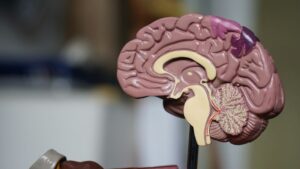
The term cerea flexibilitas, or waxy flexibility, is not merely descriptive but encapsulates the unique biomechanical property of the affected musculature in plastic tonus. The sensation imparted to the clinician is that of manipulating a substance that offers mild resistance but maintains the imposed shape perfectly, behaving like pliable wax. The underlying mechanism is complex and thought to involve severe dysregulation within the motor control systems of the brain, particularly the interconnections between the cortex, the basal ganglia, and the cerebellum. These structures collectively govern the initiation, coordination, and termination of voluntary movement and the maintenance of static posture. In plastic tonus, it is hypothesized that the failure resides in the inhibitory circuits that normally modulate muscle tone and relax sustained contractions. This leads to an inappropriate, continuous level of activity in the motor units, locking the limbs into a fixed position after passive manipulation.
Neurophysiological theories often center on functional disturbances in the neurotransmitter systems crucial for motor control, particularly the GABAergic and dopaminergic pathways. The remarkable responsiveness of plastic tonus to benzodiazepines, which enhance GABAergic inhibition, suggests that a functional hypoactivity of the GABA system is a primary factor. A deficit in GABA-mediated inhibition could lead to disinhibition of the motor cortex or subcortical motor centers, resulting in the sustained, non-reciprocal firing of both agonist and antagonist muscles necessary to maintain an imposed posture rigidly. Simultaneously, theories relating catatonia to dopaminergic dysfunction, perhaps an imbalance between D1 and D2 receptor activity, suggest a disruption in the basal ganglia’s ability to initiate movement and terminate sustained postures. It is likely that the sustained resistance and posturing are the cumulative result of a complex interplay between these systems, compromising the ability of the brain to execute the crucial function of postural reset.
The extraordinary capacity of patients with plastic tonus to hold gravity-defying postures for extended periods without experiencing typical muscle fatigue further supports the central, pathological nature of the condition. If the patient were actively contracting muscles voluntarily, metabolic demands would necessitate rapid fatigue. The lack of fatigue suggests that the posture is maintained through a neurologically fixed, energy-efficient mechanism, possibly involving sustained tonic firing of motor neurons at a low metabolic cost, or a fundamental alteration in the central pattern generators that typically maintain standing or sitting posture. This enduring immobility confirms that plastic tonus represents a severe physiological constraint imposed upon the motor system, validating its role as an objective sign of neurological dysfunction, rather than a psychological manifestation of withdrawal or volition. Understanding this mechanism is vital, as it confirms the necessity for treatments that directly address the underlying neurobiological disruption, such as benzodiazepines or ECT, which aim to rapidly restore normal inhibitory balance within the motor circuitry.
Plastic Tonus as a Key Symptom of Catatonia
Plastic tonus holds a central and highly influential position within the diagnostic framework of the catatonic syndrome, serving as one of the most specific and recognizable psychomotor disturbances. Catatonia is a heterogeneous syndrome characterized by concurrent motor, behavioral, and volitional abnormalities. According to modern diagnostic criteria, such as the DSM-5, the presence of plastic tonus/waxy flexibility significantly contributes toward meeting the threshold for a catatonic diagnosis. Its identification is crucial for quickly differentiating catatonia from other conditions that might present with immobility, such as severe depression with psychomotor retardation, stupor resulting from medical coma, or non-epileptic attacks. The unique quality of sustained, passively imposed posturing confirms a specific type of neurological impairment associated almost exclusively with catatonia, guiding the clinician toward life-saving, anti-catatonic therapies.
In clinical practice, plastic tonus is most often observed in the stuporous, retarded form of catatonia, where the patient exhibits marked immobility, mutism, and a general absence of responsiveness. When the patient is in this state, the finding of waxy flexibility serves as a concrete, objective marker that the immobility is pathologically driven rather than merely a state of profound apathy or lethargy. Plastic tonus frequently co-occurs with other classic catatonic features, forming a diagnostic constellation that includes negativism (active resistance to instruction), posturing (spontaneous maintenance of bizarre positions), catalepsy (general sustained immobility), and echolalia or echopraxia (pathological imitation). The examiner’s ability to impose and sustain an uncomfortable posture on the patient’s limb, such as holding the arm suspended in the air, provides undeniable evidence of the severity of the functional psychomotor dissociation that characterizes the catatonic state, demanding swift and decisive medical management.
Furthermore, the diagnostic importance of plastic tonus extends to determining the urgency and potential etiology of the catatonia. The syndrome itself can be secondary to numerous conditions, but the presence of plastic tonus strongly indicates a severe, acute derangement of central nervous system function. Clinicians must conduct a comprehensive medical workup to rule out life-threatening organic causes, such as infectious or autoimmune encephalopathies, which may present with catatonic signs. The rapid identification of plastic tonus is a protective measure; it alerts staff to the high risk of complications associated with prolonged immobility, such as aspiration or deep vein thrombosis, and, critically, it contraindicates the initial use of traditional antipsychotic medications due to the danger of precipitating or exacerbating Neuroleptic Malignant Syndrome (NMS), a potentially fatal condition that shares underlying dopaminergic dysfunction with catatonia. Therefore, plastic tonus acts as a pivotal clinical signpost, ensuring the prompt initiation of highly effective treatments like lorazepam or ECT.
Neurological Hypotheses and Physiological Basis
Understanding the neurological basis of plastic tonus involves exploring the complex interplay of motor circuits and neuromodulators. One leading hypothesis implicates dysfunction within the basal ganglia-thalamocortical motor loops, which are essential for selecting and executing movements and inhibiting unwanted ones. Catatonia is often modeled as a hyper-inhibition state where the basal ganglia exert excessive inhibitory control over the motor thalamus and cortex. This functional suppression prevents the initiation of voluntary movement, explaining the stupor and immobility. Simultaneously, this dysfunction may alter the regulation of descending pathways that control muscle tone, leading to the sustained, fixed tonic activity observed as plastic tonus. The theory suggests that the underlying abnormality is a widespread failure in the temporal coordination and spatial modulation of motor signals, resulting in a system that can be passively manipulated but cannot actively reset itself.
A second significant area of investigation focuses on the role of gamma-aminobutyric acid (GABA), the principal inhibitory neurotransmitter in the central nervous system. The rapid and reliable response of plastic tonus to GABA-A receptor agonists, such as lorazepam, strongly suggests that a functional deficiency or hypoactivity of GABAergic neurotransmission is central to the pathophysiology of catatonia. This functional deficit could lead to excessive excitatory drive in motor pathways, resulting in the sustained, fixed contractions that define plastic tonus. Specifically, this imbalance may affect the excitability of gamma motor neurons, which control the sensitivity of muscle spindles. Pathological hyper-sensitivity of the muscle spindles could contribute to the uniform, constant resistance felt during passive stretching—the waxy quality—and the persistence of the imposed posture, as the postural reflex mechanism becomes pathologically fixed and unresponsive to normal inhibitory signals.
Furthermore, the maintenance of plastic tonus involves structures responsible for integrating sensory input with motor output, including the parietal cortex and the cerebellum. The cerebellum is crucial for coordinating movement and maintaining muscle tone. Dysfunction in cerebello-thalamic connections could impair the precise timing and modulation required to adjust muscle tone smoothly, contributing to the rigidity. While dopaminergic deficits are often discussed in the context of catatonia’s overlap with NMS, the sustained posturing quality of plastic tonus suggests a more widespread failure involving multiple systems. It is hypothesized that plastic tonus represents a final common pathway of severe motor dysregulation resulting from complex interactions between reduced GABA inhibition, possibly altered dopaminergic signaling, and dysfunction in the motor integration circuits, culminating in the involuntary “locking” of the limbs into passively imposed positions.
Differential Diagnosis and Related Motor Disturbances
Accurate differentiation of plastic tonus from similar-appearing motor disturbances is paramount for appropriate clinical management. The primary differential diagnosis involves distinguishing plastic tonus from other forms of hypertonia. **Lead-pipe rigidity**, characteristic of Parkinsonian syndromes, also presents as uniform resistance throughout the range of passive movement. However, unlike plastic tonus, lead-pipe rigidity typically does not result in the prolonged, sustained posturing against gravity (waxy flexibility) that is the hallmark of catatonia. Moreover, Parkinsonian rigidity is often accompanied by tremor and bradykinesia, and responds to dopaminergic agents, whereas plastic tonus responds dramatically to GABAergic agents. Another key distinction is made against **clasp-knife rigidity**, which is associated with spasticity due to upper motor neuron lesions; this condition involves high initial resistance that suddenly melts away upon continued passive force, a quality entirely absent in the smooth, constant resistance of plastic tonus.
It is also essential to distinguish plastic tonus from behavioral phenomena that mimic resistance or immobility. **Negativism**, a core catatonic symptom, involves active opposition or resistance by the patient to external instruction or passive manipulation. While a patient with plastic tonus may also exhibit negativism, the defining feature of plastic tonus is the passive maintenance of an imposed posture after the examiner ceases manipulation. If a patient is consciously resisting or malingering, the resistance usually fluctuates, is overcome by steady force, and the patient cannot maintain anti-gravity postures for extended periods due to muscle fatigue. The sustained, non-fatiguing nature of waxy flexibility serves as the objective physiological marker confirming its pathological basis, separating it from volitional opposition or non-compliance. Clinicians must observe the quality of resistance and the duration of posturing meticulously to ensure an accurate diagnosis.
Furthermore, plastic tonus must be differentiated from other movement disorders that involve sustained contractions, such as **dystonia**. Dystonia involves sustained or intermittent muscle contractions causing abnormal, often repetitive, twisting movements or postures. However, dystonic posturing is typically spontaneous, dynamic, and follows specific, involuntary patterns, rather than being the static, passively imposed and maintained positions seen in waxy flexibility. Similarly, **stereotypies** are repetitive, purposeless movements, which differ from the fixed, sustained static postures of plastic tonus. Therefore, the assessment criteria for plastic tonus emphasize three specific components: the quality of the resistance (waxy, uniform), the initiating factor (passive manipulation by the examiner), and the result (sustained maintenance of the posture against gravity), ensuring the precise identification of this syndrome-defining sign.
Clinical Assessment and Observation Techniques
The clinical assessment of plastic tonus requires a specific, systematic examination designed to elicit and confirm the presence of waxy flexibility. The examination begins with a gentle passive range-of-motion test of the patient’s major joints, particularly the elbow, wrist, and knee. The examiner must passively move the limb slowly and deliberately through its range, paying close attention to the quality of the muscle tone encountered. The sensation of smooth, even, sustained resistance throughout the movement, akin to bending a wax figure, is the initial indicator of plastic tonus. Unlike normal tone, which should feel soft and compliant, or spasticity, which is velocity-dependent, the resistance in plastic tonus is constant regardless of the speed of movement.
The definitive step in confirming plastic tonus is the test for sustained posturing. After assessing the quality of resistance, the examiner places the patient’s limb into a slightly uncomfortable or anti-gravity position—for example, by raising the patient’s arm and suspending it above the chest, or bending the knee and holding the foot slightly elevated. The examiner then removes support and observes the limb. If plastic tonus is present, the limb will remain suspended in the imposed position without any apparent active effort by the patient. The duration for which the patient maintains this posture is the critical diagnostic measure. Maintenance of the position for an abnormally extended period (minutes or longer) confirms the presence of waxy flexibility and catalepsy.
To standardize and objectify this observation, clinicians often employ validated assessment tools such as the Bush-Francis Catatonia Rating Scale (BFCRS). This scale specifies criteria for rating waxy flexibility, typically requiring the sustained maintenance of a passively imposed, anti-gravity posture for a minimum defined time, often 15 seconds. Systematic documentation of the assessment, including the joint tested, the position imposed, and the exact duration the position was held, is essential. Such objective measurement is crucial for establishing baseline severity, ensuring diagnostic reliability, and, most importantly, monitoring the efficacy of acute treatment. The rapid resolution of plastic tonus within minutes following a lorazepam challenge provides powerful confirmation of the catatonic diagnosis and guides subsequent therapeutic adjustments, highlighting the indispensable nature of rigorous observation techniques.
Historical Context and Evolution of Terminology
The historical trajectory of plastic tonus is intrinsically linked to the conceptualization of catatonia itself. The syndrome was first formally described by Karl Ludwig Kahlbaum in 1874, who detailed a condition characterized by profound motor disturbances, including states of stupor and excitement. Kahlbaum used the term ‘catalepsy’ broadly to encompass the sustained, fixed postures observed in his patients. However, subsequent clinical refinement led to the specific recognition of the unique quality of muscle tone that allowed for passive manipulation and sustained fixation. This distinct motor symptom was formally termed cerea flexibilitas, or waxy flexibility, distinguishing it as a specific physiological manifestation within the broader catatonic syndrome and differentiating it from the general rigidity seen in other neurological disorders.
During the early 20th century, the influence of Emil Kraepelin led to the categorization of catatonia, and by extension plastic tonus, almost exclusively as a subtype of Dementia Praecox (later schizophrenia). For decades, plastic tonus was considered a hallmark of schizophrenic deterioration. This view persisted until the latter half of the 20th century, when landmark research demonstrated that catatonia, including the presence of waxy flexibility, was not pathognomonic for schizophrenia but was frequently secondary to severe mood disorders (affective catatonia) or general medical conditions (organic catatonia). This historical shift in understanding was pivotal, transforming plastic tonus from a fixed sign of chronic psychosis into a critical indicator of an acute, reversible neuropsychiatric state requiring immediate medical attention, regardless of the primary psychiatric diagnosis.
Modern psychiatric nomenclature, particularly the DSM-5, acknowledges the clinical overlap of the descriptive terms. While ‘plastic tonus’ is the neurophysiological term describing the pathological quality of muscle tone, ‘waxy flexibility’ is the vivid clinical descriptor. Both are now consolidated under the broader diagnostic umbrella of ‘catalepsy’ within the catatonia criteria. The persistence of this specific motor sign in contemporary diagnostic manuals underscores its high clinical value. The history of plastic tonus reflects a crucial evolution in neuropsychiatry—moving from a descriptive symptom of a single, severe mental illness to an objective, measurable sign of acute central nervous system dysregulation that serves as a therapeutic guide, demanding prompt, targeted intervention to ensure patient recovery and minimize morbidity.
Therapeutic Implications and Prognosis
The detection of plastic tonus carries immediate and urgent therapeutic imperatives, as it signifies a severe catatonic state that may rapidly escalate into a life-threatening medical emergency. Fortunately, the presence of plastic tonus often predicts a highly favorable response to specific treatments. The first-line pharmacological intervention involves the rapid administration of high-potency benzodiazepines, particularly lorazepam, typically delivered via intramuscular or intravenous routes. Lorazepam’s efficacy in rapidly reversing plastic tonus and other catatonic signs is so profound that a successful response to a test dose (the ‘lorazepam challenge’) is often used to confirm the diagnosis of catatonia. This therapeutic success strongly supports the hypothesis that catatonia, and the resulting plastic tonus, involves a functional deficit in GABAergic inhibition within the motor pathways, which the benzodiazepine acts to correct.
For cases where catatonia, and thus plastic tonus, proves refractory to adequate benzodiazepine trials, or when the patient’s condition is life-threatening (e.g., malignant catatonia characterized by fever, autonomic instability, and extreme rigidity), **Electroconvulsive Therapy (ECT)** is considered the definitive second-line treatment. ECT is regarded as the most effective and rapid intervention for resolving severe catatonia. The mechanisms are complex but involve rapid neurophysiological changes that normalize neurotransmitter levels and motor circuit function. The rapid resolution of plastic tonus following the initiation of ECT is one of the most reliable and objective markers of successful treatment, often leading to complete remission of the motor symptoms within a few sessions, underscoring the reversibility of the underlying neurological dysfunction.
The prognosis for patients exhibiting plastic tonus is generally excellent, provided the condition is promptly recognized and treated with anti-catatonic agents. Since plastic tonus is a reversible symptom of the catatonic syndrome, its resolution follows the successful treatment of the underlying catatonia, irrespective of whether the cause is a mood disorder, schizophrenia, or a general medical condition. However, the prognosis is severely compromised if the sign is missed or misinterpreted, leading to inappropriate management—such as the sole administration of antipsychotics, which can worsen the condition or precipitate NMS. Thus, the accurate identification of plastic tonus is not merely an academic exercise but a critical step in a sequence of clinical decisions that highly influences patient outcome, guiding the clinician toward interventions that offer a high likelihood of full motor and psychological recovery.
PLASTIC TONUS: “The plastic tonus condition of her arms makes me suspect underlying illness, necessitating immediate assessment for catatonia.”