The Reward System: Decoding Your Brain’s Secret Drive
Scientifically Reviewed · Dr. Marwa Abd-Alazim · August 26, 2026
Review Criteria & Clinical Standards
This content undergoes rigorous scientific peer-review and medical editorial standards at Arab Psychology Network to ensure clinical accuracy, validity, and compliance with evidence-based guidelines from leading psychological and healthcare authorities (APA / WHO).
The Concept and Definition of the Pleasure Center
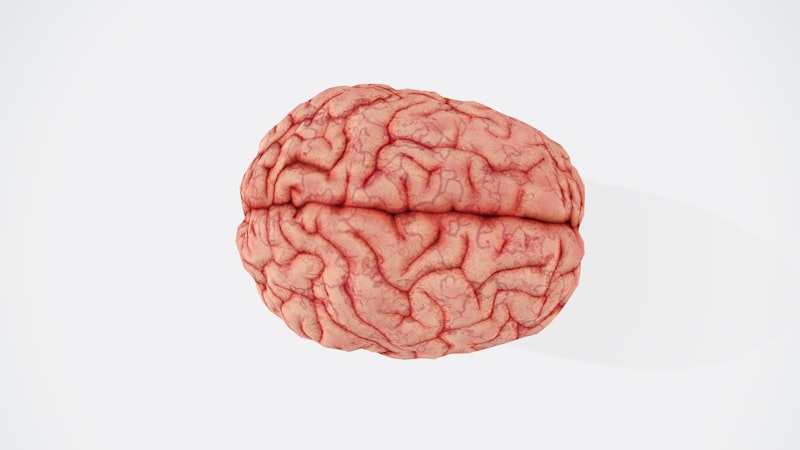
The term pleasure center refers not to a single, monolithic anatomical location, but rather to multiple different regions of the brain that, when activated, elicit feelings of intense gratification, satisfaction, or reward. This concept emerged prominently in the mid-20th century following groundbreaking experiments involving intracranial self-stimulation (ICSS). These experiments demonstrated that certain neural circuits possess powerful reinforcing properties, leading organisms, primarily laboratory animals, to repeatedly perform an action solely for the sake of receiving electrical current delivered directly to these areas. While the early terminology suggested the existence of discrete areas dedicated purely to generating hedonic states, modern neuroscience has refined this view, recognizing these regions as integral components of the broader central reward system. This system is fundamentally involved in motivation, learning, and survival, mediating the drive to seek out necessary resources such as food, water, and reproductive opportunities.
Understanding the pleasure center requires differentiating between the subjective experience of pleasure (or liking) and the motivational drive to obtain the stimulus (or wanting). Early research often conflated these two distinct psychological phenomena, treating any behaviorally reinforcing brain stimulation as evidence of pure satisfaction. However, the complexity of these circuits dictates that the observed self-stimulation behavior is often indicative of powerful reinforcement mechanisms and motivational salience rather than an exclusive measure of subjective delight. Therefore, the term is now commonly referred to as the reward center, emphasizing its role in guiding behavior through positive reinforcement loops, which may or may not be accompanied by conscious feelings of pleasure.
The functional definition of the pleasure center revolves around its capacity to sustain highly demanding operant behavior. The very presence of these circuits underscores the evolutionary necessity of internal mechanisms that prioritize behaviors crucial for survival and propagation. These systems are highly adaptable and responsive to internal physiological states and external environmental cues, ensuring that appropriate behaviors are prioritized. The anatomical areas involved, such as the Nucleus Accumbens (NAcc) and the Ventral Tegmental Area (VTA), form the core pathways for this reinforcement, utilizing key neurotransmitters, most notably dopamine, to signal the predictive value and reinforcing quality of a stimulus. The initial, somewhat simplistic nomenclature of a “pleasure center” has thus evolved into a comprehensive neurobiological model of reward processing.
Historical Foundations: The Pioneering Work of James Olds
The concept of the pleasure center was famously proposed by James Olds, an American psychologist, working in collaboration with Peter Milner in 1954. Their seminal research marked a pivotal moment in the history of neuroscience and psychology, providing the first direct evidence that internal brain mechanisms could drive complex, goal-directed behavior entirely independent of external biological rewards. The discovery was, to some extent, serendipitous. Olds and Milner were initially attempting to map areas of the rat brain that mediated aversion and avoidance behaviors, but during one trial, an electrode was mistakenly placed in a different region—the septal area, a structure connected to the limbic system.
When the rats were given the opportunity to self-administer the electrical stimulation by pressing a lever, they exhibited intense, persistent, and highly focused behavior. The animals would press the lever hundreds or even thousands of times per hour, often foregoing food, water, or sleep to continue stimulating the implanted electrode. This extraordinary persistence led Olds and Milner to conclude that they had stumbled upon a circuit that produced a highly desirable, presumably pleasurable, internal state. They posited the existence of a neural substrate dedicated to generating satisfaction, which they termed the “pleasure center.” This discovery immediately provided a powerful biological framework for understanding motivation and the underlying mechanisms of reinforcement learning, revolutionizing behavioral psychology.
The initial findings were rapidly replicated and expanded upon, demonstrating that the stimulation-seeking behavior was extremely potent, often surpassing the motivational power of natural rewards. Subsequent mapping studies identified a wide array of regions that supported self-stimulation, extending from the basal forebrain through the hypothalamus and into the brainstem, specifically mapping the pathway known as the Medial Forebrain Bundle (MFB). While Olds’ initial interpretation focused heavily on the hedonic quality of the stimulation, his work undeniably established the crucial role of internal neural circuits in mediating behavior and laid the groundwork for decades of research into the neurobiology of motivation, addiction, and affective disorders.
Intracranial Self-Stimulation (ICSS) Methodology
Intracranial Self-Stimulation (ICSS) is the fundamental experimental paradigm used to define and study the function of the pleasure center pathways. The technique involves surgically implanting fine electrodes into specific brain regions of an animal, typically a rodent. The animal is then placed in an operant chamber equipped with a lever or response mechanism. When the animal performs the required action (e.g., pressing the lever), a brief, low-amperage electrical current is delivered directly to the targeted brain site. The rate at which the animal performs the behavior—the self-stimulation reaction rate—serves as the primary dependent measure, quantifying the reinforcing efficacy of the stimulation.
The ICSS methodology is critical because it bypasses the sensory apparatus and directly activates neural pathways, allowing researchers to isolate the reinforcement mechanisms. High response rates are interpreted as high motivational drive, reflecting the animal’s willingness to work for the stimulus. Researchers manipulate various parameters to understand the nature of the circuit. For example, by lowering the magnitude or duration of the electrical stimulation, researchers can determine the threshold necessary to sustain the behavior. The observation that self-stimulation rates differ significantly in accordance with aspects such as the intensity and frequency of the electrical pulse highlights the parametric sensitivity of these circuits and suggests that the reinforcing effect is not an all-or-nothing phenomenon, but rather a graded response influenced by the physical characteristics of the stimulus itself.
While ICSS is a powerful tool for measuring the motivational strength and reinforcing properties of neural activity, it does not directly confirm the subjective experience of pleasure. The method measures the appetitive phase of reward processing—the ‘wanting’ or seeking behavior—rather than the consummatory phase or the ‘liking’ response. The animal is demonstrating strong drive, but researchers must infer the internal state. This limitation is central to the ongoing debate regarding whether the areas supporting ICSS are true “pleasure centers” or, more accurately, drive or motivation centers. Despite this nuance, ICSS remains indispensable for studying how pharmacologically active agents, especially drugs of abuse, modulate the sensitivity of the reward pathway.
Key Neuroanatomical Structures Involved
The anatomical substrate of the pleasure center, or reward pathway, is a complex, interconnected circuit, primarily comprising the mesolimbic dopamine pathway. This pathway originates in the midbrain and projects forward into the forebrain, integrating motivational signals with cognitive and motor outputs. The three primary structural components are the source, the main pathway, and the key target. The source is the Ventral Tegmental Area (VTA), a dense collection of dopaminergic neurons located in the midbrain. These neurons are responsible for synthesizing and releasing dopamine, the primary neurotransmitter associated with predicting reward and signaling salience.
The axons of the VTA neurons bundle together to form the Medial Forebrain Bundle (MFB), which serves as the principal anatomical conduit for the reward signal. The MFB is an extremely effective site for ICSS, often yielding the highest lever-pressing rates, because electrical stimulation here simultaneously activates numerous dopaminergic fibers projecting to multiple forebrain targets. This diffuse activation ensures a powerful reinforcing signal. The main terminal region of this system, and arguably the most crucial structure related to the original concept of the pleasure center, is the Nucleus Accumbens (NAcc). The NAcc acts as the critical interface between motivation and action, receiving VTA dopamine input and integrating it with glutamatergic signals from the cortex and hippocampus.
Beyond the core VTA-NAcc circuit, other structures contribute significantly to reward processing, including the prefrontal cortex (PFC), which is vital for planning and evaluating long-term reward outcomes, and the amygdala, which mediates the emotional significance of reward cues. The lateral hypothalamus also plays a role in feeding and satiety rewards. The complexity of these interconnections explains why self-stimulation in one area often yields similar behavioral outcomes to stimulation in a seemingly distant area: they are all functionally linked within the overarching reward circuit. The combined activity of these multiple different regions ensures that the reinforcement signal is robust, context-dependent, and highly influential over behavior.
Pharmacological and Neurotransmitter Modulations
The functional efficacy of the pleasure center is overwhelmingly dependent on neurotransmitter activity, particularly the release of dopamine. Dopamine is not strictly the “pleasure molecule,” but rather the primary signaling agent for reward prediction error and motivational salience. When a rewarding event occurs, or when an animal performs an action that leads to reinforcement, the VTA releases a surge of dopamine into the NAcc. This signal serves to stamp in the preceding behavior, making it more likely to be repeated. Drugs of abuse, such such as cocaine, amphetamines, and nicotine, exert their powerful addictive properties precisely by hijacking this system, dramatically increasing dopamine levels in the NAcc and thus generating an unnaturally intense and persistent reinforcement signal.
While dopamine drives the “wanting” or seeking component of reward, other neurotransmitter systems are responsible for the hedonic or “liking” component. Endogenous opioid peptides, such as enkephalins and endorphins, play a crucial role in mediating the subjective feeling of pleasure. These opioid systems operate primarily in specific subregions of the NAcc and the ventral pallidum, sometimes referred to as hedonic hotspots. When these areas are chemically stimulated with opioid agonists, animals exhibit increased appetitive behaviors and observable indices of pleasure, such as characteristic facial expressions in some species. This distinction between the dopaminergic drive (wanting) and the opioid-mediated affect (liking) is central to modern reward theory, explaining why dopaminergic lesions can abolish the motivation to seek reward without necessarily eliminating the capacity to enjoy a reward once consumed.
Furthermore, glutamatergic inputs from cortical structures modulate the VTA-NAcc pathway, providing contextual information and regulating the intensity of the dopaminergic response. Imbalances in these modulatory systems are hypothesized to underlie various psychopathologies, including addiction and depression. For instance, chronic stress or drug use can lead to maladaptive synaptic plasticity within the pleasure center, resulting in a persistent hyperexcitability of the reinforcement circuits that prioritizes drug-seeking behavior above all natural rewards. The intricate interplay of dopamine, opioids, GABA, and glutamate underscores the biochemical complexity that supersedes the simple concept of a single electrical “on/off” switch for satisfaction.
Variability, Criticism, and the Search for Pure Satisfaction
A significant challenge to the early interpretation of the “pleasure center” was the inherent variability observed in the ICSS response. As noted in the original research, the self-stimulation reaction rate differs in accordance with aspects such as the duration and magnitude of the electrical stimulation. If the stimulation truly activated a pure, invariant pleasure center, one might expect a consistent, maximal response. Instead, researchers found that the rate of responding could be finely tuned by adjusting the current intensity, pulse frequency, and electrode placement, suggesting the measurement was sensitive to the strength of the motivational signal, not merely the presence of satisfaction.
A primary criticism arising from this variability and the behavioral observations is that the presence of pure satisfaction centers has not been definitively recognized. Critics argue that the behavior observed during ICSS is more akin to an extreme form of compulsive drive or seeking behavior rather than the enjoyment of a hedonic state. Animals often appear agitated, restless, and focused entirely on pressing the lever, a behavioral profile more consistent with powerful motivation (wanting) than relaxed contentment (liking). If the stimulation were purely pleasurable, one might expect the animal to pause and savor the sensation, but instead, the behavior is often highly frenetic and repetitive, suggesting a high-priority motivational drive that is immediately extinguished upon cessation of the electrical current.
This critical perspective forced a necessary theoretical shift. Researchers began to understand that the brain’s reward system is fractionated into functionally distinct components. While the dopaminergic system clearly mediates the motivational aspect—the urgency to obtain the stimulus—the subjective, affective experience of pleasure is mediated by separate, though interacting, neurochemical systems, primarily opioid circuits. Therefore, the ICSS paradigm, while invaluable for studying reinforcement, is limited in its capacity to measure hedonic affect directly. The search for a neural region that exclusively and reliably signals subjective satisfaction, independent of motivational drive, remains a complex area of research, confirming that the initial model was an oversimplification of a highly specialized and distributed neural network.
Distinguishing Pleasure from Reward: A Modern Perspective
The modern neuroscientific understanding has largely superseded the term “pleasure center” with the more accurate and comprehensive term, the Reward System. This conceptual shift acknowledges that reward processing is a complex, multi-stage mechanism that includes components that are dissociable both functionally and anatomically. Reward is broadly defined as anything that an organism will work to obtain, which falls into three main psychological components: learning (predictive conditioning), motivation (wanting or seeking), and affect (liking or pleasure).
The distinction between “wanting” and “liking” is crucial. Dopamine primarily drives the “wanting” component, encoding the motivational value and predicting the utility of a reward. This system is robustly activated by ICSS and forms the basis of addictive cravings. In contrast, the “liking” component, which corresponds to the actual subjective affective experience of pleasure, is mediated by opioid and endocannabinoid systems in specific subcortical zones. This separation explains why individuals with Parkinson’s disease, who have depleted dopamine levels, may lose the motivation to seek out enjoyment (reduced wanting) but can still report enjoying a pleasant stimulus once it is encountered (intact liking).
Therefore, when the original content states that the reward center is the term commonly referred to, it reflects this necessary evolution in terminology. The reward system encompasses the entire process—from initial seeking behavior mediated by dopaminergic circuits to the final consummatory satisfaction mediated by opioid systems. This framework recognizes the complexity and variability inherent in the neural response, acknowledging that the intense self-stimulation behavior observed in early experiments measured the profound motivational power of the neural circuit rather than an exclusive center for pure, unadulterated pleasure.
Clinical Relevance and Pathological Implications
The functional integrity of the pleasure center, or reward system, holds immense clinical relevance, particularly in the understanding of addiction, depression, and compulsive disorders. The ability of addictive substances to directly and forcefully activate the dopaminergic mesolimbic pathway provides the neurobiological mechanism for pathological reinforcement. Repeated exposure to drugs of abuse leads to long-lasting neuroplastic changes within the NAcc and PFC, causing a sensitization of the “wanting” system. This results in intense cravings and compulsive seeking behavior, even when the substance no longer delivers the same level of hedonic pleasure, demonstrating a critical disconnect between wanting and liking in the addicted brain.
Conversely, dysfunction within this system is implicated in affective disorders such as depression. A hallmark symptom of major depressive disorder is anhedonia, the diminished capacity to experience pleasure from previously rewarding activities. Neuroimaging studies often reveal hypoactivity in key components of the reward pathway, suggesting a failure of the system to generate sufficient motivational drive or hedonic response to natural stimuli. Therapeutic interventions, including pharmacological agents and techniques like Deep Brain Stimulation (DBS), often target components of the reward circuit, such as the NAcc or related regions, in an attempt to restore balance and normalize the signaling of motivational and affective states, thereby mitigating symptoms of anhedonia and severe depression.
The study of the pleasure center has moved beyond mere structural mapping to inform interventions designed to correct dysregulated reward processing. Understanding how variability in stimulation parameters (as highlighted by ICSS research) translates into clinical outcomes is crucial for optimizing neuromodulation techniques. For example, DBS protocols often involve carefully titrating the electrical stimulation parameters to achieve maximum therapeutic benefit with minimal side effects, mirroring the sensitivity observed in the initial animal models. Thus, the legacy of the “pleasure center” research is a comprehensive model of reward neurobiology that provides essential targets for treating some of the most debilitating disorders involving motivation and affective processing.