Environmental Psychology: How Playgrounds Shape Young Minds
Scientifically Reviewed · Dr. Marwa Abd-Alazim · August 27, 2026
Review Criteria & Clinical Standards
This content undergoes rigorous scientific peer-review and medical editorial standards at Arab Psychology Network to ensure clinical accuracy, validity, and compliance with evidence-based guidelines from leading psychological and healthcare authorities (APA / WHO).
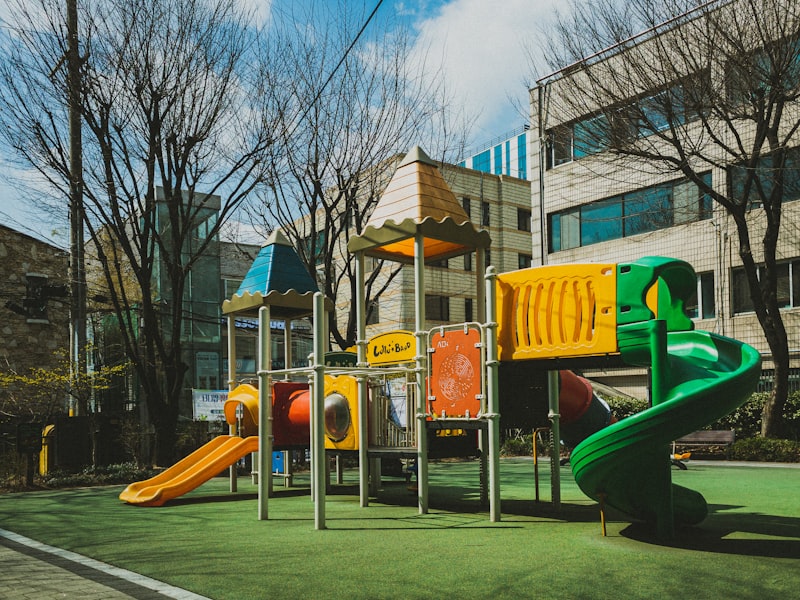
Defining Playground Design and its Psychological Context
Playground design, viewed through the lens of developmental psychology, is far more complex than simply arranging equipment in an open space. It is defined as the deliberate modeling and configuration of recreational areas for children, specifically intended to influence, stimulate, and optimize their spontaneous play behavior. This modeling encompasses the selection of materials, the spatial arrangement of zones, and the incorporation of elements that evoke specific psychological responses. A playground is fundamentally a structured environment where children negotiate social rules, test physical limits, and develop cognitive strategies, making its design a crucial factor in early childhood development outcomes. The quality of the design directly mediates the type, duration, and complexity of interactions children engage in, moving beyond mere recreation to become a vital laboratory for social and emotional learning and skill acquisition.
Historically, the focus was often exclusively on safety and efficiency, resulting in playgrounds characterized by fixed, standardized, and often sterile equipment, such as traditional swings and slides placed on uniform surfaces. However, contemporary psychological research emphasizes the necessity of environments that foster divergent thinking, problem-solving, and adaptive behavior. A modern understanding of playground architecture integrates principles from environmental psychology, urban planning, and child development theory to create what are often termed “play landscapes.” These environments are designed not just to occupy children, but to provide rich, layered, and open-ended experiences that cater to various developmental stages and learning styles simultaneously. The ultimate success of a design is measured by its capacity to elicit various forms of play, including physical, constructive, dramatic, and rule-based games, ensuring a truly holistic developmental impact on the users.
Crucially, the intentional structure of these recreational zones is directly linked to behavior modification and emotional regulation. If the environment is monotonous or lacks sufficient challenge, play often becomes repetitive, less imaginative, and can sometimes escalate into aggressive behavior due to boredom or sensory deprivation; conversely, a richly textured environment encourages sustained attention, cooperative interaction, and complex narrative formation. The overall goal is to create a setting where perceived risk is balanced with actual safety, encouraging children to push their boundaries and explore their physical capabilities without undue danger. This delicate and intentional balance ensures that the child develops a robust sense of competence and mastery, which are essential psychological components of self-esteem, autonomy, and self-efficacy. Therefore, playground design acts as a powerful, non-verbal curriculum that fundamentally shapes motor skills, spatial awareness, and critical executive functions.
The Role of Affordances in Play Behavior
The concept of affordances, originating from the work of ecological psychologist James J. Gibson, is central to effective, psychologically informed playground design. Affordances refer to the potential actions that an environment offers to an individual, based on their physiological and cognitive capabilities. In the context of play, this means that a well-designed space must offer a wide, perceivable, and enticing range of possibilities for interaction—climbing, hiding, sliding, swinging, balancing, or manipulating loose parts—that are appropriate for children of varying ages and abilities. For instance, a simple, non-uniform hill affords rolling, running up, sliding down, or viewing the landscape from an elevated position, offering multiple interaction points unlike a fixed, manufactured ladder which primarily affords only vertical climbing. The richness and diversity of affordances directly correlate with the complexity and duration of play, encouraging creativity, adaptation, and prolonged engagement among users. If a design lacks complexity or versatility, the affordances become limited, inevitably leading to stagnant, repetitive play patterns and reduced overall interest.
Designing for high affordance requires a philosophical shift away from singular-purpose equipment toward multi-functional, ambiguous structures. Psychologically, equipment that can be used in numerous, often unintended ways encourages imaginative and symbolic play, which is vital for cognitive development. For example, a timber fort structure might afford climbing (gross motor skill development), hiding (solitary or social play), or serving as a spaceship or castle (dramatic role-play). Designers must meticulously analyze the relationship between the child’s body dimensions, developing motor capabilities, and the environmental features to ensure the affordances are challenging yet attainable. If the challenge level is too low, children quickly exhaust the possibilities and lose interest; if it is perceived as too high or overwhelmingly difficult, it evokes frustration or fear, leading to avoidance behavior. Therefore, the gradient of affordances must be finely tuned and layered to promote continuous learning and progressive skill acquisition across the entire age range intended for the play space.
Furthermore, affordances must be considered in the context of material science and maintenance strategies. Natural materials like wood, sand, water, and earth offer fundamentally different and often richer affordances than manufactured plastic or metal structures. Sand, for example, affords digging, molding, sifting, and transport, promoting intricate fine motor skills, mathematical concepts (volume), and highly detailed constructive play. When designers incorporate modular or “loose parts” systems—such as large blocks, tires, ropes, or pipes—they significantly increase the potential affordance spectrum of the environment. These materials allow children to actively redesign and reconstruct their environment, transforming them from passive recipients of the design into active co-creators of their play experience. This empowerment is a key psychological benefit, fostering a profound sense of ownership, control, and agency over the immediate play space.
Designing for Diverse Personalities: The Spectrum of Play
A crucial realization in modern playground architecture, deeply informed by temperament theory, is the necessity of accommodating the full spectrum of children’s personalities and temperaments. These range widely, from the highly adventurous, extroverted, and risk-taking child to the quiet, reserved, contemplative, and sensitive child. The success of a holistic design lies in its equitable distribution of zones that specifically appeal to these different inherent psychological needs. As the foundational principle states, “The playground design was set up purposely to allow for children with all types of personalities, from adventurous to reserved, to enjoy.” Achieving this requires a strategic shift away from monolithic, open-field designs toward intentionally segmented and specialized areas that facilitate choice.
For the adventurous and sensation-seeking child, the design must robustly incorporate elements that provide high levels of vestibular (balance and spatial orientation) and proprioceptive (body awareness) input. This includes tall climbing structures, fast and long slides, spinning equipment, and areas that require significant physical coordination, dynamic movement, and rapid risk assessment. These zones satisfy the innate drive for challenge, excitement, and physical mastery. However, equally critical are the provisions made for the reserved or introverted child, who may find large, chaotic, and loud central spaces overwhelmingly stimulating. These children often thrive in micro-environments designed specifically for withdrawal, quiet observation, and small-group or solitary interaction. Examples include quiet nooks, tunnels, dense plantings or willow structures, elevated observation decks, or small sensory gardens where they can engage in sustained, focused, or parallel play without the intense pressure and demands of large, high-energy group dynamics.
The spatial layout must facilitate seamless and intuitive transitions between these high-energy and low-energy zones. A truly successful playground design employs a graduated transition: moving from high-energy, open central spaces (e.g., a large rope climbing net or a splash pad) to lower-energy, peripheral spaces (e.g., a reading bench area, a designated sand pit corner, or a building block station). This carefully managed flow ensures that a child can autonomously regulate their sensory input and social engagement levels. The design effectively supports the development of self-regulation, a vital executive function skill, by giving the child agency to choose their environment. By offering explicit choice and physical control over the setting, the playground validates different necessary modes of interaction, ensuring that all children, regardless of their dominant personality type or sensory thresholds, feel comfortable, appropriately challenged, and deeply engaged, thereby maximizing the comprehensive developmental potential of the space.
Integrating Risk and Challenge in Modern Play Environments
The integration of perceived risk and appropriate challenge is perhaps the most intensely debated and critically important aspect of contemporary, psychologically informed playground design. Psychological research and epidemiological data strongly support the notion that eliminating all forms of risk is counterproductive to healthy development, often leading to detrimental outcomes such as risk aversion, poor hazard perception, increased anxiety, and a failure to develop effective coping strategies. The central concept is not to introduce unnecessary danger or injury potential, but to engineer structures that offer “managed risk,” where the child must actively assess their physical and cognitive abilities, make rapid decisions about potential consequences, and experience the feeling of overcoming a genuine physical or mental obstacle. This critical decision-making process is foundational for developing resilience, self-confidence, and sound judgment necessary for navigating the complexities of adult life.
Managed risk elements can include structures with irregular and variable surfaces, higher-than-average climbing walls, water features with varying flow and depth, or equipment that allows complex and less predictable movement patterns (e.g., rope bridges, unstable log walks, or inclined netting). These structures demand and refine the child’s utilization of adaptive motor planning and spatial reasoning. When a child successfully navigates a challenging obstacle, they experience a profound, internal increase in self-efficacy, often described as the “mastery experience.” Conversely, standardized, low-risk, and highly prescriptive equipment often results in intellectual and physical boredom, which paradoxically can lead children to seek out genuinely dangerous behaviors outside the intended play area in search of adequate sensory and motor stimulation. Therefore, the design must prioritize psychological stimulation and cognitive engagement over absolute physical rigidity and standardization.
Furthermore, the most advanced designs should incorporate elements that allow children to manipulate the environment to increase or decrease the challenge level themselves. For example, providing large, movable loose materials like logs, stones, or crates allows children to build their own unique obstacles, exercising constructive play alongside dynamic risk assessment and negotiation. The challenge is also inherently related to cognitive load; features such as mazes, puzzle paths, or structures that require navigational mapping (e.g., complex multi-story towers) actively engage spatial reasoning and working memory. By ensuring the environment consistently presents novel, solvable, and engaging problems, the playground acts as a powerful catalyst for cognitive flexibility, proving convincingly that risk is not the inherent antithesis of safety, but rather a necessary, integrated component of developmental learning when thoughtfully and expertly engineered.
Sensory Integration and Accessibility in Design
An effective, high-quality playground must be meticulously designed as a complex sensory landscape, appealing purposefully to all seven recognized sensory systems—visual, auditory, tactile, olfactory, taste (though limited in application), vestibular (system of balance and spatial orientation), and proprioceptive (the sense of body awareness and force). Sensory integration refers to the neurological process that organizes and interprets sensation from one’s own body and from the external environment, making it possible to use the body effectively and purposefully within that environment. Poor or dysfunctional sensory integration can manifest as significant difficulties in motor coordination, attention regulation, emotional reactivity, and overall functional performance, particularly in children with diagnoses along the developmental spectrum.
To support rich tactile engagement, optimal designs incorporate widely varied textures (smooth metal, rough wood, soft sand, pliable rubber, varying plantings, and water elements). Auditory stimulation is enhanced through musical elements, wind chimes, sound tubes, or acoustic structures that amplify and redirect natural sounds, while simultaneously ensuring that there are quiet, contained zones to prevent sensory overload and provide retreat. Vestibular and proprioceptive input, which are crucially important for balance, gravitational security, and body awareness, are maximized through specialized equipment that involves rotation, inversion, linear acceleration, and deep pressure (e.g., spinning platforms, climbing walls with tightly spaced grips, or compression tubes designed for squeezing). A truly inclusive and psychologically informed design recognizes that providing these varied and regulated sensory inputs is essential and beneficial for all children, not just those with formally identified sensory processing differences or disorders.
Accessibility, frequently mandated by civil rights legislation, extends far beyond mere basic physical access (such as ramps and accessible safety surfacing). Psychologically, genuine accessibility means designing play opportunities that are intrinsically engaging, challenging, and available for children with diverse physical, cognitive, and sensory abilities. This comprehensive approach includes incorporating transfer systems onto play equipment, ground-level activity panels, swings with high-back supports, and tactile wayfinding maps for orientation. The governing design philosophy should be one of universal design, where equipment and experiences are seamlessly integrated so that children of all abilities can play side-by-side without functional segregation. Segregated or parallel play structures diminish the profound developmental benefits of social integration and reciprocal learning; therefore, accessible design must be seamless, central to the overall aesthetic, and foundational to the social function of the entire play space.
The Impact of Natural Elements vs. Manufactured Structures
The philosophical and practical debate between incorporating natural play elements (often termed nature play or adventure playgrounds) versus relying solely on fixed, manufactured structures has profound psychological implications for childhood development. A large body of empirical research strongly suggests that exposure to nature, even in small, managed urban doses, significantly reduces stress hormone levels, improves directed attention and concentration spans, and fosters greater creativity and divergent problem-solving skills. Natural playgrounds, which purposefully utilize elements like varied topography (hills, dips), mature trees, loose water features, and readily available natural materials (logs, stumps, rocks, soil), offer highly open-ended play opportunities that standardized manufactured equipment often inherently lacks. These rich environments promote deeper engagement with the ecosystem, facilitate scientific observation, and encourage a sustained sense of wonder and complex exploration.
Manufactured equipment, while essential for standardized safety compliance and providing specific motor challenges, can sometimes limit imaginative scope due to its fixed, singular purpose (e.g., a molded plastic rocket ship remains aesthetically and functionally a rocket ship). Natural elements, conversely, are profoundly ambiguous and transformative in the child’s mind; a fallen log can serve as a bridge, a quiet seat, an imaginary horse, or a boundary marker for a game. This powerful ambiguity requires the child to actively project meaning and narrative onto the object, thereby exercising their symbolic reasoning and imaginative capacities far more vigorously. Furthermore, natural environments tend to change dramatically seasonally and weather-wise, offering continuous novelty and varied challenges that static metal or plastic structures cannot replicate, thus sustaining long-term interest and complex engagement over years of use.
The optimal modern design strategy integrates both elements judiciously and harmoniously. Blending the reliability, structural integrity, and safety provided by certified manufactured equipment (e.g., safe swings, specific climbing components) with the open-ended, ambiguous, and therapeutic qualities of natural elements (e.g., strategic planting, ephemeral water creeks, deep sand pits) creates a superior hybrid environment. This blending ensures compliance with essential safety standards while maximizing the psychological and developmental benefits derived from unstructured play. The presence of diverse vegetation and earth elements also serves a crucial regulatory function, providing necessary cooling shade, absorbing impact, and offering soft, varied textures that contrast favorably with the hardness of urban structures, contributing significantly to a calmer, more bio-diverse, and ultimately more psychologically restorative play setting.
Psychological Outcomes of Optimal Playground Design
The ultimate measure of successful playground design is the observation of positive, measurable psychological and developmental outcomes in the children who regularly utilize the space. When a playground is optimally designed—meaning it caters effectively to diverse personalities, offers a rich spectrum of affordances, and manages risk and challenge appropriately—it serves as a powerful, preventative intervention tool. Key, research-supported outcomes include significantly enhanced social competence, improved emotional and sensory regulation abilities, superior physical health indicators, and advanced development of critical executive functioning skills necessary for academic success.
In terms of social development, a well-designed space inherently fosters cooperative play, negotiation, and conflict resolution skills. Features that inherently require collaboration, such as large team swings, complex pulley systems, or collaborative building zones, necessitate shared goal setting, communication, and compromise. Children learn to manage frustration, share limited resources, and understand different social perspectives in real-time. Emotionally, the sustained opportunity to successfully navigate a challenging physical or social environment leads to verifiable increases in confidence, tenacity, and a marked reduction in learned helplessness. The deep, internal feeling of mastering one’s environment and physical abilities is a core psychological driver of sustainable self-esteem and competence.
Crucially, the complex cognitive demands imposed by navigating a multi-layered, non-uniform playground—planning an optimal route, estimating distances and force required, avoiding moving obstacles, and adapting to unexpected changes—translate directly into improved executive functions, including enhanced working memory capacity, stronger inhibitory control, and greater cognitive flexibility. Longitudinal studies have consistently shown that children who engage frequently in free, unstructured play within rich, stimulating environments demonstrate higher levels of creativity and advanced divergent problem-solving compared to those restricted solely to highly prescriptive, adult-directed activities. Thus, optimal playground design is not merely about promoting physical fitness, but fundamentally about creating the requisite physical and social conditions necessary for complex cognitive architecture to flourish, effectively setting the stage for future academic achievement and robust life success.