Social Drinking: The Hidden Psychology of Bonding
Scientifically Reviewed · Dr. Marwa Abd-Alazim · August 27, 2026
Review Criteria & Clinical Standards
This content undergoes rigorous scientific peer-review and medical editorial standards at Arab Psychology Network to ensure clinical accuracy, validity, and compliance with evidence-based guidelines from leading psychological and healthcare authorities (APA / WHO).
Introduction and Definitional Clarity
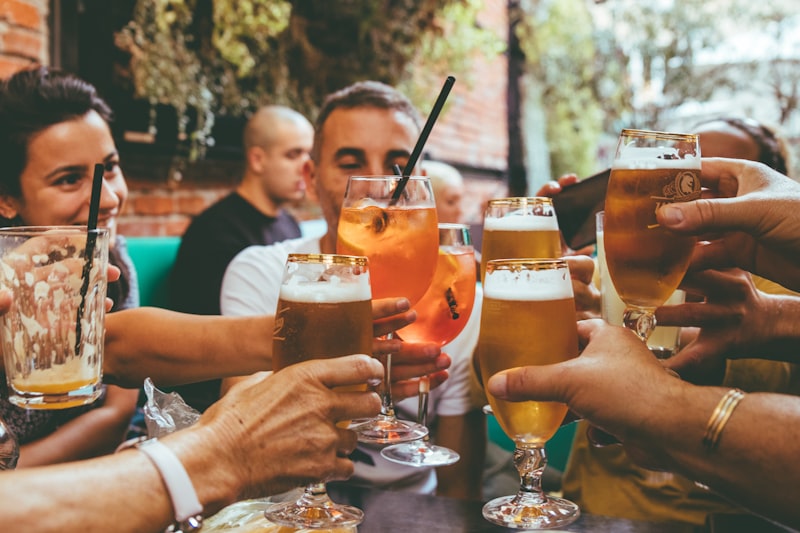
The term social drinker refers fundamentally to an individual whose consumption of alcoholic beverages is strictly confined to specific social contexts, events, or gatherings where alcohol is culturally normative or expected. This definition hinges less on the quantity consumed during an event and more on the patterned restriction of use, differentiating this behavior from regular, solitary, or dependency-driven consumption. Unlike individuals who may consume alcohol daily or privately to manage stress, cope with underlying psychological issues, or satisfy a physical craving, the social drinker exhibits robust control over the environment and timing of their drinking. Their relationship with alcohol is generally instrumental; it serves as a social lubricant or an accompaniment to shared experience, rather than a necessary element for daily functioning or emotional regulation. The critical defining characteristic, as illustrated by common usage, is the complete absence of alcohol consumption when the individual is alone or when the specific social catalyst is removed. This pattern places the social drinker firmly outside the diagnostic criteria for Alcohol Use Disorder (AUD) because the consumption is situational, predictable, and typically lacks negative physical, professional, or interpersonal consequences.
From a sociological perspective, the classification of social drinker highlights the pivotal role of group dynamics and cultural norms in dictating substance use. This behavior is learned and maintained through social reinforcement, where drinking is perceived as a means of bonding, establishing rapport, or conforming to group expectations during celebrations, dinners, or networking events. The identity associated with being a social drinker often carries a positive connotation of moderation and responsibility, contrasting sharply with the stigma sometimes attached to heavy or solitary drinking patterns. Furthermore, the term implies an intentionality; the individual chooses to drink based on the environment, not compulsion. For example, a person identified as a social drinker, such as the anecdotal example of ‘Joe and Lyn,’ would not maintain alcohol supplies in their private residence because the stimulus for drinking—the presence of friends or a public event—is absent, thereby underscoring the environmental control mechanism inherent in this specific pattern of consumption. Understanding this restrictive context is paramount to distinguishing this behavior from the much broader spectrum of low-risk drinking or occasional heavy use, which might still involve solitary consumption.
The psychological underpinning of the social drinking pattern is strongly rooted in expectancy theory and social learning theory. Individuals who identify as social drinkers hold specific expectations about the positive social outcomes of moderate alcohol consumption—such as lowered inhibitions leading to easier conversation, enhanced mood, or increased acceptance by peers. These perceived benefits reinforce the behavior, but only within the established social boundaries. Conversely, they typically lack the expectation that alcohol is necessary for managing personal distress or that it offers meaningful rewards outside of the group setting. This cognitive framework supports the maintenance of moderation and prevents the escalation to problematic use, provided the individual’s cognitive control and environmental boundaries remain intact. The self-monitoring required to maintain this restricted pattern is a key indicator of executive function being successfully applied to substance use choices.
Behavioral Characteristics of Social Drinking
The behavioral profile of the social drinker is characterized by predictability, infrequency, and moderation, all dictated by external social cues. Consumption is typically episodic, tied rigidly to specific calendar events, celebratory occasions, or planned gatherings, such as holiday parties, wedding receptions, or weekly dinner engagements with colleagues. A hallmark of this pattern is the lack of spontaneous or unplanned drinking. The individual consciously decides whether to consume alcohol based entirely on the external social environment, often adhering strictly to unwritten rules regarding the acceptable number of drinks per session, ensuring that the primary goal remains social engagement and not intoxication. This intentional moderation is a crucial differentiator from heavy episodic drinking, even if the latter also occurs in a social setting, because the social drinker prioritizes behavioral control and the avoidance of public impairment that could compromise their social standing or personal safety.
A primary characteristic involves the quantification of consumption, which generally falls within recommended low-risk guidelines, though this can vary culturally. The social drinker typically consumes alcohol at a pace and volume intended to achieve a mild, pleasant buzz that facilitates conversation and relaxation—often referred to as ‘social lubrication’—without resulting in noticeable physical impairment or cognitive deficits. They are highly attuned to their own limits and the limits of the group, utilizing environmental cues, such as the availability of food, the passage of time, or the declining sobriety of their companions, to signal when they should cease consumption. This sophisticated self-regulation mechanism is often absent in individuals struggling with dependency, who may find external limits difficult to heed. Furthermore, the beverage choices themselves are often determined by the social setting; for instance, choosing wine at a formal dinner or a single beer at a sporting event, rather than seeking out high-concentration alcohol or consuming large volumes indiscriminately, further reflecting behavioral intentionality and context dependence.
The behavioral control exhibited by social drinkers extends beyond the immediate drinking episode into the realm of preparation and recovery. They rarely experience hangovers severe enough to interfere with professional or personal duties because their intake is managed to avoid significant physiological distress. Furthermore, the social drinker does not engage in anticipatory drinking behaviors or planning their day around the next opportunity to drink, which is often seen in problematic patterns. Instead, the behavior is reactive to the social invitation. Key indicators of this controlled behavior include:
- The ability to stop drinking easily after one or two servings, even when alcohol is freely available.
- The absence of cravings or withdrawal symptoms when alcohol is unavailable for extended periods.
- The capacity to choose non-alcoholic alternatives in social settings without feeling deprived or pressured.
- The motivation for drinking is explicitly linked to enhancing a shared experience, not escaping reality or alleviating emotional discomfort.
These behaviors solidify the distinction between controlled social participation and habits that verge toward dependency.
Social Context and Group Dynamics
The social context provides the necessary and sufficient conditions for the social drinker’s behavior. In many Western cultures, alcohol consumption is deeply woven into the fabric of communal rituals, acting as a powerful symbol of celebration, camaraderie, or affiliation. Drinking in a social setting is often interpreted as a gesture of trust and shared experience, facilitating group cohesion and lowering interpersonal barriers. For the social drinker, the act of drinking is less about the pharmacological effects of ethanol and more about the symbolic participation in a collective ritual. Refusing a drink in certain social circles can sometimes be interpreted as a rejection of the group, which illustrates the profound social pressure and normative influence at play. The social drinker navigates this pressure by participating moderately, thereby gaining the social benefits of inclusion without succumbing to the negative consequences of excessive consumption, successfully balancing conformity and personal responsibility.
Group dynamics play a critical role in shaping the specific frequency and volume of social drinking. Social norms, which are the implicit rules governing behavior within a group, dictate the acceptable level of intoxication. In groups where moderate consumption is the standard, the social drinker will typically maintain that standard. Conversely, if the group norm shifts towards heavy drinking (e.g., during college years or specific occupational settings), the individual may temporarily increase their intake to match the environment, although the fundamental definition of a social drinker requires that this increased intake remains situational and does not spill over into solitary or problematic use. Social comparison theory also applies here, as individuals constantly compare their drinking behavior to that of their peers to assess whether their own consumption is appropriate, usually concluding that their moderate, controlled pattern is the healthy mean compared to both abstinence and excessive use.
The function of alcohol as a perceived social lubricant is central to the maintenance of this pattern. Many individuals believe that alcohol reduces anxiety related to social interaction, making conversation flow more easily and reducing feelings of awkwardness or shyness. For the social drinker, this effect is carefully managed. They seek the initial reduction of social anxiety but avoid the subsequent impairment that would hinder their ability to navigate complex social interactions. Therefore, the benefit they seek is situational facilitation, not complete disinhibition. This controlled engagement reinforces the notion that alcohol is a tool for social enhancement rather than an escape mechanism. This dynamic means that if the social interaction is already comfortable or low-stakes, the motivation to drink diminishes significantly, further proving the context-dependent nature of the behavior.
Distinction from Problematic Alcohol Use
The most crucial differentiation in the study of substance use patterns lies in separating the social drinker from individuals exhibiting problematic alcohol consumption, including Alcohol Abuse or Alcohol Use Disorder (AUD). The core distinction rests on the presence or absence of negative life consequences and the element of compulsion or physical dependence. For the social drinker, alcohol use does not interfere with professional performance, family responsibilities, physical health, or legal standing. Their consumption is non-pathological, characterized by complete control and the ability to abstain without distress. Conversely, problematic use is defined by the inability to cut back, the development of tolerance, withdrawal symptoms upon cessation, prioritizing drinking over other life duties, and continued use despite recurring negative outcomes. The social drinker can effortlessly maintain the boundary between controlled use and dependence, a boundary that is fundamentally lost or blurred for those with AUD.
A key criterion often highlighted in defining the social drinker is the lack of internal craving or psychological dependency. They do not experience intrusive thoughts about drinking during non-social hours, nor do they feel anxiety or irritation stemming from the absence of alcohol. This is starkly contrasted with dependency, where drinking transitions from being a choice to a physical or psychological necessity required to feel normal or to avoid the discomfort of withdrawal. The example provided—that social drinkers ‘had no alcohol in the house’—perfectly illustrates this point: the lack of private storage reflects the lack of private need. If alcohol is not present, the social drinker is indifferent, whereas an individual with dependence might expend significant energy seeking it out or feeling profoundly uncomfortable without it. This absence of internal drive is perhaps the single most protective factor against the development of AUD among social drinkers.
Furthermore, the concept of loss of control is central to pathological drinking. Problematic drinkers often intend to consume moderately but find themselves unable to stop once they start, frequently leading to blackouts or risky behavior. The social drinker, however, consistently demonstrates the capacity for volitional control over both the initiation and cessation of consumption. Even in high-pressure environments, they maintain the cognitive awareness necessary to enforce their self-imposed limits. This sustained control is often measured clinically through self-report questionnaires focusing on negative consequences (e.g., missed work, arguments, health issues related to drinking). The results for the social drinker typically show a near-zero score on such measures, reinforcing the non-harmful nature of their behavioral pattern. Therefore, while social drinking is not abstinence, it is a stable, low-risk pattern of substance use anchored by self-monitoring and the absence of compulsive internal drives.
Psychological and Sociological Functions
The practice of social drinking fulfills several important psychological and sociological functions for the individual. Psychologically, it often serves as a temporary, context-specific release of stress or inhibition. Attending a social event can be inherently taxing, and a small amount of alcohol may facilitate a transition from a professional or stressful mindset to a relaxed, convivial one. This function is strictly situational; the relief sought is related to the immediate social context (e.g., nervousness about meeting new people), not chronic life stress that would necessitate daily self-medication. The social drinker utilizes the substance to enhance existing positive experiences rather than to numb negative emotions, differentiating their motivation from those who use alcohol as an escape mechanism. The psychological reward is tied directly to the positive feedback received from the social environment—laughter, acceptance, and shared fun—rather than the chemical effect itself.
Sociologically, social drinking is a powerful tool for identity construction and maintenance. By participating moderately, the individual signals their adherence to cultural norms and their competence in managing potentially risky substances, projecting an image of being well-adjusted and responsible. In certain professional or high-status circles, the ability to engage in moderate social drinking is viewed almost as a necessary component of professional networking and social integration. To abstain entirely might imply rigidity or past struggles with alcohol, while overindulgence signals a lack of control; thus, the social drinker successfully occupies the middle ground, which is often the most socially advantageous position. This identity management is a key driver for the perpetuation of the behavior, as the social rewards of being perceived as a controlled participant reinforce the pattern.
Furthermore, the ritualized nature of social drinking provides structure and predictability to social interactions. From the moment a toast is offered to the decision to order the last round, these rituals provide clear social scripts that reduce ambiguity and facilitate smooth interaction. The shared experience of consuming alcohol builds collective effervescence—a sociological term describing the sense of heightened emotional energy and belonging that occurs in group settings. For the social drinker, engaging in these rituals strengthens interpersonal bonds and solidifies membership within the group. The focus remains on the collective activity and shared enjoyment, making the substance itself merely a medium for the interaction rather than the primary focus of the evening. When these rituals are internalized and performed appropriately, they serve to stabilize the individual’s position within their social network.
The Spectrum of Drinking Behavior
It is crucial to recognize that social drinking is not a static, binary state but occupies a fluid position along the continuum of alcohol consumption behaviors, ranging from complete abstinence to severe AUD. While the strict definition implies controlled, situational use, the practical realities of life mean that a social drinker might occasionally deviate into heavier consumption based on environmental factors, such as attending an open bar wedding or celebrating a major professional milestone. However, what defines the consistent social drinker is the rapid return to their baseline moderate pattern immediately following such a deviation. This ability to revert to controlled consumption—often termed “recalibration”—is a critical indicator that they lack the underlying physiological or psychological vulnerability to dependency.
The fluidity of this spectrum necessitates an understanding of low-risk drinking guidelines established by public health organizations. These guidelines, which often specify limits on drinks per week and drinks per occasion, provide an empirical benchmark against which the social drinker’s behavior can be assessed. While social drinkers typically fall within or below these low-risk thresholds, any significant or sustained increase in frequency or volume—even if still confined to social settings—signals a shift toward potentially hazardous use. Factors that can push an individual along the spectrum include chronic, unmanaged stress, changes in their social circle (e.g., joining a group with heavier drinking norms), or the onset of mental health issues like depression or anxiety, which might create a motivation to use alcohol for self-medication, thus breaking the core definitional boundary of ‘social only’ consumption.
Understanding the spectrum also involves contrasting the social drinker with the heavy drinker who only drinks socially. The latter may restrict consumption to weekends or gatherings but consistently exceeds low-risk guidelines during those episodes, leading to intoxication, impaired judgment, and potential harm, even if they do not exhibit dependency symptoms. The social drinker is defined by both the context (social only) and the typical volume (moderate). Public health efforts often focus on educating both groups: encouraging heavy social drinkers to reduce volume, and helping social drinkers monitor external stressors that could lead to an escalation of frequency or a shift toward solitary use. The key preventive measure for the social drinker is vigilance against the encroachment of consumption into private life or its transformation into a coping mechanism for internal psychological states.
Conclusion and Future Considerations
The concept of the social drinker serves as a vital sociological category, effectively partitioning controlled, non-pathological substance use from the spectrum of problematic behaviors. It highlights the significant role that social context, group norms, and self-efficacy play in regulating alcohol intake. The primary defining characteristics—situational restriction, moderate volume, and the absence of internal compulsion or negative life consequences—make the social drinker a model for controlled substance use within a culture that frequently incorporates alcohol into social ritual. The study of this group offers important insights into protective factors against addiction, particularly emphasizing the power of cognitive control and the maintenance of clear environmental boundaries.
Future research concerning social drinking must focus on refining the definition in an increasingly complex environment, particularly addressing the rise of digital and virtual social interactions. As social contexts expand beyond physical gatherings, understanding how these new environments affect the restriction and moderation of consumption will be crucial. Furthermore, longitudinal studies tracking how the pattern of social drinking shifts over the lifespan—especially in response to major life transitions such as marriage, parenthood, or retirement—are necessary to better predict the transition, if any, to hazardous consumption. Public health initiatives must also leverage the positive identity associated with being a moderate social drinker to promote low-risk guidelines, reinforcing the notion that participation in alcohol-centric events does not necessitate intoxication.
Ultimately, the social drinker represents a significant portion of the population whose relationship with alcohol is defined by choice, moderation, and control. Their behavior demonstrates that the consumption of alcohol is not inherently pathological when it is kept strictly within controlled, external boundaries and does not serve as a primary means of emotional regulation or coping. Maintaining this distinction remains paramount for accurate clinical assessment and effective public health communication, ensuring that interventions are appropriately targeted toward those whose use patterns have crossed the critical threshold into dependency or harm. The stability and consistency of the restricted drinking pattern are the enduring hallmarks of this behavioral identity.