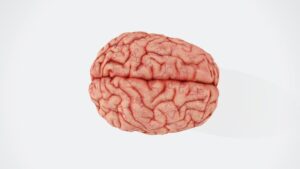
Psychophysiology: Where Your Mind Meets Your Body
Scientifically Reviewed · Dr. Marwa Abd-Alazim · September 17, 2026
Review Criteria & Clinical Standards
This content undergoes rigorous scientific peer-review and medical editorial standards at Arab Psychology Network to ensure clinical accuracy, validity, and compliance with evidence-based guidelines from leading psychological and healthcare authorities (APA / WHO).

Introduction to Psychophysiology: Definition and Scope
Psychophysiology is formally defined as the scientific discipline dedicated to investigating the physiological underpinnings of psychological processes. It serves as a critical bridge between the traditionally separate fields of physiology, which focuses on biological function, and psychology, which explores behavior and mental processes. This interdisciplinary approach seeks to uncover the precise mechanisms by which bodily systems, such as the autonomic nervous system, the central nervous system, and the endocrine system, interact with and reflect subjective psychological states, including emotion, cognition, attention, and motivation. Unlike physiological psychology or neuroscience, which often manipulate the physical body (e.g., through lesions or pharmacological interventions) to observe behavioral changes, psychophysiology typically focuses on measuring physiological responses non-invasively as dependent variables while manipulating psychological states or stimuli. This methodology allows researchers to gain profound insights into the moment-to-moment dynamics of the mind-body connection, revealing how observable bodily changes correlate with internal, subjective experiences and objective cognitive performance.
The fundamental premise of psychophysiology rests on the principle of psychophysiological correspondence, asserting that every psychological event, whether conscious or unconscious, is accompanied by a measurable change in the biological state of the organism. The scope of psychophysiological inquiry is remarkably broad, spanning analyses from basic reflexive responses to highly complex, integrated cognitive functions. For instance, researchers might examine subtle shifts in skin conductance to assess emotional arousal during decision-making tasks, or monitor specific patterns of brain electrical activity (Event-Related Potentials, or ERPs) to pinpoint the exact timing of attentional resource allocation during perception. By meticulously documenting these biological correlates, psychophysiology offers an objective lens through which to study internal mental states that are otherwise inaccessible to direct observation. This focus on objective, quantifiable biological data significantly enhances the rigor and validity of psychological research, moving beyond reliance solely on self-report measures and observational data.
A crucial distinction must be made between psychophysiology and related fields like cognitive neuroscience. While both utilize physiological measures, psychophysiology traditionally emphasizes peripheral physiological measures (heart rate, respiration, electrodermal activity) that reflect the activity of the Autonomic Nervous System (ANS), whereas cognitive neuroscience often prioritizes central measures (fMRI, EEG) reflecting brain structure and function. However, modern research increasingly integrates both central and peripheral measures, acknowledging that psychological phenomena are realized through a tightly integrated biological system. The ultimate goal remains consistent: to understand the complete feedback loop—how the brain processes information, how that processing manifests in bodily changes, and how those bodily changes, in turn, influence subsequent psychological functioning. This holistic view is essential for developing comprehensive theories of human behavior and experience, positioning psychophysiology as an indispensable component of contemporary psychological science by providing robust indices of physiological states corresponding to psychological phenomena.
Historical Foundations and Early Pioneers
The roots of modern psychophysiology can be traced back to the late 19th century, coinciding with the establishment of psychology as an independent empirical discipline. A pivotal figure in this development was Wilhelm Wundt, who is often credited with founding the world’s first experimental psychology laboratory in Leipzig in 1879. Wundt’s early research program included systematic studies of the physiological parameters associated with basic psychological processes, such as reaction time and sensory perception. He utilized instruments like the kymograph to record physiological changes, seeking to establish precise, measurable relationships between external stimuli and internal, subjective experiences. Although Wundt’s primary focus was often on introspection, his insistence on using objective measurements of bodily responses—however rudimentary by modern standards—laid the groundwork for the scientific methodology that defines psychophysiology today, emphasizing quantification, reliability, and experimental control in the observation of psychological states.
Following Wundt, the early 20th century saw significant progress, particularly in the study of autonomic responses. Researchers like Ivan Pavlov, while primarily focused on learning theory, demonstrated the profound links between psychological conditioning and measurable physiological changes, such as salivation. Concurrently, the study of emotional responses received a major boost from figures like Walter Cannon and Hans Selye. Cannon’s work on the “fight or flight” response provided a coherent theoretical framework linking external threats (a psychological appraisal) to massive, coordinated changes in the sympathetic nervous system (a physiological outcome), including changes in heart rate and adrenaline release. This work firmly established the relevance of autonomic arousal as a key index of psychological state, particularly stress and emotion. These seminal investigations demonstrated that physiological measurement was not merely an interesting adjunct to psychological study, but a necessary tool for understanding fundamental psychological phenomena, paving the way for the exploration of psychosomatic interactions.
The development of reliable electronic amplification systems in the mid-20th century marked a technological turning point, enabling the precise and continuous measurement of subtle electrical signals generated by the body. The advent of the Electroencephalogram (EEG), originally developed by Hans Berger, allowed researchers to non-invasively monitor electrical activity in the brain, providing the first temporal window into the neural correlates of consciousness and sleep. Similarly, the refinement of techniques to measure electrodermal activity (EDA), sometimes referred to as skin conductance response (SCR) or galvanic skin response (GSR), provided a sensitive index of sympathetic arousal that became a cornerstone of lie detection research and basic emotion studies. These technological advances transformed psychophysiology from a niche area into a rapidly expanding research domain, allowing for the systematic exploration of complex psychological phenomena with unprecedented physiological precision and establishing the rigorous standards for data collection still used today.
Core Methodologies: Peripheral Physiological Measures
Peripheral psychophysiology centers on the measurement of bodily changes mediated primarily by the Autonomic Nervous System (ANS) and the endocrine system, reflecting general states of arousal, stress, and affective engagement. One of the most frequently employed peripheral measures is Cardiovascular Activity, which includes metrics such as heart rate (HR), heart rate variability (HRV), and blood pressure (BP). Changes in HR are rapid and responsive to attentional demands, emotional stimuli, and physical effort. For instance, a decrease in heart rate, known as cardiac deceleration, often accompanies the orienting response—a shift in attention towards a novel or significant stimulus—while cardiac acceleration is typically associated with increased effort, anxiety, or defense responses. HRV, which analyzes the beat-to-beat variability of the heart, provides a sophisticated measure of the balance between the sympathetic (mobilizing) and parasympathetic (calming) branches of the ANS, offering critical insights into regulatory capacity and stress resilience, particularly in response to challenging psychological stimuli.
Another critical peripheral measure is Electrodermal Activity (EDA), also known as skin conductance. EDA measures changes in the electrical conductivity of the skin, primarily mediated by the sweat glands, which are almost exclusively innervated by the sympathetic nervous system. Since sweat gland activity is highly responsive to emotional and cognitive arousal, EDA serves as an exceptionally sensitive, albeit non-specific, index of psychological intensity or engagement. Researchers use tonic EDA (skin conductance level) to gauge general arousal over time, and phasic EDA (skin conductance response) to measure specific, transient responses to discrete stimuli, such as a surprising image or a difficult cognitive challenge. The utility of EDA lies in its direct link to the sympathetic nervous system’s activation, providing an objective measure of arousal that is less susceptible to conscious control or distortion than self-report, making it a reliable indicator of motivational significance.
Beyond cardiovascular and electrodermal responses, psychophysiology utilizes measures of Somatic Activity and Oculomotor Responses. Somatic measures include electromyography (EMG), which records the electrical activity generated by skeletal muscles. EMG is crucial for studying emotional expression, such as facial muscle activity (e.g., the corrugator muscle for frowning or the zygomatic muscle for smiling), and for measuring tension associated with stress or motor preparation. Oculomotor measures, tracked using eye-tracking technology, provide details on gaze direction, fixation duration, and pupil diameter. While gaze parameters reflect attentional allocation, pupillometry—the measurement of pupil size—is a sensitive indicator of cognitive load and processing effort. When individuals engage in more difficult tasks or encounter highly salient information, their pupils dilate, reflecting an increase in noradrenergic activity in the brain, which is closely linked to arousal and cognitive mobilization. Integrating these multiple peripheral metrics allows researchers to build a comprehensive, multi-system profile of the body’s response to psychological stressors and tasks, enhancing the ecological validity of laboratory findings.
Core Methodologies: Central Physiological Measures
Central psychophysiology focuses on techniques that directly measure the activity of the Central Nervous System (CNS), providing detailed spatial and temporal information about brain function during psychological tasks. The Electroencephalogram (EEG) remains a foundational technique, utilizing electrodes placed on the scalp to measure the summed electrical activity generated by millions of neurons. EEG offers exceptional temporal resolution, measuring neural events on the order of milliseconds, which is crucial for tracking the rapid sequence of information processing in the brain. Researchers analyze spontaneous EEG activity by examining frequency bands (e.g., alpha, beta, theta, delta) associated with different states of consciousness, such as alertness, relaxation, or sleep. EEG is particularly invaluable in cognitive studies due to its ability to track transitional states with high fidelity and is often utilized to examine functional connectivity between different brain regions during sustained cognitive effort.
A specialized and powerful application of EEG is the measurement of Event-Related Potentials (ERPs). ERPs are small voltage fluctuations in the EEG that are consistently triggered by specific sensory, motor, or cognitive events. By averaging the EEG signal across multiple trials, random background noise is filtered out, revealing characteristic waveforms (components) linked to specific stages of processing. These components are typically named by their polarity (P for positive, N for negative) and their typical timing in milliseconds (e.g., N100, P300, N400). For instance, the P300 component is often associated with the allocation of attentional resources and working memory updating, serving as a neural metric of stimulus evaluation, while the N400 reflects semantic processing difficulty or expectation violation. ERPs provide high temporal resolution markers that allow researchers to delineate the precise timing and sequence of cognitive operations, such such as identifying whether a cognitive deficit lies in early perceptual encoding or later stages of decision-making and memory access.
While EEG and ERPs excel in temporal precision, techniques like Functional Magnetic Resonance Imaging (fMRI) and Positron Emission Tomography (PET) offer superior spatial resolution, though traditionally slower temporal resolution. fMRI measures brain activity indirectly by detecting changes in blood oxygenation (the BOLD signal), which correlates with increased neural metabolism. Although fMRI is often classified strictly under cognitive neuroscience, its integration with psychophysiological paradigms is increasingly common, especially when investigating the neural bases of emotional regulation or complex decision-making, where the structural localization of activity is critical. Researchers often combine central measures (e.g., EEG or fMRI data) with simultaneous peripheral measures (e.g., heart rate or skin conductance) in a multimodal approach. This synergy allows for the simultaneous analysis of where (fMRI), when (EEG/ERP), and how intensely (EDA/HRV) a psychological event is processed and manifested across the entire psychophysiological system, providing a robust, highly detailed picture of the underlying mechanisms necessary for comprehensive understanding.
The Psychophysiology of Emotion and Affective States
The study of emotion is arguably the most historically central domain within psychophysiology. Emotional states—such as fear, happiness, disgust, or anger—are universally characterized by dramatic, rapid, and measurable physiological changes. Psychophysiological research aims to differentiate these affective states based on their unique physiological profiles and to understand the relationship between subjective feeling (experience) and objective bodily change (expression). Seminal theories, such as the James-Lange theory, hypothesized that bodily changes precede and cause the feeling of emotion, a relationship that psychophysiology directly tests. Modern research focuses on dimensional models of emotion, primarily valence (pleasantness vs. unpleasantness) and arousal (intensity). Measures like EDA and heart rate are excellent indices of arousal level, regardless of valence, while specific facial EMG patterns (corrugator muscle activity for negative valence, zygomatic muscle activity for positive valence) can often differentiate the affective quality of the experience, offering objective metrics for complex subjective feelings.
Specific emotions elicit highly characteristic physiological signatures that researchers utilize to study affective processing. For example, studies investigating fear and anxiety consistently show heightened sympathetic activation, evidenced by rapid increases in heart rate, elevated skin conductance, and increased startle reflex magnitude (measured via orbicularis oculi EMG). This pattern reflects a generalized state of defensive mobilization. Conversely, positive emotional states, such as happiness or contentment, are often associated with parasympathetic dominance or a balance of the ANS, frequently yielding higher heart rate variability, which suggests better emotional regulation capacity and physiological flexibility. Research on emotional processing often employs highly standardized stimulus sets, such as the International Affective Picture System (IAPS), while simultaneously recording ERP components. For instance, emotionally salient stimuli often elicit an enhanced Late Positive Potential (LPP) in the ERP waveform, reflecting sustained, prioritized processing of motivationally relevant information, whether the stimulus is inherently positive or negative in nature.
Furthermore, psychophysiology plays a critical role in understanding emotion regulation—the ability to influence which emotions we have, when we have them, and how we experience and express them. Techniques like reappraisal (reinterpreting a situation to alter its emotional impact) and suppression (inhibiting emotional expression) have distinct psychophysiological correlates. Studies show that cognitive reappraisal, often considered an adaptive strategy, typically leads to a reduction in both subjective distress and physiological arousal (e.g., lower EDA and blunted LPPs), indicating successful down-regulation of the affective response. In contrast, expressive suppression, while seemingly reducing outward signs of emotion, can paradoxically maintain or even increase internal physiological effort and sympathetic activation, suggesting it is a less efficient regulatory strategy that comes with a measurable biological cost. By measuring these objective bodily costs, psychophysiology provides empirical evidence supporting the efficacy and potential drawbacks of different emotion regulation techniques, crucial for both basic research and clinical intervention development.
Cognitive Psychophysiology: Attention, Memory, and Decision Making
Cognitive psychophysiology applies physiological measurement techniques to investigate complex mental processes, seeking to understand the neural and bodily correlates of thinking, learning, and deciding. The study of attention is particularly well-served by psychophysiological measures. The aforementioned orienting response, characterized by cardiac deceleration and transient EDA increase, reflects the automatic allocation of attention to novel or significant stimuli. Furthermore, the P300 component of the ERP is a key marker of attentional resources, with its amplitude often reflecting the amount of attention paid to a stimulus and its latency indicating the speed of classification. By manipulating task difficulty, cognitive load, or stimulus salience and observing corresponding changes in these physiological markers, researchers can precisely dissect the mechanisms underlying selective attention, sustained attention, and distraction, gaining insights into the efficiency and capacity of the cognitive system.
In the domain of memory research, psychophysiological methods are utilized to distinguish between implicit (unconscious) and explicit (conscious) memory processes, and to monitor the encoding, storage, and retrieval phases. For instance, the “old/new effect” in ERPs—where previously encountered items elicit a larger late positive component than new items—provides an objective index of recognition memory retrieval, often occurring even when participants are unsure of their conscious memory report. Furthermore, peripheral measures can index memory consolidation: increased sympathetic arousal (EDA) during or immediately following learning is often associated with better long-term memory formation, reflecting the crucial role of emotional salience and stress hormones in stabilizing memory traces. This integration demonstrates how psychophysiological arousal serves not only as a response marker but also as a modulator of cognitive efficiency and the long-term biological embedding of new information.
Psychophysiology is also indispensable in the investigation of decision-making and executive function. Researchers frequently use the Error-Related Negativity (ERN) and the Feedback Negativity (FN) or Medial Frontal Negativity (MFN) components of the ERP to track error monitoring and performance evaluation. The ERN is elicited immediately after an incorrect response, reflecting a rapid, unconscious neural mechanism for detecting conflict or error, usually originating in the anterior cingulate cortex. Furthermore, measures of cardiovascular activity, particularly heart rate variability, have been linked to prefrontal cortex function, suggesting that individuals with higher HRV—indicating greater regulatory capacity—often exhibit better performance in complex executive tasks requiring cognitive flexibility and inhibitory control. By providing real-time data on internal processing states, psychophysiological measures offer robust alternatives to relying solely on reaction times and accuracy scores, which only reflect the end product of a cognitive process, allowing for deeper mechanistic understanding.
Clinical and Applied Psychophysiology
The utility of psychophysiology extends far beyond basic research, finding significant application in clinical settings for the diagnosis, assessment, and treatment of mental health disorders. Many psychological disorders, including anxiety disorders, depression, and post-traumatic stress disorder (PTSD), are characterized by distinct patterns of physiological dysregulation. For example, individuals with generalized anxiety disorder often exhibit chronically heightened sympathetic arousal (elevated tonic EDA and reduced HRV), reflecting a state of persistent hypervigilance and impaired regulatory control. PTSD patients frequently show an exaggerated startle response and altered patterns of fear conditioning and extinction, which can be precisely measured using EMG and EDA, aiding in objective diagnosis and tracking symptom severity over time. By providing quantifiable biomarkers, psychophysiology helps to refine diagnostic criteria and differentiate between disorders that may present with superficially similar behavioral symptoms, thereby improving diagnostic specificity.
Psychophysiological techniques are also integral to evaluating the efficacy of psychotherapeutic interventions. A successful intervention, whether cognitive-behavioral therapy (CBT) or pharmacotherapy, should ideally normalize the underlying physiological dysregulation associated with the disorder. Researchers use measures of arousal and emotional reactivity to objectively assess treatment outcomes. For instance, if CBT successfully helps an individual manage social anxiety, one would expect to see a corresponding reduction in their skin conductance response and heart rate acceleration when exposed to social stressors in a laboratory setting, indicating diminished fear response. This objective assessment complements subjective self-report data, offering a powerful validation of clinical improvement and helping to identify which specific components of therapy are driving physiological normalization, facilitating evidence-based practice.
Perhaps the most direct clinical application is Biofeedback and Neurofeedback. Biofeedback involves providing individuals with real-time, continuous physiological information (e.g., heart rate, muscle tension, or skin temperature) and teaching them to voluntarily control these responses to improve health and performance. This is highly effective in treating conditions like chronic pain, hypertension, and migraine headaches by training patients to increase parasympathetic tone or reduce muscle tension. Neurofeedback, a specialized form of biofeedback utilizing EEG, trains individuals to alter specific patterns of brain wave activity associated with cognitive or emotional states. For example, training individuals to increase specific frequency bands might promote relaxation, while training related to specific ERP components (like enhancing the P300) might improve attention and cognitive control in conditions like ADHD. These applied techniques demonstrate the powerful clinical potential of leveraging the mind-body connection through objective physiological monitoring and self-regulation training.
Conclusion and Future Directions
Psychophysiology is a dynamic and fundamentally interdisciplinary field that has successfully established the critical link between internal psychological processes and measurable physiological activity. From its early reliance on basic mechanical devices to today’s sophisticated integration of high-density EEG, fMRI, and continuous wearable sensors, the field continues to evolve, providing increasingly precise tools for understanding human experience. The core strength of psychophysiology lies in its ability to generate objective data on typically subjective phenomena, offering invaluable insights into the mechanisms underlying emotion, cognition, personality, and behavioral health. The continued development of methodologies ensures that psychophysiology remains at the forefront of efforts to create comprehensive, biologically grounded theories of human behavior and mental functioning.
Looking toward the future, psychophysiology is poised to benefit immensely from ongoing technological advancements. The rise of wearable and ambulatory psychophysiology—using small, non-obtrusive sensors embedded in clothing or devices—is transforming the field by enabling the collection of high-quality physiological data in naturalistic, real-world environments rather than being restricted to the laboratory. This ecological validity is crucial for understanding how psychological states manifest in daily life, especially regarding stress, sleep, and social interaction, and for identifying triggers for clinical symptoms outside controlled settings. Furthermore, the integration of machine learning and advanced data analytics is allowing researchers to process massive datasets derived from multimodal recordings, enabling the identification of complex, subtle physiological signatures that might predict clinical outcomes or cognitive performance with greater accuracy than ever before, moving the field towards predictive modeling.
In summary, psychophysiological techniques are increasingly utilized across the spectrum of human investigation—from fundamental research on consciousness and perception to practical applications in diagnostics, mental health treatment, and performance enhancement. Advances in technology have enabled researchers to explore the relationship between physiological responses and psychological states with greater accuracy and precision. As such, psychophysiological techniques are being increasingly used in clinical settings to diagnose and treat mental health disorders, assess the efficacy of psychotherapies, and gain insight into psychological phenomena, solidifying its role as an essential component of modern psychological and neuroscientific research.
References
The following references support the foundational and applied principles discussed in this entry:
- Bakker, A.B., Demerouti, E., & Sanz-Vergel, A.I. (2017). The psychophysiology of work and effort. Annual Review of Organizational Psychology and Organizational Behavior, 4, 427–454. https://doi.org/10.1146/annurev-orgpsych-040116-043804
- Boucsein, W. (2012). Psychophysiology: Human behavior & physiological response (4th ed.). Hoboken, NJ: Wiley.
- Kring, A.M., & Sloan, D.M. (Eds.). (2010). Emotion regulation and psychopathology: A transdiagnostic approach to etiology and treatment. New York, NY: Guilford Press.
- Lane, R.D., Reiman, E.M., Ahern, G.L., Schwartz, G.E., & Davidson, R.J. (1997). Neuroanatomical correlates of happiness, sadness, and disgust. American Journal of Psychiatry, 154(7), 926-933. https://doi.org/10.1176/ajp.154.7.926
- Cacioppo, J. T., Tassinary, L. G., & Berntson, G. G. (Eds.). (2017). Handbook of psychophysiology (4th ed.). Cambridge University Press.
- Davidson, R. J., Scherer, K. R., & Goldsmith, H. H. (Eds.). (2003). Handbook of affective sciences. Oxford University Press.