Public Territory: The Hidden Rules of Owning Your Space
Scientifically Reviewed · Dr. Marwa Abd-Alazim · September 5, 2026
Review Criteria & Clinical Standards
This content undergoes rigorous scientific peer-review and medical editorial standards at Arab Psychology Network to ensure clinical accuracy, validity, and compliance with evidence-based guidelines from leading psychological and healthcare authorities (APA / WHO).
Introduction and Definition of Public Territory
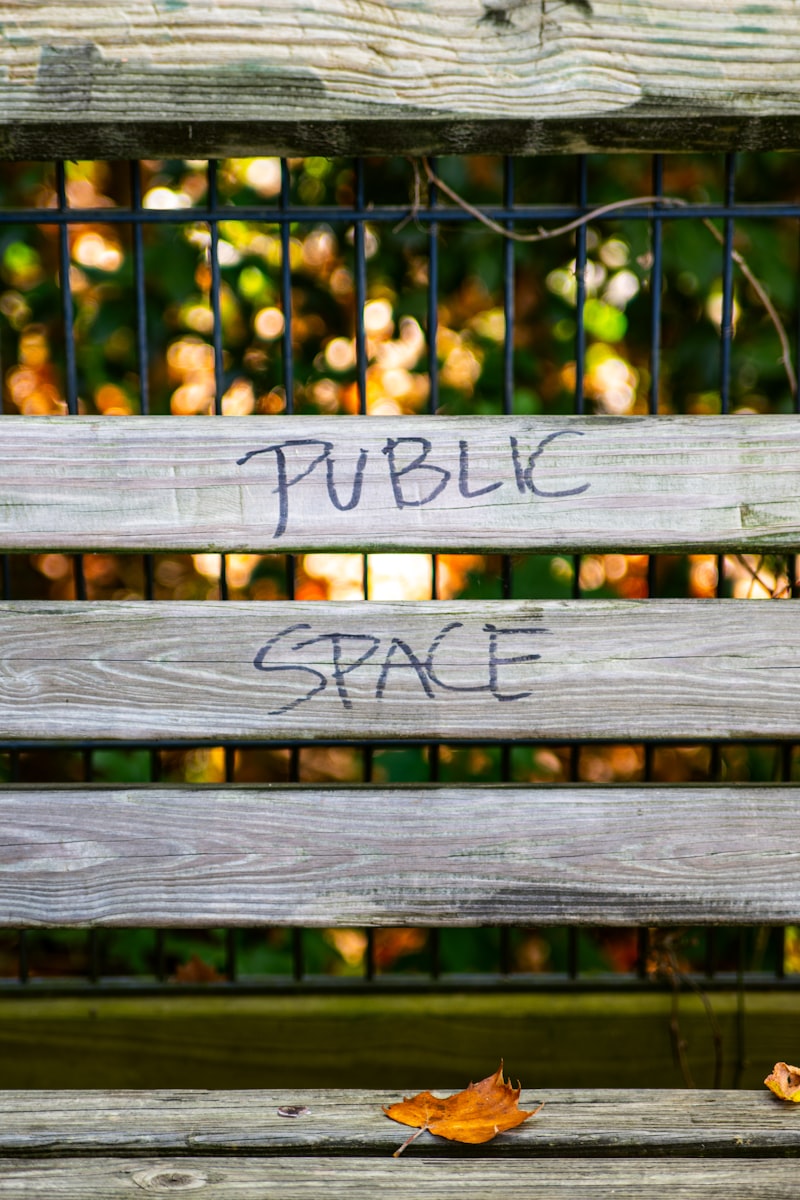
Public territory is a crucial concept within the field of social psychology, specifically relating to the study of human spatial behavior and environmental psychology. It refers to a public space that is temporarily claimed or occupied by an individual or a group, establishing a transient boundary of personal space within a communal setting. Unlike primary territories, which involve long-term ownership and high levels of control (such as a home or private office), public territory is characterized by its temporary tenure and the general understanding that the claim is contingent upon active use. For instance, the specific seating area occupied by an individual on a park bench, the segment of an escalator used for ascent, or a booth designated for dining in a restaurant are all classic examples of public territory. This temporary appropriation provides the user with a momentary sense of control and predictability in an otherwise shared and often anonymous environment.
The definition of public territory underscores the dynamic interaction between individual needs for privacy and control, and the societal norms governing shared space. These spaces are inherently permeable; while the occupant maintains temporary jurisdiction, the space remains accessible to the public once the original occupant vacates it. This contrasts sharply with secondary territory (like a reserved classroom or a preferred seat in a library), which involves moderate levels of personal identification but still lacks true ownership. Public territory, therefore, exists on the most fragile end of the territoriality continuum, requiring subtle, often non-verbal communication to signal temporary occupancy and discourage encroachment. The effectiveness of claiming public territory relies heavily on widely accepted social contracts and situational expectations that govern behavior in public spheres.
The core example illustrating this concept involves the use of personal items as boundary markers. Consider an individual riding a public bus: while the entire bus is public domain, the specific seat claimed by the rider becomes their public territory. If that rider places a purse or brief case on the adjacent seat, as in the illustrative case, they are actively extending their temporary territory and using an artifact to visually signal that the area is temporarily unavailable to others. This act transforms an open, shared space into a defended, if fleeting, personal zone, fulfilling a fundamental human need to manage social density and maintain a comfortable level of interpersonal distance, known scientifically as proxemics.
Theoretical Foundations of Territoriality in Public Spaces
The concept of public territory is deeply rooted in the broader study of human territoriality, initially formalized by researchers like Irwin Altman, who proposed a comprehensive typology categorizing human territories based on permanence and ownership. Altman defined territoriality as the exclusive and persistent possession of a space, object, or idea by an individual or group, often involving behavioral displays of defense or ownership signaling. Public territory fits into this framework as the least permanent form, characterized by its high degree of public access and its reliance on situational definition rather than legal or institutional rights. This reliance on situational context links public territory closely to the work of sociologist Erving Goffman, particularly his concepts concerning staged interaction and the management of personal space during public encounters.
Further theoretical support comes from the field of proxemics, pioneered by anthropologist Edward T. Hall. Hall’s work detailed the culturally variable distances people maintain in different social situations (intimate, personal, social, and public distances). Public territory management is essentially the practical application of negotiating these distances in crowded or shared environments. When an individual claims a segment of a public space, they are effectively attempting to shift the interaction distance from the often close and involuntary nature of public proximity toward a more controlled, socially distant zone. The temporary establishment of public territory serves as a non-verbal buffer zone, allowing the occupant to maintain their desired level of sensory input and social engagement, thereby reducing the stress associated with high-density environments.
Understanding the theoretical underpinnings also requires examining the motivational drivers behind temporary territorial claims. These claims are not merely about physical space; they are psychological mechanisms intended to enhance feelings of security, control, and personal identity. In a large, impersonal public space, claiming a small, defined area provides a focal point—a temporary refuge from the chaotic environment. This temporary possession allows the individual to organize their belongings and actions without immediate fear of intrusion, fulfilling a basic need for order and environmental mastery. The theoretical model thus views public territory as a behavioral adaptation designed to optimize personal autonomy within the constraints of shared community resources.
Characteristics and Defining Features of Public Territory
The defining characteristic that sets public territory apart is its lack of permanent residency rights. Unlike a home or office, the moment the occupant leaves a public territory, their claim is immediately invalidated, and the space reverts to general public use, available for the next person to claim. This fluid tenure requires occupants to actively and continuously signal their presence and claim, often through sustained physical presence or the strategic placement of personal markers. A second key feature is the high degree of accessibility inherent in the space; the public is generally permitted access up to the boundary established by the current occupant, and the boundaries themselves are often soft and negotiable rather than fixed and immutable.
Another defining attribute is the situational dependency of the territory. The rules governing public territory are highly specific to the context in which they occur. For example, the acceptable distance between strangers waiting in line (a linear public territory) differs significantly from the distance maintained between individuals sharing a large table in a crowded coffee shop. These rules are governed by unspoken social norms, often referred to as “display rules,” which dictate appropriate behavior for claiming, defending, and respecting temporary occupancy. Violation of these rules, such as sitting too closely to a stranger on a nearly empty bus, often elicits strong negative non-verbal reactions, demonstrating the power of these temporary norms.
Furthermore, public territories are often characterized by their low emotional investment, especially when compared to primary territories. While the temporary occupant may experience frustration if their public territory is encroached upon, the attachment is purely utilitarian and ephemeral. The claim is functional—it serves the immediate need for space, privacy, or convenience—but there is no deep-seated emotional loss when the territory is surrendered. This low investment allows for the high turnover typical of public spaces. The defining features of public territory thus combine transient use, situational rules, high permeability, and reliance on non-verbal communication for successful negotiation of the space.
Mechanisms of Public Territory Defense
Since public territory lacks formal legal or institutional protection, individuals must rely on various behavioral and artifactual mechanisms to establish and defend their claims. The most common defense mechanism involves the use of personal markers, or objects used to signal occupancy. These markers—such as coats, books, newspapers, or bags—act as silent warnings to potential intruders. The effectiveness of these markers depends heavily on the social context; a jacket draped over a chair in a crowded lecture hall is a widely accepted marker, whereas placing a single key on a large picnic table might be deemed insufficient or inappropriate for claiming the entire space. The clarity and visibility of these markers are crucial for successful defense, minimizing the need for direct, confrontational interaction.
Beyond physical objects, body orientation and posture serve as powerful non-verbal defense mechanisms. An individual may position their body in a way that maximizes the perceived area of their public territory. For example, spreading one’s legs, leaning back in a chair, or positioning oneself diagonally across two seats subtly enlarges the occupied zone. Furthermore, maintaining a focused gaze or exhibiting behaviors associated with immersion (e.g., intense reading or listening to music with headphones) signals to others that the individual is actively engaged and less receptive to social approach, thereby fortifying the boundary of the temporary territory. These non-verbal cues create a psychological barrier that respects social distance norms.
When encroachment does occur, defense mechanisms shift from preventative signaling to active response, although these responses are typically muted in public settings to avoid escalating conflict. The defense might involve a series of escalating non-verbal cues: first, a shift in posture or body tension; second, a direct, brief stare (a “glance of disapproval”); and finally, if necessary, verbal assertion, though this is rare and usually reserved for significant violations. Successful management of public territory thus requires a high degree of social competence, allowing the individual to communicate their temporary claim effectively using a combination of artifactual signs, spatial positioning, and subtle non-verbal warnings, ensuring the maintenance of their desired social distance without disrupting the flow of the public environment.
Contextual Variations: Fixed versus Fluid Public Territories
Public territories can be broadly categorized based on the stability and definition of their spatial boundaries, leading to a distinction between fixed and fluid territories. Fixed public territories are those spaces where the physical layout of the environment provides clear, built-in boundaries for occupancy. Examples include pre-defined seating areas like restaurant booths, individual desks in a co-working space, or specific chairs in a waiting room. In these environments, the claim is simplified because the physical architecture dictates the limits of the territory, reducing ambiguity about where one person’s space ends and the next begins. The defense of fixed territories primarily focuses on ensuring the space is not occupied by others, rather than constantly negotiating the boundary itself.
In contrast, fluid public territories exist in open, unstructured spaces where boundaries must be actively created and maintained by the occupant. Examples include standing areas on a train platform, the space surrounding a person standing in a crowd, or an unoccupied section of lawn in a public park. The definition of a fluid territory is highly dynamic, expanding and contracting based on the density of the surrounding population and the movement of others. Claiming a fluid territory requires more explicit and continuous behavioral effort, such as maintaining a consistent perimeter through body movement, or strategically utilizing personal space norms to keep others at bay. The constant negotiation required in fluid territories increases the cognitive load on the occupant, leading to higher rates of stress in crowded settings.
The distinction between fixed and fluid territories highlights the varying levels of control available to the occupant. In fixed settings, control is outsourced partially to the environment; the furniture or architecture supports the territorial claim. In fluid settings, control rests entirely with the individual and their ability to successfully signal their intended boundaries. Furthermore, the type of territory often dictates the nature of encroachment. Violations in fixed territories are typically direct (e.g., someone sitting at your claimed table), while violations in fluid territories are often incremental and perceived as a slow erosion of personal space (e.g., the crowd pressing closer). Effective social functioning requires individuals to rapidly assess the environmental cues to determine whether they are operating within a fixed or fluid public territory and adjust their defense strategies accordingly.
Psychological Functions of Claiming Public Territory
The temporary appropriation of public territory serves several essential psychological functions for the individual navigating complex social environments. Chief among these is the function of control and predictability. In unpredictable public settings, establishing a small, defined area of temporary sovereignty allows the individual to exert mastery over their immediate surroundings. This control reduces feelings of helplessness and anxiety associated with being surrounded by strangers, providing a psychological anchor in an otherwise chaotic context. Knowing that one’s immediate physical space is secured allows for mental relaxation and facilitates the completion of goal-directed behaviors, such as reading, working, or eating.
Secondly, public territory facilitates identity display and self-expression. While temporary, the way an individual claims and organizes their space can communicate aspects of their personality or current intentions to others. For example, a student laying out numerous textbooks and notebooks signals serious academic intent, reinforcing their temporary claim to a large table segment. Conversely, a minimalist claim signals efficiency or lack of permanence. This function allows individuals to manage the impressions they make on others, ensuring that their temporary presence aligns with their desired social role in that specific setting.
Finally, public territory is crucial for managing sensory overload and achieving psychological privacy. In densely populated areas, the constant inflow of sensory information (sights, sounds, smells) can be overwhelming. By establishing a public territory, the individual creates a temporary buffer, allowing them to filter out unwanted social intrusions and regulate the necessary level of interaction. This regulation of social input is vital for stress reduction and cognitive rest. Therefore, the simple act of placing a coat on an adjacent chair is not merely about claiming space; it is a profound psychological tool used to secure a momentary zone of sensory and social respite within the shared world.
Cultural and Societal Influences on Public Territory Norms
The definition, establishment, and defense of public territory are not universal; they are significantly mediated by cultural and societal norms. Proxemic standards vary widely across the globe, directly impacting how much space is considered appropriate for a temporary public territory. In high-contact cultures, such as those often found in Latin America or the Mediterranean, the acceptable social distance is generally smaller. Consequently, the boundaries of public territory are tighter, and individuals may tolerate closer proximity without perceiving it as encroachment. Markers used to claim space may be smaller or less explicitly defined, relying instead on direct body orientation.
Conversely, in low-contact cultures, typical of Northern Europe or North America, larger interpersonal distances are preferred, resulting in expansive public territory claims. Individuals in these societies are more likely to use clear, physical markers (e.g., placing belongings on every adjacent seat) and react more strongly to perceived boundary violations. These cultural variations extend to the interpretation of occupancy signals; what is considered a polite claim in one culture (e.g., asking permission) might be seen as unnecessary formality or even awkward in another.
Beyond national culture, societal factors like urban density and social class also influence territorial norms. In highly dense urban environments, individuals often develop tacit agreements to reduce the size of their public territories (e.g., sitting shoulder-to-shoulder on crowded subways) out of practical necessity. Furthermore, situational power dynamics can influence territorial claims; individuals perceived as having higher status may feel entitled to claim larger or more desirable public territories with fewer defense mechanisms, and their claims are often respected more readily by others, highlighting the intersection of spatial behavior and social hierarchy.
Public Territory in Modern Urban Environments
The nature of public territory is continually evolving, particularly in modern urban environments defined by high population density, technological integration, and rapid mobility. The rise of shared economy concepts and flexible workspaces has introduced new complexities to territorial claims. For instance, in a modern co-working space, the distinction between secondary (reserved) and public (open seating) territory is often blurred, requiring new norms for temporary occupancy and defense, frequently mediated by technology, such as reserving a desk via an app. This introduces a formal, digital layer of territorial defense atop traditional non-verbal cues.
Moreover, the increasing use of mobile technology profoundly affects how individuals define their public territory. Wearing large headphones, engrossed in a mobile device, or conducting loud phone calls are modern behaviors that effectively extend the psychological boundaries of a public territory, signaling both unavailability and a desire for distance. These behaviors create an auditory and visual bubble, establishing a temporary barrier that is often respected by passersby as an inviolable personal zone, even if the physical space claimed is minimal.
Addressing the challenges of managing public territory in dense urban settings requires careful urban planning and architectural design. Spaces that provide natural, fixed boundaries (such as individual charging stations or separated seating pods) can reduce social friction and the stress associated with constantly negotiating fluid boundaries. Ultimately, the effective management of public territory is essential for the smooth functioning of modern urban life, allowing millions of people to share finite resources—from bus seats to park benches—with minimal conflict, relying entirely on universally understood, though highly temporary, social contracts of spatial respect.