Pupillometry: Decoding Your Hidden Emotions
Scientifically Reviewed · Dr. Marwa Abd-Alazim · October 10, 2026
Review Criteria & Clinical Standards
This content undergoes rigorous scientific peer-review and medical editorial standards at Arab Psychology Network to ensure clinical accuracy, validity, and compliance with evidence-based guidelines from leading psychological and healthcare authorities (APA / WHO).

Introduction to Pupillometry
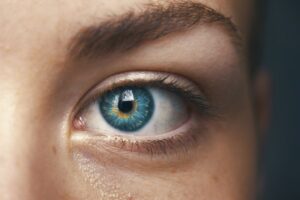
Pupillometry is the scientific measurement of the size of the pupil, the aperture in the center of the iris that regulates the amount of light entering the eye. This seemingly simple physiological measurement has profound implications across various scientific and clinical domains, offering an objective window into an individual’s cognitive, emotional, and physiological states. Far beyond merely reflecting light intensity, changes in pupil size, known as pupillary responses, are involuntary reactions controlled by the autonomic nervous system (ANS), making them invaluable indicators in psychology, medicine, optometry, and engineering. The primary instrument used for this measurement is called a pupillometer, a device designed for precise and often continuous monitoring of pupil diameter.
The study of pupillary responses extends beyond simple dilation and constriction in response to light, which is known as the pupillary light reflex. Of particular interest in psychological research are instances where pupil size changes in the absence of light variation, reflecting internal mental processes. These subtle yet measurable fluctuations provide an objective index of phenomena such as cognitive load, emotional arousal, attention, and even decision-making processes. By quantifying these changes, researchers and clinicians can gain insights into mental effort, stress levels, and neurological functioning that might not be discernible through self-report or overt behavioral observation alone, making pupillometry a powerful psychophysiological tool.
The Mechanism of Pupil Dilation and Constriction
The intricate dance of pupil dilation and constriction is primarily orchestrated by the autonomic nervous system (ANS), specifically its two branches: the sympathetic nervous system and the parasympathetic nervous system. These two systems work in opposition to control the muscles of the iris, thereby regulating pupil size. The sympathetic nervous system, often associated with the “fight-or-flight” response, mediates pupillary dilation, a process medically termed mydriasis. This occurs when the dilator pupillae muscle contracts, widening the pupil to allow more light to enter the eye, which can be advantageous in situations requiring heightened awareness or during periods of stress or excitement.
Conversely, the parasympathetic nervous system, responsible for “rest-and-digest” functions, controls pupillary constriction, known as miosis. This response involves the contraction of the sphincter pupillae muscle, which reduces the pupil’s diameter, limiting the amount of light entering the eye. While the primary function of miosis is to protect the retina from excessive light and improve depth of field, both mydriasis and miosis can also be triggered by cognitive and emotional factors, independent of ambient light. For example, increased mental effort or emotional intensity can lead to sympathetic activation and subsequent pupil dilation, offering a non-invasive physiological marker of internal states.
The key insight for psychological applications of pupillometry is that these autonomic responses are not solely tied to visual input. The brain’s processing of information, emotional responses, and the allocation of cognitive resources all feed into the autonomic nervous system, manifesting as measurable changes in pupil size. Therefore, by carefully controlling environmental light and measuring pupil diameter, researchers can infer the level of cognitive processing or emotional engagement. This makes pupillometry a particularly valuable tool in fields like psychophysiology and cognitive neuroscience, providing an objective window into the subjective experience and mental workload of an individual.
Historical Foundations of Pupillometry
The observation of pupillary changes dates back to ancient times, with early physicians like Hippocrates noting that pupil size could offer clues about a patient’s health. However, the systematic study of the pupil’s non-light-reflex responses, particularly in relation to psychological states, began to gain momentum in the 19th and early 20th centuries. Pioneering work in this area involved meticulous visual observations and rudimentary measurement techniques. Early researchers were intrigued by the pupil’s sensitivity to factors beyond light, such as emotional states and mental effort, laying the groundwork for what would eventually become modern pupillometry.
A pivotal figure in the formalization of pupillometry as a scientific discipline was Otto Lowenstein, a German-American ophthalmologist and neuroscientist. In the mid-20th century, Lowenstein developed the pupillograph, a sophisticated instrument that allowed for the continuous, objective, and precise photographic recording of pupil diameter. His extensive research, often conducted in collaboration with Irene Loewenfeld, demonstrated that pupillary responses were not only reactive to light but also highly sensitive to a range of neurological and psychological stimuli, including pain, fear, mental arithmetic, and even drug effects. This groundbreaking work moved pupillometry from anecdotal observation to a rigorous, quantitative science, establishing its potential as a diagnostic and research tool.
The evolution of technology, particularly with the advent of infrared cameras and computerized image processing in the latter half of the 20th century, significantly advanced the field. These technological innovations enabled non-invasive, high-resolution, and real-time measurement of pupil size, overcoming the limitations of earlier photographic methods. This progress democratized the use of pupillometry in research, allowing for more precise and complex studies into the intricate relationship between pupillary dynamics and various cognitive and emotional processes, solidifying its place as an indispensable tool in psychophysiology and cognitive neuroscience.
Modern Pupillometry Technology
Modern pupillometry relies on sophisticated technology to achieve accurate and reliable measurements of pupil size. These technologies can broadly be categorized into two main types: contact and non-contact pupillometers, each with its own advantages and disadvantages. Contact pupillometers, while historically more common and potentially offering higher precision, require physical contact with the eye, typically through a specialized contact lens or probe. This direct physical interaction can sometimes cause discomfort for the participant and may influence natural eye movements or responses, limiting their utility in certain research or clinical contexts where natural behavior is paramount.
Non-contact pupillometers represent the dominant technology in contemporary research and clinical settings due to their ease of use and ability to capture data without interfering with the participant. These devices typically employ an infrared light source to illuminate the eye and an imaging system, often a high-resolution camera, to capture images of the pupil. The infrared light is invisible to the human eye, ensuring that the measurement process itself does not influence the pupillary response. Advanced algorithms then process these images in real-time to precisely calculate the pupil’s diameter. These systems are often integrated into comprehensive eye-tracking devices, allowing for simultaneous measurement of gaze direction alongside pupil size, providing a richer dataset for understanding visual and cognitive processing.
The sophistication of modern non-contact pupillometers extends to their ability to track the pupil with high temporal resolution, capturing even subtle, rapid changes in pupil size. Many systems can also automatically compensate for head movements, blinks, and changes in ambient lighting, further enhancing data quality. These technological advancements have made pupillometry an accessible and robust tool for investigating a wide array of psychological phenomena, from basic attention and memory processes to complex decision-making and emotional regulation. The continuous development in hardware and software ensures that pupillometry remains at the forefront of physiological measurement techniques in psychology and related fields.
Factors Influencing Pupillometry Accuracy
The accuracy and reliability of pupillometry measurements are critical for drawing valid conclusions from research and clinical applications. Several factors can significantly influence the precision of pupillary data, requiring careful experimental design and control. One primary factor is the type of pupillometer employed; as discussed, contact pupillometers may offer slightly higher accuracy in specific contexts due to direct measurement, but their invasive nature can introduce artifacts from participant discomfort or restricted natural eye movement. Non-contact systems, while generally preferred for their unobtrusiveness, rely on sophisticated image processing and are susceptible to environmental factors.
Environmental conditions, particularly lighting, play a crucial role in pupillometry. Fluctuations in ambient light can directly trigger the pupillary light reflex, confounding measurements of cognitive or emotional responses. Therefore, experiments typically require precisely controlled and constant lighting conditions, or the use of specific algorithms to mathematically account for light changes. Furthermore, the quality of the instrument’s calibration is paramount. Regular and accurate calibration ensures that the device correctly translates captured images into precise pupil diameter measurements, minimizing systematic errors that could otherwise skew results and lead to erroneous interpretations.
Beyond instrumental and environmental factors, individual physiological and behavioral variables can also impact pupillometry accuracy. These include the participant’s natural pupil size, which can vary significantly between individuals and even within the same individual based on arousal levels or fatigue. Eyelid occlusion, blinks, and rapid eye movements can temporarily obstruct the pupil from the camera’s view, leading to data loss or inaccuracies that require robust data cleaning and interpolation techniques. Moreover, certain medications or physiological conditions can affect autonomic nervous system control over pupil size, necessitating careful screening of participants to ensure the validity of pupillary responses as indicators of psychological states. Addressing these factors through meticulous experimental control and advanced data processing is essential for maximizing the accuracy and interpretability of pupillometry data.
Diverse Applications of Pupillometry
The versatility of pupillometry has led to its widespread application across a multitude of scientific and practical domains, providing objective insights where subjective reports might fall short. In the realm of clinical diagnostics, pupillometry serves as a valuable tool for identifying and monitoring various medical conditions. For instance, abnormal pupillary responses can indicate neurological disorders, such as traumatic brain injury, stroke, or autonomic neuropathies. It is also used in ophthalmology to assess conditions like glaucoma, cataracts, and retinopathy, as well as to monitor the effects of certain medications on the visual system. The precision offered by pupillometers allows for early detection and objective tracking of disease progression or treatment efficacy.
Within psychology and cognitive science, pupillometry is indispensable for assessing cognitive performance and mental workload. As individuals engage in tasks requiring greater mental effort—such as problem-solving, memory recall, or complex decision-making—their pupils tend to dilate. This pupillary response provides a real-time, non-invasive measure of the cognitive resources being expended. Researchers utilize this phenomenon to study attention, memory, language processing, and learning, helping to understand the brain’s efficiency in various cognitive functions. Furthermore, pupillometry is employed in sleep research to assess the effects of sleep deprivation or sleep disorders on alertness and cognitive function, revealing how impaired sleep impacts mental processing.
Beyond clinical and academic research, pupillometry has found innovative applications in fields like marketing, human-computer interaction (HCI), and even education. In marketing, pupillary responses can indicate a consumer’s level of interest, engagement, or emotional reaction to advertisements or product designs, providing objective data on consumer preferences. In HCI, monitoring pupil dilation can help designers optimize user interfaces by identifying points of high cognitive strain or confusion. In educational settings, pupillometry can gauge student engagement or comprehension difficulty during learning tasks, offering insights into effective pedagogical strategies. These diverse applications underscore pupillometry’s broad utility as a window into the mind, offering quantifiable data for understanding and optimizing human experience across various contexts.
Pupillometry in Cognitive and Affective Neuroscience: A Practical Example
To illustrate the practical application of pupillometry in understanding cognitive and emotional processes, consider a scenario involving a student undertaking a series of academic tasks. Imagine a research study designed to measure the cognitive effort associated with different levels of task difficulty. The student is seated in a controlled environment with consistent ambient lighting, and their pupil size is continuously monitored by a non-contact pupillometer integrated into an eye-tracking system.
- Baseline Measurement: Before commencing the tasks, a baseline pupil diameter is established while the student rests or looks at a neutral stimulus. This provides a reference point for subsequent changes.
- Task Presentation: The student is then presented with a series of questions or problems. These tasks are designed with varying levels of cognitive load; for instance, simple arithmetic problems (low load) followed by complex logical puzzles (high load).
- Pupillary Response Observation: As the student attempts to solve an easy problem, their pupil diameter might show a modest increase from baseline. However, when a complex logical puzzle is presented, requiring intense mental effort, the pupil will typically dilate significantly, reaching its peak dilation as the student grapples with the problem. This sustained dilation indicates heightened attention and increased allocation of cognitive resources.
- Data Analysis and Interpretation: The pupillometer records these changes in real-time. Researchers analyze the magnitude and duration of pupillary dilation in response to each task type. A larger and more sustained dilation in response to the complex puzzles, compared to the simple arithmetic, objectively confirms that the complex tasks induce a higher cognitive load. This objective measure can corroborate subjective reports of difficulty or even reveal cognitive effort when participants are unaware of their own exertion.
This practical example demonstrates how pupillometry provides an invaluable, objective physiological measure of internal mental states, offering insights into how individuals process information and allocate cognitive resources. This methodology is crucial in cognitive psychology and affective neuroscience for understanding the neural underpinnings of cognitive effort, emotional regulation, and attentional processes without relying solely on subjective self-reports or overt behavioral indicators.
Connections to Related Psychological Concepts
Pupillometry is deeply intertwined with several fundamental psychological concepts and theories, serving as a critical empirical tool in various subfields of psychology. At its core, pupillary responses are manifestations of the autonomic nervous system‘s activity, making it a cornerstone of psychophysiology—the study of psychological processes and their physiological correlates. Within this broader category, pupillometry specifically provides a window into arousal states, as both physical and mental arousal, often driven by the sympathetic nervous system, typically leads to pupil dilation.
In cognitive psychology, pupillometry is a powerful tool for measuring cognitive load. The consistent observation that pupil diameter increases with mental effort has made it an objective proxy for cognitive processing demands in tasks involving memory, problem-solving, language comprehension, and decision-making. This allows researchers to quantify the “work” the brain is doing, shedding light on the efficiency of cognitive strategies and the limits of cognitive capacity. Furthermore, pupillometry is closely related to the study of attention, with pupillary responses reflecting the allocation of attentional resources, the detection of salient stimuli, and the maintenance of focus.
Beyond cognitive domains, pupillometry also plays a significant role in affective neuroscience and the study of emotion. Emotional states, particularly those involving high arousal such as fear, excitement, or surprise, reliably elicit pupillary dilation, even in the absence of light changes. This makes pupillometry a valuable, non-verbal indicator of emotional engagement and intensity, complementing self-report measures and other physiological indices like heart rate or skin conductance. The concept also extends into neuropsychology, where abnormal pupillary responses can be indicative of neurological damage or dysfunction, offering a diagnostic and prognostic marker for various brain-related conditions.
Conclusion: The Future of Pupillometry
Pupillometry stands as a testament to the fact that seemingly simple physiological measurements can unlock profound insights into complex human psychology and physiology. From its ancient origins of observation to its modern embodiment as a high-precision, non-invasive technology, pupillometry has evolved into an indispensable tool across medicine, cognitive science, and various applied fields. Its ability to objectively quantify internal states such as cognitive load, emotional arousal, and attention, often bypassing the limitations of self-report, secures its enduring relevance in understanding the human mind.
The continued advancement in imaging technology, computational power, and analytical techniques promises an even brighter future for pupillometry. Future developments may include more robust algorithms for distinguishing between different sources of pupillary dilation, such as light reflex versus cognitive responses, and the integration of pupillometry with other physiological measures (e.g., EEG, fMRI) for a more holistic understanding of brain-body interactions. As research continues to uncover the intricate neural pathways governing pupillary responses, the precision and interpretability of pupillometric data will only grow, further solidifying its position as a cornerstone in psychological and neuroscientific research.
Ultimately, pupillometry offers a unique and accessible window into the continuous, dynamic interplay between our internal mental world and our external environment. Its expanding applications, from enhancing clinical diagnostics to optimizing user experiences in technology, underscore its pervasive utility. As our understanding of the autonomic nervous system and its intricate role in cognitive and affective processes deepens, pupillometry will undoubtedly remain a vital and evolving technique for exploring the complexities of human experience.