Rationality: Master Your Mind and Logic
Scientifically Reviewed · Dr. Marwa Abd-Alazim · August 22, 2026
Review Criteria & Clinical Standards
This content undergoes rigorous scientific peer-review and medical editorial standards at Arab Psychology Network to ensure clinical accuracy, validity, and compliance with evidence-based guidelines from leading psychological and healthcare authorities (APA / WHO).

The concept of RATIONAL in psychology refers primarily to the state or quality of being in accordance with reason and logic, encompassing higher cognitive functions necessary for complex decision-making and problem-solving. This term describes mental activity that adheres rigorously to accepted principles of reasoning, ensuring internal consistency and alignment with external evidence. Furthermore, a central tenet of classical definitions is that rational behavior is fundamentally influenced by deliberate reasoning rather than impulsive or overwhelming emotional responses, although modern psychological models have significantly nuanced this strict dichotomy. The application of rationality extends beyond mere intellectual capacity, acting as a critical psychological construct that governs adaptation, judgment, and the successful navigation of complex social and environmental demands.
Definition and Core Components of Rationality
Rationality is typically understood through three intersecting components that define its application within cognitive science and philosophy. Firstly, it concerns the engagement of higher thought processes, which include abstract thinking, analytical review, synthesis of diverse data points, and sophisticated planning. These processes distinguish rational thought from automatic or reflexive responses, requiring deliberate cognitive effort and the utilization of complex neurological structures, particularly those governing executive function. A fully rational assessment demands that an individual move beyond immediate perceptions to construct a comprehensive model of reality necessary for informed action.
Secondly, rationality mandates that thought processes and resulting conclusions must be based on or agreeing with accepted principles of reasoning. This criterion emphasizes adherence to formalized logic, including deductive inference (drawing specific conclusions from general premises) and inductive inference (forming generalizations based on specific observations). Psychological research frequently evaluates rationality by testing an individual’s capacity to avoid logical fallacies and maintain consistency across belief structures and behavioral outputs. When an individual’s beliefs are internally consistent and logically derived from the available evidence, their cognitive state is deemed rational, irrespective of whether the outcome ultimately proves successful.
The third classical component states that rational behavior is influenced by reasoning rather than emotion, positioning logic as the primary driver of action. While traditional views often portrayed emotion as an inherent impediment to rationality, modern psychology recognizes the complexity of this interaction. However, the core definition maintains that for an action or belief to be strictly rational, its justification must stem from logical premises that can withstand critical analysis, rather than merely reflecting visceral reactions or transient feelings. For instance, in the observation, “We felt her anger at the conditions was rational,” the anger itself is acknowledged as an emotional response, but the assessment of rationality applies to the underlying cause—the justifiable, logically verifiable poor conditions—which warrants the emotional reaction as an appropriate, proportionate, and thus rational, response to an objective state of affairs.
The Philosophical Roots of Rationality
The psychological understanding of rationality is deeply rooted in philosophical inquiry dating back to classical antiquity. Thinkers such as Plato and Aristotle positioned reason (Logos) as the defining characteristic of humanity, asserting that the ability to reason differentiated humans from other animals and formed the basis for ethical and political life. This tradition established reason not merely as a tool but as an innate faculty designed to perceive universal truths and guide behavior toward the highest good. This early framework laid the groundwork for viewing rationality as a normative ideal—a standard against which human thought should be measured, rather than simply a description of how humans actually think.
The Enlightenment further solidified the supremacy of reason, particularly through the works of rationalists like René Descartes and Immanuel Kant. Descartes sought to build knowledge upon foundations that were certain and indubitable, relying exclusively on reason and deduction (a priori knowledge) rather than empirical sensory experience. Kant distinguished between theoretical reason, which seeks knowledge, and practical reason, which guides moral action. This philosophical distinction is crucial because it informs psychological theories of rationality, separating epistemic rationality (the justification of beliefs) from instrumental rationality (the effective choice of means to achieve goals). The Enlightenment emphasis on universal, abstract principles of reason heavily influenced the development of early psychological models that sought universal cognitive laws.
The enduring legacy of these philosophical traditions is the establishment of normative rationality, which serves as the benchmark for psychological evaluation. When cognitive psychologists study human judgment, they often compare observed behavior against the ideal logic derived from philosophy, probability theory, or economic models. This comparison allows researchers to identify systematic deviations from perfect rationality, thereby illuminating the actual mechanisms and limitations inherent in human cognitive architecture. Understanding the historical context ensures that psychological investigations into rationality remain grounded in the long-standing quest to define what it means for thought and action to be logically sound.
Rationality in Cognitive Psychology: Dual-Process Theory
Contemporary cognitive psychology often frames rationality through the lens of dual-process theories, most prominently popularized by Daniel Kahneman and Amos Tversky. These models posit that human thought is governed by two distinct systems: System 1 and System 2. System 1 is characterized as fast, intuitive, automatic, and emotionally charged, requiring little conscious effort. Conversely, System 2 is the engine of rational thought; it is slow, deliberate, effortful, analytical, and controlled, requiring significant working memory capacity and attention resources. Rational judgment, according to this framework, is primarily the domain of System 2.
The engagement of System 2 is essential for tasks requiring complex logic, mathematical computation, critical evaluation of evidence, and the suppression of System 1’s intuitive biases. When individuals engage in rational decision-making, they are actively allocating cognitive resources to analyze alternatives, calculate probabilities, and ensure that their conclusions align with logical rules. This deliberate mechanism serves to override potentially misleading immediate impressions, thereby increasing the accuracy and consistency of the final decision. The necessity of effort implies that rationality is a limited resource; individuals often default to the less taxing System 1 processes when under pressure, fatigued, or lacking motivation.
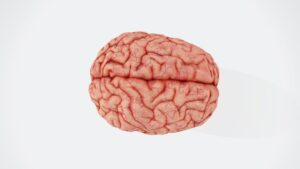
Neuropsychological studies further support this model by mapping rational processes to specific brain regions, particularly the prefrontal cortex (PFC). The PFC is crucial for executive functions, including planning, sequencing, error correction, and inhibitory control—all prerequisite functions for sustained rational thought. Damage to this region often results in severe impairment in instrumental rationality, where individuals struggle to connect their actions to long-term goals, even if their underlying logical comprehension remains intact. Therefore, rationality is not merely a philosophical concept but a measurable neurocognitive function dependent upon the integrity and efficient operation of the brain’s highest organizational structures.
Distinction Between Rationality and Reason
While often used interchangeably in colloquial language, a precise understanding of reason and rationality is essential in psychological discourse. Reason refers to the faculty or capacity of the mind used for logically processing information, forming judgments, and drawing inferences. It is the tool or method employed. Rationality, on the other hand, is the quality, state, or outcome of applying that tool effectively and correctly. Rationality is the adherence to the principles that reason dictates. Thus, one might possess the faculty of reason but still act irrationally if the application of that reason is flawed, biased, or incomplete.
Psychologists distinguish between two primary forms of rationality that rely on the application of reason: Epistemic Rationality and Instrumental Rationality. Epistemic rationality concerns the formation of beliefs that accurately reflect the world. A person is epistemically rational if their beliefs are justified by evidence and adhere to the laws of probability and logic. This form focuses on achieving truth and avoiding error. Conversely, Instrumental rationality (or pragmatic rationality) concerns choosing the best means to achieve a desired end. A person is instrumentally rational if they effectively select actions that maximize their expected utility or goal fulfillment, regardless of whether the goal itself is morally or logically sound. For instance, a criminal who meticulously plans a perfect crime is instrumentally rational, even if his goal is epistemically or ethically unsound.
The differentiation between these types is critical for psychological assessment. Cognitive tests often measure epistemic rationality by assessing probabilistic reasoning and resistance to cognitive biases (e.g., confirmation bias). In contrast, clinical and organizational psychology frequently focus on instrumental rationality, evaluating whether an individual’s behaviors are constructive pathways toward their stated personal or professional objectives. This distinction allows for a nuanced appreciation of cognitive failures; an individual may possess strong logical capabilities (reason) yet fail to apply them effectively in real-world contexts, resulting in demonstrably irrational behavior (a failure of instrumental rationality).
Models of Rational Decision Making
In the behavioral sciences, models of decision-making serve to define the ideal standard of rationality. The canonical normative model is Expected Utility Theory (EUT), borrowed from economics, which posits that a perfectly rational agent, often termed Homo economicus, makes choices that maximize their subjectively expected utility. EUT assumes that rational agents possess perfect information, stable preferences, and the computational power to weigh all possible outcomes and their associated probabilities accurately. This model outlines a set of axioms—such as transitivity (if A is preferred over B, and B over C, then A must be preferred over C) and dominance (if option A is better than B in every respect, A must be chosen)—that must be satisfied for a decision to be considered strictly rational.
EUT, therefore, stands as the gold standard for normative rationality—describing how people should decide. However, decades of psychological research, particularly in behavioral economics, have shown that actual human behavior frequently deviates systematically from these axioms. These deviations are not random but predictable, indicating that humans operate under cognitive constraints that prevent adherence to the strict requirements of EUT. For example, humans exhibit framing effects, where the presentation of information (gain vs. loss) drastically alters their choices, violating the assumption of stable preferences.
Consequently, the field developed descriptive models of decision-making, which aim to describe how people actually decide. Prospect Theory, developed by Kahneman and Tversky, is a prominent descriptive model that highlights key psychological irrationalities, such as loss aversion (the pain of a loss is felt roughly twice as intensely as the pleasure of an equivalent gain) and the overweighting of small probabilities. These descriptive models acknowledge that while the goal remains to achieve rational outcomes, the cognitive paths taken often involve systematic shortcuts and biases that render the process imperfect relative to the mathematical ideal of EUT.
The Role of Emotion in Rationality
The traditional philosophical view held that emotion (passion) was the antithesis of reason, leading to the definition component that rationality is achieved when thought is uninfluenced by emotion. However, modern neuroscience and psychology have strongly refuted this strict separation, arguing instead that certain emotional processes are not merely compatible with, but often essential for, effective rationality. The groundbreaking work of neurologist Antonio Damasio, particularly the Somatic Marker Hypothesis, demonstrated that emotional signals derived from the body (somatic markers) serve as necessary informational shortcuts in complex decision-making.
Damasio observed patients with damage to the ventromedial prefrontal cortex (vmPFC), a region critical for integrating emotion into decision-making. These patients retained high logical reasoning capabilities (System 2) but were crippled by an inability to make basic life decisions, often choosing courses of action that led to disastrous personal or financial outcomes. They lacked the “gut feeling” or emotional forewarning that quickly filters out obviously bad options. This research suggests that emotions act as a rapid screening mechanism, allowing the individual to efficiently prune the decision tree, thereby making the subsequent effortful System 2 analysis manageable. Without this affective input, the purely logical processing becomes computationally overwhelming.
Therefore, contemporary psychological views embrace the concept of Ecological Rationality or Emotionally Intelligent Rationality, recognizing that optimal decision-making involves the judicious integration of emotional data. Rationality is achieved not by suppressing all emotion, but by treating emotional responses as valuable information inputs—signals about potential risks, rewards, or social consequences—that must be logically weighed alongside objective data. This integrated approach allows for decisions that are not only logically sound but also contextually appropriate and sustainable for the individual’s overall well-being.
Bounded Rationality and Heuristics
A major shift in the psychological understanding of rationality came with the work of Nobel laureate Herbert A. Simon, who proposed the concept of Bounded Rationality. Simon argued that human rationality is inherently limited or “bounded” by three key constraints: limited time available for decision-making, limited information processing capacity, and limited information available from the environment. Because human minds are not computationally infinite, the normative ideal of EUT is psychologically unrealistic. Simon concluded that humans are not maximizers (seeking the absolute best outcome) but rather satisficers (seeking a good enough, or satisfactory, outcome).
To cope with these boundaries, humans rely heavily on heuristics—mental shortcuts or rules of thumb that simplify complex judgments and decisions. Heuristics are efficient and often lead to correct or acceptable outcomes, reflecting a form of functional, adaptive rationality. Examples include the availability heuristic (judging frequency based on how easily examples come to mind) and the representativeness heuristic (judging probability based on similarity to a prototype). While these shortcuts are necessary for survival and rapid response in uncertain environments, they are the very mechanisms that lead to systematic, predictable errors when applied incorrectly or when they encounter specific types of data.
The systematic errors resulting from the misuse of heuristics are known as cognitive biases. These biases represent the gap between descriptive and normative rationality. For instance, the anchoring bias demonstrates how an initial piece of information, even if irrelevant, irrationally “anchors” subsequent numerical estimates. Understanding bounded rationality is paramount in psychological study because it shifts the focus from judging humans based on an unattainable ideal to understanding the adaptive strategies they employ under real-world cognitive limitations. The goal of behavioral science is thus to identify the conditions under which these adaptive shortcuts fail, leading to irrational outcomes.
Clinical Applications and Implications
The understanding and promotion of rational thought processes form a cornerstone of various psychological therapies, particularly those within the cognitive-behavioral tradition. Rationality, in a clinical context, is often defined as the capacity to hold beliefs that are flexible, empirically verifiable, and conducive to mental health. Conversely, psychological distress is frequently linked to irrational beliefs—rigid, demanding, catastrophic interpretations of reality that lack factual basis and impede constructive action.
Rational Emotive Behavior Therapy (REBT), founded by Albert Ellis, is explicitly centered on this concept. REBT posits that emotional disturbances are not caused directly by activating events (A), but by the individual’s irrational belief system (B) about those events, which leads to negative consequences (C). The therapeutic goal is to help the client identify and vigorously dispute (D) these deeply held irrational beliefs, replacing them with rational, reality-based, and functional alternatives (E). This process directly targets improving epistemic rationality as a pathway to emotional regulation and stability.
Similarly, Cognitive Behavioral Therapy (CBT) employs techniques aimed at restructuring thought patterns to achieve greater coherence and logical soundness. CBT focuses on identifying automatic negative thoughts and subjecting them to rational scrutiny—asking whether the thought is supported by evidence, whether there are alternative explanations, and what the logical implications of holding that thought are. By promoting deliberate, System 2 processing and challenging faulty logical leaps, CBT enhances the client’s ability to approach life challenges with greater instrumental and epistemic rationality, leading to measurable improvements in mood disorders, anxiety, and general well-being. The clinical pursuit of rationality is therefore a practical effort to foster adaptive, evidence-based thinking in everyday life.
- Higher Thought Processes: Engaging complex analysis, abstraction, and planning.
- Logical Consistency: Adhering to deductive and inductive principles of reasoning.
- Instrumental Goal Achievement: Selecting effective means to fulfill objectives.
- Emotional Integration: Utilizing emotion as data rather than allowing it to dominate judgment.