Reentrant Neural Activity: The Brain’s Feedback Loop
Scientifically Reviewed · Dr. Marwa Abd-Alazim · August 23, 2026
Review Criteria & Clinical Standards
This content undergoes rigorous scientific peer-review and medical editorial standards at Arab Psychology Network to ensure clinical accuracy, validity, and compliance with evidence-based guidelines from leading psychological and healthcare authorities (APA / WHO).
Defining Reentrant Neural Activity
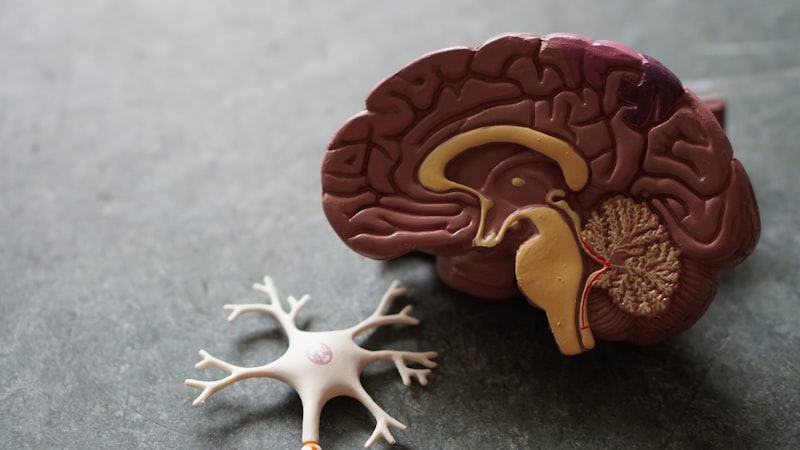
Reentrant neural activity represents a fundamentally critical organizational principle of the brain, differentiating it from simple computational systems. At its core, reentrance describes the mutual and reciprocal exchange of signals between distinct, geographically separated neural populations through dense, parallel connections. Unlike a simple feed-forward mechanism where information flows unidirectionally from A to B, reentrance involves concurrent communication where A sends signals to B, and B simultaneously sends signals back to A, as well as to other related areas C and D. This continuous, circular exchange of information is executed by massive bundles of axons, ensuring that the processing occurring within disparate neural regions is constantly compared, correlated, and integrated. This mechanism is essential because it allows the brain to overcome the challenge of anatomical segregation—where specialized functions are handled by unique brain areas—by ensuring that the resulting processed information is consistently associated.
The concept of reentrance elevates the brain’s capacity beyond mere signal relay into a realm of complex integration and pattern recognition. The process hinges on the existence of highly parallel pathways; if only a few fibers connected two areas, the resulting information exchange would be sparse and inefficient for complex cognitive tasks. Instead, reentrant loops are characterized by thousands, or even millions, of connections operating concurrently, which allows for the rapid establishment of functional synchrony between the involved neuronal groups. This parallelism ensures robust communication and redundancy, meaning that the association between activities in different regions is not fragile but is constantly reinforced by the reciprocal firing patterns. The maintenance of this ongoing dialogue is what allows the brain to construct a unified and coherent perception of the world from segmented sensory inputs, such as linking the sight of an object processed in the visual cortex with its name retrieved from language centers.
Functionally, the most significant outcome of reentrant neural activity is the ability to associate activity in separate areas of the brain, effectively solving the classic “binding problem” in neuroscience. When an individual sees a red, moving ball, the brain processes the color (red) in one specific visual area, the motion in another specialized area (MT), and the object’s identity (ball) in higher association cortices. Without reentrance, these features would remain isolated data points. Reentrant signaling acts as the necessary adhesive, creating temporary, highly correlated firing patterns across these distributed areas. This synchronization effectively binds the disparate sensory features into a singular, integrated percept. Thus, reentrance is not merely a structural feature but a dynamic process that defines the functional connectivity required for sophisticated cognitive operations, including perception, memory formation, and ultimately, consciousness itself.
Theoretical Foundations of Reentry
The theoretical framework underpinning reentrant signaling was most prominently articulated by Nobel Laureate Gerald Edelman in his Theory of Neuronal Group Selection (TNGS), often referred to as Neural Darwinism. Edelman proposed that the brain does not operate like a computer following fixed instructions, but rather as a selective system where variation and differential survival—analogous to natural selection—shape functional connectivity. TNGS posits three main tenets: developmental selection (shaping the initial neural anatomy), experiential selection (strengthening synapses based on experience), and crucially, reentrant signaling. Reentry provides the mechanism by which the functionally segregated brain areas, or “maps,” selected through development and experience, can communicate and correlate their respective activities dynamically, moving beyond segregated processing toward global integration.
Within the context of TNGS, reentrance is the core process that allows for the creation of higher-order functions. The theory emphasizes that the brain is organized into multiple, functionally specialized maps, such as the somatosensory map, the visual map, and the auditory map. While these maps perform specialized computations, they must interact seamlessly to generate meaningful behavior. Edelman argued that reentrant connections, often forming massive reciprocal loops between cortical areas and subcortical structures like the thalamus and cerebellum, allow these maps to signal back and forth, correlating their output. This continuous correlation ensures that the processing in one map is constantly informed by, and informs, the processing in another, leading to the formation of integrated “global mappings” necessary for sophisticated abilities such as abstract thought and intentional movement.
Furthermore, the theoretical significance of reentrance lies in its ability to support degeneracy—the capacity of structurally different components to perform the same function or yield the same output. Because reentrant circuits are massive and parallel, there are many potential pathways and combinations of neuronal groups that can achieve the necessary correlation for a cognitive task. This degeneracy provides the brain with immense robustness, flexibility, and adaptability. If one specific pathway is damaged, another parallel reentrant loop can often compensate, ensuring the stability of perceptual and cognitive functions. This robustness, inherent in the reentrant architecture, is a key reason why brain function can remain stable despite the continuous turnover and modification of individual synaptic connections throughout an organism’s lifetime.
Anatomical Basis: Parallel Connections and Mapping
The physical architecture of the cerebrum is explicitly structured to facilitate reentrant activity, relying on highly organized anatomical substrates that ensure robust communication between specialized regions. The cortex is famously characterized by functional segregation, where specific areas are devoted to specific tasks—for instance, the primary visual cortex (V1) handles basic visual features, while the fusiform gyrus specializes in facial recognition. However, these distinct areas are not isolated; they are linked by extensive, reciprocal axon tracts. These tracts are not simple, single-line connections; they are massive bundles of parallel fibers that allow for the simultaneous exchange of data packets between neuronal groups, forming the physical basis of reentrant loops. These connections are typically organized in a hierarchical manner, but critically, the flow of information is often reciprocal, running both “up” and “down” the hierarchy simultaneously.
A prime example of a crucial anatomical reentrant system involves the interactions between the thalamus and the cortex, known as the thalamo-cortical loops. Almost every area of the cortex maintains dense reciprocal connections with specific nuclei in the thalamus. Information flows from the thalamus to the cortex (feed-forward), but the cortex also sends massive projections back to the same thalamic nuclei (feedback). This constant, mutual interaction is a classic reentrant circuit that regulates sensory gating, attention, and cortical excitability. The sheer number of parallel fibers in these loops ensures that the cortex can rapidly modulate the input it receives, effectively focusing processing resources and integrating immediate sensory data with existing internal models or expectations. Disruptions in the precise tuning of these thalamo-cortical reentrant circuits are implicated in various neurological disorders, highlighting their importance in maintaining normal brain dynamics.
Furthermore, reentrant connections are pervasive throughout the cortico-cortical network. The complexity of these connections is underscored by the fact that they often link distant lobes, such as the frontal lobe (responsible for planning and execution) and the parietal lobe (responsible for spatial awareness and sensory integration). For example, the recognition of an object and the subsequent decision to interact with it requires a constant reentrant dialogue between the visual processing stream and the motor planning stream. The signals originating in the visual cortex are sent to the parietal cortex for spatial localization, and simultaneously, signals from the parietal cortex inform the visual processing areas about the intended focus of attention. This continuous, reciprocal stream of parallel signals ensures that actions are dynamically guided by perception, and perception is simultaneously framed by intent, illustrating how anatomical parallelism underpins the functional integration required for goal-directed behavior.
Mechanisms of Signal Exchange
The functional realization of reentrant activity relies heavily on precise temporal mechanisms, particularly the synchronization of neural firing. For two spatially separated neuronal groups to successfully associate their activities, their signals must not only be exchanged reciprocally but must also align in time. This is often achieved through neural oscillations, most notably in the gamma band (30–90 Hz). When neuronal groups involved in a reentrant loop fire synchronously at a high frequency, they establish a temporary, highly coherent functional connection. This synchronized activity serves as a mechanism to tag disparate pieces of information as belonging together, allowing the brain to rapidly and flexibly assemble and disassemble temporary functional networks based on immediate perceptual and cognitive demands.
Synaptic plasticity plays a critical, long-term role in shaping which reentrant pathways become dominant. While the anatomical connections are largely fixed, the effectiveness of signal transfer across those connections is dynamic. When two neuronal groups consistently participate in successful reentrant loops—meaning their simultaneous firing leads to a meaningful perceptual or behavioral outcome—the synapses connecting them are strengthened through mechanisms like Long-Term Potentiation (LTP). This strengthening ensures that the next time those same inputs arrive, the reentrant association is faster and more reliable. Conversely, pathways that do not contribute meaningfully may be weakened. Thus, the physical mechanism of reentrance is continuously refined by experience, allowing the brain to optimize its functional connectivity based on learned associations and recurring environmental patterns, transforming structural potential into functional reality.
It is crucial to distinguish true reentrance from simple feedback. While feedback is a regulatory mechanism—for instance, a motor command generating sensory feedback to correct movement—reentrance is fundamentally an integrative and generative process. Reentrance involves the creation of new information or meaning through the correlation of previously segregated data. The reciprocal signals in reentrant loops do not merely correct an output; they dynamically construct a higher-order pattern of activity that transcends the individual inputs. The signals are exchanged in such a manner that the state of the neuronal group A is continuously being updated by the incoming correlated information from B, and simultaneously, the state of B is updated by A. This iterative, recursive process generates a self-sustaining and constantly evolving internal representation that is the hallmark of complex cognitive processing.
Functional Significance: Integration and Association
The primary functional significance of reentrant neural activity lies in its power to facilitate integration, allowing the brain to merge specialized, segregated information into a cohesive whole. This capability is paramount for perception, where sensory data arrives fragmented. For example, the visual input of a person speaking is processed separately for auditory content (in the temporal lobe) and visual lip movements (in the visual cortex). Reentrant loops between these areas ensure that the audio and visual streams are correlated in time, leading to the unified perception of speech. If this reentrant binding is delayed or misaligned, cross-modal integration fails, potentially resulting in perceptual anomalies such as the ventriloquist effect or temporal desynchronization in multisensory perception.
Beyond simple sensory binding, reentrance is vital for maintaining perceptual constancy and stability. The world we perceive is constantly changing due to movements of our eyes, head, and body, yet our perception of objects remains stable. This constancy is achieved through reentrant signaling between sensory areas and areas monitoring motor commands (e.g., the parietal and frontal eye fields). When we move our eyes, the visual system receives a large shift in input. Reentrant signals communicating the motor command for the eye movement allow the visual system to anticipate and compensate for this shift, thereby maintaining a stable visual field. This predictive and compensatory integration, mediated by continuous reciprocal signaling, prevents the world from appearing jumpy or unstable during self-motion, providing a foundational stability for all higher cognition.
Moreover, reentrant activity is indispensable for higher-level functions such as categorization and concept formation. Concepts, such as “chair” or “justice,” are not localized to a single brain region but are represented by a distributed network of neuronal groups encoding various features (e.g., visual shape, function, name, associated memories). When a concept is activated, reentrant loops rapidly synchronize the activity across this vast, distributed network. The recurrent firing associated with the shape, the motor plan to sit down, and the linguistic label “chair” are all brought into a coherent, temporary pattern. This instantaneous binding allows for the rapid recognition and manipulation of complex concepts, demonstrating that reentrance is the mechanism for generating and accessing integrated semantic knowledge, connecting abstract thought with concrete sensory representation.
Role in Higher Cognitive Functions
The most ambitious theoretical application of reentrant activity is its proposed fundamental role in consciousness. Edelman and Tononi’s Integrated Information Theory (IIT) and the Dynamic Core Hypothesis posit that consciousness arises from a highly integrated, yet highly differentiated, set of neuronal groups—the “dynamic core”—maintained by intense reentrant interactions, primarily involving the thalamocortical system. For a state to be conscious, the underlying neural activity must be simultaneously integrated (bound together by reentrance) and differentiated (meaning the activity pattern is specific and information-rich). Reentrant signaling provides the necessary integration, allowing the massive exchange of information that generates a unified subjective experience, rather than a collection of isolated sensations.
In the realm of memory, reentrance is crucial for both working memory and the consolidation of long-term episodic memories. Working memory, the ability to hold and manipulate information over short periods, is thought to rely on sustained, reverberating activity within reentrant loops, particularly involving prefrontal and parietal cortices. These loops maintain a stable, active representation of the information in the absence of external stimuli. For episodic memory formation, reentrance links the hippocampus (the area crucial for initial encoding) with various cortical areas that hold the sensory and contextual details of the event. The repeated, reciprocal firing between the hippocampus and the neocortex during sleep or quiet wakefulness is believed to be the mechanism by which the memory trace is gradually consolidated and shifted from the temporary hippocampal store to more permanent cortical networks, allowing the different elements of the memory to be recalled as a cohesive event.
Furthermore, reentrant dynamics are essential for sophisticated executive functions and language processing. Executive control, including planning, decision-making, and error correction, requires continuous, rapid association between the outcomes predicted by the frontal lobe and the current state of the sensory environment and motor systems. This complex comparison and updating process is entirely dependent on swift reentrant loops connecting prefrontal, parietal, and cingulate cortices. In language, comprehension and production rely on the instantaneous, reciprocal communication between Wernicke’s area (comprehension/semantics) and Broca’s area (production/syntax), along with areas responsible for auditory input and motor output. Reentrance ensures the seamless flow necessary for translating thought into speech and speech back into understanding, integrating lexical, syntactic, and semantic information in real time.
Reentry and Pathophysiology
Disruptions to the integrity or functionality of reentrant neural circuits are increasingly recognized as central factors in numerous neurological and psychiatric disorders. When anatomical tracts are severed or damaged, the resulting “disconnection syndromes” reveal the necessity of reentrance. For instance, damage to the corpus callosum, the primary tract connecting the two cerebral hemispheres, eliminates the massive reentrant exchange between the two sides, leading to difficulties in cross-hemispheric communication and integration, such as the inability to name an object presented to the left visual field. This starkly illustrates that the physical integrity of parallel connections is mandatory for functional association.
In psychiatric conditions like Schizophrenia and Autism Spectrum Disorder (ASD), theories often point toward dysfunctional reentrant connectivity and abnormal synchrony. Schizophrenia is frequently associated with reduced coherence or “hypoconnectivity” between distant cortical regions, suggesting that the necessary reentrant binding for coherent thought and reality testing is impaired. This may manifest as fragmented thought processes or hallucinations, where internally generated signals are not correctly integrated with external reality. Conversely, some forms of ASD are theorized to involve localized “hyperconnectivity” but reduced long-range reentrance, leading to highly detailed local processing at the expense of global integration, making it difficult to associate social cues, emotional context, and language effectively across the brain’s specialized regions.
Pathological reentrant activity can also be a direct cause of neurological symptoms, most notably in epilepsy. A seizure involves an abnormal, excessive, and hypersynchronous discharge of a population of neurons. In many cases, this runaway synchronous activity is perpetuated by maladaptive, hyperexcitable reentrant loops that effectively trap the electrical signal, causing it to reverberate uncontrollably within a circuit. Understanding the precise anatomical location and functional properties of these pathological reentrant circuits is a major focus of epilepsy research, as surgical or pharmacological treatments often aim to disrupt these self-sustaining loops to prevent the spread and recurrence of seizure activity.
Research Methodologies and Future Directions
Investigating reentrant neural activity presents significant methodological challenges because the process is dynamic, rapid, and involves massive, distributed networks. Current research relies heavily on electrophysiological techniques such as Electroencephalography (EEG) and Magnetoencephalography (MEG) to measure the synchrony and coherence of firing patterns between distant brain regions, providing indirect evidence of functional reentrance. A high degree of coherence in specific frequency bands (e.g., Gamma) between two areas during a cognitive task is often interpreted as evidence of active reentrant binding.
In conjunction with electrophysiology, functional Magnetic Resonance Imaging (fMRI) is employed to study functional connectivity. By measuring correlations in the Blood-Oxygen-Level Dependent (BOLD) signal between different brain voxels over time, researchers can map the strength and organization of functional networks, revealing the architecture of reentrant communication pathways in the resting and active brain. However, fMRI measures activity over seconds, making it difficult to capture the millisecond precision required for true reentrant binding. Therefore, computational neuroscience, using tools like neural mass models and dynamic causal modeling (DCM), is essential for testing specific hypotheses about the directionality and timing of signal flow, helping to distinguish between simple feed-forward loops, regulatory feedback, and genuine associative reentrance.
Future directions in reentrant research are increasingly focused on causal manipulation. Techniques such as Transcranial Magnetic Stimulation (TMS) and Transcranial Direct Current Stimulation (tDCS) are being developed to non-invasively disrupt or enhance specific cortical connections, allowing researchers to observe the behavioral consequences of altering reentrant integrity. Furthermore, advancements in optogenetics, particularly in animal models, allow for the precise activation or silencing of specific parallel fiber pathways, providing unprecedented control to confirm the causal role of specific reentrant loops in complex cognitive functions like perception and decision-making. Ultimately, a deeper understanding of reentrant dynamics promises to open new avenues for therapeutic interventions targeting connectivity disorders by seeking to restore healthy, integrated communication within the brain’s complex architecture.