Rehabilitation Engineering: Engineering Human Potential
Scientifically Reviewed · Dr. Marwa Abd-Alazim · August 24, 2026
Review Criteria & Clinical Standards
This content undergoes rigorous scientific peer-review and medical editorial standards at Arab Psychology Network to ensure clinical accuracy, validity, and compliance with evidence-based guidelines from leading psychological and healthcare authorities (APA / WHO).
Introduction to Rehabilitation Engineering
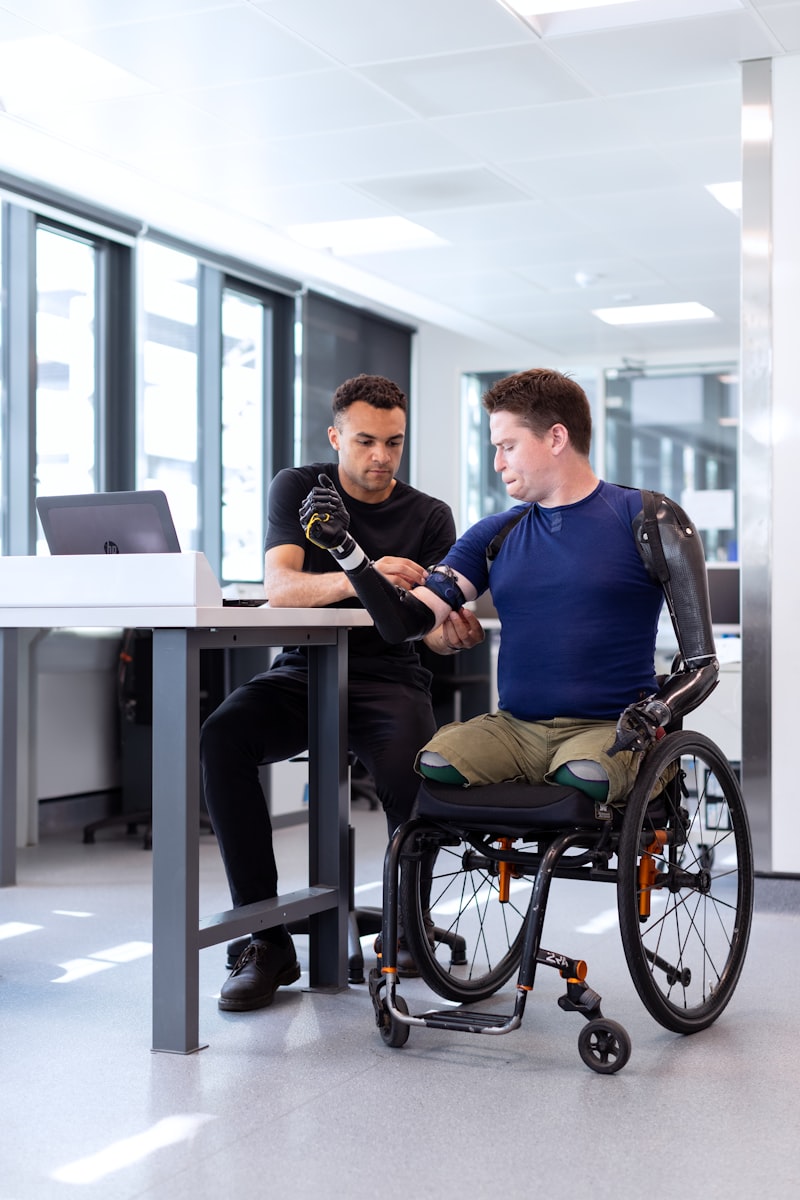
Rehabilitation Engineering stands as a critical and highly integrated discipline, situated at the nexus of engineering science, technology, and health sciences. Its foundational purpose is the systematic application of engineering principles and design methodologies to develop, test, and implement commodities, environments, and programs specifically tailored to enhance the functional capabilities and ultimately augment the quality of life for individuals living with disabilities or special needs. This field is inherently multidisciplinary, drawing upon expertise ranging from mechanical and electrical engineering to human factors and clinical rehabilitation practice, ensuring that technological solutions are not only robust and innovative but also intimately aligned with the complex biological, psychological, and social requirements of the user population. The goal extends far beyond mere technological development; it seeks to dismantle physical and systemic barriers, fostering greater independence, participation, and inclusion across all facets of daily living, a mission deeply rooted in the philosophy that technology should serve as an equalizer.
The scope of Rehabilitation Engineering is vast, encompassing the design and modification of devices, the adaptation of physical settings, and the creation of systematic intervention protocols. It is fundamentally concerned with the entire human-technology interaction process, beginning with a detailed assessment of the user’s remaining abilities and environmental constraints, and culminating in the long-term evaluation of the efficacy and usability of the implemented solution. This requires a profound understanding of biomechanics, neurophysiology, and cognitive science, allowing engineers to create solutions that interface seamlessly with the human body and mind. Furthermore, Rehabilitation Engineering is closely linked with the broader field of Bioengineering, sharing core principles related to the application of engineering to biological problems, yet it maintains a distinct focus on functional restoration, compensation for lost abilities, and the prevention of secondary complications associated with chronic conditions or impairment.
At its core, the discipline promotes the philosophy of personalized intervention. Recognizing that disability is a highly individualized experience shaped by personal context, environment, and social interactions, rehabilitation engineers utilize a human-centered design approach. This methodology ensures that consumers are active participants throughout the design process, guaranteeing that the final product or setting is maximally effective, comfortable, and socially acceptable. Whether the challenge involves restoring mobility through advanced prosthetics, facilitating communication via sophisticated augmentative systems, or modifying homes and workplaces for greater accessibility, the central mandate of Rehabilitation Engineering remains unwavering: to leverage technological innovation to achieve tangible improvements in the autonomy and overall well-being of the individual, thereby fulfilling the definition that Rehabilitation Engineering is aimed at helping those with disabilities to have a better quality of life.
Historical Context and Evolution
The genesis of Rehabilitation Engineering can be traced back through centuries of attempts to compensate for physical loss, primarily through rudimentary prosthetics and orthotics. However, the modern, scientifically integrated discipline truly began to solidify following periods of mass trauma, particularly the two World Wars, which resulted in large populations of individuals requiring functional restoration and reintegration into society. These conflicts spurred significant government investment and research into artificial limbs and mobility aids. Initially, the focus was heavily placed on mechanical solutions and materials science, driven by the immediate need for robust, functional replacements for lost limbs, often lacking the nuanced understanding of human movement and user comfort that characterizes contemporary practice.
The mid-20th century marked a critical shift, characterized by the formal integration of medical expertise with engineering rigor. Landmark legislative actions, particularly the establishment of vocational rehabilitation programs and the growing disability rights movement in the latter half of the century, catalyzed the evolution of the field from simple device provision to comprehensive environmental and functional redesign. This era saw the introduction of early electrical and eventually computer-controlled systems, moving beyond passive aids to active technological assistance. The realization that disability is often a product of the interaction between a person and an inaccessible environment, rather than an inherent personal deficit, fundamentally changed the research agenda, pushing engineers to address architectural barriers and communication challenges alongside physical impairment.
In the contemporary landscape, the discipline has been profoundly shaped by advancements in microelectronics, computing power, and materials science. The late 20th and early 21st centuries introduced sophisticated concepts such as brain-computer interfaces (BCIs), advanced robotics for gait assistance, and highly personalized 3D-printed prosthetic components. This evolution reflects a philosophical maturation where the emphasis has shifted from simply compensating for loss to maximizing residual function and promoting total integration. Today, the field operates under an international framework, often referencing models such as the World Health Organization’s International Classification of Functioning, Disability and Health (ICF), which provides a holistic framework for understanding health states and ensures that rehabilitation engineering interventions address participation restrictions and activity limitations within a social context.
Core Disciplines and Intersections
Rehabilitation Engineering thrives on synergy, demanding the integration of knowledge from diverse professional domains to create viable and clinically relevant solutions. The primary engineering disciplines involved include Mechanical Engineering, essential for the design of structural components, linkages, stress analysis of mobility aids, and dynamic properties of prosthetics; Electrical and Computer Engineering, crucial for developing control systems, sensor technology, microprocessors embedded in assistive devices, and communication interfaces; and Materials Science, which informs the selection of lightweight, durable, and biocompatible materials for devices that directly interface with the human body. These technical fields provide the fundamental tools necessary to conceptualize and construct the physical apparatus of rehabilitation technology.
Equally critical is the intersection with clinical and human-centered sciences. Biomedical Engineering provides the foundational knowledge of physiological systems, biomechanics, and human-machine interface design, particularly important in areas like orthotics and functional electrical stimulation (FES). Furthermore, collaboration with clinical specialists is mandatory: Occupational Therapists provide crucial insights into activities of daily living (ADLs), task analysis, and functional goals; Physical Therapists contribute expertise on gait, movement patterns, and muscle function; and Speech-Language Pathologists guide the development of augmentative and alternative communication (AAC) systems. This clinical input ensures that technological designs are functionally appropriate, clinically validated, and relevant to real-world rehabilitation goals.
Beyond the immediate clinical and engineering domains, successful rehabilitation efforts necessitate input from disciplines focused on user interaction and societal inclusion. Human Factors Engineering (Ergonomics) plays a vital role in optimizing device usability, minimizing cognitive load, and ensuring comfort and safety during operation. Furthermore, fields like industrial design contribute aesthetic and practical considerations, enhancing user acceptance and reducing the potential stigma associated with assistive technology. Finally, understanding policy and economics is crucial; expertise in public health and health informatics guides the development of scalable, affordable solutions and influences the development of standards for accessibility, thereby ensuring that innovative technologies transition effectively from the laboratory setting to broad market implementation and public benefit.
Primary Goals and Objectives
The overarching goal of Rehabilitation Engineering is the maximization of the individual’s functional capacity and the enhancement of their overall autonomy. This objective is achieved through several core aims, the first of which is Functional Independence. Engineers strive to design interventions that allow individuals to perform essential life activities—such as mobility, self-care, communication, and vocational tasks—with minimal reliance on human assistance. This focus on independence not only improves daily efficiency but also significantly boosts self-efficacy and psychological well-being. For example, designing sophisticated environmental control systems allows individuals with severe motor impairments to manage their home environment, operate appliances, and secure their surroundings without constant caregiver intervention.
A second critical objective is promoting Societal Participation and Inclusion. Rehabilitation technologies are intended to bridge the gap between individual capacity and societal expectations, enabling full engagement in educational, occupational, and community settings. This involves designing accessible public infrastructure, developing vocational aids, and creating communication systems that facilitate complex social interactions. By eliminating functional barriers, rehabilitation engineering helps fulfill the fundamental right of individuals with disabilities to participate fully in economic and cultural life, thereby addressing systemic issues of exclusion and fostering diversity within communities. The success of an intervention is often measured not just by its technical performance but by its ability to increase meaningful participation.
Finally, a major objective involves the prevention of secondary complications and the preservation of health. Many primary disabilities lead to subsequent health issues, such as pressure ulcers due to immobility, musculoskeletal pain from improper seating posture, or joint degeneration caused by inefficient movement patterns. Rehabilitation engineers work closely with clinicians to design specialized seating, sophisticated support surfaces, and ergonomic devices that mitigate these risks. This preventative approach is critical to maintaining the long-term health and stability of the user. Furthermore, the field aims to develop technology that is both economically viable and sustainable, ensuring that effective, high-quality assistive solutions are accessible to the broadest possible population, regardless of socio-economic status, reinforcing the commitment to improving quality of life universally.
Key Areas of Application
Rehabilitation Engineering is categorized into several distinct areas of application, each addressing specific functional domains. The field of Mobility and Locomotion is perhaps the most visible, encompassing the design and optimization of manual and powered wheelchairs, scooters, advanced orthotic devices (braces), and high-tech prosthetic limbs. Modern advancements in this area include microprocessor-controlled knees and ankles that use sophisticated algorithms to mimic natural gait patterns, as well as powered exoskeletons designed for gait training and functional restoration in individuals with paralysis. Engineers focus heavily on efficiency, weight reduction, maneuverability, and energy storage within these devices to maximize user endurance and real-world utility.
Another crucial application area is Communication and Cognition. This involves the development of Augmentative and Alternative Communication (AAC) systems for individuals who cannot rely on verbal speech, including text-to-speech devices, dynamic display communication boards, and eye-tracking technology that allows users to type and control computers solely through gaze. Furthermore, cognitive rehabilitation engineering designs focus on aids for memory, attention, and executive function, utilizing mobile apps, smart environments, and specialized software to assist individuals recovering from traumatic brain injuries or managing neurodegenerative conditions. These tools are critical for supporting learning, vocational performance, and complex daily tasks.
The modification of the physical environment constitutes a third major application area: Environmental Accessibility and Workplace Adaptation. Rehabilitation engineers assess homes, schools, and workplaces to recommend and design modifications that adhere to principles of Universal Design. This includes automated door openers, customized kitchen layouts, accessible bathroom facilities, and sophisticated environmental control units (ECUs) that allow users to operate lights, heating, entertainment systems, and security features using minimal input, such as voice commands or single switches. In the vocational context, engineers design adapted tools, specialized input devices (e.g., modified keyboards, mouth sticks), and ergonomic workstations to ensure that individuals with disabilities can effectively participate in the labor market, matching the demands of the job to the functional abilities of the employee.
The Role of Assistive Technology (AT)
Assistive Technology (AT) serves as the primary deliverable of Rehabilitation Engineering, defined as any item, piece of equipment, or product system, whether acquired commercially off-the-shelf, modified, or customized, that is used to increase, maintain, or improve functional capabilities of individuals with disabilities. The process of delivering effective AT is complex, requiring a systematic approach that begins with a thorough needs assessment. This assessment must evaluate the user’s specific functional limitations, their living and working environments, their personal goals, and their cognitive and physical abilities to interact with technology. Unlike general consumer electronics, AT must often be highly customizable, adapting to unique anatomical and physiological requirements.
The engineering challenge in AT lies in bridging the gap between sophisticated technical capability and practical, reliable usability. Engineers must contend with issues of durability, battery life, maintenance, and the complexity of the user interface. A central focus is on Human-Centered Design principles, ensuring that the technology integrates seamlessly into the user’s life without introducing new physical strain or cognitive burden. This involves iterative prototyping and extensive user testing, often conducted in real-world environments, to refine the design until it achieves optimal performance and acceptance. The most effective AT is often invisible or intuitive, requiring minimal conscious effort from the user to operate effectively.
Furthermore, the maintenance and evolution of AT represent ongoing engineering responsibilities. As technology rapidly advances, rehabilitation engineers are tasked with developing interfaces that can accommodate future upgrades and ensure longevity of use. They must also address the critical issue of abandonment, where users discontinue the use of prescribed AT due to poor fit, complexity, or lack of training. By integrating educational components and providing robust technical support, rehabilitation engineers work to maximize the long-term benefit derived from the technology. Successful AT implementation is a holistic process involving not only the engineering design of the device itself but also the creation of comprehensive training protocols and support infrastructure.
Ethical and Societal Considerations
The practice of Rehabilitation Engineering is inextricably linked with significant ethical and societal responsibilities. A primary ethical concern revolves around Equity and Access. Innovative rehabilitation technologies, particularly those involving advanced robotics or neuroprosthetics, often carry high development and production costs, creating a risk that the most transformative solutions remain inaccessible to low-income populations or those in developing nations. Engineers and policymakers must actively work to design affordable, scalable solutions and advocate for public funding and insurance policies that ensure widespread availability, upholding the principle that technological advancement should benefit all members of society.
Another crucial ethical dimension is the consideration of Autonomy and Identity. While technology aims to restore function, the implementation of highly visible or invasive devices (e.g., certain prosthetics or specialized mobility aids) can sometimes impact a person’s sense of self or lead to social stigma. Engineers must collaborate with users to prioritize designs that are not only functionally superior but also aesthetically acceptable and empowering, ensuring that the technology enhances, rather than detracts from, the user’s personal identity. Furthermore, issues of data privacy become paramount with the rise of interconnected, smart assistive devices that collect sensitive health and usage data, requiring rigorous adherence to data protection standards.
Finally, the field must address the ethical implications of technological substitution versus functional restoration. While advanced systems like powered exoskeletons can be transformative, there is an ongoing debate regarding the optimal balance between providing compensatory aids and developing interventions aimed at genuine neurological or physiological recovery. Engineers must ensure that their designs are based on sound clinical evidence and do not inadvertently discourage or replace valuable therapeutic interventions. This necessitates transparency in communicating the capabilities and limitations of the technology, avoiding the promotion of unrealistic expectations, and maintaining a commitment to the user’s overall health and dignity.
Future Directions and Challenges
The future of Rehabilitation Engineering is poised for revolutionary advancements driven by converging technologies such as Artificial Intelligence (AI), advanced robotics, and personalized medicine. One major direction involves the integration of AI and machine learning into assistive devices. AI algorithms are being developed to personalize control systems for prosthetics and orthotics, allowing devices to learn and predict user intent and environmental demands in real time, leading to smoother, more intuitive operation. Similarly, AI-driven diagnostic tools will enhance the precision of needs assessments, allowing engineers to prescribe or customize devices with greater accuracy and speed, reducing the lengthy iterative process currently required for optimal fitting.
A second critical area is the expansion of Neuroprosthetics and Regenerative Rehabilitation. Research is rapidly advancing in the field of brain-computer interfaces (BCIs) that bypass damaged nervous systems entirely, allowing individuals with severe paralysis to control robotic limbs, computers, and environmental systems directly with thought. This technology promises to redefine functional restoration. Coupled with this is the growing integration of engineering with regenerative medicine, where bioengineers develop scaffolding and stimulation techniques to promote the regrowth and repair of damaged tissue, shifting the focus from purely compensatory technology to genuine biological recovery, often utilizing engineered materials and targeted electrical stimulation.
Despite these promising developments, several challenges persist. The primary technical hurdle remains the creation of reliable, non-invasive, and robust human-machine interfaces that can withstand the rigors of daily use. Furthermore, the complexity of integrating diverse data streams—from wearable sensors monitoring physiological parameters to environmental data—requires sophisticated engineering solutions that are both secure and user-friendly. On a societal level, the greatest challenges involve establishing effective regulatory pathways for rapidly evolving technology, securing consistent funding for AT provision, and ensuring that the principles of Universal Design are fully integrated into all public infrastructure and product development, guaranteeing accessibility from the outset rather than relying solely on post-hoc adaptation.