Renshaw Cells: The Spinal Cord’s Secret Inhibition System
Scientifically Reviewed · Dr. Marwa Abd-Alazim · September 11, 2026
Review Criteria & Clinical Standards
This content undergoes rigorous scientific peer-review and medical editorial standards at Arab Psychology Network to ensure clinical accuracy, validity, and compliance with evidence-based guidelines from leading psychological and healthcare authorities (APA / WHO).
Introduction and Definition
The Renshaw cell is a specialized type of inhibitory interneuron residing within the gray matter of the spinal cord, playing a crucial, often underappreciated, role in the regulation of motor output. These cells function as indispensable components of a fast-acting negative feedback system, meticulously designed to modulate and stabilize the firing patterns of alpha motor neurons. Their fundamental purpose is centered on preventing the excessive or temporally unstable discharge of the lower motor neurons, thereby ensuring smooth, controlled muscle contraction and relaxation. The designation of these cells as interneurons highlights their function as intermediary processors within the spinal circuitry, receiving input primarily from the motor neurons themselves and subsequently providing inhibitory output back onto those same motor neurons and their synergistic neighbors. This recurrent pathway is essential for maintaining the integrity and precision of the motor system, functioning as a critical safety mechanism against neural overexcitation.
The functional significance of the Renshaw cell lies in its capacity to curtail the rapid, successive firing of the associated alpha motor neurons. When a motor neuron is strongly activated, it sends its efferent signal down the motor axon to the muscle; however, simultaneously, a collateral branch of that same axon, known as the recurrent collateral, synapses directly upon the Renshaw cell. This excitatory input immediately triggers the Renshaw cell to fire, which, being inhibitory in nature, then releases neurotransmitters that dampen the activity of the originating motor neuron. This closed-loop system, termed recurrent collateral inhibition, provides instantaneous regulation of the motor neuron pool excitability. Without this intrinsic dampening mechanism, even minor fluctuations in supraspinal drive could lead to unstable, oscillatory muscle contractions or potentially harmful hyperexcitability, underscoring the necessity of this precise feedback loop for normal physiological movement.
While the primary focus of Renshaw cell activity is autoregulation of the originating motor neuron pool, their inhibitory influence often extends laterally to adjacent motor neurons controlling synergistic muscles. This lateral inhibition is vital for sharpening the neural focus of the motor command, ensuring that only the intended group of motor neurons maintains maximal activity while closely related, but less essential, motor neurons are temporarily suppressed. Therefore, the Renshaw cell contributes not only to temporal stability but also to spatial refinement of motor unit activation. The study of these cells offers profound insights into the complex computational processes occurring within the spinal cord, demonstrating how local circuitry can implement sophisticated control algorithms that govern the execution of all voluntary and reflex movements, ultimately translating complex neural commands into coordinated muscle action.
Anatomical Location and Morphology
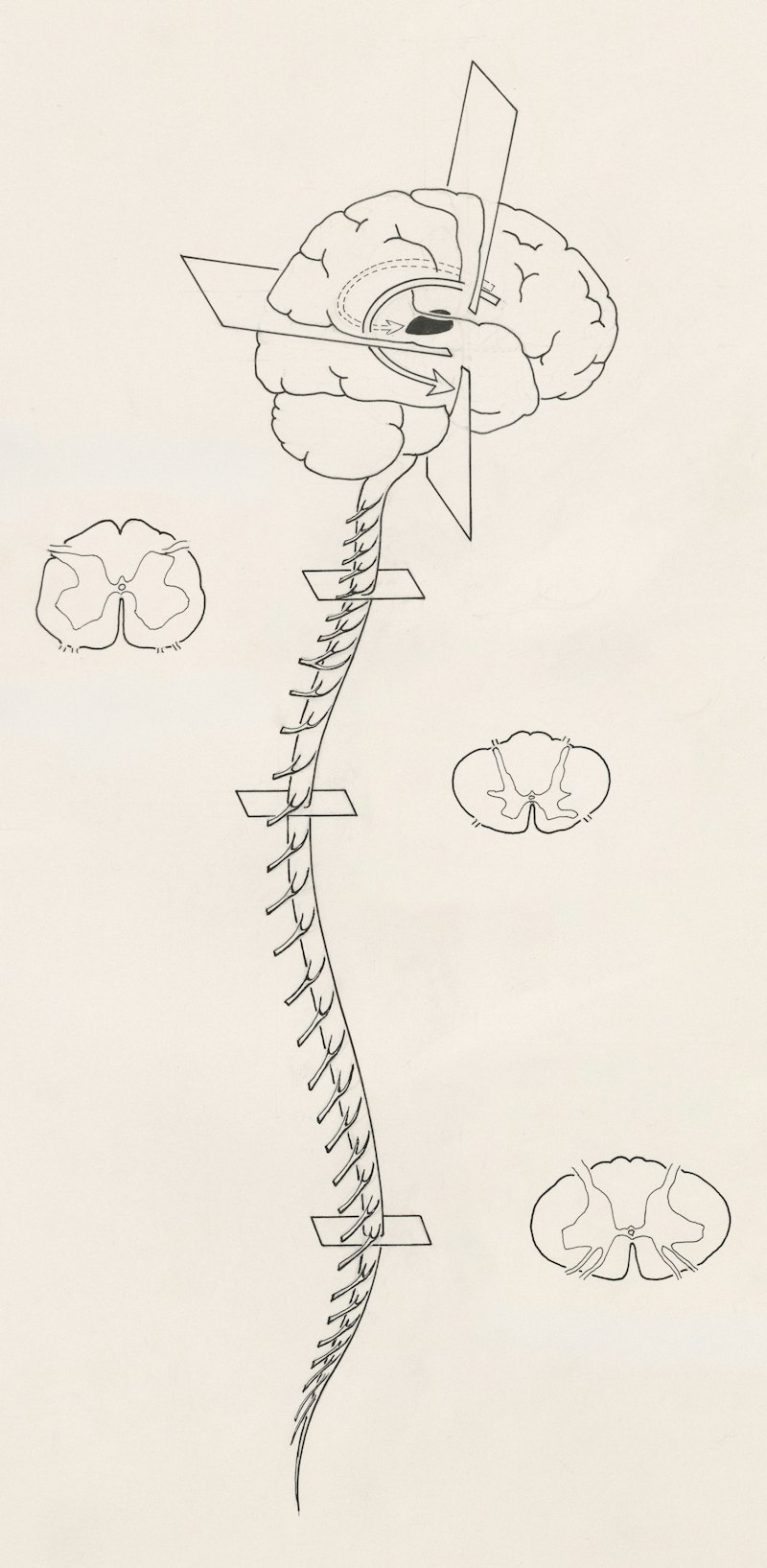
Anatomically, Renshaw cells are strategically located within the ventral horn of the spinal cord gray matter, in close proximity to the cell bodies and dendrites of the alpha motor neurons they are tasked with regulating. Their placement is essential for their function, as it allows them to intercept the recurrent collateral branches of the motor axons immediately after they exit the motor neuron soma. These interneurons are generally small, multipolar cells characterized by extensive dendritic arborization, enabling them to receive excitatory input from multiple motor axon collaterals belonging to various motor units within a specific muscle pool. This dense connectivity ensures that a broad range of motor activity within a localized area is monitored and subject to immediate inhibitory feedback, providing a cohesive and stable regulation across the entire functional unit of a muscle. The sheer density of these synaptic connections highlights the importance of the Renshaw cell as a central hub for localized motor control processing within the anterior horn.
The morphology of Renshaw cells is distinctively suited for their role as fast-acting inhibitory buffers. Their axons are relatively short and arborize extensively within the local motor neuron pool, allowing the inhibitory signal to be rapidly dispersed across the target population. This local distribution pattern contrasts sharply with projection neurons whose axons extend over long distances. The short axonal projection ensures that the inhibitory feedback is highly localized and timely, a requirement for effectively regulating the rapid firing sequences of motor neurons. Furthermore, the synapses formed by the Renshaw cell axons are primarily axo-somatic or axo-dendritic, meaning they target the cell body or the proximal dendrites of the motor neurons, positions that confer maximal inhibitory effectiveness by being close to the motor neuron’s spike initiation zone. The careful arrangement of these structures optimizes the inhibitory effect, allowing the Renshaw cell to exert powerful control over the motor neuron’s output firing frequency and pattern.
The density and distribution of Renshaw cells vary somewhat along the rostrocaudal axis of the spinal cord, reflecting the density and functional complexity of the motor pools in different segments. For instance, segments controlling complex limb movements (cervical and lumbar enlargements) tend to have a higher density of both motor neurons and associated Renshaw cells compared to the thoracic segments. This regional variation underscores the adaptive nature of spinal circuitry, where the regulatory machinery is proportional to the computational demands of the motor tasks governed by that segment. The precise spatial organization of Renshaw cells ensures that the negative feedback loop is efficiently implemented for every muscle group, providing a necessary layer of inhibitory control that is intrinsically linked to the level of motor activity generated within that specific spinal segment. This anatomical integration is paramount to the overall robustness and stability of the central nervous system’s control over peripheral musculature.
Physiological Function: The Negative Feedback Loop
The core physiological function of the Renshaw cell is its involvement in the highly efficient negative feedback loop known as recurrent inhibition. This loop is initiated when an alpha motor neuron fires an action potential, transmitting a signal that bifurcates upon leaving the soma. The primary axon travels toward the muscle fiber, while a dedicated collateral branch loops back into the ventral horn to make an excitatory, cholinergic synapse onto the Renshaw cell. This immediate and powerful excitation drives the Renshaw cell to fire at a high frequency, often in bursts synchronized with the motor neuron’s activity. The ensuing burst of Renshaw cell firing releases inhibitory neurotransmitters—predominantly Glycine—onto the original motor neuron and surrounding motor neurons, effectively reducing their excitability. This self-regulatory mechanism is critical for preventing prolonged or excessive depolarization, acting as a crucial brake system that limits the duration and maximum frequency of motor neuron discharge, preventing fatigue and ensuring smooth, non-tetanic contractions under normal physiological conditions.
The efficiency of the negative feedback loop is determined by the speed and strength of the synaptic transmission involved. The synapses between the motor neuron collateral and the Renshaw cell are among the fastest and most reliable excitatory synapses in the central nervous system, utilizing Acetylcholine (ACh) acting on nicotinic receptors. This rapid excitation ensures that the inhibitory signal is generated almost instantaneously following the motor neuron’s activation. The resulting inhibition acts quickly to terminate subsequent firing, thereby shaping the motor neuron’s firing pattern into discrete, regulated bursts rather than continuous, runaway trains of action potentials. This temporal control is vital, as the precise timing of motor unit recruitment and derecruitment is essential for generating graded forces and sophisticated movements. Furthermore, the strength of the inhibition is modulated based on the intensity of the motor neuron activity; a higher firing frequency in the motor neuron leads to stronger activation of the Renshaw cell, resulting in a proportionally greater inhibitory feedback, which constitutes the very definition of a stabilizing negative feedback system.
Beyond simple dampening, the recurrent inhibition mediated by Renshaw cells plays a vital role in regulating the overall excitability threshold of the motor neuron pool. By constantly providing inhibitory tone, these interneurons prevent the motor neurons from operating too close to their firing threshold, especially during periods of high descending excitatory drive. This ensures that the motor system maintains a dynamic range of responsiveness, allowing for flexible and precise control over muscle force. The Renshaw cell acts almost like an automatic gain control mechanism for the motor system, adjusting the output sensitivity based on the current input level. This continuous fine-tuning is what allows humans to perform both delicate tasks requiring minimal force, such as threading a needle, and powerful tasks requiring maximal effort, such as weightlifting, all while maintaining stability and preventing uncontrolled tremors or oscillations in muscle activation.
Neurotransmitters and Receptor Dynamics
The synaptic chemistry governing the function of Renshaw cells involves a critical interplay between excitatory and inhibitory neurotransmitters. The input side of the Renshaw cell is exclusively excitatory, receiving signals via the recurrent collaterals of the alpha motor neurons. The neurotransmitter released at this specialized synapse is Acetylcholine (ACh), which binds to high-affinity nicotinic cholinergic receptors (nAChRs) located on the Renshaw cell membrane. The activation of these ionotropic receptors leads to rapid depolarization and the generation of action potentials in the Renshaw cell. The nicotinic nature of this transmission ensures rapid onset and termination, fitting the need for an instantaneous feedback response mechanism. The high density and specific subtype of these receptors contribute significantly to the exceptional reliability and speed of this critical excitatory pathway, ensuring the Renshaw cell is activated immediately upon motor neuron firing.
In contrast to their excitatory input, the output of the Renshaw cell is fundamentally inhibitory. The primary inhibitory neurotransmitter utilized by these interneurons is Glycine, a small amino acid known for mediating fast inhibitory postsynaptic potentials (IPSPs) in the spinal cord. Glycine released from the Renshaw cell axon terminals binds to glycine receptors (GlyRs) on the postsynaptic membranes of the target alpha motor neurons and gamma motor neurons. Glycine receptor activation leads to an influx of chloride ions, hyperpolarizing the motor neuron membrane and pushing its potential further away from the firing threshold, thus temporarily suppressing its excitability. In some instances and species, Renshaw cells may also co-release GABA (gamma-aminobutyric acid), particularly when targeting other interneurons or for slower, modulatory inhibition, but Glycine remains the dominant agent responsible for the rapid recurrent inhibition onto the motor neuron pool.
The precise regulation of these neurotransmitter systems is crucial for maintaining spinal cord health. Pathological conditions or external agents that interfere with either the cholinergic input or the glycinergic output can have catastrophic effects on motor control. For example, the disruption of glycinergic transmission is a hallmark of certain toxins, leading to severe motor dysfunction. The specific expression of both nicotinic receptors for input and Glycine receptors for output defines the Renshaw cell’s unique position in the spinal circuit, allowing it to translate excitatory motor outflow into immediate, stabilizing inhibitory feedback. Understanding these specific receptor dynamics is essential for developing therapeutic strategies aimed at modulating spinal excitability in conditions characterized by spasticity or hyperreflexia, where the balance between excitation and inhibition has been compromised.
Interaction with Alpha Motor Neurons
The relationship between the Renshaw cell and the alpha motor neuron pool is highly specialized and forms the anatomical basis of recurrent inhibition. Each Renshaw cell typically receives input from multiple recurrent collaterals originating from a localized group of motor neurons, thereby effectively integrating the activity of a motor unit pool. Crucially, the Renshaw cell not only inhibits the motor neuron that excited it (autogenic inhibition) but also exhibits significant divergence in its output, inhibiting other motor neurons within the same pool and, often more powerfully, inhibiting synergistic motor neurons controlling muscles that cooperate in a specific movement. This broad, yet localized, pattern of inhibition is critical for ensuring coordinated muscle action, preventing the unwanted recruitment of unnecessary motor units, and maintaining a clear focus on the intended motor command. The inhibitory influence often extends to gamma motor neurons as well, thereby modulating muscle spindle sensitivity.
The temporal characteristic of the Renshaw cell’s inhibitory action is finely tuned to the firing patterns of the motor neurons. The inhibition rapidly follows the motor neuron spike and typically lasts for tens of milliseconds. This brief but powerful inhibition ensures that the motor neuron is temporarily silenced immediately after firing, preventing the initiation of another spike too quickly, which would otherwise result in an unstable, high-frequency discharge. This mechanism is particularly important during sustained voluntary contraction, where the Renshaw cells work continuously to regulate the motor unit firing rate, ensuring that the motor neurons operate within a physiological range that maximizes force generation efficiency while minimizing fatigue. This dynamic interaction ensures that motor commands are translated into graded muscle force with exceptional temporal precision.
Furthermore, the effectiveness of Renshaw cell inhibition can be dynamically adjusted by descending inputs from supraspinal centers, such as the brainstem and motor cortex. These descending pathways can modulate the excitability of the Renshaw cells themselves, either increasing or decreasing their inhibitory influence on the motor neuron pool. For instance, during the initiation of powerful voluntary movement, descending pathways may transiently suppress Renshaw cell activity, effectively “releasing the brake” on the motor neurons to allow for higher firing frequencies and rapid force generation. Conversely, during posture maintenance or fine motor control, descending input might enhance Renshaw cell activity to increase stability and reduce tremor. This supraspinal control over the recurrent inhibitory loop highlights the integration of the local spinal circuit into the broader context of central motor planning and execution, underscoring the Renshaw cell as a vital adjustable component of the motor control hierarchy.
Modulation and Plasticity of Renshaw Cell Activity
The activity of Renshaw cells is not fixed but is subject to extensive modulation by diverse inputs, both intrinsic and extrinsic to the spinal cord. Beyond the primary excitatory input from alpha motor neuron collaterals, Renshaw cells receive synaptic contacts from various descending tracts originating in the brainstem (e.g., reticulospinal and vestibulospinal pathways) and from the motor cortex. These supraspinal inputs allow the central nervous system to exert moment-to-moment control over the gain of the recurrent inhibitory system. For example, inputs from the reticular formation can influence the excitability of Renshaw cells during locomotion, ensuring that the necessary balance between excitation and inhibition is maintained during the rhythmic alternating activity of flexors and extensors. This complex modulation ensures that the inhibitory feedback is appropriate to the behavioral state and the demands of the ongoing motor task, thereby facilitating necessary shifts in spinal excitability.
Local circuitry also provides powerful modulatory influences on Renshaw cells. These interneurons receive input from other spinal interneurons, including those involved in primary afferent pathways and those associated with complex locomotor pattern generators (CPGs). This convergence of signals means that the level of recurrent inhibition is constantly being updated based on proprioceptive feedback and the inherent operational rhythm of the spinal cord. The integration of afferent information, particularly from muscle spindles and Golgi tendon organs, allows the Renshaw cell system to adapt its braking function according to the mechanical loading and stretch imposed on the muscle. This integration ensures that the inhibitory control is tightly coupled to the sensory state of the periphery, providing a sophisticated mechanism for stability during dynamically changing conditions, such as rapid changes in load or unexpected perturbations.
Furthermore, Renshaw cell circuitry exhibits a degree of plasticity, adapting its function in response to sustained changes in motor activity or following injury. Chronic changes in descending drive, such as those that occur during intensive motor learning or during the recovery phase following spinal cord injury, can lead to long-term adjustments in the synaptic efficacy of connections both onto and originating from the Renshaw cells. This plasticity is crucial for maintaining functional motor control in the face of neural damage or prolonged disuse. For instance, following an upper motor neuron lesion, the modulation of Renshaw cell activity often becomes impaired, contributing significantly to the development of pathological conditions like spasticity, where the loss of descending control over the inhibitory interneuron results in unchecked motor neuron hyperexcitability and hyperreflexia.
Clinical Significance and Related Pathologies
The proper functioning of Renshaw cells is paramount for maintaining normal muscle tone and reflex activity, making them clinically relevant targets in various neuromuscular and neurological disorders. Disruptions to the recurrent inhibitory loop often manifest as disorders of motor control, particularly those involving muscle rigidity, spasticity, and exaggerated reflexes (hyperreflexia). In conditions where upper motor neuron pathways are damaged (e.g., stroke, cerebral palsy, multiple sclerosis), the descending modulatory input that normally fine-tunes Renshaw cell activity is compromised. This can lead to a functional “disinhibition” of the Renshaw cells, or more often, a failure of descending pathways to appropriately control the motor neuron pool’s excitability, resulting in a net increase in motor neuron excitability and the characteristic symptoms of spasticity—a velocity-dependent increase in muscle tone.
One of the most dramatic examples illustrating the clinical importance of Renshaw cells involves the potent neurotoxin produced by Clostridium tetani, responsible for the disease Tetanus. The Tetanus toxin (tetanospasmin) is internalized and transported retrogradely to the spinal cord where it specifically acts on inhibitory interneurons, including Renshaw cells. The toxin prevents the release of inhibitory neurotransmitters, primarily Glycine, from the presynaptic terminals. By abolishing the inhibitory feedback provided by the Renshaw cells, the motor neurons become pathologically hyperexcitable, leading to uncontrolled, continuous firing. Clinically, this manifests as extreme muscle rigidity, painful spasms, and the characteristic lockjaw (trismus), underscoring the critical role of Renshaw cell inhibition in preventing lethal motor hyperexcitability.
Therapeutic interventions aimed at managing severe spasticity often indirectly target the Renshaw cell circuit. Pharmaceutical agents, such as muscle relaxants, frequently act by enhancing inhibitory transmission within the spinal cord. For instance, drugs that potentiate GABAergic or glycinergic inhibition can help restore the balance between excitation and inhibition, thereby reducing the pathological hyperactivity of the motor neurons. Understanding the precise molecular mechanisms governing Renshaw cell function provides vital targets for future treatments, moving beyond broad muscle relaxation to highly targeted modulation of the spinal circuitry. The continued investigation into the plastic changes and susceptibility of Renshaw cells in various motor diseases offers promising avenues for developing more effective therapies for chronic motor impairment.
Historical Context and Discovery
The discovery and initial characterization of the Renshaw cell represent a significant milestone in the field of neurophysiology, providing one of the earliest clear demonstrations of a specific negative feedback circuit within the central nervous system. These cells are named after the American neurophysiologist Birdsey Renshaw, who first described their existence and function in the early 1940s through meticulous electrophysiological studies conducted on the spinal cords of cats. Renshaw utilized then-novel techniques involving microelectrodes to record action potentials, observing that stimulation of the ventral root (containing motor axons) resulted in a delayed but specific inhibitory potential in the motor neurons themselves. This seminal work provided the first evidence of recurrent collateral input and subsequent inhibition, laying the groundwork for understanding the internal regulatory mechanisms of the motor system.
Renshaw’s initial findings were crucial because they challenged the prevailing view of the spinal cord as merely a relay center for supraspinal commands and simple reflexes. His work proved that the spinal cord possessed complex, self-regulating intrinsic circuitry capable of sophisticated inhibitory processing. The identification of a dedicated interneuron responsible for this rapid feedback loop fundamentally altered the understanding of how motor output is stabilized and controlled. Later research, particularly by Eccles and colleagues, further solidified the identity of the Renshaw cell as an inhibitory interneuron and detailed the nature of its cholinergic input and glycinergic output, confirming the model of recurrent collateral inhibition proposed by Renshaw.
The ongoing research into Renshaw cells continues to refine our understanding of spinal cord function, moving from their role in simple reflexes to their integral part in complex movements like locomotion and posture. Modern techniques, including optogenetics and advanced imaging, are allowing researchers to map the precise connectivity of these cells and explore their modulation by descending pathways with unprecedented detail. The legacy of Birdsey Renshaw remains profound, as the cell bearing his name serves as a primary model for studying local inhibitory control, synaptic function, and the pathophysiology of motor disorders within the central nervous system.