Craniosacral Therapy: Healing Through Gentle Touch
CRANIOSACRAL THERAPY: A REVIEW OF ITS EFFECTIVENESS Dinah J. Lewis, J.D., Ph.D. & Jason M. Kost, M.D. Craniosacral therapy (CST) is a form of bodywork that uses gentle touch to manipulate the bones of the skull, spine, and sacrum, in order to release tension and promote healing. CST is based on the belief that the […]
NEURAL AXIS
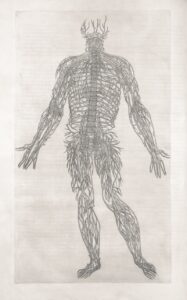
The Core Definition and Functional Concept of the Neural Axis The neural axis fundamentally describes the central nervous system, encompassing the brain, spinal cord, and their intricate network of peripheral nerves. This complex biological architecture serves as the body’s primary communication highway, enabling the seamless exchange of information between various organs, systems, and the external […]
PYRAMIDAL TRACT
Definition and Fundamental Architecture of the Pyramidal Tract The pyramidal tract represents one of the most critical pathways within the central nervous system, serving as the primary conduit for the transmission of signals related to voluntary motor control from the cerebral cortex to the spinal cord and brainstem. This system is traditionally divided into two […]
NERVOUS SYSTEM
Foundations of Neural Architecture and Systemic Organization The nervous system represents an extraordinarily intricate and highly specialized network of cells, tissues, and organs that serves as the primary mechanism for coordinating and controlling the vast array of functions within the human body. As a sophisticated communication infrastructure, it integrates internal and external stimuli to produce […]
MENINGOCELE
Introduction to Meningocele and Neural Tube Defects In the vast landscape of neonatal pathology, meningocele stands as a significant, albeit relatively rare, clinical manifestation within the spectrum of spina bifida. To understand this condition, one must first grasp the complexities of the neural tube, which is the embryonic precursor to the central nervous system. During […]
NEURULATION
The Fundamental Process of Neurulation Neurulation represents one of the most critical and complex milestones in the early embryonic development of vertebrates, serving as the foundational process for the construction of the central nervous system. This intricate biological sequence involves the transformation of a relatively simple, flat layer of cells into a complex, hollow structure […]
NEURAL PARENCHYMA
Defining the Neural Parenchyma: An Overview of the Central Nervous System’s Functional Core The neural parenchyma serves as the fundamental functional tissue of the central nervous system, encompassing the brain and spinal cord. Unlike the stromal or connective tissues that provide a purely structural framework, the parenchyma is the site where the primary physiological duties […]
DORSAL HORN
An Overview of the Dorsal Horn as a Sensory Processing Hub The dorsal horn represents a sophisticated and essential region within the gray matter of the spinal cord, serving as a primary interface for the integration of sensory information and the orchestration of complex spinal reflexes. Historically characterized as a mere relay station, contemporary neurobiological […]
ROSTRAL
The Etymological and Conceptual Foundations of Rostral Orientation In the complex field of neuroscience, the ability to accurately describe the spatial relationships between various biological structures is paramount. The term rostral serves as a fundamental directional descriptor within the standard anatomical nomenclature, specifically referring to the anterior or “front” portion of the brain and body. […]
MENINGOMYELOCELE
Meningomyelocele: A Review of Causes, Diagnosis, and Treatment Meningomyelocele (MMC) represents the most severe and common form of spina bifida aperta, a devastating category of neural tube defects (NTDs) that arise from the incomplete closure of the embryonic neural tube during the first month of gestation. This congenital anomaly is characterized by the protrusion of […]
EFFERENT PATHWAY
Introduction to Efferent Pathways The efferent pathways constitute the crucial output system of the central nervous system, serving as the conduit for neural commands directed toward the body’s peripheral effectors. These effectors primarily include skeletal muscles, smooth muscles, cardiac muscle, and various glandular structures. Fundamentally, efferent pathways are responsible for the transmission of nerve impulses […]
INTERSEGMENTAL ARC REFLEX
Intersegmental Arc Reflex: Overview and Definition The Intersegmental Arc Reflex (IAR) represents a fundamental and complex neural circuit integral to the maintenance of postural control, dynamic balance, and efficient locomotion in vertebrates. Far surpassing the simplicity of basic monosynaptic reflexes, the IAR involves multi-level integration within the central nervous system, effectively linking different segments of […]
CAUDA EQUINA
Anatomical Definition and Etymology The term Cauda Equina, derived from the Latin for “horse’s tail,” is a crucial neuroanatomical descriptor referring to the distal bundle of spinal nerve roots. This collection originates where the solid spinal cord terminates, a point known as the conus medullaris, which is typically situated near the level of the first […]
THORACIC
Definition and Anatomical Boundaries of the Thorax The term thoracic is an anatomical descriptor pertaining directly to the thorax, which represents the chest region—the upper segment of the trunk in mammals. This region is fundamentally defined as the body cavity bounded by a sophisticated skeletal and muscular arrangement, designed primarily for the protection of the […]
RENSHAW CELL
Introduction and Definition The Renshaw cell is a specialized type of inhibitory interneuron residing within the gray matter of the spinal cord, playing a crucial, often underappreciated, role in the regulation of motor output. These cells function as indispensable components of a fast-acting negative feedback system, meticulously designed to modulate and stabilize the firing patterns […]
FORAMEN MAGNUM
Introduction and Definition The foramen magnum, Latin for “great hole,” is a critical anatomical aperture located centrally within the base of the skull. This substantial opening serves as the primary gateway connecting the contents of the cranial cavity—specifically the brainstem—with the vertebral canal, which houses the spinal cord. It represents one of the most vital […]
SPINAL CANAL
Introduction to the Spinal Canal The spinal canal, also referred to as the vertebral canal or spinal cavity, represents a vital anatomical structure integral to the central nervous system. Fundamentally, it is a long, tubular space formed by the sequential arrangement of the vertebrae, extending from the base of the skull (foramen magnum) down to […]
MYELOCELE
Definition and Context within Neural Tube Defects Myelocele represents one of the most severe forms within the spectrum of Neural Tube Defects (NTDs), congenital anomalies that arise from the incomplete closure of the embryonic neural tube during the first month of gestation. Specifically, a myelocele is characterized by the protrusion of the spinal cord tissue […]
LUMBAR PUNCTURE
The lumbar puncture (LP), often referred to clinically as a spinal tap, is a crucial invasive medical procedure employed primarily for diagnostic purposes within neurology and infectious disease management. The fundamental goal of this technique is to obtain a sample of cerebrospinal fluid (CSF), the clear, watery substance that circulates within the brain’s ventricles and […]
CORTICOSPINAL FIBER
Introduction and Definition The corticospinal fiber is a critically important efferent projection axon originating in the cerebral cortex and descending through the brainstem and spinal cord. It constitutes the primary anatomical component of the corticospinal tract (CST), serving as the essential conduit for voluntary motor commands from the brain to the skeletal musculature. This pathway […]
PYRAMID
Introduction to the Pyramids of the Medulla Oblongata The structure known simply as the pyramid in physiological and neurological contexts refers specifically to one of two prominent, paired longitudinal bulges located on the anterior surface of the medulla oblongata, the lowest part of the brainstem. These structures are crucial components of the central nervous system, […]
EXTENSOR RIGIDITY
The rigid contractions of extensor muscles. See decerabrate rigidity. EXTENSOR RIGIDITY: “Damage to motor neurons is associated with extensor rigidity.”
ARCUATE ZONE OF THE BRAIN
Introduction and Anatomical Definition The arcuate zone of the brain represents a crucial, though often subtle, region within the caudal brainstem architecture. Anatomically, it is best described as a bow-shaped portion of the broader reticular formation, a complex network of nuclei and fibers essential for regulating consciousness, sleep-wake cycles, and vital reflexes. This specific zone […]
SPINA BIFIDA
Defining Spina Bifida: A Complex Neural Tube Defect Spina bifida represents one of the most significant and prevalent congenital anomalies affecting the central nervous system, fundamentally classified as a Neural Tube Defect (NTD). This developmental failure occurs early in gestation, typically between the third and fourth weeks, a crucial period when the neural plate folds […]
PIA MATER
Introduction and Definition of the Pia Mater The pia mater, translating literally from Latin as “tender mother” or “soft mother,” constitutes one of the most critical elements of the central nervous system’s protective architecture. It is an exquisitely delicate, highly vascularized connective tissue membrane that intimately follows the contours of the brain and spinal cord, […]
ANTERIOR HORN
Introduction: Defining the Dual Contexts of the Anterior Horn The term Anterior Horn is utilized in neuroanatomy to describe two fundamentally distinct structures located in separate regions of the central nervous system: the spinal cord and the cerebral ventricular system. Due to this dual application, precise context is essential when discussing the anatomy, physiology, and […]
AFFERENT STIMULATION
Defining Afferent Stimulation Afferent stimulation constitutes the fundamental physiological process by which the nervous system receives information regarding changes in the internal and external environments. This process involves the initial impingement of an energy source—be it mechanical, chemical, thermal, or electromagnetic—upon a specialized sensory receptor. The term afferent is derived from the Latin meaning “to […]
SPINAL CORD
Introduction and Definition of the Spinal Cord The spinal cord constitutes a vital, elongated component of the central nervous system (CNS), serving as the primary conduit for information exchange between the brain and the rest of the body. Originating continuously from the lower end of the medulla oblongata, situated at the base of the brainstem, […]
AUTONOMIC MOTOR POOL
Introduction and Definition of the Autonomic Motor Pool The autonomic motor pool represents the definitive central nervous system (CNS) origin point for all efferent control signals destined for the involuntary musculature and glandular tissues of the body. Fundamentally, this pool comprises specialized motor neurons located within the brainstem and the spinal cord, whose axons exit […]
SPINAL ROOT
Introduction to the Spinal Root The spinal root represents a critical juncture in the organization of the human nervous system, serving as the essential anatomical and functional link between the central nervous system (CNS)—specifically the spinal cord—and the peripheral nervous system (PNS). This structure is not a singular entity but rather a complex bifurcation point […]
MEDIAL LEMNISCUS
Introduction and Definitional Context The Medial Lemniscus (ML) constitutes a profoundly critical ascending sensory pathway within the central nervous system, fundamental to the perception of specialized somatosensory information. Functionally, it serves as the direct continuation of the fibers that originate from the dorsal column nuclei in the caudal medulla oblongata, forming a cohesive tract that […]
AFFERENT PATHWAY
The Core Definition and Function The afferent pathway constitutes a fundamental element of the nervous system, defined as the sensory pathway that conducts neural impulses from peripheral sense organs or receptors toward the Central Nervous System (CNS), which includes the brain and spinal cord. This vital transmission system is responsible for relaying all forms of […]
TECTOSPINAL TRACT
Introduction to the Tectospinal Tract The tectospinal tract (TST) represents a crucial descending motor pathway within the central nervous system, primarily dedicated to the mediation of rapid, reflexive movements of the head and neck. This tract is part of the medial motor system, which governs the axial and proximal musculature necessary for posture and orientation. […]
MYELO- (MYEL-)
The Prefix MYELO- (MYEL-): Anatomy, Psychology, and Pathophysiology The Core Definition of MYELO- The prefix MYELO- (or MYEL-) is fundamentally derived from the ancient Greek word myelos (μυελός), meaning marrow or the innermost, deepest part of a structure. In modern medical and psychological terminology, MYELO- carries a crucial dual meaning, referring almost exclusively to either […]
MONOSYNAPTIC STRETCH REFLEX
Monosynaptic Stretch Reflex Definition and Core Mechanism The Monosynaptic Stretch Reflex (MSR), often referred to simply as the stretch reflex or myotatic reflex, represents the most fundamental and rapid circuit unit within the vertebrate nervous system dedicated to somatic motor control. Its defining characteristic is its reliance on a minimal neural pathway: a sensory neuron […]
SENSORIMOTOR ARC
The Sensorimotor Arc: Definition and Mechanism The Core Definition of the Sensorimotor Arc The sensorimotor arc represents the fundamental functional unit of the nervous system responsible for translating sensory input into motor output, often without requiring conscious thought or extensive processing by the brain. At its most basic level, the sensorimotor arc is synonymous with […]
SUBSTANTIA GELATINOSA
The Substantia Gelatinosa (SG): Modulator of Pain and Sensory Input Core Definition and Anatomical Location The Substantia Gelatinosa (SG), often referred to by its anatomical designation, Lamina II of the spinal cord’s gray matter, represents a crucial and unique component of the central nervous system. It is specifically located within the superficial region of the […]
MYELOMENINGOCELE
Myelomeningocele: Neurological Basis and Psychosocial Impact The Core Definition and Fundamental Mechanism Myelomeningocele (MMC) represents the most severe and common form of a group of birth defects known collectively as neural tube defects. At its essence, MMC is characterized by the incomplete closure of the embryonic neural tube, which normally develops into the spinal cord […]
NERVE ROOT
Nerve Root Introduction to Nerve Roots The nerve root represents a critical anatomical structure within the human spinal cord, serving as the initial segment of a nerve as it branches out from the central nervous system to form the peripheral nervous system. Specifically, these roots are the bundles of nerve fibers emerging directly from the […]
BELL-MAGENDIE LAW
Bell-Magendie Law The Bell-Magendie Law: A Fundamental Principle of Neural Organization The Bell-Magendie Law is a foundational principle in neuroscience, asserting a strict functional segregation of nerve roots emerging from the spinal cord. It explicitly states that the dorsal roots, which enter the posterior aspect of the spinal cord, are exclusively responsible for transmitting sensory […]
ALPHA MOTOR NEURON
Alpha Motor Neuron The Core Definition of Alpha Motor Neurons An alpha motor neuron (AMN) represents a pivotal type of efferent neuron found in the central nervous system, specifically within the spinal cord and brainstem, whose primary function is to directly innervate and control the contraction of skeletal muscle fibers. These large, multipolar lower motor […]
LOWER MOTOR NEURON
Lower Motor Neuron Introduction to Lower Motor Neurons Lower motor neurons (LMNs) represent a critical component of the human nervous system, serving as the final common pathway for motor commands originating from the brain and spinal cord to reach the muscles. They are essential for all voluntary and involuntary movements, from the most intricate finger […]
RUBROSPINAL TRACT
Rubrospinal Tract Introduction and Core Definition The rubrospinal tract is a vital component of the descending motor system within the brain, primarily responsible for the control of limb movements. Originating from the red nucleus in the midbrain, it projects to the contralateral cervical and lumbar segments of the spinal cord. This pathway is crucial for […]
EPENDYMA
The Ependyma: Structure, Function, and Clinical Significance The Ependyma: Core Definition and Overview The ependyma represents a crucial component of the central nervous system (CNS), functioning as a specialized thin membrane composed of epithelial cells. This delicate lining is strategically positioned throughout the internal fluid-filled spaces of the brain, specifically within the cerebral ventricles, and […]
DESCENDING TRACT
Descending Tracts Introduction to Descending Tracts The intricate orchestration of movement, posture, and vital internal functions within the human body relies fundamentally on a complex network of neural pathways. Among these, the descending tracts represent a critical component, serving as the primary communication channels through which the brain transmits commands and regulatory signals to the […]
NEUROGLIA
Neuroglia: The Essential Supporting Cells of the Nervous System The Core Definition: Understanding Neuroglia Neuroglia, often referred to simply as glial cells, represent the crucial non-neuronal cells within the central nervous system (CNS) – encompassing the brain and spinal cord – that provide indispensable support and protection to neurons. While neurons are primarily recognized for […]
CROSSED REFLEX
Crossed Reflexes: A Comprehensive Encyclopedia Entry Introduction to Crossed Reflexes A crossed reflex, also widely known as a contralateral reflex, represents a fundamental type of reflex arc observed in humans and various other animal species. Its core characteristic lies in the intriguing phenomenon where a noxious or unexpected stimulus applied to one side of the […]
DESCENDING PATHWAY
Descending Pathway The Core Definition: Orchestrating Movement The Descending Pathway represents a fundamental and indispensable component of the central nervous system, specifically critical to the neural circuits responsible for regulating voluntary and involuntary movement. At its essence, it constitutes a complex network of neurons originating in various regions of the brainstem and extending caudally into […]