Spinal Anatomy: The Hidden Blueprint of Your Mind
Scientifically Reviewed · Dr. Marwa Abd-Alazim · September 10, 2026
Review Criteria & Clinical Standards
This content undergoes rigorous scientific peer-review and medical editorial standards at Arab Psychology Network to ensure clinical accuracy, validity, and compliance with evidence-based guidelines from leading psychological and healthcare authorities (APA / WHO).
Introduction to the Spinal Canal
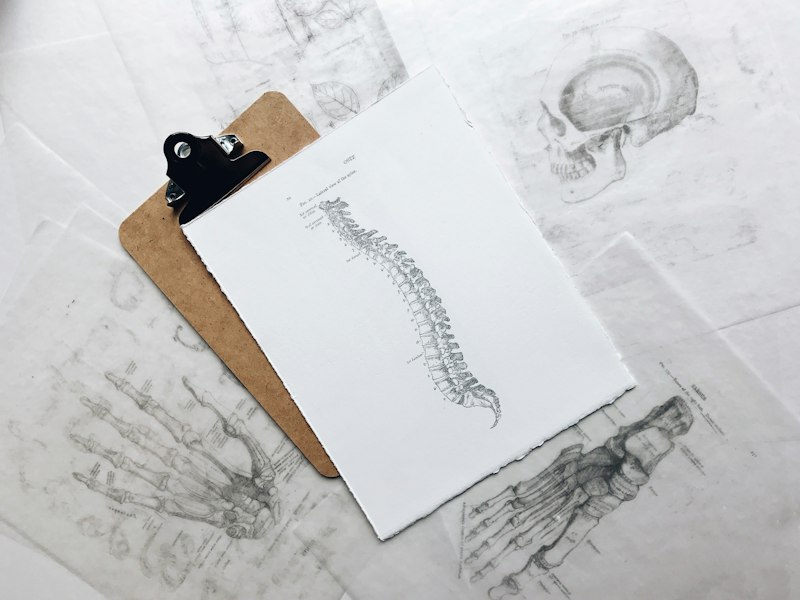
The spinal canal, also referred to as the vertebral canal or spinal cavity, represents a vital anatomical structure integral to the central nervous system. Fundamentally, it is a long, tubular space formed by the sequential arrangement of the vertebrae, extending from the base of the skull (foramen magnum) down to the sacrum. The primary and indisputable function of the spinal canal is the housing and paramount protection of the delicate spinal cord and its associated structures, including nerve roots, connective tissues, and surrounding fluids. This bony enclosure ensures that the vulnerable neural tissues, which are critical for motor control, sensory transmission, and autonomic functions, are shielded from external trauma and mechanical stress. The structural integrity of the spinal canal is thus intrinsically linked to the overall functional integrity of the human nervous system.
The formation of this crucial canal is achieved through the stacking of the individual bony rings—the vertebral foramina—of each vertebra. When aligned, these foramina create the continuous passageway that defines the canal itself. The dimensions of the canal vary significantly across different segments of the spine, reflecting the varying needs for neural tissue volume and mobility required at the cervical, thoracic, and lumbar levels. Furthermore, the canal is not merely a passive container; it is a dynamic structure cushioned by layers of protective membranes known as the meninges, bathed in cerebrospinal fluid (CSF), and stabilized by an intricate network of ligaments and soft tissues. Understanding the architecture of the spinal canal is foundational to recognizing the potential sites of neurological compression or injury, which are often the root causes of debilitating spinal conditions.
As the central axis of communication between the brain and the periphery, the spinal cord’s safety within the canal is non-negotiable for human physiology. Any compromise to the bony dimensions or the internal contents of the spinal canal—whether due to congenital anomalies, degenerative processes, acute trauma, or infectious diseases—can lead directly to profound neurological deficits. Therefore, the spinal canal is more than just a mechanical tunnel; it is an optimized biological shield, demonstrating a complex interplay between skeletal support and neural protection that underscores the importance of the vertebral column in maintaining health and mobility.
Anatomical Structure and Bony Boundaries
The rigid boundaries of the spinal canal are defined primarily by the osseous elements of the vertebrae. Specifically, the anterior boundary is formed by the posterior surfaces of the vertebral bodies and the intervening intervertebral discs. This anterior wall provides substantial load-bearing capacity and shock absorption. The lateral boundaries consist of the pedicles, the short, stout processes that project posteriorly from the vertebral body. These pedicles are crucial structural components, as they define the width of the canal and are key reference points for surgical access. The posterior boundary is completed by the laminae, which are broad, flat plates extending from the pedicles, meeting in the midline to form the spinous process. The overlap and articulation of these elements across the entire vertebral column create a continuous, highly resilient osseous tube, designed to withstand significant forces while maintaining the necessary space for neural tissues.
Although primarily bony, the structural integrity and smooth functioning of the canal rely heavily on associated soft tissues. The canal is lined internally by the ligamentum flavum posteriorly, a series of thick, elastic ligaments connecting the laminae of adjacent vertebrae. The elasticity of the ligamentum flavum allows the spinal column to flex and extend while minimizing the infolding of tissue into the canal space, which could otherwise impinge upon the spinal cord. Anteriorly, the posterior longitudinal ligament (PLL) reinforces the vertebral bodies and discs, running the length of the canal and providing critical stability against disc herniation toward the neural elements. These ligaments are vital components that contribute to both the flexibility and the protective rigidity of the entire structure, ensuring that movement does not translate into neural damage.
The precise dimensions of the canal are inherently linked to the shape and size of the individual vertebral foramina. In typical anatomy, the cervical spine possesses the widest canal relative to the size of its vertebrae, accommodating the large cervical enlargement of the spinal cord necessary for upper limb innervation. The thoracic spine generally has the narrowest canal, reflecting the smaller cross-sectional area of the thoracic cord. The canal widens again in the lumbar region to house the lumbar enlargement and the extensive nerve roots of the cauda equina. These regional variances are crucial in clinical assessment, as a subtle narrowing (stenosis) that might be tolerated in a wider segment could become critically symptomatic in a naturally narrower segment, such as the mid-thoracic region.
Contents and Neural Components
The most critical occupant of the spinal canal is the spinal cord itself, a cylindrical structure of neural tissue that serves as the main conduit for signals between the brain and the rest of the body. The spinal cord typically extends from the medulla oblongata in the skull down to the level of the first or second lumbar vertebra (L1 or L2) in adults, where it tapers into a structure known as the conus medullaris. This intricate structure carries ascending sensory pathways to the brain and descending motor pathways to the peripheral nerves, managing reflexes and integrating crucial bodily functions. The preservation of the spinal cord’s structure and function is the primary mandate of the surrounding bony canal.
Below the termination point of the spinal cord at the conus medullaris, the canal is filled by the cauda equina, or “horse’s tail.” This bundle consists of the long dorsal and ventral roots of the lumbar, sacral, and coccygeal spinal nerves, which must descend within the canal before exiting through their respective intervertebral foramina. Unlike the solid cord, the cauda equina is more resilient to compression due to its dispersed arrangement, though severe narrowing of the lumbar canal can still lead to the debilitating condition known as cauda equina syndrome. Also situated within the canal are the filum terminale, a non-neural fibrous extension of the pia mater that anchors the spinal cord to the coccyx, contributing to longitudinal stability.
Beyond the neural tissue, the canal contains essential supporting elements. These include the meninges—dura mater, arachnoid mater, and pia mater—which enclose and protect the cord. Cerebrospinal fluid (CSF) fills the subarachnoid space (between the arachnoid and pia mater), acting as a hydrostatic shock absorber, ensuring mechanical protection, and facilitating the exchange of nutrients and waste products. Furthermore, the epidural space, situated between the dura mater and the surrounding bone and ligaments, contains loose connective tissue, lymphatic vessels, and a substantial amount of protective epidural fat, which further cushions the structures. A dense network of internal vertebral venous plexuses also resides within the epidural space, managing blood flow and contributing to the overall physiological regulation within the canal.
Protective Mechanisms and Meningeal Layers
The protection afforded by the spinal canal is multi-layered, beginning with the rigid osseous framework and supplemented by the meningeal sheaths. The outermost and toughest layer is the dura mater, a thick, fibrous membrane that forms a durable sac, extending down to the S2 vertebral level where it closes off the dural sac. This layer is highly resistant to tearing and mechanical shear forces, acting as the primary barrier against external contaminants or bony impingement. The space immediately surrounding the dura, the epidural space, contains fat and veins, which allow for slight movement and volume changes without immediate pressure transfer to the neural tissues.
Immediately deep to the dura mater lies the arachnoid mater, a delicate, web-like membrane. The arachnoid mater is separated from the underlying pia mater by the subarachnoid space, which is critical because it is the reservoir for the cerebrospinal fluid (CSF). The CSF is produced primarily in the ventricles of the brain and circulates throughout the CNS, providing buoyant support that effectively reduces the net weight of the spinal cord and brain. This buoyancy minimizes the effects of gravity and inertia, protecting the neural structures from being crushed against the bony walls of the canal during rapid movements or falls. The hydrodynamic properties of CSF are central to the protective strategy of the spinal canal.
The innermost layer is the pia mater, a highly vascularized, thin, translucent membrane that adheres tightly to the surface of the spinal cord and brain, following every contour and fissure. It is through the pia mater that blood vessels penetrate the neural tissue, delivering essential oxygen and nutrients. Specialized projections of the pia mater, known as the denticulate ligaments, anchor the spinal cord laterally to the dura mater along the length of the cord. These anchors prevent excessive side-to-side displacement, ensuring that the spinal cord remains centrally suspended within the CSF-filled dural sac, further stabilizing the sensitive neural tissue against rotational forces and sudden shifts in posture.
Regional and Segmental Anatomy
The structure and volume of the spinal canal are not uniform along its length, exhibiting distinct regional differences corresponding to the functional requirements of the vertebral segments. In the Cervical Spine (C1–C7), the canal is widest relative to the size of the vertebrae. This width is necessary to accommodate the cervical enlargement of the spinal cord, which houses the high concentration of motor and sensory neurons supplying the upper limbs. The increased mobility of the cervical region also necessitates a wider canal to prevent compression during extreme flexion and extension, although this region remains highly vulnerable to trauma.
Moving into the Thoracic Spine (T1–T12), the canal generally narrows and becomes more circular. This segment is characterized by its relative rigidity, constrained by the attachment of the ribs, resulting in limited motion. The neural tissue here is smaller (the thoracic cord), and the canal dimensions reflect this decrease in bulk. This inherent narrowness means that even minor space-occupying lesions, such as small disc herniations or osteophyte formation, can quickly lead to symptomatic spinal cord compression (myelopathy) in the thoracic region, often presenting a diagnostic challenge due to the subtlety of initial symptoms.
The Lumbar Spine (L1–L5) exhibits a return to a wider, often triangular or oval-shaped canal. This widening is required to house the lumbar enlargement of the spinal cord (though the cord terminates high up) and, most importantly, the massive bundle of nerve roots comprising the cauda equina. The lumbar region bears the greatest axial load and experiences the highest degree of degenerative change, making this segment the most common site for acquired spinal stenosis. Below L2, the functional space required is solely for the resilient nerve roots of the cauda equina, making the consequences of narrowing slightly different than compression of the solid cord. Finally, the canal continues into the Sacrum, terminating as the sacral canal, which houses the remaining sacral and coccygeal nerves before they exit the sacral foramina.
Clinical Significance: Pathologies and Disorders
The spinal canal is susceptible to numerous pathological conditions that compromise its protective function, primarily by reducing the available space for the neural contents. The most prevalent of these conditions is Spinal Stenosis, defined as the abnormal narrowing of the spinal canal, the lateral recesses, or the intervertebral foramina. Stenosis can be congenital, but it is far more commonly acquired through degenerative processes associated with aging, such as hypertrophy (overgrowth) of the facet joints, thickening of the ligamentum flavum, and bulging or herniation of the intervertebral discs. This narrowing exerts pressure on the spinal cord or cauda equina, leading to symptoms like neurological claudication, pain, numbness, and weakness.
Acute conditions often involve trauma, such as severe vertebral fractures or dislocations. When the bony elements of the vertebrae are fractured, bone fragments can be displaced posteriorly into the spinal canal, causing immediate and catastrophic compression or laceration of the spinal cord, often resulting in permanent paralysis. Furthermore, the contents of the canal can be affected by space-occupying lesions. These include primary or metastatic tumors (e.g., neurofibromas, meningiomas, or osseous metastases) and vascular malformations. The slow growth of tumors often allows the body some adaptation time, but their eventual mass effect invariably leads to neurological deterioration as the available CSF space is consumed and the cord is displaced.
Inflammatory and infectious diseases also pose a significant threat to the spinal canal. Conditions like epidural abscesses or discitis can lead to collections of pus or inflammatory tissue within the epidural space, rapidly compromising the canal volume and demanding urgent surgical decompression. Less common, but equally serious, are conditions affecting the connective tissue, such as ossification of the posterior longitudinal ligament (OPLL), which causes the stabilizing ligament to turn into bone, protruding into and constricting the spinal canal, leading to progressive myelopathy, particularly in the cervical spine. Early recognition and differentiation of these pathologies are paramount for preserving neurological function.
Diagnostic Modalities and Assessment
Accurate assessment of the spinal canal’s structure and contents relies heavily on advanced medical imaging techniques. Magnetic Resonance Imaging (MRI) is generally considered the gold standard for visualizing the neural elements—the spinal cord, nerve roots, and soft tissues—as well as assessing the extent of fluid (CSF) and identifying inflammation or tumors. MRI provides excellent detail regarding disc herniations, ligamentum flavum thickening, and the degree of neural compression within the canal. It is indispensable for diagnosing myelopathy and radiculopathy resulting from canal stenosis.
While MRI is superior for soft tissue, Computed Tomography (CT) scans excel in visualizing the bony architecture of the vertebral column. CT scans are crucial for assessing acute trauma, evaluating complex fractures, visualizing bone fragments that may impinge upon the canal, and precisely measuring the bony dimensions of the spinal canal, which is essential for pre-operative planning. CT myelography, which involves injecting contrast dye into the subarachnoid space, can be used when MRI is contraindicated or when a clearer outline of the dural sac and nerve roots is required, particularly in cases of severe spinal deformity.
Other specialized tests complement imaging in the assessment of canal function. Electrophysiological studies, such as Electromyography (EMG) and nerve conduction velocity (NCV) tests, help determine the functional status of the nerve roots exiting the canal, confirming whether compression is causing electrical dysfunction. Standard X-rays, though offering limited detail regarding the canal contents, are still useful for screening for alignment issues, instability (dynamic flexion/extension views), and gross pathology like severe spondylolisthesis or advanced degenerative changes that indirectly affect the canal geometry. The integration of these modalities provides a comprehensive view of both the structural integrity and the functional status of the spinal canal.
Therapeutic and Surgical Management
The management of conditions affecting the spinal canal ranges from conservative, non-operative measures to complex surgical intervention, depending on the severity and nature of the pathology. Initial treatment for mild to moderate canal narrowing or inflammation often involves conservative approaches, including physical therapy, anti-inflammatory medications, and epidural steroid injections. The goal of these non-surgical therapies is typically to reduce inflammation, manage pain, and improve functional tolerance without directly altering the canal structure.
When non-operative management fails, or when there is evidence of progressive neurological deficit, surgical decompression becomes necessary. The most common surgical procedure for relieving pressure within the canal is laminectomy, where the lamina and often the spinous process of the affected vertebrae are removed. This removal effectively opens the posterior aspect of the canal, thereby creating more space for the spinal cord and nerve roots, a process often referred to as direct decompression. In cases where the pathology is anterior (e.g., a massive disc herniation or bony spur), an anterior approach may be required to remove the compressive element.
Following decompression, particularly if multiple levels are involved or if instability is present (or created by the surgery), spinal fusion may be required. Spinal fusion involves permanently joining two or more vertebrae using bone grafts and instrumentation (rods, screws, plates) to stabilize the segment and prevent excessive motion that could further irritate the neural elements. Modern surgical techniques, including minimally invasive approaches, are continually evolving to achieve effective decompression while minimizing soft tissue damage and accelerating patient recovery, underscoring the critical nature of maintaining optimal dimensions and function within the protective confines of the spinal canal.