Reproductive Imagination: How Your Mind Replays Reality
Scientifically Reviewed · Dr. Marwa Abd-Alazim · August 20, 2026
Review Criteria & Clinical Standards
This content undergoes rigorous scientific peer-review and medical editorial standards at Arab Psychology Network to ensure clinical accuracy, validity, and compliance with evidence-based guidelines from leading psychological and healthcare authorities (APA / WHO).
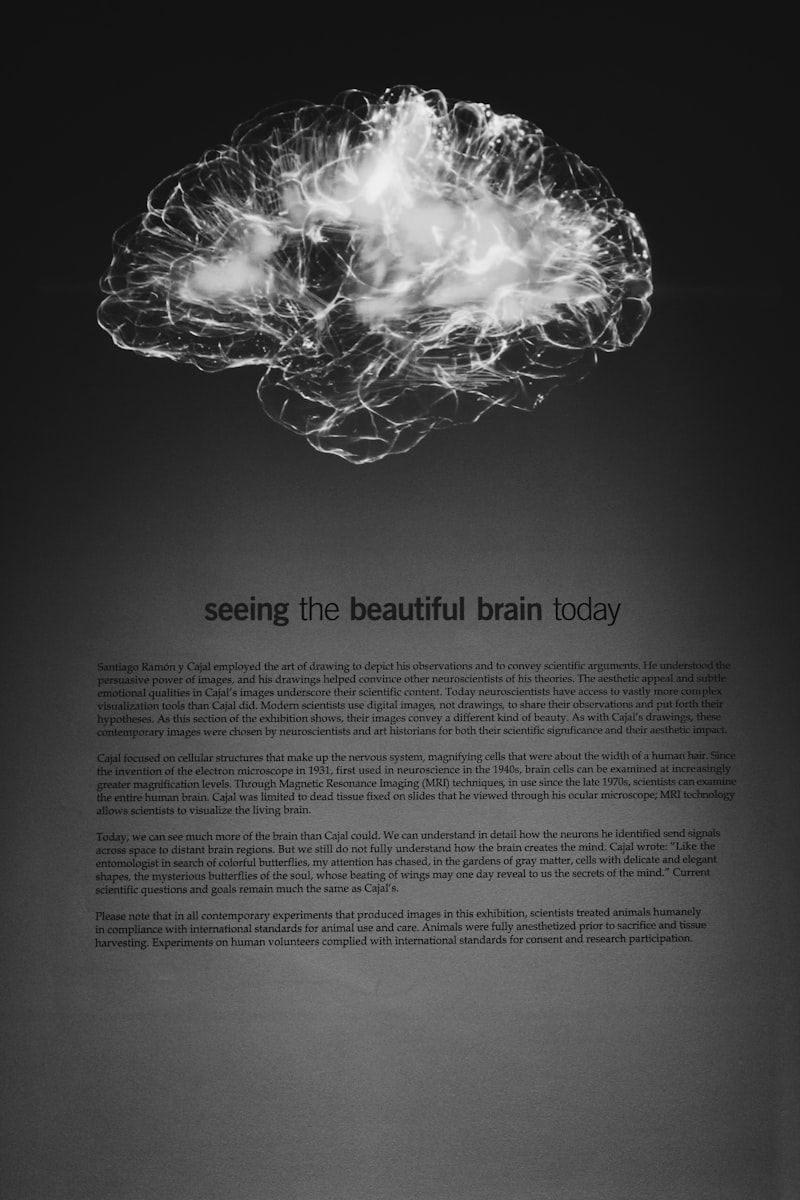
The Core Definition of Reproductive Imagination
Reproductive imagination is the fundamental psychological activity where the mind utilizes its imaginative capacity primarily to reproduce or recreate objects, images, and sensory experiences that have been previously encountered and stored in memory. It is fundamentally an act of retrieval, creating a mental representation that closely mirrors the original sensory input, such as the visual appearance of a house, the sound of a specific voice, or the texture of a familiar object. This process is distinct from mere abstract thought because it involves vivid, sensory-rich mental content, making it a critical bridge between stored knowledge and conscious experience.
The fundamental mechanism underlying reproductive imagination is the capacity of the human brain to store and reactivate complex sensory data patterns. When an individual engages in this form of imagination, they are not inventing a new reality or concept but rather performing a specialized type of memory recall that focuses heavily on the dense, qualitative details inherent in the original perception. The imagination, in this context, serves as a sophisticated retrieval system, allowing us to mentally rehearse past events or examine past objects internally, providing an essential foundation for recognition and learning.
The key characteristic of reproductive imagination is its fidelity to the past. While memory recall itself is often incomplete and subject to reconstruction biases, reproductive imagination aims for an accurate, albeit subjective, recreation of the past percept. This includes recalling minute details, such as the specific shade of a color, the nuanced pitch of a melody, or the exact spatial layout of a familiar environment. The imagination, in this role, functions as a mechanism for internal sensory rehearsal, allowing the individual to manipulate and review sensory information without external stimuli.
Historical and Philosophical Context
The concept of reproductive imagination traces its roots deeply into Western philosophical thought, particularly reaching prominence in the 18th century through the work of the German Enlightenment philosopher, Immanuel Kant. In his seminal work, the *Critique of Pure Reason*, Kant categorized imagination into two distinct functions: the reproductive and the productive (or transcendental). The reproductive imagination was defined as being tied directly to the empirical laws of association, operating under the constraints of memory and perception, essentially recreating elements as they were given in experience.
For Kant, the reproductive imagination was crucial for linking sensory intuitions with rational concepts, enabling the mind to synthesize the scattered, momentary elements of perception into cohesive and recognizable experiences. It provided the necessary link between raw, immediate sensory data and the higher-order understanding required for objective knowledge acquisition. It was viewed as a more mechanical, empirical function, ensuring that the objects of our experience were continuous and recognizable, contrasting sharply with the productive imagination’s role in shaping the very possibility of experience itself.
As psychology emerged as a distinct scientific discipline in the late 19th century, researchers moved the study of imagination away from purely transcendental philosophy and toward empirical studies of mental imagery and memory. Early introspectionist psychologists utilized controlled experiments to examine how individuals consciously rebuilt past images, focusing on the vividness, stability, and accuracy of these internal reproductions. This shift established reproductive imagination as a core component of cognitive processing, paving the way for modern research into mental visualization and the neural correlates of memory retrieval.
The Mechanism of Mental Reproduction
Reproductive imagination is inextricably linked to the complex architecture of human memory systems, particularly episodic memory, which stores specific experiences and their associated sensory details. When an individual attempts to reproduce a past image, neural networks associated with the original perception—including those responsible for processing visual, spatial, and auditory information—are partially reactivated. This reactivation process relies heavily on the quality of encoding that occurred during the initial experience, determining how rich and detailed the mental reproduction will be.
Neuroscientific evidence suggests that the neurological activity involved in reproductive imagination often mirrors the activity observed during actual external perception, albeit typically at a lower intensity. For instance, visualizing a past event or object activates specific regions within the visual cortex (occipital lobe), indicating that the brain utilizes similar pathways for both seeing and for mentally reproducing what has been seen. The clarity and robustness of the mental reproduction are dependent not only on the integrity of the memory trace but also on the individual’s current level of cognitive control and ability to maintain focused attention.
Retrieval cues play a critical and often indispensable role in initiating the reproductive process. Reproductive imagination rarely begins spontaneously; instead, it is usually triggered by an associated stimulus—a scent, a piece of music, a word, or an emotional state that acts as a prompt. These cues aid the mind in accessing and reconstructing the complex array of sensory data necessary to form a complete, recognizable mental image of a past event or object. The effectiveness of these cues highlights the interconnected, associative nature of human memory and imagination.
Practical Example: Recalling a Childhood Toy
To illustrate reproductive imagination, consider a simple, relatable scenario: an adult attempting to recall the specific details of their favorite toy from early childhood, such as a worn, distinctive stuffed animal or a unique, brightly colored building block. This task requires the reproductive imagination to synthesize sensory data that may not have been consciously accessed or articulated for many years. The goal is not merely to acknowledge *that* the toy existed, but to internally *see* and *feel* its characteristics again.
The process begins with the initial prompt, which acts as the retrieval cue (e.g., “Describe your favorite childhood toy”). The mind immediately accesses the relevant index within the episodic memory system, triggering the abstract concept of the object. This initial conceptual retrieval then initiates the reproductive phase, where the imagination starts working to fill in the necessary sensory gaps, transforming the abstract concept into a concrete, visualizable image.
The core work of reproduction involves layering sensory details onto the abstract memory structure. The individual mentally recreates the visual appearance—the specific shade of the material, the location of a tear or worn spot, and the precise shape of its features. They might simultaneously reproduce haptic sensations—the soft, slightly rough texture of the material, the approximate size and weight of the object in their hands, and perhaps even the memory of its faint smell. This deliberate, detailed, and multi-sensory reconstruction of a past percept is the purest manifestation of reproductive imagination.
Significance in Cognitive Psychology
Reproductive imagination holds immense significance within cognitive psychology because it provides fundamental insights into how the human mind structures, organizes, and utilizes past experience to navigate the present. Without the ability to accurately reproduce past sensory input, our capacity to learn from mistakes, recognize familiar environments, and make accurate predictions about future outcomes based on prior events would be severely compromised. It is a cornerstone of experiential learning.
This concept is critical for explaining the formation and maintenance of robust mental models and cognitive schemas. By consistently reproducing past spatial layouts, sequences of actions, or characteristic appearances of objects, individuals build reliable internal maps of the world. These maps allow us to function efficiently and automatically—for example, knowing the shortest route through a building or anticipating the next step in a familiar recipe—without having to process every piece of information anew through immediate perception.
Furthermore, the study of mental imagery, which relies heavily on reproductive processes, serves as a vital tool in cognitive research. Researchers use tasks requiring mental rotation or visualization to measure working memory capacity, assess spatial reasoning skills, and explore the neural impact of various cognitive interventions. Understanding *how* people reproduce images allows psychologists to map the underlying cognitive architecture responsible for integrating sensory input and memory storage, contributing directly to theories of consciousness and information processing.
Clinical and Applied Relevance
The principles governing reproductive imagination have substantial applied relevance, particularly in clinical and educational settings. In fields like cognitive-behavioral therapy (CBT), patients are often guided to utilize controlled mental imagery techniques to reproduce and re-evaluate past experiences, especially those that trigger anxiety or fear. By mentally reproducing the details of a traumatic or stressful scenario in a safe, controlled environment, the patient can work toward restructuring the emotional responses associated with those past events, a technique often central to exposure therapy.
In education and professional training, the ability to accurately reproduce complex visual and spatial information is essential. Disciplines such as architecture, engineering, surgical training, and advanced geometry depend heavily on the ability to mentally reproduce diagrams, anatomical structures, or mechanical schematics. Training methods in these fields frequently incorporate visualization exercises designed to strengthen students’ capacity to retrieve and manipulate long-term sensory memory traces, thereby improving problem-solving abilities and practical application skills.
Reproductive imagination also plays a critical, albeit complex, role in forensic psychology, specifically concerning eyewitness testimony. Witnesses are asked to mentally reproduce the scene of a crime or accident, recalling specific details about lighting, clothing, timing, and the spatial relationships between objects. While psychologists acknowledge that this reproductive process is susceptible to suggestion and reconstruction errors, the underlying cognitive effort is the attempt to accurately recreate previously perceived reality, making the study of its limitations vital for legal procedure.
Connections to Related Psychological Concepts
Reproductive imagination is fundamentally housed within the broad subfield of cognitive psychology, alongside core processes such as memory, attention, language, and problem-solving. It is also deeply intertwined with the study of perception, as the quality and completeness of the original sensory input directly determine the potential quality of the subsequent mental reproduction. These processes are not isolated but form a continuous loop where perception feeds memory, and reproductive imagination allows memory to inform future perception and action.
The most significant psychological contrast to reproductive imagination is Productive Imagination (often termed Creative Imagination). While the reproductive function strives for faithfulness and fidelity to past experience, productive imagination involves the novel rearrangement, synthesis, and transformation of existing mental elements into entirely new forms or concepts that have never been directly perceived. For instance, accurately reproducing the image of a car you saw yesterday is reproductive; imagining a radically new type of vehicle with features drawn from disparate objects is productive.
Reproductive imagination is also related to, yet distinct from, eidetic imagery, commonly referred to as “photographic memory.” Eidetic imagery describes a rare phenomenon where an individual can hold an unusually vivid, stable, and detailed mental image of a perceived object or scene for an extended period after the stimulus is removed. In contrast, reproductive imagination is a universal cognitive function, common to all healthy individuals, typically resulting in images that are less vivid, more fleeting, and subject to the normal decay and reconstructive processes of standard memory.
Finally, effective reproduction requires highly focused attention. The inability to reproduce a past image accurately often stems not from a failure of the memory storage system itself, but from a lack of attention during the original encoding phase. If the initial sensory input was not attended to thoroughly, the memory trace will be weak, confirming the profound interconnectedness of these foundational cognitive processes in creating our subjective reality.