Temporal Conditioning: How Time Controls Your Habits
Scientifically Reviewed · Dr. Marwa Abd-Alazim · August 20, 2026
Review Criteria & Clinical Standards
This content undergoes rigorous scientific peer-review and medical editorial standards at Arab Psychology Network to ensure clinical accuracy, validity, and compliance with evidence-based guidelines from leading psychological and healthcare authorities (APA / WHO).
The Core Definition of Temporal Conditioning
Temporal conditioning represents a specialized and often subtle form of Classical Conditioning, wherein the passage of time itself serves as the crucial trigger or signal for an anticipated event. Unlike standard procedures where a discrete, external cue—such as a bell, light, or tone—is paired with the outcome, in temporal conditioning, the Unconditioned Stimulus (US) is presented at highly reliable, fixed intervals. The fundamental mechanism dictates that the organism learns to develop an internal representation of this interval, allowing the internal “clock” or timing mechanism to become the effective Conditioned Stimulus (CS). This process highlights the organism’s remarkable ability to organize behavior and physiological responses around predictable temporal structures in the environment, even in the absence of explicit external signals. The result is an anticipatory response that peaks just before the next scheduled occurrence of the US.
The core idea behind temporal conditioning is the establishment of an association between a specific duration and a significant environmental event. This is not simply about being exposed to a recurring event; it requires the precise measurement of elapsed time since the last event. The organism must encode the interval, store this information, and then use it to modulate its behavior. For instance, if a reward (US) is delivered every sixty seconds, the subject does not simply wait randomly; its physiological and behavioral preparation (the Conditioned Response, CR) will gradually intensify over the fifty-nine seconds, reaching maximum intensity just before the sixtieth second mark. This demanding requirement distinguishes temporal conditioning from other conditioning paradigms, emphasizing the importance of internal timing mechanisms in adaptive learning and survival, particularly in environments where resources or threats follow periodic cycles.
Furthermore, temporal conditioning underscores the inherent anticipatory nature of learning. Organisms that can accurately predict when a significant event will occur—whether it is food, danger, or relief—have a significant evolutionary advantage. This type of conditioning demonstrates that the brain possesses sophisticated time-keeping systems that are intrinsically linked to the reward and threat processing centers. The accuracy of the resulting Conditioned Response (CR) is often highly dependent on the regularity of the interval; the more precise the schedule of the US presentation, the sharper and more localized the CR becomes, demonstrating fine-grained temporal resolution in learned associations.
Historical Context and Pavlovian Origins
The concept of temporal conditioning emerged directly from the pioneering work of the Russian physiologist, Ivan Pavlov, in the early 20th century. While Pavlov is most famous for demonstrating classical conditioning using discrete signals like bells and metronomes paired with food, his meticulous observations revealed instances where the subjects—primarily dogs—began responding even when the discrete signal was omitted. If the food (US) was delivered on a strictly regular, periodic schedule, the dogs would begin to salivate (CR) at the precise moment the food was due, irrespective of any external signal. Pavlov recognized this phenomenon as a distinct form of associative learning, noting that the timing of the experiment itself became the effective conditioned signal.
Pavlov initially referred to this phenomenon by terms that suggested an internal clock or rhythmicity, recognizing that the dog was responding not to an external cue, but to an internally generated metric corresponding to the passage of time since the last reinforcement. This discovery was critical because it expanded the definition of what could serve as a Conditioned Stimulus. Prior to this, the CS was almost exclusively defined as an external, perceptible environmental event. Temporal conditioning demonstrated that an internal, cognitive, or physiological state—the processing of time—could function as an equally powerful stimulus, initiating a learned physiological response. This observation provided early physiological evidence that time perception is not merely a passive cognitive process but an active, learned component of adaptive behavior.
The context in which this discovery was made was crucial. Pavlov’s laboratory demanded extreme methodological control, ensuring that extraneous variables were eliminated. It was this rigorous control over the temporal spacing of the Unconditioned Stimulus presentations that isolated the effect. Had the timing been irregular or varied, the dogs would likely not have developed the precise, time-locked anticipatory response. Therefore, temporal conditioning served as early proof that learning mechanisms are highly sensitive to periodicity and interval stability, laying foundational groundwork for later research into timing mechanisms in cognitive psychology and neuroscience, particularly concerning how organisms measure and track intervals in the absence of external cues.
Experimental Methodology and Mechanism
Studying temporal conditioning involves a highly controlled experimental design focusing exclusively on interval training. The methodology typically mandates the repeated presentation of the Unconditioned Stimulus (US), such as a mild shock, a puff of air, or food delivery, at a consistent inter-stimulus interval (ISI). For example, a standard experiment might deliver the US precisely every 30 seconds for hundreds of trials. Crucially, no other stimulus (e.g., a tone or light) is presented to alert the subject to the impending US delivery. The only variable available to the subject to predict the event is the internal measurement of the time elapsed since the preceding US.
The primary observation used to confirm successful temporal conditioning is the characteristic pattern of the Conditioned Response (CR). If the interval is 30 seconds, the CR (e.g., blinking, freezing, or salivating) will be virtually absent immediately following the US presentation (the post-US period). However, the strength and frequency of the CR will gradually increase, forming a ramp-like function that peaks just as the 30-second mark approaches. This ramp function demonstrates the subject’s internal timing mechanism actively tracking the interval. If the subject were simply responding randomly, the CR rate would be uniform throughout the interval. The observed peaked anticipation confirms that the organism has effectively conditioned the elapsed time as the signal.
Neuroscientifically, the mechanisms underlying temporal conditioning are complex and are believed to involve dedicated neural circuits responsible for interval timing, distinct from those that process standard sensory input. While the precise neural correlates are still debated, research suggests involvement of the striatum, cerebellum, and the prefrontal cortex in processing durations ranging from milliseconds to several minutes. This specialized timing mechanism is what allows the subject to internally generate the equivalent of a CS. When the internal timer reaches the learned duration, it triggers the associated physiological or behavioral response that constitutes the CR, thus linking fundamental Learning Theory principles with the neurobiology of time perception.
A Practical Example: Anticipating Daily Rhythms
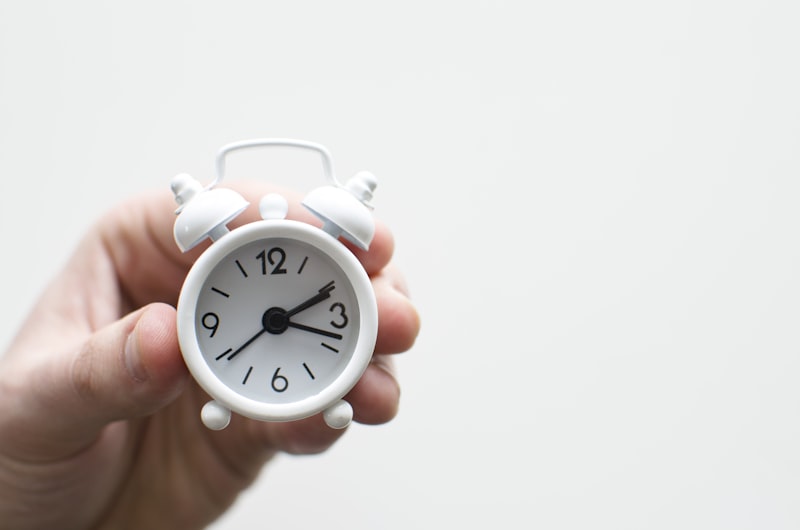
A highly relatable real-world example of temporal conditioning involves human sleep-wake cycles and physiological anticipation, often manifested by waking up just minutes before a scheduled alarm clock is set to ring. This common experience occurs when an individual maintains a consistent wake-up time over an extended period, creating a highly reliable, periodic schedule for the transition from sleep to activity. The alarm clock itself is usually the US—the event that triggers the immediate physiological arousal necessary for waking. However, when the schedule is consistent, the internal biological systems begin to predict this arousal based on time elapsed during the sleep cycle.
The application of the conditioning principle in this scenario can be broken down step-by-step.
- The Unconditioned Stimulus (US): The sudden sound of the alarm clock, followed by the immediate physiological and behavioral necessity of getting out of bed.
- The Unconditioned Response (UR): Immediate arousal, increased heart rate, cortisol release, and alertness triggered by the alarm.
- The Conditioning Interval: The consistent duration of the sleep period (e.g., 8 hours), which serves as the internal measurement cue.
- The Conditioned Stimulus (CS): The internal realization that the required duration (8 hours) has nearly elapsed, acting as the temporal signal.
- The Conditioned Response (CR): The anticipatory physiological shift—a natural, gradual increase in alertness, slight rise in body temperature, and release of preparatory hormones (like cortisol)—that occurs spontaneously a few minutes before the alarm is due, causing the individual to wake up naturally before the external cue is presented.
This example clearly illustrates how the body’s internal mechanisms, particularly those linked to Circadian Rhythms, integrate with learned associations. The body learns to initiate the waking sequence based purely on the expectation derived from prior experience of a fixed temporal interval. This internal preparation is highly adaptive, allowing the body to transition smoothly and efficiently, demonstrating the powerful influence of rhythmic temporal cues on physiological homeostasis and routine behavior.
Significance and Impact in Psychology
Temporal conditioning holds significant importance within the field of psychology because it provides crucial evidence that associative learning is not solely dependent on external, contiguous stimuli. It demonstrates that organisms, from simple invertebrates to complex humans, possess robust internal mechanisms capable of encoding, storing, and retrieving information about duration, and that these mechanisms can be directly integrated into fundamental learning processes. This validates the study of timing and anticipation as a core component of cognitive and behavioral science.
The impact of this concept extends into several applied areas. In clinical psychology and addiction research, temporal conditioning helps explain why cravings and withdrawal symptoms often peak at specific times of the day or in predictable cycles, even when external cues (like seeing drug paraphernalia) are absent. For individuals struggling with substance use disorders, the habitual timing of use can become a powerful, internal CS, triggering intense physiological responses (CRs) at the expected time, which must be addressed during treatment.
Furthermore, in behavioral therapy and education, understanding temporal conditioning assists in designing effective schedules for reinforcement. By maintaining highly regular timing for rewards or breaks, educators and clinicians can harness the power of anticipation to enhance focus and motivate behavior. If a child knows precisely when a reward is due, the anticipation itself can maintain task engagement throughout the interval. Ultimately, temporal conditioning bridges basic research into classical conditioning with complex cognitive concepts like memory, attention, and the neurobiology of time perception, demonstrating the profound influence of internal temporal regularity on adaptive behavior across the lifespan.
Connections to Related Concepts and Broader Context
Temporal conditioning resides primarily within the subfield of Behavioral Psychology, as it is fundamentally rooted in the principles established by Ivan Pavlov and the broader framework of associative learning. However, due to its reliance on internal processing of duration, it also intersects significantly with Cognitive Psychology and Neuroscience, particularly concerning models of interval timing and expectation.
Several related concepts help contextualize temporal conditioning:
- Trace Conditioning: In trace conditioning, a discrete CS is presented and then removed, followed by a gap (the trace interval), and finally the US is presented. While both involve a temporal gap, in trace conditioning, the CS is an external event whose memory must be maintained across the gap. In contrast, temporal conditioning uses no external CS; the time interval itself is the primary cue.
- Interoceptive Conditioning: This involves conditioning based on internal bodily states (e.g., changes in heart rate, blood pressure, or hunger) as the CS or US. Temporal conditioning can often overlap with interoceptive processes, as the body’s measurement of time may involve subtle, periodic shifts in internal physiology that serve as reinforcing cues.
- Delayed Conditioning: This is the most effective form of classical conditioning, where the CS begins and remains present until the US is delivered. Temporal conditioning differs because the “stimulus” (the elapsed time) is continuously generated internally, rather than presented externally throughout the interval.
Temporal conditioning serves as a critical model for understanding how organisms track and respond to cyclical events, positioning it as a key concept that links the simple associative principles of classical learning to complex biological rhythms. It emphasizes that the environment is structured not only spatially but also temporally, and that successful adaptation requires the ability to internalize and utilize this temporal structure effectively. The study of Temporal Conditioning continues to inform research into how internal biological clocks influence mood, performance, and pathological conditions linked to disrupted timing, such as insomnia and attention deficit disorders.