Manual Laterality: The Science Behind Your Dominant Hand
Scientifically Reviewed · Dr. Marwa Abd-Alazim · August 18, 2026
Review Criteria & Clinical Standards
This content undergoes rigorous scientific peer-review and medical editorial standards at Arab Psychology Network to ensure clinical accuracy, validity, and compliance with evidence-based guidelines from leading psychological and healthcare authorities (APA / WHO).

The Core Definition of Manual Laterality
Right-handedness is formally defined as the component of dexterity that reflects a significant and consistent preference for using the right hand over the left hand to perform fine motor tasks, daily chores, and jobs requiring precision. This preference is not merely a matter of learned habit but is deeply rooted in the organization of the human nervous system, specifically related to the phenomenon of cerebral lateralization. While humans exhibit varying degrees of skill in both hands, the designation of right-handedness applies to individuals who use the right hand more skillfully, easily, and reliably than the left, particularly when performing complex, sequential actions such as writing, cutting, throwing, or utilizing specialized tools. This characteristic applies to approximately 90% of the global human population, making it the statistically dominant form of manual preference.
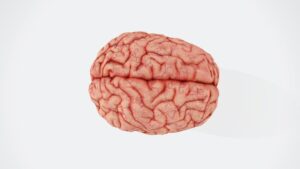
The fundamental mechanism driving this preference lies in the principle of contralateral control, where the left cerebral hemisphere primarily manages movement and sensory input for the right side of the body. In the vast majority of right-handed individuals, the left hemisphere is dominant not only for motor control but also for specialized cognitive functions, most notably language processing. This specialization suggests a profound evolutionary and developmental link between hemispheric function, language, and manual skill. The distinction between the hands is often subtle in gross motor tasks, such as lifting heavy objects, but becomes critically apparent in tasks requiring high levels of coordination and sequential planning, reinforcing the idea that handedness is a spectrum, but with a strong statistical clustering toward the right side.
It is crucial to understand that right-handedness is not just a binary choice; rather, it is a reflection of inherent biological organization. The degree of skill difference between the hands can vary widely among right-handers, with some exhibiting near-ambidexterity for certain tasks, while others display absolute reliance on the right hand for almost all manipulations. However, the consistent selection of the right hand for primary action defines the classification. This concept is often studied alongside its opposite, left-handedness, and the less common state of ambidexterity, under the broader umbrella of human laterality, which encompasses functional differences between the two sides of the body, including footedness, eyedness, and ear preference.
Historical and Biological Foundations
The study of laterality and right-handedness has fascinated philosophers and scientists for centuries, but its entry into formal psychology began in the mid-19th century with pioneering neurological research. A key figure in establishing the biological basis of handedness and cerebral asymmetry was the French physician Paul Broca. In the 1860s, Broca’s post-mortem examinations of patients who had suffered from aphasia (loss of ability to understand or express speech) led him to identify that the damage was consistently located in the left frontal lobe, now known as Broca’s area. This discovery provided concrete evidence that the brain was functionally asymmetrical and established the left hemisphere as the primary seat of language for most individuals.
This realization led researchers to link the left hemisphere’s dominance for language directly to the preference for the right hand, governed by the same hemisphere. For decades, the dominant theory was that right-handedness was a direct, perhaps necessary, consequence of the evolutionary specialization of the left hemisphere for language. While modern research confirms a strong correlation—about 95% of right-handers have left-hemisphere language dominance—the exact causal relationship remains complex and debated. Early attempts to explain handedness often focused on environmental pressures, suggesting that societal norms or cultural training forced infants into using their right hands. However, archaeological evidence, which consistently shows a ratio of tools and artifacts designed for right-handed use that mirrors the modern 90:10 split, suggests that this preference is an ancient and likely innate characteristic of the human species.
More recent biological investigations have focused on the developmental origins, moving away from purely environmental or simple genetic explanations. Ultrasound studies in the late 20th century demonstrated that fetal preference for thumb-sucking can be observed as early as the 10th to 15th week of gestation, long before significant environmental influence is possible. Furthermore, the preferred hand used by the fetus in utero strongly correlates with the later preference observed after birth. This prenatal manifestation underscores the idea that handedness is determined very early in development, likely influenced by a complex interplay of genetic factors, epigenetic modifications, and subtle structural asymmetries in the developing motor cortex and spinal cord, rather than cultural conditioning alone.
Mechanisms and Genetic Influences
The mechanism that determines whether an individual will be right- or left-handed is highly complex and remains one of the major unsolved puzzles in neuroscience and genetics of handedness. While handedness clearly runs in families, suggesting a hereditary component, the pattern of inheritance does not follow simple Mendelian rules (e.g., a single dominant or recessive gene). Instead, current models propose a polygenic inheritance system, meaning multiple genes, each contributing a small effect, interact with environmental and developmental factors to determine manual preference. Researchers have identified several candidate genes, with the strongest current evidence pointing toward genes involved in cell asymmetry and the establishment of left-right body structures during embryonic development.
One gene that has garnered significant attention is LRRTM1 (Leucine Rich Repeat Transmembrane Neuronal 1), which has been tentatively linked to the determination of handedness and may play a role in establishing asymmetry in the brain. However, it is essential to note that no single “handedness gene” has been definitively isolated that dictates the trait absolutely. The prevailing theory suggests that the genetic contribution primarily biases the development toward right-handedness. This genetic bias is hypothesized to lead to stronger motor control pathways originating in the left hemisphere, resulting in the eventual manifestation of right-hand dominance. For the majority of the population, this biological bias is successfully implemented, resulting in right-handedness.
Beyond genetics, the structural asymmetries within the brain are significant. Studies using MRI have found subtle differences in the motor cortex size and structure between the hemispheres of right-handed individuals, with the motor area controlling the right hand often showing slightly greater volume or activation efficiency. Furthermore, differences in the corpus callosum, the large bundle of nerve fibers connecting the two hemispheres, have also been observed. These structural differences suggest that the brain of a right-handed person is subtly organized to prioritize the processing and execution of fine motor commands originating from the left cerebral hemisphere, allowing for the superior execution of complex manual tasks using the right hand.
Right-Handedness in Action: A Practical Illustration
To illustrate the establishment and application of right-handedness, consider the common real-world scenario of a child learning the complex motor skill of writing. When a young child first begins to manipulate a crayon or pencil, both hands may be used awkwardly or interchangeably. However, as the child progresses through early schooling, teachers and parents often observe a rapid crystallization of preference, usually settling on the right hand. This preference is not solely based on external encouragement but is driven by the internal efficiency of the child’s developing nervous system.
The “how-to” of this process involves a neurological feedback loop. The child instinctively attempts to perform the demanding task of forming letters. If the child is biologically predisposed to right-handedness, the motor commands initiated by the left hemisphere will be executed more smoothly, rapidly, and consistently by the right hand. This initial success creates a positive reinforcement loop. The brain learns that the right hand provides superior results for this high-precision task. As the child practices, the neural pathways controlling the right hand are myelinated and strengthened, making the use of the left hand for writing feel increasingly clumsy and inefficient by comparison.
Specifically, the process involves several steps: First, the child attempts the task. Second, the left hemisphere executes the motor plan through the corticospinal tract, which crosses over to control the right hand. Third, sensory feedback confirms the quality of the movement. For the right-handed child, this feedback is consistently more accurate and satisfying when the right hand is used. This repeated success solidifies the dominance, transforming a slight biological predisposition into a firmly established manual preference. Over time, the right hand becomes the default choice for all tasks requiring precision, such as using scissors, threading a needle, or operating a computer mouse, confirming the functional definition of right-handedness in daily life.
Significance in Psychology and Society
The study of right-handedness and its contrast with other forms of laterality holds profound significance for the field of psychology, particularly in the areas of neuropsychology and cognitive psychology. Understanding the prevalence and organization of right-handedness is crucial because of its robust correlation with cerebral lateralization. Since approximately 90% of the population is right-handed, and 95% of those individuals have language centers located in the left hemisphere, handedness serves as an easily observable proxy for underlying brain organization. This allows researchers to make reliable predictions about functional asymmetry when designing cognitive experiments or evaluating neurological damage.
In clinical application, particularly in neurosurgery and neuropsychological assessment, determining a patient’s handedness is a standard procedure. For instance, before invasive brain procedures, knowing whether a patient is right- or left-handed helps surgeons anticipate where critical functions like speech and language are localized. This information minimizes the risk of damaging essential cognitive areas. Furthermore, studying atypical laterality patterns (such as left-handedness or ambidexterity) in relation to learning disabilities or neurological disorders sometimes reveals important deviations from the standard brain organization associated with right-handedness, providing clues about developmental trajectories.
Beyond the clinic, right-handedness has a massive, though often invisible, impact on society. The vast majority of human tools, machinery, and environments are designed for right-hand dominance. From simple items like scissors, can openers, and computer keyboards to complex industrial equipment, the ergonomic design assumes the user’s primary manipulative power resides in the right hand. Culturally, the dominance is reflected in language and symbolism, where the word “right” often carries connotations of correctness, morality, or competence (e.g., “right-hand man,” “being in the right”), while the left often historically held negative or awkward connotations, demonstrating the deep-seated societal normalization of right-hand preference.
Connections and Relations to Other Concepts
Right-handedness is best understood as a behavioral manifestation of a much broader psychological and biological principle: laterality. Laterality refers to the functional specialization of one side of the body or one hemisphere of the brain over the other. Right-handedness is tightly correlated with cerebral lateralization, which is the specialization of the two hemispheres for different functions. For example, in most right-handers, the left hemisphere is specialized for analytic thought, sequential processing, and language, while the right hemisphere is often specialized for spatial reasoning, holistic processing, and emotional recognition.
The concept of right-handedness is intrinsically linked to its opposite, left-handedness. While right-handedness is the statistical norm, the existence of a persistent minority (around 10%) of left-handers is vital to the study of laterality. Research comparing the two groups often reveals differences in brain structure, particularly in the corpus callosum, which may be larger or differently organized in left-handers, potentially reflecting a less strongly lateralized, or more bilaterally distributed, organization of function. Additionally, the relationship between handedness and language dominance is slightly weaker in left-handers; while the majority still exhibit left-hemisphere language control, a significantly higher percentage of left-handers show right-hemisphere language dominance or bilateral language representation.
Right-handedness falls squarely within the subfields of Biological Psychology and Cognitive Psychology, and more specifically, Neuropsychology. These fields utilize handedness as a fundamental variable when studying perception, motor control, developmental milestones, and the neurological basis of human behavior. The study of manual preference helps map the functional organization of the brain, providing critical insight into how complex traits, which are neither purely genetic nor purely environmental, come to define human individuality and collective societal structure.