Trace Conditioning: Master the Art of Mental Timing
Scientifically Reviewed · Dr. Marwa Abd-Alazim · October 23, 2026
Review Criteria & Clinical Standards
This content undergoes rigorous scientific peer-review and medical editorial standards at Arab Psychology Network to ensure clinical accuracy, validity, and compliance with evidence-based guidelines from leading psychological and healthcare authorities (APA / WHO).
The Core Definition of Trace Conditioning
Trace conditioning represents a specific and nuanced procedure within the framework of classical conditioning, initially investigated as part of the systematic study of temporal relationships between stimuli. Fundamentally, it involves an associative learning paradigm where the presentation of the conditioned stimulus (CS) and the unconditioned stimulus (US) are separated by a distinct, measurable period of time known as the trace interval. Unlike other conditioning methods where stimuli overlap, in trace conditioning, the CS is presented and then completely removed before the US is delivered.
The core principle distinguishing trace conditioning is the necessity for the organism to bridge this temporal gap using memory. The conditioned response (CR) can only be established if the subject retains a cognitive representation, or a “trace,” of the CS in working memory long enough for the US to appear. This memory trace serves as the crucial predictive link. Consequently, trace conditioning tasks are far more cognitively demanding than simple delay conditioning, placing significant reliance on higher-order brain regions, which must sustain the neural representation of the CS during the stimulus-free interval.
This procedure provides invaluable insight into the intersection of learning, memory, and attention. The successful formation of the association is highly dependent on the length of the trace interval; generally, the shorter the interval, the stronger and more readily acquired the conditioned response will be. As the interval extends beyond a few seconds, the cognitive load increases, often leading to a rapid decline in learning success, underscoring the limitations of the subject’s working memory capacity in forming such predictive associations.
Historical Roots and Pavlovian Context
The theoretical foundation of trace conditioning stems directly from the pioneering work on associative learning conducted by Russian physiologist Ivan Pavlov during the late 19th and early 20th centuries. While Pavlov himself laid out the initial spectrum of temporal relationships—including simultaneous, delayed, and backward arrangements—the systematic exploration of the trace procedure became essential for understanding how the organism’s internal states mediate external stimuli association. Early researchers realized that conditioning was not merely a mechanical pairing but involved complex psychological processing.
The introduction of the trace interval challenged the notion that contiguous presentation was strictly necessary for learning. When Pavlovian experiments demonstrated that associations could still be formed even when the CS had vanished before the US arrived, it necessitated a shift from purely peripheral, reflex-based models of learning to those incorporating central processes. This historical development marked a pivot point in behavioral psychology, forcing the recognition that cognitive elements—specifically short-term memory—played a vital and active role in forming predictive relationships with the environment.
The distinction between various temporal arrangements allowed psychologists to categorize learning complexity. Trace conditioning stood out because its success was demonstrably different across species and developmental stages. For instance, while simple delay conditioning (where the CS and US overlap) can be observed even in decorticate animals, trace conditioning typically requires an intact and functioning neocortex and associated structures, solidifying its status as a benchmark for measuring the integrity of complex cognitive circuitry in various experimental animal models.
The Neurobiological Mechanism
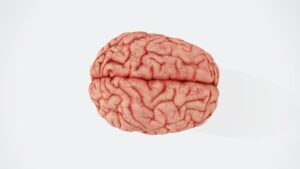
From a neurobiological perspective, trace conditioning is considered a superior tool for dissecting the neural circuits responsible for complex learning and memory consolidation. Unlike delay conditioning, which primarily relies on basic reflexive pathways often localized to the cerebellum and brainstem for timing and execution, trace conditioning unequivocally recruits structures associated with higher cognitive function, most notably the hippocampus and the medial prefrontal cortex.
The necessity for hippocampal involvement stems from its critical role in working memory and bridging temporal gaps. During the trace interval, the hippocampus is believed to sustain the neural representation of the CS until the US occurs, effectively linking the two stimuli across time. Evidence from animal models, particularly research involving fear conditioning, consistently shows that lesions or pharmacological inactivation of the hippocampus severely impairs the acquisition and expression of trace conditioned responses, while often having minimal impact on delay conditioned responses. This functional dissociation highlights the unique cognitive demands of the trace procedure.
Furthermore, the prefrontal cortex (PFC) is involved in maintaining attention and inhibiting distracting information during the trace interval, contributing to the overall success of the association. The interaction between the hippocampus (memory bridge) and structures like the amygdala (emotional processing, especially in fear conditioning) is crucial. The neural trace held by the hippocampus is passed to the amygdala upon the arrival of the US, allowing the association to be encoded and stored, ultimately resulting in the predictable conditioned response. The robustness of this circuit is therefore directly tied to the individual’s ability to focus and maintain the memory representation over time.
A Practical Illustration: The Everyday Application
To fully grasp the mechanism of trace conditioning, one can analyze a common, real-world experience that requires maintaining a predictive expectation across a period of silence. Consider the scenario of a student who is learning to associate a specific sound cue in a lecture hall with an imminent, important announcement from the professor.
The process unfolds in distinct stages requiring memory retention. First, the Conditioned Stimulus (CS) is presented: the professor momentarily clears their throat and taps their microphone, a distinct, non-verbal signal. This sound immediately stops. Second, the Trace Interval begins: there is a silence lasting approximately ten seconds as the professor gathers notes or adjusts equipment. During this time, the student’s brain must retain the trace of the microphone tap, anticipating the next event. Third, the Unconditioned Stimulus (US) arrives: the professor announces a pop quiz or a change in the assignment deadline, which elicits an involuntary emotional response (anxiety or attentiveness).
After several repetitions of this sequence (microphone tap, silence, important announcement), the student forms a trace conditioned association. The sight or sound of the microphone being tapped (CS) will, even during the silent trace interval, elicit a Conditioned Response (CR), such as an immediate tightening of posture, increased heart rate, or heightened focus, in anticipation of the announcement. This example clearly demonstrates that the student’s nervous system successfully linked two events separated by time, relying entirely on the maintenance of a short-term memory trace to bridge the temporal discontinuity and facilitate prediction.
Significance, Impact, and Clinical Relevance
The study of trace conditioning holds profound significance for both theoretical psychology and clinical neuroscience. Theoretically, it provides a crucial experimental paradigm for separating learning mechanisms that are reflexive (delay conditioning) from those that are fundamentally cognitive (trace conditioning). By requiring the active engagement of working memory and attentional resources, trace conditioning serves as a powerful behavioral marker for assessing the integrity of the hippocampus and prefrontal cortex functionality.
In clinical and diagnostic settings, the ability to perform trace conditioning tasks is often used as a sensitive indicator of cognitive impairment. Research has consistently shown that performance deficits in trace conditioning tasks are highly correlated with several neurological and psychiatric conditions where memory and executive function are compromised. For instance, individuals suffering from schizophrenia frequently exhibit impaired trace conditioning relative to healthy controls, suggesting a dysfunction in the neural circuits governing the maintenance of the memory trace across the temporal gap.
Furthermore, trace conditioning research is vital in the study of aging and neurodegenerative disorders, such as Alzheimer’s disease. Because the hippocampus is one of the earliest brain structures affected by these conditions, measuring the decline in the ability to acquire trace conditioned responses offers a quantifiable and objective index of cognitive deterioration. This impact extends into pharmacology, where researchers use the trace conditioning paradigm to test the efficacy of novel drugs aimed at enhancing memory and cognitive function in vulnerable populations.
Relations to Other Conditioning Procedures
Trace conditioning is one of several temporal arrangements studied under the umbrella of Behaviorism and Learning Theory, each offering a distinct perspective on the conditions necessary for forming robust associations. Its primary point of comparison is Delay Conditioning, which is characterized by the overlap of the CS and the US. In delay conditioning, the CS remains present until the US is delivered, making it temporally contiguous and generally resulting in faster and stronger learning that relies less on higher cognitive processing.
Other arrangements highlight the importance of prediction. In Simultaneous Conditioning, the CS and US begin and end at the exact same moment. This arrangement often yields poor results because the CS lacks predictive value; it does not signal the impending arrival of the US, but merely co-occurs with it. The brain finds it difficult to use a stimulus to prepare for an event that is already happening. Trace conditioning, by contrast, maintains the predictive order (CS first, then US), allowing the CS to function as a meaningful warning signal, provided the memory trace holds.
Finally, Backward Conditioning involves presenting the US before the CS. This arrangement typically results in the weakest, or even non-existent, conditioned responses. Since the US (e.g., the shock) has already occurred when the CS (e.g., the tone) is presented, the CS cannot possibly predict the US. This comparison emphasizes that regardless of the temporal gap imposed by trace conditioning, the fundamental requirement for successful associative learning remains the predictive nature of the CS relative to the US, a principle that trace conditioning maintains through the active involvement of memory resources.
Summary of Key Components
Trace conditioning requires the engagement of active cognitive processes to link temporally discontinuous events. This reliance on memory makes it a powerful tool for cognitive neuroscience.
- Stimulus Sequence: CS onset, CS offset, Trace Interval (empty time), US onset.
- Critical Mechanism: The organism must maintain a memory trace of the CS during the interval to associate it with the subsequent US.
- Neural Substrate: Heavily dependent on the integrity of the hippocampus and the prefrontal cortex, differentiating it from simpler forms of classical conditioning.
- Utility: Used clinically to assess cognitive deficits in disorders affecting working memory and executive function, such as schizophrenia and Alzheimer’s disease.