Scientific Explanation: Decoding the Human Mind
Scientifically Reviewed · Dr. Marwa Abd-Alazim · September 18, 2026
Review Criteria & Clinical Standards
This content undergoes rigorous scientific peer-review and medical editorial standards at Arab Psychology Network to ensure clinical accuracy, validity, and compliance with evidence-based guidelines from leading psychological and healthcare authorities (APA / WHO).
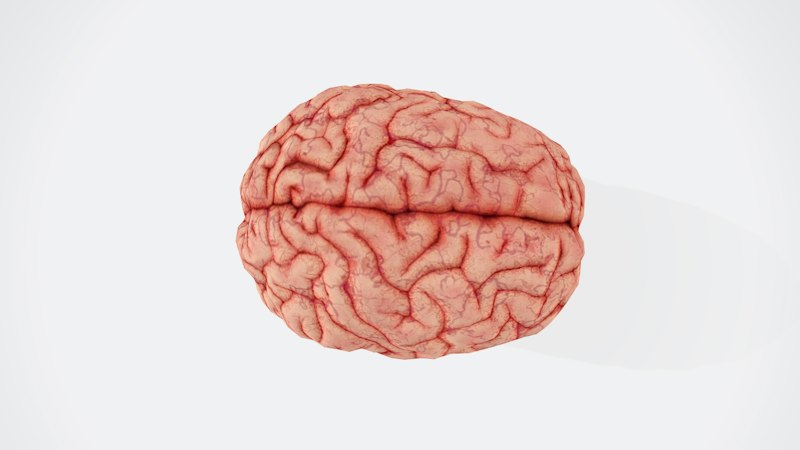
Scientific Explanation: Foundational Principles
Scientific explanation constitutes a core, indispensable component of the entire enterprise of scientific inquiry. Far more than simple description, it represents the highly structured process of providing a comprehensive, logical, and evidence-based account of observed phenomena. While explanations are intuitively understood as answers to the fundamental “why” questions—such as why a specific event occurred or why a law of nature holds true—their utility extends critically to addressing “how” and “what” questions, delving into the mechanisms, processes, and conditions that govern the natural and artificial world. A robust scientific explanation must always be firmly tethered to the available empirical evidence, ensuring consistency with established scientific principles, laws, and theories applicable to the specific domain under investigation. This requirement for empirical grounding differentiates scientific explanation from philosophical speculation or anecdotal assertion, placing it squarely within the realm of testable knowledge.
The historical evolution of what constitutes a proper scientific explanation has been dominated by various philosophical models, perhaps most notably the Deductive-Nomological (D-N) Model, often associated with Carl Hempel. This model posits that a complete scientific explanation functions essentially as a logical argument where the description of the phenomenon to be explained (the explanandum) is deduced from a set of premises (the explanans). The explanans typically consists of two main components: general laws of nature and specific statements concerning initial conditions. Although the D-N model faces significant limitations—particularly in its inability to fully account for causal explanations or its difficulty handling probabilistic events—it underscores the crucial requirement that scientific explanations must possess predictive power and adhere to strict standards of logical coherence. Modern approaches often favor causal mechanistic explanations, emphasizing the identification of the underlying physical or biological structures and processes that directly give rise to the observed phenomenon, moving beyond mere logical deduction to focus on the verifiable reality of the causal relationships.
A central challenge in formulating scientific explanations lies in the nuanced distinction between correlation and causation. Scientific explanation is inherently concerned with identifying genuine causal links—factors that actively produce or influence the outcome—rather than merely describing relationships where two events happen concurrently. The process demands rigorous methodology to isolate variables and demonstrate that changes in one variable reliably produce changes in the phenomenon being studied. Furthermore, scientific explanations must be capable of handling complexity, acknowledging that most real-world phenomena are not determined by a single cause but rather emerge from the interaction of multiple contributing factors, often operating at different scales of analysis. Understanding these foundational principles—the commitment to evidence, the pursuit of logical structure, and the focus on verifiable causality—is essential for appreciating the rigor inherent in scientific knowledge production.
The Process of Scientific Inquiry and Explanation
The construction of a scientific explanation is seldom an instantaneous revelation; rather, it follows a systematic and often iterative methodological path rooted deeply in the scientific method. This process invariably commences with the detailed observation and precise description of the phenomenon under scrutiny. Scientists must first accurately document what is happening, quantifying the variables involved and defining the scope of the investigation. This initial descriptive phase is critical because an explanation cannot be valid if the phenomenon it seeks to explain is inaccurately characterized. Once the phenomenon is clearly delineated, the subsequent stage involves the formulation of preliminary hypotheses regarding the potential causes or factors responsible for its occurrence. These hypotheses transform the initial “what” and “how” observations into testable “why” statements.
Following the development of preliminary causal hypotheses, the scientific process transitions into the critical phase of empirical investigation. This phase involves the systematic design and execution of experiments, observational studies, or other forms of data collection specifically intended to test the proposed causal relationships. The goal here is to determine the precise effects of the hypothesized causes on the phenomenon. For instance, if a specific factor is proposed as the cause, researchers manipulate that factor (or observe its natural variation) while controlling for extraneous variables, seeking to establish a statistically significant and repeatable relationship. This rigorous testing phase is necessary to move beyond mere speculation and ensure that the proposed cause-effect relationship holds up under controlled conditions. The strength of the resulting explanation relies directly on the integrity and replicability of these empirical investigations, demanding that all proposed causal links be subjected to intense scrutiny.
If the body of evidence generated through experimentation strongly indicates that the proposed cause or set of factors is indeed responsible for the phenomenon, then a formal, logical explanation is constructed. This construction is a delicate act of synthesis, requiring the integration of the empirical findings with existing theoretical knowledge. The final explanation must not only account for the specific data gathered during the investigation but must also be fully consistent with established, overarching scientific principles and laws. A successful explanation acts as a coherent framework, tying together the specific observations, the tested causal mechanisms, and the broader theoretical context. Furthermore, the explanation must possess explanatory scope, meaning it should ideally be capable of accounting for all relevant evidence gathered, including anomalies or contradictory findings, thereby increasing its overall robustness and acceptance within the scientific community.
The Role of Evidence and Empirical Testing
The authority and validity of any scientific explanation derive entirely from the quality and quantity of the evidence that supports it. Scientific explanations are not accepted based on authority, tradition, or rhetorical appeal, but strictly on their ability to withstand repeated empirical scrutiny. The concept of evidence in this context is broad, encompassing meticulously collected quantitative data from controlled experiments, qualitative observations from field studies, and verifiable data derived from historical or astronomical observations. Crucially, the evidence must be objective and reproducible; that is, other researchers, using the same methodology, should be able to arrive at comparable results, thereby confirming the explanatory power of the hypothesis. This requirement for replicability is the bedrock upon which scientific confidence is built, serving as a critical filter against spurious or subjective claims.
Empirical testing serves as the ultimate arbiter in the scientific method. Hypotheses are not proven in the absolute sense; rather, they are continuously subjected to attempts at falsification, a concept championed by philosopher Karl Popper. A strong scientific explanation is one that has survived multiple attempts at being proven wrong, providing stronger and stronger confidence in its underlying mechanisms. This iterative process of testing and refinement often utilizes advanced statistical methods to evaluate the probability that the observed results occurred by chance, ensuring that the detected causal links are scientifically meaningful and not merely artifacts of random variation. When empirical investigation yields data inconsistent with a proposed explanation, the scientific imperative is clear: the explanation must be modified, restricted in scope, or, if the contradictory evidence is overwhelming, discarded entirely. This commitment to evidence-based revision prevents scientific knowledge from stagnating and drives continuous progress.
The evaluation of evidence further necessitates consideration of the source and methodology of data collection. Scientists must critically assess potential sources of bias, measurement error, and confounding variables that might distort the true relationship between cause and effect. The preference is always given to evidence derived from highly controlled studies, particularly those employing methodologies like randomized controlled trials (in fields where applicable), because these designs offer the highest level of confidence in attributing causality. The transparency of the testing process—including the open publication of methods and data—is essential, allowing the global scientific community to scrutinize the evidence base and validate the resulting explanation. Only through this collective, decentralized scrutiny can an explanation transition from a provisional hypothesis to an accepted scientific theory with widespread consensus.
Explanation as Predictive Power
A critical hallmark distinguishing a successful scientific explanation is its inherent ability to generate accurate and verifiable predictions regarding the future behavior or unknown characteristics of the phenomenon under investigation. The capacity for prediction is not merely an optional add-on but an essential consequence of truly understanding the underlying principles and mechanisms governing the system. If an explanation correctly identifies the fundamental causal laws, then logically, applying those laws to new or hypothetical initial conditions must yield accurate expectations about the resulting outcome. In essence, prediction serves as the ultimate, forward-looking test of the explanation’s depth and truth value, validating the claim that the model accurately reflects reality.
The relationship between explanation and prediction is often viewed as reciprocal and intertwined. An explanation derived from past observations is validated when the predictions it generates about future observations prove to be consistent with reality. For example, the detailed explanation of plate tectonics not only accounted for the historical distribution of earthquakes and mountains but also allowed geologists to predict the locations and types of seismic activity likely to occur in specific zones in the future. Conversely, if an explanation consistently fails to predict outcomes accurately, it signals a fundamental flaw in the proposed mechanisms or the governing principles, necessitating immediate revision or replacement. This predictive failure is a powerful driver of scientific innovation, forcing researchers to seek more accurate and comprehensive models.
The utility of predictive power extends far beyond simple academic validation; it forms the basis for engineering, technology, and applied sciences worldwide. If scientists can explain the molecular structure that causes a certain material to fail under specific environmental stress, they can predict how similar materials will behave in new designs, thereby informing engineering choices and preventing catastrophic failures. If epidemiologists can explain the mechanism behind the transmission of a virus, they can predict the rate of spread under different mitigation scenarios, allowing public health officials to design effective interventions. Therefore, the ability to forecast future states or control system outcomes based on an explanation is arguably the most valuable practical outcome of the scientific process, demonstrating a deep, functional understanding of the system’s dynamics.
Dynamic Nature and Revisability of Scientific Explanations
Crucially, scientific explanations are never considered absolute, immutable truths. They are provisional constructs—the best current models available that account for all known data—and are always subject to modification, refinement, or outright discarding when new, contradictory evidence emerges. This inherently dynamic and self-correcting nature is perhaps the most defining characteristic of the scientific method, distinguishing it sharply from dogma or fixed belief systems. The commitment to empirical evidence dictates that when observations or experimental results consistently deviate from the expectations set by the prevailing explanation, the explanation, not the evidence, must yield. This principle ensures that science remains responsive to the complexities of the observable world.
The process of revising scientific explanations is not an admission of failure but a testament to the strength and objectivity of the scientific process. It ensures that scientific knowledge remains adaptive and continually improves its accuracy and scope. Often, explanations are not completely discarded but are instead refined to accommodate new information, a process known as paradigm shift or progressive refinement. For instance, the explanation of light evolved from a purely particle model to a wave model, and finally to a quantum mechanical model recognizing wave-particle duality. This demonstrates a principle of continuity, where newer, more sophisticated explanations often incorporate the predictive successes of older ones while expanding their explanatory range to cover previously inexplicable phenomena.
This systematic willingness to challenge and revise existing explanations is fundamental to scientific progress. It encourages ongoing critical evaluation by the scientific community, fostering an environment where challenging established paradigms is not only accepted but actively encouraged, provided the challenge is supported by compelling empirical data. When an existing explanation proves incapable of integrating significant new findings—such as inexplicable anomalies or the discovery of entirely new forces—the scientific community mobilizes to develop novel explanations that offer a better, more comprehensive fit for the expanded dataset. This self-correction mechanism guarantees that scientific understanding is always striving toward a closer approximation of reality, ensuring the knowledge base remains robust against future empirical challenges.
Applications Across Disciplines
The principles and methodology of scientific explanation are universally applicable across the vast spectrum of scientific disciplines, providing a unified framework for understanding phenomena ranging from the infinitesimally small in particle physics to the cosmically large in astrophysics. Scientific explanations are vital for understanding natural phenomena, such as the mechanisms of biological evolution, the formation of geological structures, the dynamics of weather patterns, and the processes of chemical reactions. By identifying the underlying physical, chemical, and biological laws that govern these systems, scientists can construct explanations that allow for both deep theoretical understanding and effective practical management, such as predicting the impact of climate change or developing new pharmaceutical treatments based on molecular interactions.
Beyond the natural world, scientific explanation is equally crucial for analyzing and improving artificial phenomena and engineered systems. This includes explaining why certain manufactured materials exhibit specific properties (e.g., the tensile strength of alloys), how complex machines operate (e.g., the functioning and limitations of artificial intelligence algorithms), or the failure modes of large-scale infrastructure like bridges or power grids. In engineering and technology, the ability to explain “why” a system behaves the way it does allows designers to anticipate problems, optimize performance, and create new technologies based on a reliable understanding of physical and computational constraints. The explanation here often translates directly into formalized design principles, safety standards, and operational protocols necessary for technological advancement.
Furthermore, scientific explanation provides essential tools for grappling with complex systems, particularly those involving human behavior and large-scale interactions, such as social and economic systems. Explaining phenomena like market crashes, demographic shifts, the spread of cultural norms, or the efficacy of public policy requires sophisticated models that account for multiple interacting variables, feedback loops, and emergent properties. By applying scientific principles—collecting rigorous data, testing hypotheses about causal drivers (e.g., policy changes, economic incentives), and constructing logical, evidence-based models—researchers can develop explanations that allow for predictions about systemic behavior. This capability is instrumental in enabling policymakers and leaders to design better strategies for managing global challenges, improving societal outcomes, and mitigating risks associated with human and complex adaptive systems.
Conclusion: The Importance of Scientific Explanation
In summation, scientific explanation is far more than a rhetorical exercise; it is the fundamental mechanism through which scientific inquiry translates raw observation into verifiable knowledge and actionable insight. It mandates a rigorous, structured approach involving the precise identification of the causes underlying a phenomenon, followed by exhaustive empirical testing of those causes through carefully designed experiments and observational studies. The synthesis of evidence derived from these investigations culminates in the construction of logical, coherent explanations that must be consistent with all established scientific principles relevant to the domain. This process ensures the integrity and reliability of the knowledge produced.
The utility of these explanations extends across all human endeavors. They serve as reliable foundations for generating crucial predictions about the future behavior of natural, artificial, and complex systems. Whether applied to forecasting climate change, developing advanced materials, or designing effective public health interventions, the explanatory power inherent in scientific knowledge allows humanity to anticipate outcomes, control variables, and ultimately design better strategies for managing and interacting with the world. This predictive capacity is the practical manifestation of deep scientific understanding, enabling control and informed decision-making.
Finally, the enduring strength of the scientific enterprise lies in its inherent commitment to self-correction. Scientific explanations are not static monuments but living frameworks that are perpetually scrutinized and refined. This constant willingness to modify or discard inadequate models in favor of those better supported by new, compelling evidence ensures the continuous refinement and ultimate reliability of scientific knowledge. Thus, the pursuit of robust scientific explanation remains the cornerstone of all scientific progress, driving our ever-increasing ability to understand and navigate the complexities of existence.
References
Cherry, K. (2020). What Is Scientific Explanation? Retrieved from https://www.thoughtco.com/what-is-scientific-explanation-604317
Khan Academy. (n.d.). What is scientific explanation? Retrieved from https://www.khanacademy.org/science/biology/scientific-explanation
McMullin, E. (1984). The Inference that Makes Science. In P. D. Asquith & T. N. Nickles (Eds.), Scientific Inquiry and the Social Sciences: A Volume in Honor of Donald T. Campbell (pp. 41–78). San Francisco, CA: Jossey-Bass.