Response Inhibition: Master Your Brain’s Brake Pedal
Scientifically Reviewed · Dr. Marwa Abd-Alazim · August 31, 2026
Review Criteria & Clinical Standards
This content undergoes rigorous scientific peer-review and medical editorial standards at Arab Psychology Network to ensure clinical accuracy, validity, and compliance with evidence-based guidelines from leading psychological and healthcare authorities (APA / WHO).
Introduction and Definition
The Stop-Signal Task (SST), often referred to simply as the Stop Task, is a fundamental paradigm in cognitive psychology and neuroscience designed specifically to quantify the capacity for response inhibition. Response inhibition is a crucial executive function, representing the ability to deliberately suppress or cancel a planned or initiated action. This procedure places participants in a dual-task scenario where they must typically execute a primary reaction (the “Go” task) but occasionally must abort that reaction when presented with a secondary, inhibitory stimulus (the “Stop” signal). The elegance of the SST lies in its ability to isolate and measure the temporal dynamics of this crucial inhibitory process, providing a robust metric for impulse control. Understanding the mechanisms of stopping is vital, as deficits in response inhibition are central features in numerous neurological and psychiatric disorders, including Attention-Deficit/Hyperactivity Disorder (ADHD), Obsessive-Compulsive Disorder (OCD), and substance use disorders. The task’s objective is precisely to determine the temporal threshold at which an ongoing motor program can no longer be successfully inhibited, revealing the underlying speed of the inhibitory process itself.
The core structure of the task involves frequent Go trials and infrequent Stop trials. In a typical setup, participants might be asked to press a button corresponding to the direction of an arrow (the Go signal). Crucially, during a small percentage of trials, usually 20 to 30 percent, an auditory tone or visual cue—the Stop signal—is presented shortly after the Go signal appears. When this Stop signal is presented, the participant must immediately attempt to withhold the button press. The critical variable manipulated by the experimenter is the time interval between the presentation of the Go signal and the presentation of the Stop signal; this is known as the Stop-Signal Delay (SSD). By systematically varying the duration of the SSD, researchers can pinpoint the moment where the internal stopping mechanism fails, providing the necessary data to calculate the key dependent measure of the paradigm: the Stop-Signal Reaction Time (SSRT). This metric is theorized to represent the latency of the internal process responsible for cancelling the motor response.
The reliability and theoretical underpinning of the SST have made it the gold standard for measuring inhibitory control in laboratory settings. It moves beyond simple error rates to provide a temporal measure of inhibition, differentiating it from tasks that merely assess proactive control or conflict monitoring. The concept hinges upon the principle that the Go process and the Stop process are independent races toward a finish line. The success or failure of inhibition on any given trial depends entirely on which process—the execution of the response or the cancellation of the response—finishes first. If the Go process reaches its execution threshold before the Stop process has completed its cancellation command, the participant responds. Conversely, if the Stop process is faster than the Go process on that specific trial, the response is successfully inhibited. This independent race model is the theoretical backbone that permits the mathematically precise estimation of the SSRT, allowing for sophisticated analysis of individual differences in inhibitory capabilities.
Historical Context and Theoretical Foundations
The conceptual framework for the Stop-Signal Task traces its origins back to early research on human reaction time and inhibition, notably building upon Donders’ subtractive method, yet offering a more nuanced approach to measuring mental chronometry. The modern SST, however, is most closely associated with the seminal work of Logan and Cowan in the late 1970s and 1980s, who formalized the independent race model. This model posits that two independent, stochastic processes—the Go process and the Stop process—are initiated simultaneously or near-simultaneously upon the presentation of their respective stimuli. Crucially, the outcome of the trial is determined by a simple competition between the finishing times of these two processes. This theoretical foundation is essential because it allows researchers to treat the Stop process as a quantifiable reaction time, even though it is a reaction time that results in the absence of an overt behavioral response. Without this mathematical framework, the task would yield only binary success/failure data, rather than a continuous measure of inhibitory speed.
The theoretical robustness of the independent race model relies on several core assumptions that must hold true for the SSRT estimation to be valid. Firstly, it assumes that the Go and Stop processes are stochastically independent; that is, the speed of the Stop process does not influence the speed of the Go process, and vice versa. Secondly, it assumes that the Stop process, once triggered, is ballistic and irreversible—it either succeeds entirely or fails entirely, and there is no partial inhibition. While these assumptions have been subject to intense scrutiny and debate over the decades, empirical evidence largely supports the utility and predictive power of the model across various populations and experimental manipulations. For instance, manipulations known to speed up overall reaction time (the Go process) typically do not proportionally affect the SSRT, lending weight to the independence assumption. This theoretical underpinning allows the SST to transcend simple behavioral observation and provide a window into the timing of internal cognitive operations.
Prior to the formalization of the SST, measures of inhibition were often confounded with general attentional capacity or working memory load. The innovation introduced by the SST was the ability to isolate inhibition from these other executive functions. The task design forces inhibition to occur under time pressure, thereby minimizing the influence of voluntary, strategic slowing, which can contaminate results in simpler response-withholding tasks. The Stop signal forces an immediate, reactive response cancellation, which is argued to reflect a more automatic and fundamental mechanism of motor control. This distinction between reactive inhibition (measured by SST) and proactive inhibition (strategic preparation to inhibit) has become a major focus in modern cognitive control research, allowing researchers to explore the differential neural substrates that support these two forms of self-control. The theoretical legacy of the SST is therefore not just a measurement tool, but a foundational concept that structures how inhibition is understood within cognitive psychology.
Methodology and Implementation of the SST
Implementing the Stop-Signal Task requires meticulous control over timing and stimulus presentation to ensure the integrity of the collected data. The task typically begins with a block of Go trials (often 100 or more) to establish a stable baseline for the Go reaction time (Go RT). This baseline is critical because the Go RT distribution serves as the reference against which the speed of the Stop process is ultimately compared. Following the baseline block, the main experimental trials commence, mixing Go trials (approximately 70-80%) with Stop trials (20-30%). The stimuli used for the Go task must be clear and require a rapid, forced-choice response, such as identifying the orientation of a specific letter or the location of a target. The Stop signal itself must be highly discriminable—a loud tone, a sudden change in background color, or a specialized visual cue—to ensure maximum attention and immediate processing when it occurs.
The crucial methodological component is the precise control and manipulation of the Stop-Signal Delay (SSD). Researchers employ various methods for setting the SSD, but the most common and statistically robust approach is the tracking procedure, often referred to as a staircase procedure. In this method, the SSD is not fixed but dynamically adjusts based on the participant’s performance on the preceding Stop trials. If the participant successfully inhibits the response, the SSD is lengthened on the subsequent Stop trial, making the task harder. Conversely, if the participant fails to inhibit (commits an error), the SSD is shortened, making the task easier. This adaptive tracking typically aims to maintain a success rate of approximately 50% inhibition probability. Maintaining this 50% inhibition probability is vital because it ensures that the Stop signal is presented at a point in time that directly corresponds to the mean of the Go RT distribution, which is necessary for accurate calculation of the SSRT using the integration method.
Proper data collection and handling are also paramount for valid results. Data logging must capture the precise timing of all stimuli presentation, the participant’s response time on Go trials, and the outcome of Stop trials (success or failure). Any trials where the Go RT is excessively fast (anticipatory responses) or excessively slow (lapses in attention) are usually excluded from analysis, as they violate the assumption of a stable Go process distribution. Furthermore, ensuring that participants understand that the Stop signal is a command to cancel the action, rather than just slow down, is necessary. Instructions must emphasize speed on Go trials and immediate cancellation upon hearing the Stop tone. Methodological rigor ensures that the resulting SSRT is a clean estimate of reactive inhibition, uncontaminated by strategic behavioral adjustments or measurement noise.
The Stop-Signal Delay (SSD) and its Critical Role
The Stop-Signal Delay (SSD) is arguably the most powerful experimental variable in the entire Stop-Signal Task paradigm. It represents the temporal gap between the onset of the Go stimulus and the onset of the Stop stimulus. By definition, a shorter SSD means the Stop signal arrives very quickly after the Go signal, giving the inhibitory process a significant advantage and resulting in a high probability of successful inhibition. Conversely, a longer SSD means the Go process has already progressed substantially toward execution by the time the Stop signal is presented, making successful inhibition much less likely. The manipulation of the SSD essentially allows the experimenter to probe the moment-by-moment vulnerability of the ongoing motor plan to cancellation.
The determination of the SSD sequence is critical for achieving a stable and measurable inhibition function. As discussed previously, researchers often employ an adaptive staircase procedure where the SSD is adjusted by a fixed increment (e.g., 50 milliseconds) after each Stop trial outcome. The primary goal of this tracking mechanism is to converge upon the point of subjective equiprobability, where the probability of successful stopping is 0.5 (P(Stop|Signal) = 0.5). At this 50% point, the delay is optimized to capture the maximum information about the difference between the Go and Stop process completion times. If the SSD were consistently too short (e.g., 100 ms), almost all stops would be successful, providing little information about the speed of the Stop process. If the SSD were consistently too long (e.g., 500 ms), almost all stops would fail, again yielding insufficient data. The adaptive tracking ensures the experiment operates in the most informative range of difficulty.
Analyzing the relationship between the SSD and the probability of stopping success yields the inhibition function. This function is typically represented as a psychometric curve, plotting the probability of responding (failing to stop) against the increasing length of the SSD. As the SSD increases, the probability of responding monotonically increases, demonstrating the temporal constraints on inhibition. The shape and slope of this inhibition function are themselves insightful, reflecting not only the mean speed of the Stop process but also its variability. Steep slopes suggest low variability in the inhibitory process, whereas shallower slopes indicate greater trial-to-trial fluctuation in the time it takes to initiate and complete the stop command. The precise point on the Go RT distribution corresponding to the SSD associated with 50% success is the key element required for the subsequent calculation of the Stop-Signal Reaction Time (SSRT).
Measuring Inhibition: Stop-Signal Reaction Time (SSRT)
The primary outcome metric derived from the Stop-Signal Task is the Stop-Signal Reaction Time (SSRT). The SSRT is not a directly observed measurement, but rather an estimated value representing the time required for the internal, covert inhibitory process to fully halt the motor response. Conceptually, the SSRT is the duration from the moment the Stop signal is presented until the inhibitory command effectively cancels the action. A shorter SSRT indicates faster, more efficient response inhibition, while a longer SSRT suggests sluggish or impaired inhibitory control.
There are two primary methods for calculating the SSRT based on the independent race model: the integration method and the mean method. The most commonly accepted and theoretically robust method is the integration method (sometimes called the subtraction method based on the mean). This method requires the following steps:
- Establish the distribution of Go Reaction Times (Go RTs) from successful Go trials.
- Identify the average probability of responding (failing to stop), P(Respond|Stop), across all Stop trials.
- Determine the RT quantile from the Go RT distribution that corresponds to this failure probability. If the failure rate is 30%, find the Go RT at the 70th percentile. This specific Go RT is designated as the Go RT associated with the successful stop attempts.
- Calculate the SSRT by subtracting the mean Stop-Signal Delay (SSD) from this calculated quantile Go RT (SSRT = Quantile Go RT – Mean SSD).
This subtraction is mathematically sound because, according to the race model, the successful stop trials are those where the time taken for the Go process to complete (the Go RT) was longer than the time taken for the Stop process (SSRT) plus the delay (SSD). By subtracting the known delay (SSD) from the effective Go RT, the remaining time is the duration of the Stop process itself. Furthermore, it is crucial to note that while the integration method often uses the mean SSD, sometimes a more precise method utilizes the SSRT calculated for each individual SSD bin, providing a more granular view of the inhibitory process across time. Regardless of the precise calculation variant, the SSRT provides a crucial temporal metric unavailable in simpler behavioral measures, allowing researchers to compare the speed of inhibition across different experimental conditions, populations, or pharmacological interventions.
Neural Correlates and Brain Regions Involved
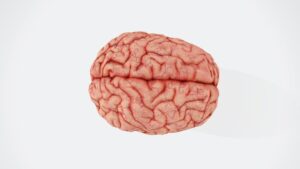
Neuroimaging studies, particularly those using functional Magnetic Resonance Imaging (fMRI) and electroencephalography (EEG), have successfully mapped the neural network responsible for the execution of the Stop-Signal Task. Response inhibition is not mediated by a single brain region but rather involves a distributed network of areas working in concert, primarily centered on the prefrontal cortex and subcortical structures. The most consistently implicated region is the right inferior frontal gyrus (rIFG), which is widely considered the critical node for implementing reactive inhibitory control. Activation in the rIFG is robustly observed during successful Stop trials compared to successful Go trials, suggesting its role in initiating the motor cancellation command.
However, the rIFG does not act in isolation; it functions as part of a larger circuit known as the cortico-basal ganglia-thalamo-cortical loop. Specifically, the rIFG is believed to project excitatory signals to the subthalamic nucleus (STN) of the basal ganglia. The STN, in turn, exerts a powerful, generalized inhibitory influence on the motor output pathway via the globus pallidus interna (GPi), effectively acting as a “brake” on the motor system. This hyperdirect pathway—rIFG to STN to GPi—is hypothesized to be the anatomical substrate of the Stop process itself, providing a rapid mechanism for global response suppression. The speed of transmission along this hyperdirect pathway is thought to directly determine the speed of the calculated SSRT.
Beyond these core structures, other areas contribute to the successful performance of the SST. The pre-supplementary motor area (pre-SMA) is often active and is thought to play a role in monitoring conflict and detecting the need for inhibition, providing top-down control that signals the rIFG to initiate the stopping process. Furthermore, areas in the posterior parietal cortex and the thalamus are involved in attentional processing and relaying information relevant to the Go task. Lesion studies and transcranial magnetic stimulation (TMS) experiments targeting the rIFG have confirmed its causal role, demonstrating that temporary disruption of this region significantly impairs a participant’s ability to inhibit responses, leading to longer SSRTs. The convergence of behavioral and neuroscientific evidence strongly supports the SST as a valid tool for probing the function and integrity of the brain’s inhibitory control circuitry.
Clinical and Research Applications
The Stop-Signal Task is one of the most widely utilized paradigms in clinical neuropsychology and cognitive neuroscience due to its sensitivity in detecting subtle impairments in inhibitory control. Deficits in the ability to suppress inappropriate actions are hallmarks of numerous clinical conditions, making the SSRT a valuable diagnostic and research biomarker. One of the most prominent applications is in the study of Attention-Deficit/Hyperactivity Disorder (ADHD). Individuals with ADHD consistently exhibit significantly prolonged SSRTs compared to neurotypical controls, reflecting a core deficit in reactive inhibition that contributes to characteristic impulsivity and restlessness. The SSRT can therefore be used to track the efficacy of pharmacological treatments, such as stimulants, which often demonstrate a corresponding shortening of the SSRT, indicating improved inhibitory function.
Furthermore, the SST is employed extensively in research concerning addiction and substance use disorders. It has been repeatedly shown that individuals struggling with alcohol dependence, nicotine addiction, or opioid use disorders often display impaired inhibitory control, manifesting as longer SSRTs. This impairment is theorized to reflect a weakened capacity to resist prepotent responses (i.e., drug seeking or consumption), linking the underlying cognitive deficit directly to maladaptive behavior. The SSRT serves as a crucial tool for investigating whether these inhibitory deficits predate the onset of addiction (a risk factor) or are consequences of chronic substance exposure (a result of neurotoxicity or neural adaptation). This research informs targeted cognitive training and behavioral interventions aimed at strengthening inhibitory control.
Beyond these primary clinical applications, the SST provides valuable insights into normal aging and various neurodegenerative conditions. Studies show a consistent trend where SSRT tends to lengthen with age, suggesting a natural decline in the efficiency of the inhibitory system. In conditions such as Parkinson’s disease, Huntington’s disease, and frontotemporal dementia, the SST is used to assess the impact of basal ganglia and frontal lobe pathology on executive control. Finally, in pharmacological research, the SST is frequently used as a standardized metric to evaluate how specific neurotransmitter systems—such as the dopaminergic and noradrenergic systems—modulate inhibitory speed, providing mechanistic links between neurochemistry and observable behavior. The versatility and precision of the SSRT ensure its continued role as a cornerstone of cognitive control research.
Limitations and Future Directions
While the Stop-Signal Task is a robust measure, it is not without theoretical and methodological limitations that continue to drive research improvements. One significant limitation revolves around the core assumption of the independent race model, specifically the assumption that the Go and Stop processes are truly independent. Some researchers argue that the act of preparing for a potential Stop signal (proactive control) inherently influences the speed or variability of the Go process, potentially violating the independence assumption and leading to misestimation of the SSRT. For instance, if participants strategically slow their Go responses on all trials to improve their chance of stopping, the calculated SSRT may appear artificially short. Future research is focused on developing statistical models that can better disentangle reactive inhibition from proactive slowing, perhaps by incorporating measures of trial-to-trial variability and sequential dependencies.
Another methodological challenge lies in the calculation of the SSRT itself, particularly the choice between the integration method and simpler methods like subtracting the mean SSD from the mean Go RT. While the integration method is preferred, its accuracy relies heavily on accurately estimating the specific quantile of the Go RT distribution that corresponds to the probability of responding. Furthermore, the SST provides a single measure of reactive inhibition speed (SSRT), but inhibition is a multi-faceted construct. It does not fully capture other aspects of inhibitory control, such as resistance to distraction (interference control) or the ability to override deeply ingrained habits. Therefore, contemporary cognitive batteries often pair the SST with tasks like the Flanker task or the Stroop task to obtain a more comprehensive profile of executive functions. The future of SST research involves integrating it within multi-level models that combine behavioral performance with neural data (e.g., EEG time-frequency analysis) to provide a richer, temporally resolved understanding of the inhibition process.
Future directions for the SST also involve broadening its application and ecological validity. While traditionally a laboratory task, efforts are underway to adapt the SST for real-world contexts, such as driving simulations or virtual reality environments, to understand how inhibitory control functions under high cognitive load or emotional stress. There is also increasing interest in utilizing computational modeling, such as diffusion models, to analyze the SST data. These advanced models move beyond the simple race framework to explain not just the resulting reaction times, but the entire process of decision-making, including the rate of evidence accumulation and the threshold for response commitment. By continuously refining the theoretical models and leveraging modern neuroscientific tools, researchers aim to solidify the SSRT as an even more precise and mechanistically insightful measure of human self-control.