Tag: executive functions


The Frontal Lobe: Command Center of the Human Mind

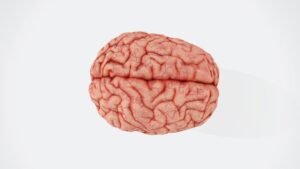
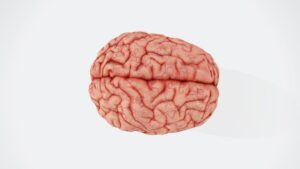
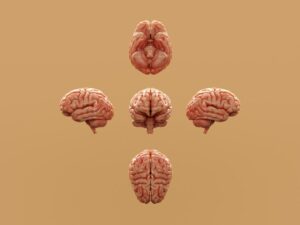
The Frontal Lobe Introduction to the Frontal Lobe The frontal lobe represents a profoundly significant and expansive region of the human brain, strategically positioned at the anterior pole of each cerebral hemisphere. As the largest of the brain’s four lobes, it occupies approximately one-third of the cerebral cortex and is an indispensable orchestrator of a […]

Read More

DISJUNCTIVE TASK

Conceptual Foundations of the Disjunctive Task In the domain of cognitive psychology, a disjunctive task refers to a highly specific visual or perceptual search paradigm wherein a target stimulus is uniquely distinguished from surrounding distractor stimuli by a single, salient feature. This isolated feature can be any fundamental visual attribute, such as color, shape, orientation, […]

Read More

OVERLAPPING PSYCHOLOGICAL TASKS

Conceptual Foundations of Overlapping Psychological Tasks The study of overlapping psychological tasks, frequently referred to in cognitive literature as dual-task performance, explores the human mind’s capacity to process multiple streams of information simultaneously. At its core, this field of inquiry seeks to understand why human performance often degrades when an individual attempts to execute two […]

Read More

WORD FLUENCY (WF)

Conceptual Foundations of Word Fluency (WF) Word fluency (WF) is a sophisticated cognitive process that resides at the intersection of linguistic ability and executive control. Fundamentally, it involves the efficient retrieval of lexical items from long-term memory stores, specifically the semantic memory and the mental lexicon. This process is not merely a measure of vocabulary […]

Read More

MESOCORTICAL SYSTEM

Mesocortical System: A Unique Structure with Multiple Cognitive Functions The mesocortical system, a unique brain structure located between the cortex and the mesencephalon, is responsible for the formation of multiple cognitive functions. It is composed of several pathways that connect the prefrontal cortex and the mesencephalon, including the mesocortical, mesolimbic, and mesostriatal pathways (Adhikari, 2017). […]

Read More

DLPFC

Introduction to the Dorsolateral Prefrontal Cortex The dorsolateral prefrontal cortex, commonly abbreviated as the DLPFC, represents one of the most sophisticated and evolutionarily advanced regions of the human brain. Located within the frontal lobe, specifically situated just behind the forehead, this area serves as a critical hub for the brain’s executive network. The DLPFC is […]

Read More

LATERAL GYRUS

Introduction to the Lateral Gyrus The lateral gyrus represents a crucial anatomical and functional subdivision located within the cerebral cortex, specifically residing along the lateral surface of the frontal lobe. As a prominent feature of the human brain’s architecture, this region is intimately involved in coordinating the complex processes collectively known as executive functions. These […]

Read More

FRONTAL

Introduction to Frontal Cognitive Operations The term Frontal, within the specialized vocabulary of cognitive neuroscience and psychology, denotes a sophisticated class of cognitive operations critical for goal-directed behavior, adaptive regulation, and complex problem resolution. These functions collectively represent the brain’s primary mechanism for executive control, distinguishing purposeful human action from simpler, reflexive responses. They are […]

Read More

STOP-SIGNAL TASK

Introduction and Definition The Stop-Signal Task (SST), often referred to simply as the Stop Task, is a fundamental paradigm in cognitive psychology and neuroscience designed specifically to quantify the capacity for response inhibition. Response inhibition is a crucial executive function, representing the ability to deliberately suppress or cancel a planned or initiated action. This procedure […]

Read More

CONTROLLED PROCESSING

Introduction and Definition of Controlled Processing In the field of cognitive psychology, the concept of controlled processing refers to a specific type of mental operation characterized by its requirement for deliberate attentive processing. This form of cognition is inherently goal-directed, necessitating significant management of internal resources, substantial cognitive effort, and the constant monitoring of progress […]

Read More

ATTENTION-CONTROL TRAINING (ACT)

Defining Attention-Control Training (ACT) Attention-Control Training (ACT) represents a sophisticated, therapeutic program specifically engineered to assist an individual in becoming significantly more effective at maintaining an appropriate and adaptive **attentional focus** through systematic, natural methods. It is an evidence-based intervention rooted deeply in cognitive psychology, designed not merely to treat symptomatic inattention but to fundamentally […]

Read More

TOWER OF HANOI

Tower of Hanoi The Tower of Hanoi is a classical mathematical and psychological puzzle that has become one of the most frequently utilized instruments within the analysis of problem solving and the assessment of higher-order cognitive abilities, specifically executive functions. Originating as a mathematical recreation, its structure requires individuals to engage in complex planning, inhibitory […]

Read More

CONTROLLED ORAL WORD ASSOCIATION (COWA)

Controlled Oral Word Association (COWA) Introduction and Core Definition The Controlled Oral Word Association (COWA) test is a highly standardized and essential instrument in the field of Neuropsychology, designed primarily to measure an individual’s Verbal Fluency under stringent, controlled conditions. At its core, the test assesses the efficiency with which a person can search, retrieve, […]

Read More

MENTAL MECHANICS

MENTAL MECHANICS: Executive Functions in Psychology and Neuroscience The Core Definition of Executive Functions Executive functions (EFs) are a set of higher-level cognitive processes that serve as the brain’s management system, enabling goal-directed behavior, adaptive decision-making, and self-regulation. Simply put, they are the mental tools that allow us to resist immediate impulses, plan for the […]

Read More

SORTING TEST

The Sorting Test The Core Definition of the Sorting Test The sorting test is a sophisticated cognitive assessment tool designed primarily to evaluate an individual’s ability to categorize, analyze information, and adapt to changing criteria. It moves beyond simple knowledge recall to probe the fundamental mechanisms of conceptual thinking and cognitive flexibility. At its essence, […]

Read More

REVERSAL LEARNING

Reversal Learning Introduction: The Adaptive Mind Reversal learning is a fundamental cognitive process that underscores an individual’s capacity to adapt their behavior when the established rules or contingencies in their environment change. It is not merely about learning new information, but specifically about unlearning a previously rewarded response and adopting a new one in its […]

Read More

MOSAIC TEST

Mosaic Tests: A Comprehensive Overview Introduction to Mosaic Tests Mosaic tests represent a specialized category of psychometric assessments meticulously designed to evaluate an individual’s cognitive functioning across a broad spectrum of mental abilities. Unlike single-domain tests, these comprehensive batteries integrate multiple subtests into a unified administration, providing a holistic snapshot of an individual’s cognitive strengths […]

Read More

NONSENSE SYLLABLE

Nonsense Syllable: An Encyclopedia Entry Introduction The concept of a nonsense syllable holds a pivotal, albeit often unheralded, position within the annals of experimental psychology, particularly in the study of human cognition. These unique linguistic constructs, devoid of inherent meaning, have served as indispensable tools for researchers seeking to isolate and scrutinize the fundamental mechanisms […]

Read More

LEFT HEMISPHERE

LEFT HEMISPHERE Core Definition of the Left Hemisphere The left hemisphere of the human brain is a distinct and highly specialized region that plays a foundational role in a multitude of higher-order cognitive functions. Fundamentally, it is the primary locus for most forms of verbal processing and logical processing, which are indispensable for human communication […]

Read More

DISCRIMINATION REACTION TIME

Discrimination Reaction Time Introduction: Defining Discrimination Reaction Time Discrimination Reaction Time (DRT) is a sophisticated metric within the domain of cognitive psychology, specifically designed to quantify the speed and efficiency with which an individual can process multiple sensory inputs, distinguish a particular target stimulus from distractors, and subsequently initiate an appropriate motor response. It stands […]

Read More