Strabismus: How Eye Alignment Shapes Your Self-Image
Scientifically Reviewed · Dr. Marwa Abd-Alazim · October 5, 2026
Review Criteria & Clinical Standards
This content undergoes rigorous scientific peer-review and medical editorial standards at Arab Psychology Network to ensure clinical accuracy, validity, and compliance with evidence-based guidelines from leading psychological and healthcare authorities (APA / WHO).
Core Definition and Manifestations
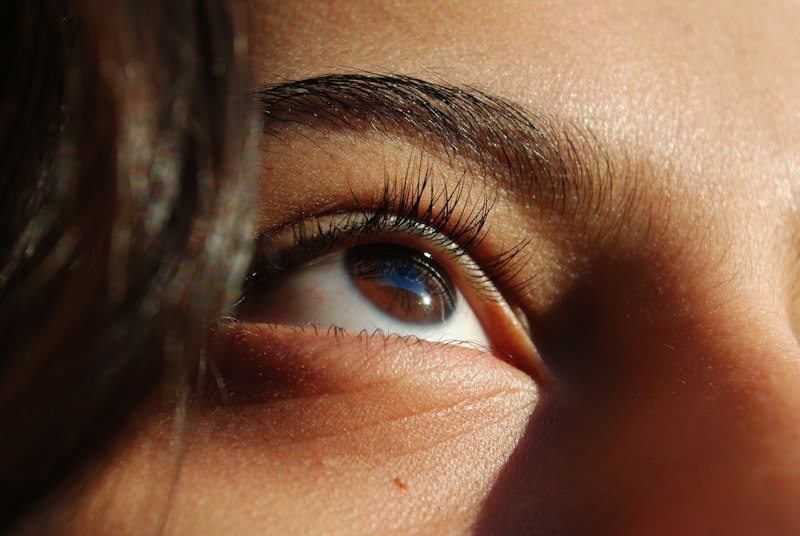
Strabismus, commonly referred to as cross-eyed, walleye, wandering eye, or squint, is a complex medical condition characterized by a misalignment of the eyes, where they do not properly align with each other when a person is looking at an object. This ocular deviation prevents both eyes from simultaneously focusing on a single point, leading to a disruption in the normal process of binocular vision. While one eye might be directed straight ahead, the other eye may turn inward (esotropia), outward (exotropia), upward (hypertropia), or downward (hypotropia). This condition can be constant, always present, or intermittent, appearing only at certain times, and can affect one eye unilaterally or alternate between both eyes.
The fundamental mechanism behind strabismus lies in the intricate interplay between the brain’s visual processing centers and the extraocular muscles responsible for eye movement. In a healthy visual system, these muscles work in perfect synchrony, allowing the eyes to move together and fuse the two images received by each eye into a single, coherent perception. However, in individuals with strabismus, this coordinated movement is disrupted. The brain receives conflicting visual information, which it struggles to reconcile. To avoid confusion and double vision, the brain often suppresses the image from the misaligned eye, particularly in children, leading to a condition known as amblyopia or “lazy eye,” where vision in the affected eye does not develop properly.
The visual consequences of strabismus extend beyond mere aesthetic concerns; they can significantly impact an individual’s functional vision and quality of life. Common vision problems include the aforementioned amblyopia, which can result in permanent vision loss if not treated early in childhood. Adults, whose visual systems are fully developed, are more likely to experience persistent diplopia (double vision) when strabismus develops later in life. Furthermore, the misalignment can severely impair depth perception, making it difficult to judge distances accurately, which can affect daily activities such as driving, sports, and even simple tasks like pouring a drink or navigating stairs.
Types and Classification of Strabismus
Strabismus is not a monolithic condition but rather a spectrum of ocular misalignments, each classified based on the direction of the eye deviation. The most common types include esotropia, where one or both eyes turn inward towards the nose; exotropia, characterized by an outward turning of the eye(s) away from the nose; hypertropia, an upward deviation; and hypotropia, a downward deviation. These primary classifications can be further refined by considering factors such as onset (congenital, acquired), constancy (intermittent, constant), and whether the deviation is the same in all directions of gaze (comitant) or varies with gaze direction (incomitant).
A significant subtype within esotropia is accommodative esotropia, which is often linked to uncorrected farsightedness (hyperopia). In an effort to focus clearly, the eyes “over-accommodate,” triggering a reflex that causes them to cross. This type can often be managed effectively with corrective eyeglasses. Conversely, infantile esotropia, which manifests in the first six months of life, is typically a large-angle deviation that requires surgical intervention for proper alignment. Similarly, exotropia often presents as intermittent initially, especially when the individual is tired or daydreaming, before potentially becoming constant. The precise classification is crucial for determining the most appropriate and effective treatment strategy, as the underlying causes and prognoses can differ significantly among the various types.
Beyond the primary directional misalignments, strabismus can also be described by its magnitude (small vs. large angle), laterality (unilateral vs. alternating), and the presence of associated conditions. For instance, paralytic strabismus results from a paresis or paralysis of one or more extraocular muscles, often due to neurological conditions affecting the cranial nerves controlling eye movement. Restrictive strabismus, on the other hand, arises from physical restrictions to eye movement, such as thyroid eye disease or orbital trauma. A thorough understanding of these classifications is paramount for ophthalmologists and optometrists in accurately diagnosing and managing this diverse ocular condition, ensuring that treatment plans are tailored to the specific needs of each patient.
Etiology and Risk Factors
The exact cause of strabismus is often multifactorial, involving a complex interplay of genetic predispositions and environmental influences. While the precise etiology remains unknown in many cases, it is widely believed that the condition stems from an inability of the eyes to maintain proper alignment due to problems with the neuromuscular control of eye movement, rather than a primary issue with the eyes themselves. This can involve issues with the extraocular muscles, the nerves that control these muscles, or the brain centers that coordinate eye movements and binocular vision. The brain’s capacity to develop and maintain precise visual processing seems to be a key factor, and any disruption during critical developmental periods can lead to misalignment.
Genetic factors play a significant role, with a higher incidence of strabismus observed in families where the condition is present. While no single gene has been definitively identified as the sole cause, research suggests that multiple genes may contribute to susceptibility. Beyond genetics, several risk factors can increase the likelihood of developing strabismus. Prematurity and low birth weight are notable risk factors, as is the presence of other developmental or neurological conditions, such as cerebral palsy, Down syndrome, or hydrocephalus. These conditions can affect the brain’s ability to coordinate eye movements effectively.
Furthermore, significant uncorrected refractive errors, particularly farsightedness (hyperopia), are strong environmental risk factors, especially for accommodative esotropia. Visual deprivation during critical periods of visual development, perhaps due to a cataract or other obstruction in one eye, can also disrupt the normal development of binocular vision and lead to strabismus. In adults, acquired strabismus can result from various causes including stroke, head trauma, neurological diseases (e.g., multiple sclerosis), Graves’ disease, or orbital tumors. Understanding these diverse contributing factors is essential for both prevention and targeted intervention strategies.
Historical Understanding and Early Treatments
The phenomenon of misaligned eyes has been observed and documented since ancient times, long before the advent of modern ophthalmology. Ancient Egyptian papyri and Greek texts contain descriptions of individuals with strabismus, often attributing it to divine punishment or moral failings, reflecting the limited medical understanding of the era. Early attempts at treatment were rudimentary and often superstitious, including practices like wearing masks with holes or eye patches to “force” the wandering eye into alignment, or even using painful methods like cauterization. These early interventions, while lacking scientific basis, highlight a persistent human desire to correct what was perceived as a significant physical and social anomaly.
During the Renaissance and Enlightenment periods, more systematic observations of human anatomy and physiology began to emerge. Physicians like Ambroise Paré in the 16th century and others started to consider the musculature of the eye in relation to its movements. However, it was not until the 19th century that significant advancements in the understanding and treatment of strabismus truly began. In 1839, French ophthalmologist Johann Friedrich Dieffenbach performed the first successful surgical correction of strabismus by cutting an extraocular muscle, marking a pivotal moment in the history of ocular surgery. This pioneering work opened the door for more refined surgical techniques and a deeper understanding of muscle mechanics.
Following Dieffenbach’s breakthrough, other researchers and clinicians, such as Albrecht von Graefe in Germany, further refined surgical approaches and began to investigate the optical and neurological aspects of strabismus. The development of corrective lenses and a better understanding of refractive errors also contributed to a more comprehensive approach to managing strabismus, particularly accommodative types. This historical progression from superstitious beliefs to surgical intervention and optical correction laid the groundwork for the modern, multidisciplinary approach to strabismus management, integrating surgical, optical, and therapeutic strategies.
Diagnosis and Clinical Assessment
The accurate diagnosis of strabismus relies on a comprehensive physical examination of the eyes and the entire visual system, typically performed by an ophthalmologist or an optometrist. This detailed assessment aims to identify the presence and type of misalignment, quantify its magnitude, and evaluate any associated visual impairments. A thorough patient history is crucial, inquiring about the onset of the deviation, its constancy, family history of strabismus, and any other relevant medical conditions or symptoms, such as diplopia or headaches.
Key diagnostic tests include the cover-uncover test and the alternate cover test, which are fundamental for detecting both manifest (always present) and latent (only apparent when binocular vision is disrupted) deviations. These tests involve covering one eye and observing the movement of the other eye, then alternating the cover to reveal any underlying misalignment. Measurements of the deviation angle are taken using tools like prism bars, which help quantify the degree of misalignment in various positions of gaze. Furthermore, visual acuity is meticulously assessed in each eye, as reduced vision in one eye can indicate the presence of amblyopia, a common sequela of strabismus.
Beyond determining the primary deviation, the diagnostic process also involves evaluating ocular motility, pupillary reflexes, and a complete dilated fundus examination to rule out any underlying ocular or neurological pathology that might be contributing to the strabismus. In some cases, specialized imaging techniques such as MRI or CT scans may be employed, especially if there is suspicion of orbital or neurological causes, such as tumors or nerve palsies. The comprehensive nature of this diagnostic approach ensures that all contributing factors are identified, allowing for the formulation of a precise and effective treatment plan tailored to the individual’s specific condition.
Treatment Modalities and Management Strategies
The treatment of strabismus is highly individualized, depending on the type, severity, age of onset, and presence of associated conditions like amblyopia. Early diagnosis and intervention, particularly in children, are paramount to prevent permanent vision loss and facilitate normal visual development. The primary goals of treatment are to achieve straight eyes, restore binocular vision, and improve depth perception. Treatment options range from conservative measures to surgical intervention, often employed in a sequential or combined approach.
Conservative treatments often begin with optical correction, such as eyeglasses or prism lenses. Eyeglasses are particularly effective for accommodative esotropia, correcting the underlying farsightedness and thereby reducing the eye crossing. Prism lenses, on the other hand, bend light before it enters the eye, shifting the image to compensate for the misalignment and allowing the eyes to work together without physically moving them. Another crucial non-surgical approach is vision therapy, a structured program of visual exercises designed to improve eye muscle control, coordination, and the brain’s ability to process visual information from both eyes. This therapy is often used to treat intermittent strabismus, enhance binocular vision, and as an adjunct to surgery.
When non-surgical methods are insufficient, strabismus surgery becomes a primary treatment option. This surgical procedure involves adjusting the length or position of the extraocular muscles surrounding the eye to change its alignment. By either weakening (recessing) or strengthening (resecting) specific muscles, the surgeon can reposition the eye to achieve better alignment. While surgery aims for cosmetic improvement, its ultimate goal is to restore binocular vision and depth perception. In cases where amblyopia is present, patching or atropine drops for the stronger eye are often employed concurrently with other treatments to force the weaker eye to work harder, thereby improving its visual acuity. Botulinum toxin (Botox) injections into the eye muscles can also be used as a temporary measure or in specific types of strabismus.
Impact on Vision and Daily Life: A Practical Example
The impact of strabismus extends far beyond the visual system, profoundly affecting an individual’s daily life, personal development, and social interactions. One of the most significant consequences is the impairment of depth perception. This crucial visual skill, which allows us to judge distances and perceive the three-dimensional world, is heavily reliant on effective binocular vision. When the eyes are misaligned, the brain struggles to fuse the two images, leading to reduced stereopsis or even its complete absence. For children, this can hinder motor skill development and learning, while adults may find it challenging to engage in activities requiring precise spatial judgment, such as driving, sports, or certain professions.
Consider the example of a young child named Leo who has intermittent exotropia, meaning one of his eyes occasionally drifts outward, especially when he is tired or looking into the distance. In his early years, this might manifest as clumsiness; he frequently bumps into objects, struggles to catch a ball, or has difficulty pouring liquids without spilling. At school, Leo finds it challenging to focus on the whiteboard and then quickly shift his gaze to his notebook, often losing his place. He avoids drawing and coloring because he struggles with hand-eye coordination. His teachers notice he squints frequently and sometimes tilts his head, a compensatory mechanism to try and achieve better visual alignment. This affects his academic performance and his confidence, making him hesitant to participate in group activities that involve visual tasks or sports.
As Leo grows, his uncorrected strabismus leads to progressive amblyopia in his wandering eye, meaning that eye’s vision becomes significantly weaker. He also starts experiencing diplopia more frequently, especially during prolonged reading or screen time, leading to headaches and eye strain. His inability to accurately judge distances makes driving a stressful and potentially dangerous endeavor, and he feels self-conscious about his appearance, impacting his social interactions and self-esteem. The “how-to” of the psychological principle here demonstrates how the physical misalignment (strabismus) directly translates into functional visual deficits (impaired depth perception, amblyopia, diplopia), which then cascade into significant challenges in everyday tasks, learning, and social development, underscoring the profound importance of early diagnosis and comprehensive treatment.
Psychological and Social Implications
Beyond the direct visual impairments, strabismus carries significant psychological and social implications, particularly for children and adolescents. The visible misalignment of the eyes can lead to feelings of self-consciousness, embarrassment, and anxiety. Children with strabismus may face teasing or bullying from peers, which can negatively impact their self-esteem, social development, and overall mental well-being. They might withdraw from social situations, avoid eye contact, and struggle with forming friendships, leading to increased isolation. These psychosocial challenges are often as impactful as, if not more distressing than, the visual symptoms themselves, highlighting the importance of considering the holistic impact of the condition.
For adults, the psychological burden of strabismus can manifest as reduced confidence in professional and personal settings. The inability to make direct eye contact can be misinterpreted as a lack of sincerity, attentiveness, or trustworthiness, affecting job interviews, social interactions, and romantic relationships. Adults who develop strabismus later in life, perhaps due to a stroke or other neurological event, often struggle with the sudden onset of double vision and the cosmetic change, leading to frustration, depression, and a significant decrease in their quality of life. The constant effort to suppress one image or cope with diplopia can also contribute to chronic fatigue and cognitive strain.
The importance of addressing both the visual and psychological aspects of strabismus cannot be overstated. Early intervention through strabismus surgery, vision therapy, and counseling can significantly mitigate these negative impacts. By improving eye alignment and binocular vision, not only are functional visual outcomes enhanced, but individuals often experience a profound boost in self-confidence and a reduction in social anxiety. Psychological support and education for both patients and their families are crucial components of a comprehensive management plan, helping individuals navigate the social challenges and fostering a positive self-image despite the condition.
Connections and Relations
Strabismus is deeply interconnected with several other key psychological and physiological concepts, particularly within the fields of developmental psychology, cognitive psychology, and neuroscience. Its most direct and frequently associated condition is amblyopia, or “lazy eye.” Amblyopia develops when the brain suppresses the image from the misaligned eye to avoid double vision, leading to a failure of the visual cortex to develop proper neural connections for that eye. This highlights the critical period of visual development in early childhood, during which the brain exhibits remarkable neuroplasticity; if the visual input is abnormal, the neural pathways for vision will develop abnormally.
The concept of binocular vision is central to understanding strabismus. Binocular vision refers to the ability of the brain to combine two slightly different images from each eye into a single, three-dimensional perception. This fusion process is essential for depth perception (stereopsis). Strabismus disrupts this intricate process, either by preventing fusion altogether or by providing misaligned input that the brain cannot reconcile. The study of strabismus also contributes to our understanding of the visual cortex‘s organization and function, especially how it processes disparate visual information and adapts to visual deficits through mechanisms like suppression.
Furthermore, strabismus connects to broader categories within psychology and medicine. It falls under the umbrella of ophthalmology, a medical specialty focused on eye health, and optometry, a healthcare profession concerned with vision care. From a psychological perspective, strabismus research often touches upon perception, motor control, and neurodevelopmental disorders, as it can be both a cause and a symptom of underlying neurological issues. The therapeutic approaches, such as vision therapy, draw upon principles of neuroplasticity and motor learning, aiming to retrain the brain and eyes to work together more effectively, demonstrating the profound interdisciplinary nature of this condition.
Prognosis and Long-Term Outlook
The prognosis for individuals with strabismus varies widely depending on several factors, including the age of onset, the type and severity of the deviation, the presence of associated conditions like amblyopia, and the timeliness and effectiveness of treatment. Early diagnosis and intervention, particularly during the critical period of visual development in childhood, are crucial for achieving the best possible visual and cosmetic outcomes. When strabismus is identified and treated early, especially before the age of 7 or 8, the chances of restoring good binocular vision, improving depth perception, and preventing permanent amblyopia are significantly higher.
For children treated for strabismus, successful outcomes often involve a combination of eyeglasses, vision therapy, and strabismus surgery. Even after initial successful treatment, ongoing monitoring is essential, as there can be a risk of recurrence or the development of a different type of deviation later in life. In cases where significant amblyopia has developed and gone untreated past the critical period, the visual acuity in the affected eye may remain permanently reduced, even if eye alignment is achieved cosmetically. However, even in these situations, surgery can still provide significant cosmetic benefits, which can greatly improve an individual’s self-esteem and social interactions.
Adults who develop strabismus typically experience double vision rather than amblyopia, as their visual system is already mature. Treatment in adults, often involving prism lenses or strabismus surgery, aims to eliminate diplopia and improve eye alignment. While the restoration of full binocular vision and depth perception can be more challenging to achieve in adults compared to children, significant functional and cosmetic improvements are often possible. Overall, with modern diagnostic tools and a range of effective treatment modalities, individuals with strabismus can achieve good visual function and an improved quality of life, underscoring the importance of seeking expert ophthalmological or optometric care.