Stroboscopic Illusion: How Your Brain Invented Cinema
Scientifically Reviewed · Dr. Marwa Abd-Alazim · August 28, 2026
Review Criteria & Clinical Standards
This content undergoes rigorous scientific peer-review and medical editorial standards at Arab Psychology Network to ensure clinical accuracy, validity, and compliance with evidence-based guidelines from leading psychological and healthcare authorities (APA / WHO).
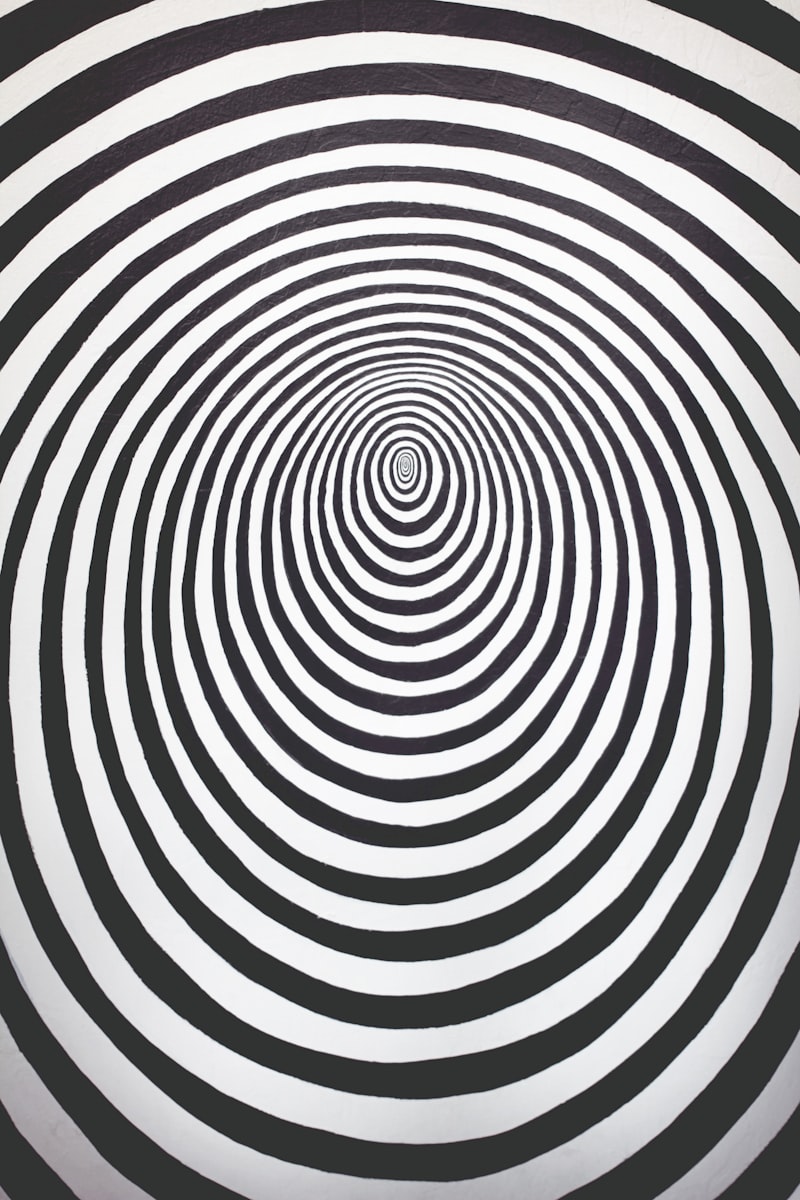
Defining the Stroboscopic Illusion
The Stroboscopic Illusion is a fundamental perceptual phenomenon wherein continuous motion is perceived by the human visual system despite the input consisting of a sequence of discrete, static images or rapid, intermittent views of a moving object. This powerful illusion demonstrates how the brain actively constructs temporal reality, bridging the gaps between moments of visual input. Fundamentally, it hinges upon the principle of temporal integration, where successive visual stimuli presented within a specific critical frequency threshold are merged together, resulting in the compelling perception of smooth, continuous movement. It is the core mechanism that underpins technologies ranging from early zoetropes to modern digital cinema, making it one of the most widely experienced perceptual errors in contemporary life.
The term encompasses two primary scenarios, both relying on temporal discontinuity. The first involves the rapid presentation of a series of slightly differing static images, such as frames in a film reel. If the interval between these frames is sufficiently short (typically above 10–12 flashes per second, but usually standardized higher for cinema), the brain interprets the small spatial shifts as fluid movement rather than a series of jumps. The second scenario, often associated directly with the stroboscope device, involves viewing a continuously moving object—such as a rotating fan blade or vibrating machinery—under conditions of periodic, momentary illumination (flashing light). In this case, the illusion causes the moving object to appear stationary, to move very slowly, or even to move backward, revealing critical information about its speed and frequency.
Understanding the Stroboscopic Illusion is crucial for visual neuroscience because it provides essential insights into the computational shortcuts utilized by the visual cortex. The visual system is not a passive receiver; rather, it constantly samples the environment, and when the samples are taken at specific, rhythmic intervals, the brain defaults to the most probable interpretation: motion. This process highlights the limitations and inherent latency in our sensory processing, showing that perception favors coherence and prediction over the objective reality of the discontinuous sensory input. The illusion is not merely a curiosity but a foundational element proving that experienced motion is often a reconstructive phenomenon rather than a direct sensory reading.
Historical Context and Early Discoveries
The recognition and systematic exploitation of the Stroboscopic Illusion predate modern psychology and film technology by decades, emerging from the Victorian era’s fascination with optics and motion. Early pioneers of the illusion sought to capture the fleeting dynamics of life in a reproducible form. Devices like the Thaumatrope (1824) demonstrated the basic concept of persistence of vision, where two distinct images rapidly alternated create a single, combined image. However, it was the development of more complex tools that truly harnessed the illusion of movement from sequential phases.
The most significant early breakthroughs occurred in the 1830s with the simultaneous, independent invention of several devices. Joseph Plateau, a Belgian physicist, developed the Phenakistoscope (or ‘spindle viewer’), a spinning disc containing sequential drawings viewed through slits, creating the immediate sensation of motion. Concurrently, Simon von Stampfer in Austria developed the Stroboscopische Scheiben, or stroboscopic discs, which lent their name to the phenomenon itself. These inventions were crucial because they scientifically demonstrated that the visual system could be reliably tricked into perceiving continuous action from discrete, stationary phases, provided the temporal parameters were correctly controlled.
These foundational discoveries provided the intellectual and mechanical blueprint for future motion picture technology. The fundamental principle that 12 to 16 separate images per second are sufficient to create apparent motion became the standard for the Mutoscope and, later, the cinematic camera. The systematic exploitation of the Stroboscopic Illusion thus transformed from a parlor trick into a powerful medium for storytelling and scientific documentation, transitioning the world from viewing static images to perceiving moving narratives. This history confirms that the illusion is not dependent on complex technology, but rather on the immutable processing architecture of the human eye and brain.
The Core Mechanism of Apparent Motion
The mechanism underlying the Stroboscopic Illusion is rooted in the complex interplay between retinal input and higher-level cortical processing, primarily concerning temporal integration. When a series of visual stimuli are presented in close spatial proximity and rapid temporal succession, the visual system interprets the change in position as continuous travel. This interpretation bypasses the objective fact that the object was stationary between flashes or frames. The initial sensory input hits the retina, but the critical processing occurs in the visual cortex, specifically within areas dedicated to motion analysis.
A key concept governing this illusion is the Critical Fusion Frequency (CFF). CFF defines the rate at which an intermittent light source ceases to be perceived as flickering and is instead perceived as continuous, steady illumination. While CFF is typically around 50–60 Hz for light sources, the threshold for perceiving smooth motion (the phi phenomenon in sequence) is much lower, around 10–16 Hz. When the presentation rate of static images exceeds this motion threshold, the visual system’s motion detectors, which are designed to register small shifts over time, integrate the discrete inputs into a single, flowing motion signal. This integration is essential for the illusion’s success.
Neurologically, the apparent movement generated by the stroboscopic effect activates the same motion-sensitive neurons in the Middle Temporal (MT or V5) area of the visual cortex as those activated by true physical motion. This suggests that the brain treats the illusory motion signal and the real motion signal identically once the temporal integration has occurred. Computational models of motion detection, such as the Reichardt detector, propose specific neural circuits that calculate motion vectors by comparing signals from two adjacent points with a temporal delay. The Stroboscopic Illusion successfully exploits this inherent time delay, causing the detection mechanism to fire and signal continuous movement, even when the input data is fundamentally discontinuous.
Intermittent Illumination: The Role of Frequency
When the stroboscopic illusion is generated by viewing a moving object under intermittent illumination—as opposed to viewing sequential static images—the precise relationship between the frequency of the light flashes and the frequency of the object’s movement becomes paramount. The specialized tool used for this purpose, the stroboscope, allows scientists and engineers to visually freeze, slow down, or reverse the apparent motion of rapidly moving objects, providing crucial diagnostic information that would otherwise be invisible to the naked eye.
The core principle dictates that if the frequency of the light flashes perfectly matches the rotational frequency of the object (e.g., a fan rotating at 60 revolutions per minute observed under 60 flashes per minute), the object will appear completely stationary. This occurs because the observer sees the object in the exact same spatial position during each flash. If the flash frequency is slightly slower than the object’s frequency, the object will appear to move slowly forward, as each successive flash catches the object just slightly ahead of its position in the previous flash. Conversely, if the flash frequency is slightly faster, the object appears to move slowly backward, illustrating the concept of aliasing in visual perception.
The manipulation of frequency highlights the power of the stroboscopic method as an analytical tool, but also reveals potential pitfalls. If the flash rate is a harmonic (a multiple or divisor) of the object’s frequency, ambiguous or misleading motions can be perceived. For instance, if a four-bladed fan is observed at half its rotational frequency, it might still appear stationary, as the viewer sees a different blade in the same position during each flash. Accurate interpretation of stroboscopic data requires precise knowledge of the object’s structure and the lighting parameters to avoid these misleading visual aliases.
Key Manifestations: The Wagon-Wheel Effect
One of the most widely cited and easily observable examples of the stroboscopic illusion is the Wagon-Wheel Effect (WWE), also known as stroboscopic motion aliasing. This effect is commonly witnessed in films or television when the spokes of a rotating wheel—such as those on a carriage, car, or helicopter blades—appear to slow down, stop, or even reverse their direction of rotation, even though the vehicle is clearly moving forward at a constant speed.
The WWE is a direct consequence of the frame rate used in filming. Standard film captures motion at 24 frames per second (fps). When the wheel rotates, the spokes move between successive frames. If the time it takes for a spoke to move to the exact position previously occupied by the adjacent spoke perfectly matches the time interval between frames (1/24th of a second), the wheel will appear perfectly stationary. If the spoke moves slightly less than the distance to the next spoke, the wheel appears to rotate slowly forward. Critically, if the spoke moves slightly more than the distance to the next spoke, the visual system interprets the nearest spatial match in the backward direction, causing the striking illusion of reverse rotation.
While the WWE is most robustly observed under the intermittent sampling of film or strobe lighting, there is a fascinating debate regarding its occurrence under continuous daylight. Some researchers suggest that the human eye’s own sampling mechanisms, such as rapid, involuntary eye movements called saccades, or the discrete processing cycles within the visual cortex, can cause a form of internal stroboscopic aliasing. However, the classic, unambiguous, and powerful demonstration of the WWE remains tied to external, periodic interruption of the visual stimulus, confirming its status as the quintessential example of the Stroboscopic Illusion in practical application.
Neurological Substrates of Stroboscopic Perception
The high fidelity of the Stroboscopic Illusion—the fact that apparent motion feels indistinguishable from real motion—points to a shared neurological pathway for processing both types of stimuli. Research utilizing advanced imaging techniques, such as functional Magnetic Resonance Imaging (fMRI) and Electroencephalography (EEG), has mapped the cortical areas responsible for integrating these discrete visual inputs into a continuous experience. The primary visual cortex (V1) is responsible for initial feature extraction, but the crucial integration occurs in specialized, higher-order areas.
The Middle Temporal area (MT or V5) is recognized as the key neurological substrate for motion processing. Studies consistently show that when a subject views stroboscopic motion, the MT area is activated with the same intensity and pattern as when the subject views a truly moving object. This evidence reinforces the idea that the illusion is not simply a cognitive trick, but a true sensory perception, where the brain’s motion-detection machinery is fully engaged and functioning as designed, even when the input is fragmented. The neurons in MT respond selectively to specific speeds and directions, and the stroboscopic sequence provides the necessary spatio-temporal cues to trigger these responses.
Furthermore, the illusion is deeply connected to the brain’s mechanisms for predictive coding and temporal integration. Because the visual system operates with inherent delays, it must constantly predict the next state of the world based on recent input. The periodic, predictable nature of the stroboscopic input allows the brain to easily anticipate the object’s subsequent position. This anticipation facilitates the seamless bridging of the temporal gaps, ensuring that the perception remains continuous. The Stroboscopic Illusion thus serves as a powerful model for understanding how the brain manages the constant inflow of dynamic information and constructs a smooth, unified perceptual reality from often discontinuous sensory data.
Technological Applications of the Effect
The exploitation of the Stroboscopic Illusion has been instrumental in the development of modern technology across entertainment, industry, and medicine. The most pervasive application is, without doubt, cinematography and video playback. Every motion picture, whether theatrical or broadcast, relies entirely on the stroboscopic principle. The industry standard frame rates (e.g., 24 fps for film, 30/60 fps for video) are carefully chosen to exceed the human motion threshold, thereby guaranteeing the illusion of fluid, lifelike movement, transforming a rapid sequence of still photographs into a dynamic visual narrative.
Beyond entertainment, the industrial and scientific applications of the stroboscope device are critical. Stroboscopy allows engineers to visually analyze rapidly oscillating or rotating components, such as turbines, rotors, or printing presses, without physically stopping them. By adjusting the flash rate, they can precisely measure rotational speed (RPM) or observe complex vibration patterns that could indicate structural failure. This non-contact measurement capability is essential for quality control, machine maintenance, and diagnostic engineering in high-speed environments.
In the medical field, stroboscopy is employed primarily in laryngoscopy to examine the movement of the vocal cords. The cords vibrate too rapidly (hundreds of times per second) to be seen under continuous light. By synchronizing a flashing light source to the fundamental frequency of the patient’s voice, the vocal cord movement appears to slow down drastically or freeze, allowing clinicians to diagnose subtle irregularities, polyps, or nerve damage that affect vocal function. Thus, the Stroboscopic Illusion serves as a fundamental analytical tool, enabling observation and measurement in temporal domains inaccessible to normal human perception.
Limitations and Factors Influencing the Illusion
While the Stroboscopic Illusion is robust, its success depends on several critical limitations and parameters related to the spatio-temporal characteristics of the stimuli. If these parameters are violated, the illusion breaks down, resulting in perceived flicker or jarring jumps rather than smooth motion. The primary limitations involve the rate of presentation, the distance between successive stimuli, and the intensity and duration of the flashes themselves.
Firstly, the temporal interval is crucial. If the successive stimuli are presented too slowly (below the minimum required motion threshold), the viewer will perceive distinct, individual flashes, a phenomenon often referred to as flicker. Conversely, if the presentation rate becomes excessively high, approaching the Critical Fusion Frequency for illumination, the individual images may merge too completely, reducing the perceived motion contrast. Secondly, the spatial separation between the sequential stimuli must be small enough to allow the visual system to plausibly link the two positions. If the jump between frames is too large, the perception shifts from continuous motion (phi movement) to simple positional jumping (beta movement or kinephantoscope effect), thereby destroying the smooth illusion.
Furthermore, factors intrinsic to the observer, such as individual differences in the processing speed of the visual cortex, can influence susceptibility to the illusion. Factors like fatigue, medication, or age can alter an individual’s CFF, potentially causing them to perceive flicker where others perceive continuity, or vice versa. The success of the Stroboscopic Illusion requires precise calibration—a delicate balance where the visual system is given just enough information to infer movement, but not so much time between samples that it recognizes the input as fundamentally discrete.