Symbolic Thinking: Master the Language of the Mind
Scientifically Reviewed · Dr. Marwa Abd-Alazim · August 27, 2026
Review Criteria & Clinical Standards
This content undergoes rigorous scientific peer-review and medical editorial standards at Arab Psychology Network to ensure clinical accuracy, validity, and compliance with evidence-based guidelines from leading psychological and healthcare authorities (APA / WHO).
Definition and Core Principles of Symbolic Thinking
Symbolic thinking refers to the sophisticated cognitive aptitude inherent in humans, allowing the individual to conceptualize, manipulate, and communicate using representations that stand for ideas, objects, or relationships not immediately present in the physical environment. This capacity moves beyond simple stimulus-response mechanisms, enabling the creation and use of abstract, hypothetical terms. At its core, symbolic thought relies on the principle of arbitrary association: a symbol, such as the word “justice” or the mathematical constant “π”, holds meaning solely because a group or culture has agreed that it does. This fundamental psychological operation is what distinguishes human higher-order cognition, forming the bedrock for complex reasoning, planning, and cultural transmission.
The distinction between a sign and a symbol is crucial in understanding this cognitive ability. A sign, such as smoke indicating fire, maintains a direct, causal, or iconic relationship with what it represents. Conversely, a symbol is characterized by its detachment from the signified object; it is abstract and conventional. For example, the verbal expression of an idea, the structure of a complex sentence, or the use of specific colors in a painting are all manifestations of symbolic thinking, where the medium itself is not the message, but rather a vehicle for the concept. The ability to mentally manipulate these non-concrete representations allows individuals to engage in counterfactual thinking and theoretical modeling, simulating outcomes without physical experimentation.
The utility of symbolic thinking is evidenced across every domain of human intellectual endeavor. It permits the mental storage and retrieval of complex knowledge that exceeds the capacity of basic episodic memory. Furthermore, it facilitates shared intentionality, allowing individuals to coordinate actions and beliefs based on mutually understood abstract frameworks. The capacity to internalize and operate within these frameworks—whether they be linguistic rules, artistic conventions, or logical formalisms—is indicative of a mature cognitive system capable of high levels of abstraction. Without symbolic thought, learning would be limited to direct experience, severely curtailing the potential for cumulative knowledge and technological advancement.
Developmental Trajectory of Symbolic Capacity
The emergence of symbolic thought is a cornerstone event in cognitive development, most thoroughly documented within the framework of Jean Piaget’s stages. According to Piaget, the foundation for symbolic capacity begins during the latter half of the sensorimotor stage (approximately 18 to 24 months), marked by the child’s achievement of object permanence. Once the child understands that objects exist independent of their perception, they begin to develop the mental structures necessary to represent those objects internally. This transition leads directly into the preoperational stage, characterized by the Symbolic Function, where the child can use one thing—a sound, a gesture, or an image—to stand for something else.
A key observable indicator of this symbolic awakening is the proliferation of pretend play. When a toddler uses a banana as a telephone, or a stick as a sword, they are engaging in nascent symbolic substitution. This activity is not merely imitation; it is the conscious imposition of an abstract identity onto a concrete object. As development progresses, these symbolic substitutions become less dependent on the physical similarity between the object and the concept, moving toward pure abstraction. The ability to engage in complex narrative play shows the child’s growing capacity to sustain multiple symbolic roles and contexts simultaneously, demanding sophisticated executive function.
Lev Vygotsky offered a complementary perspective, emphasizing the socio-cultural mediation of symbolic development. For Vygotsky, language is the primary psychological tool that drives the internalization of symbolic thought. Children first encounter symbols externally through social interaction and shared language. Vygotsky posited that the development of internal thought processes is a direct function of external communicative practices. The transition from external speech to private speech, and finally to internalized verbal thought, illustrates how language provides the formal structure necessary for abstract manipulation of symbols, solidifying symbolic competence as the individual matures and interacts within educational and cultural systems.
Neurological Foundations and Cognitive Mechanisms
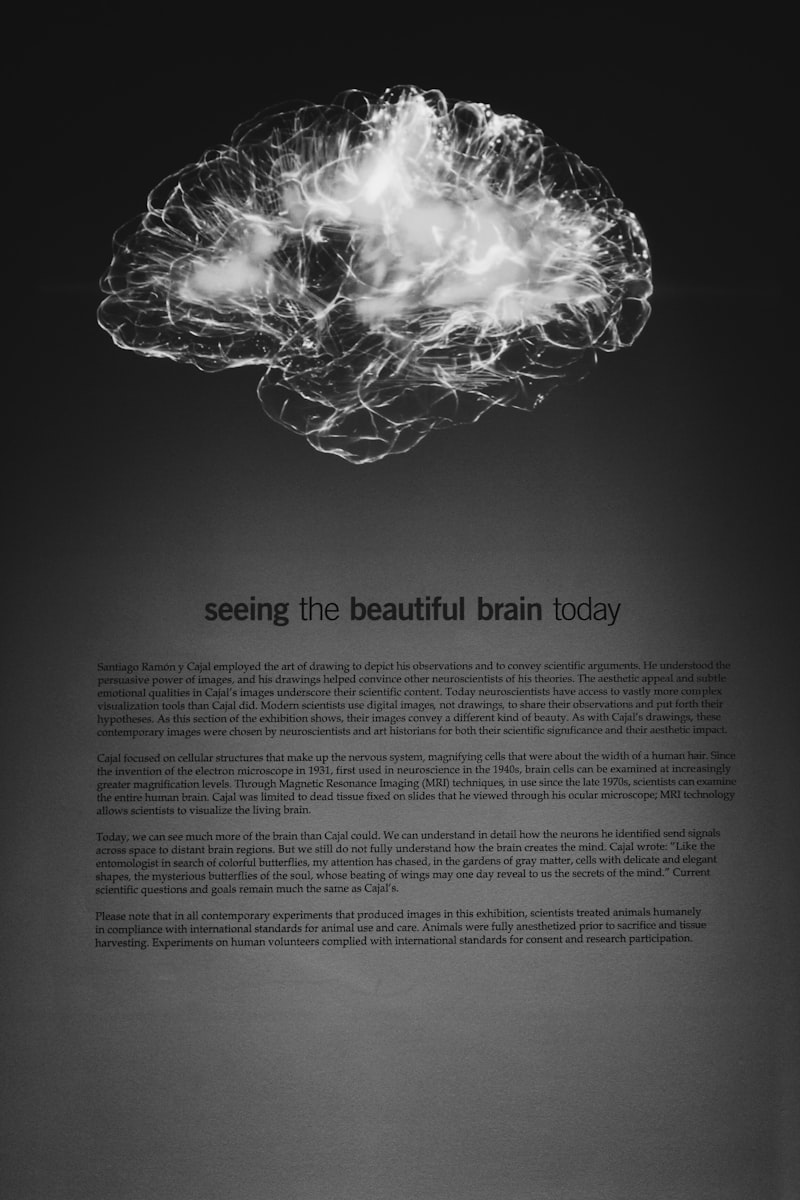
The neural architecture supporting symbolic thinking is highly distributed, yet critically dependent on specific regions of the cerebral cortex, particularly the prefrontal cortex (PFC). The PFC is essential for maintaining and manipulating information in working memory, allowing individuals to hold symbols and their associated meanings in mind while inhibiting irrelevant information. This region facilitates the necessary cognitive flexibility required to switch between concrete interpretation and abstract symbolic application, such as understanding a metaphor or decoding a complex algebraic equation. Damage to the PFC often results in concrete thinking, where the individual struggles to grasp hypothetical terms or abstract implications.
Furthermore, symbolic processing involves complex inter-hemispheric communication. While the left hemisphere is predominantly associated with sequential processing, linguistic syntax, and the analytic decomposition of symbolic units, the right hemisphere plays a critical role in integrating these units into broader contextual meanings, especially concerning metaphorical language, emotional symbolism, and visual representations. The understanding of irony or sarcasm, for instance, requires the coordinated effort of both hemispheres to reconcile the literal (left hemisphere) meaning with the intended, symbolic (right hemisphere) social context.
At a mechanistic level, symbolic thinking relies heavily on the brain’s capacity for pattern recognition and chunking. Complex symbolic systems, such as advanced mathematics or musical notation, are initially learned as discrete units, but through repeated exposure and practice, they become integrated into larger, meaningful symbolic structures. This process reduces the cognitive load required for manipulation, allowing the thinker to focus on higher-level conceptual relationships rather than the mechanics of the symbols themselves. Neural networks form robust long-term memory traces for these symbols, ensuring rapid access and efficient utilization across diverse cognitive tasks.
Manifestations of Symbolic Thinking
Symbolic thinking manifests most clearly in three major human endeavors: language, mathematics, and artistic expression. Language is perhaps the most universal and powerful symbolic system. It consists of arbitrary phonemes and graphemes combined according to generative rules (syntax) to produce infinite meaning. The word “tree,” for example, is not arboreal; it is merely an acoustic symbol that represents the concept of the object. This arbitrary mapping allows for communication about events in the past, plans for the future, and entirely hypothetical or non-existent entities, demonstrating the ultimate power of abstraction inherent in symbolic thought.
Mathematics represents a system of pure symbolic abstraction, often detached entirely from physical reality. Numbers, variables, and operators are symbols that represent quantities, relationships, and transformations. The equation E=mc², for instance, is a symbolic representation of a physical law; the symbols themselves do not possess mass or energy, but their manipulation according to agreed-upon rules allows for precise prediction and understanding of the universe. The transition from counting concrete objects to manipulating algebraic variables signifies a major leap in symbolic competence, enabling the development of advanced sciences and engineering.
In the realm of artistic form and mythology, symbolic thinking transmits deep cultural, emotional, and spiritual knowledge. As noted historically, symbolic thinking is present from the ancient age, exemplified by small statues of women which were a symbolic way of representing female fertility and life force. Similarly, colors in painting (e.g., black symbolizing mourning or red symbolizing passion), musical motifs, and narrative structures (e.g., the hero’s journey archetype) function as powerful symbols. These systems allow for the expression and sharing of complex subjective experiences that defy simple literal description, bridging the gap between individual consciousness and collective understanding.
Symbolic Thinking in Psychoanalytic and Cognitive Theory
Within psychoanalytic tradition, symbolic thinking is closely tied to the workings of the unconscious mind. Sigmund Freud viewed symbols, particularly those appearing in dreams, as disguised representations of repressed wishes, conflicts, and traumatic memories. According to Freud, the process of condensation and displacement transforms latent content (the true, often disturbing, meaning) into manifest content (the remembered dream narrative) through symbolic substitution, allowing the ego to protect itself from overwhelming psychological distress. Analyzing these symbols was, therefore, central to uncovering underlying psychological dynamics.
Carl Jung extended this concept significantly, proposing the existence of archetypes and the Collective Unconscious. Jung argued that certain symbols—such as the shadow, the anima/animus, or the mandala—are universal symbolic structures inherited across cultures, representing fundamental patterns of human experience. These symbols act as powerful psychic organizers, influencing mythology, religion, and individual destiny. For Jung, symbolic thought was not merely a defense mechanism but a profound pathway to individuation and self-realization, linking the individual to the deep, shared history of humanity.
In contrast, Cognitive Science often approaches symbolic thinking through the lens of formal systems and computational models. The classic cognitivist paradigm views the mind as an information processor where knowledge is represented by discrete, amodal symbols (e.g., production rules or propositional logic) that are manipulated according to formal, syntactic rules, much like a computer program. This approach, known as the Symbolic Paradigm, emphasizes the logical structure and efficiency of symbolic operations, providing the theoretical basis for early artificial intelligence research. Although connectionist models offer alternative explanations, the ability to process symbolic structure remains a crucial benchmark for understanding human intelligence.
Cultural Significance and Historical Context
Symbolic systems are indispensable for the formation, maintenance, and complex organization of human societies. They provide the necessary abstract frameworks for establishing laws, ethics, and social norms. Currency, for instance, is a shared symbolic system where pieces of paper or metal are granted value by collective agreement, facilitating complex economic interactions that would be impossible through bartering alone. Similarly, national flags or religious icons serve as potent symbols that establish shared identity, loyalty, and emotional connection across vast populations.
Historically, the development of writing systems marks a pivotal achievement in symbolic thinking. The earliest forms of writing were often pictographic or logographic, retaining a degree of iconic connection to the objects they represented. The innovation of the alphabet, however, revolutionized symbolic efficiency. Alphabetic letters are abstract symbols (phonemes) that bear no resemblance to the concepts they help encode, allowing for a finite set of symbols to represent an infinite array of words and ideas. This shift maximized the portability and flexibility of knowledge, accelerating the development of literature, philosophy, and systematic scholarship.
The symbolic nature of social structures also governs complex rituals and political systems. Concepts like “sovereignty” or “human rights” are highly abstract symbols that dictate international relations and societal governance. The success of civilization hinges on the capacity of its members to accept and operate within these shared, non-physical symbolic realities. When symbolic consensus breaks down, as occurs during periods of political upheaval, the stability of the entire social framework is threatened, underscoring the vital role of symbolic agreement in maintaining order and collective understanding.
Disorders and Impairments of Symbolic Function
Impairments in symbolic thinking are central features of several major neurological and psychological disorders, demonstrating the fragile nature of this cognitive ability. Damage to specific brain regions, particularly the dominant hemisphere (typically the left), can lead to various forms of aphasia, the inability to process or produce linguistic symbols. Broca’s aphasia impairs the symbolic organization necessary for fluent speech production (syntax), while Wernicke’s aphasia disrupts the comprehension of symbolic meaning, even though the physical sounds of language may still be heard.
In severe psychiatric disorders, particularly schizophrenia, symbolic function can become profoundly disorganized. Schizophrenic thought disorder often involves a disruption of the conventional, shared meaning of symbols. Symbols may become pathologically concrete (inability to understand metaphor or abstract concepts) or, conversely, over-personalized and generalized, leading to tangential speech, loose associations, and the formation of complex delusional systems where arbitrary symbols (e.g., specific numbers or colors) are imbued with intense, non-shared, existential significance. This impairment highlights the necessity of grounded, shared symbolic interpretation for rational thought.
Symbolic difficulties also feature prominently in certain neurodevelopmental conditions. Individuals on the Autism Spectrum Disorder (ASD) often demonstrate challenges in processing non-literal or highly abstract symbolic communication, such as metaphor, irony, or sarcasm. While they may excel in rule-based symbolic systems like mathematics or programming, the social and emotional nuances embedded in human communicative symbols (e.g., reading facial expressions or interpreting body language as symbolic of internal states) present significant hurdles, underscoring the multidimensional nature of symbolic processing in human interaction.