Sensory Substitution: Feel the World Through Touch
Scientifically Reviewed · Dr. Marwa Abd-Alazim · October 17, 2026
Review Criteria & Clinical Standards
This content undergoes rigorous scientific peer-review and medical editorial standards at Arab Psychology Network to ensure clinical accuracy, validity, and compliance with evidence-based guidelines from leading psychological and healthcare authorities (APA / WHO).
The Core Definition of Tactual Display
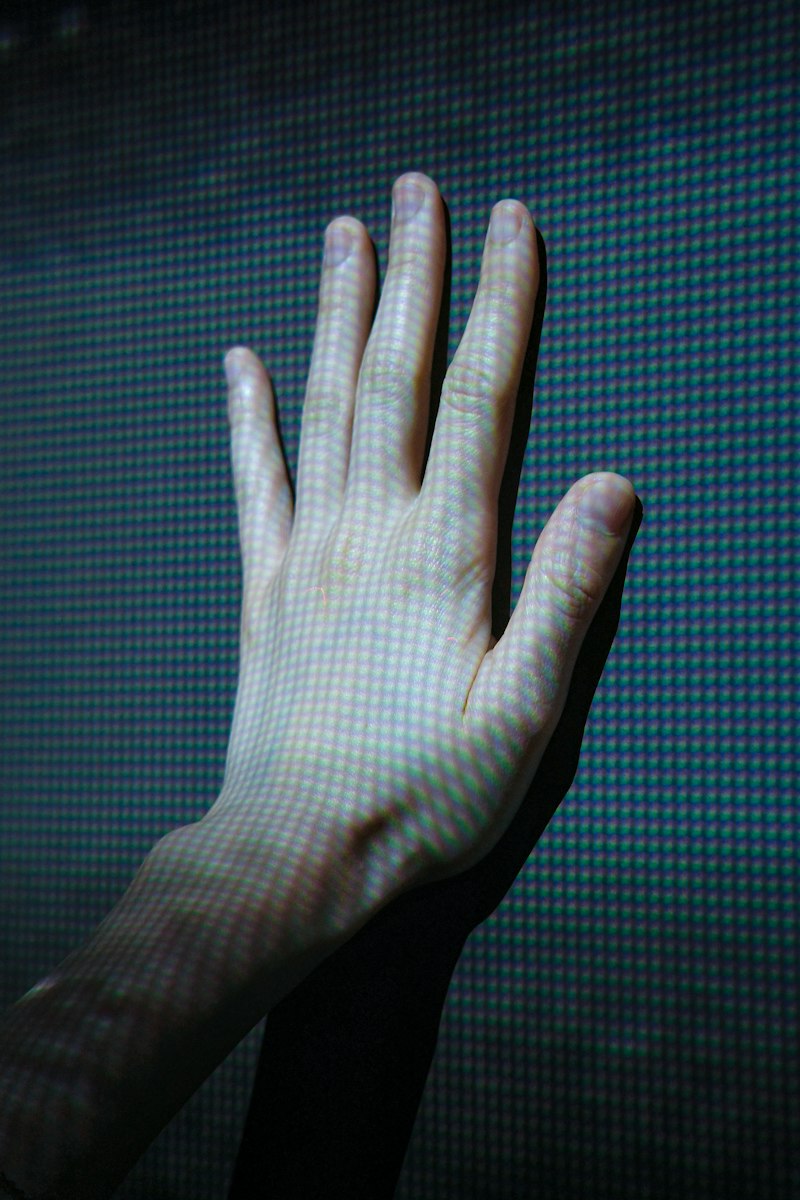
Tactual Display is defined as an advanced technological paradigm utilizing tactile stimulation to effectively convey information that is typically presented visually or aurally. At its core, the technology functions as a sophisticated form of sensory substitution, translating complex data structures—such as spatial layouts, graphical interfaces, or directional cues—into patterns of pressure, vibration, or temperature perceivable by the user’s skin. This process requires a transducer array, often composed of small actuators or pins, placed against a sensitive area of the body, such as the torso, fingertips, or tongue, allowing the user to interpret abstract or visual information through their somatosensory system. The development of Tactual Display is driven by the necessity to create engaging, immersive, and accessible communication channels, particularly for individuals with visual impairments or those operating in environments where visual attention is overloaded or compromised.
The fundamental mechanism behind Tactual Display involves the digital conversion of visual inputs, which are inherently spatial, into temporal and spatial patterns of mechanical energy. For instance, a simple image or data point is processed by a computational system which then maps the corresponding visual characteristics (e.g., brightness, edges, movement) onto specific points in the tactile array. This mapping dictates the intensity, frequency, and location of the resulting vibrational feedback, which the user must learn to decode and integrate into their cognitive framework. This highly specialized system challenges the traditional reliance on the visual pathway for information processing, offering a novel, non-visual interface that leverages the skin’s immense capacity for sensory input and discrimination.
Historical Development and Conceptual Origin
The conceptual origins of Tactual Display technology are deeply rooted in mid-to-late 20th-century research on sensory substitution, spearheaded by pioneering figures such as Paul Bach-y-Rita. While the explicit term “Tactual Display” gained traction later, specifically in research conducted by D.D. Hoffman, D.E. Meyer, and V.S. Ramachandran in the late 1990s and early 2000s, the underlying principle of replacing one sense modality with another was established decades prior. Early experiments focused on converting video camera input into low-resolution electrical or vibrational patterns placed on the skin, demonstrating that the brain possesses remarkable neuroplasticity, capable of reinterpreting tactile inputs as if they were visual perceptions.
The crucial transition from theoretical experiments to practical Tactual Display systems occurred as miniaturization and computer processing capabilities advanced. The work highlighted by Meyer and Ramachandran in the early 2000s focused on refining the technology to improve resolution and user experience, moving beyond simple pressure points to sophisticated arrays capable of conveying nuanced spatial information. This research marked the point where Tactual Display moved from being a proof-of-concept in neurophysiology to a viable field within Human-Computer Interaction (HCI) and engineering. These foundational studies demonstrated that the skin, particularly when provided with consistent, high-fidelity tactile stimulation, could serve as a powerful alternative input channel for complex visual and spatial data, paving the way for modern applications.
Fundamental Mechanisms of Tactile Feedback
The effectiveness of a Tactual Display relies heavily on the physiological characteristics of the somatosensory system. The skin is equipped with various mechanoreceptors—such as Meissner’s corpuscles, Pacinian corpuscles, and Merkel’s discs—each specialized for detecting different types of mechanical stimuli, including pressure, vibration, and texture. Tactual Display systems specifically target these receptors using small motors (eccentric rotating mass motors or linear resonant actuators) to generate finely tuned patterns of vibrational feedback. The precision of the display dictates the user’s ability to discriminate between spatial patterns; a higher density of actuators generally allows for more detailed information transfer, though this must be balanced against the limitations of tactile spatial resolution, which varies across the body.
In many advanced Tactual Display implementations, the concept of dynamic mapping is employed. This means the relationship between the visual input and the tactile output is not static but changes based on the user’s interaction, speed, or environmental context. For instance, if the display is used for navigation, the intensity of the vibration might increase as the user approaches a target, or a change in vibration frequency might indicate a shift in elevation. The successful integration of this technological output requires significant cognitive effort from the user, involving sensory learning and perceptual reorganization, highlighting the critical intersection between engineering design and cognitive psychology. The system’s ability to translate complex, multi-dimensional visual data into a comprehensible, time-varying tactile signal is the key engineering challenge that researchers continue to address to maximize the potential of Tactual Display.
Practical Applications: A Real-World Scenario
One of the most compelling practical applications of Tactual Display technology lies within the medical domain, specifically in enhancing surgical precision and providing real-time feedback during minimally invasive procedures. Consider a complex laparoscopic surgery where the surgeon relies heavily on a two-dimensional video monitor to navigate three-dimensional anatomical structures. Traditional methods often lack the crucial haptic feedback—the sense of touch and resistance—that is essential for distinguishing between different tissue types, applying appropriate pressure, or identifying internal boundaries. Tactual Display offers a solution by converting instrument-tip forces and proximity data into patterns of tactile stimulation delivered to the surgeon’s fingers or forearms.
The application of this principle follows a rigorous step-by-step process. First, specialized sensors on the surgical tools measure subtle mechanical forces (e.g., tension on a suture or resistance encountered by a cautery tool). Second, this quantitative force data is instantaneously translated into a corresponding intensity and pattern of vibration by the Tactual Display system. Third, the surgeon receives this non-visual, physical feedback—a high-frequency vibration might indicate hitting bone or dense scar tissue, while a low-frequency, gentle vibration might signify contact with delicate vessel walls. This immediate, intuitive feedback loop significantly improves the surgeon’s situational awareness and dexterity, leading to improved accuracy and reduced risk of tissue damage. The ability of the Tactual Display to convey crucial physical information that is otherwise lost in the visual interface underscores its immense value in safety-critical applications.
Significance, Impact, and Therapeutic Potential
The significance of Tactual Display technology extends far beyond niche applications; it represents a fundamental shift in how humans can interact with digital information and the physical world, offering profound benefits across multiple sectors. In the field of HCI, studies consistently demonstrate that the incorporation of vibrational feedback significantly enhances the user experience, leading to improved accuracy and speed of interaction, especially in tasks requiring rapid decision-making or simultaneous monitoring of multiple data streams. By distributing cognitive load from the visual system to the tactile system, users can process information more efficiently and naturally, ultimately leading to greater immersion, particularly in complex environments like virtual reality, as suggested by research into immersive entertainment systems.
Furthermore, the therapeutic and educational impact of Tactual Display is revolutionary. In educational settings, it provides a more engaging and multi-sensory learning experience, allowing students, especially those who are visual learners, to feel abstract concepts, such as mathematical graphs or molecular structures. Medically, beyond surgical assistance, Tactual Display systems are vital components of advanced prosthetics, providing crucial haptic feedback that allows amputees to sense the pressure and texture of objects they are manipulating, thereby restoring a degree of somatic awareness. This integration of technology and biology emphasizes the concept’s importance in rehabilitation, offering pathways to restoring lost sensory function through technological sensory substitution.
Connections to Sensory Psychology and Related Concepts
Tactual Display is intrinsically connected to the broader fields of Sensory Psychology and cognitive neuroscience. Its operational success relies entirely on the principles of neuroplasticity, the brain’s ability to reorganize itself by forming new neural connections throughout life. When a user begins utilizing a Tactual Display system, the brain must initially learn to associate the novel tactile patterns with specific visual or spatial meanings. Over time and with consistent training, the brain often reallocates cortical resources, effectively transforming the interpreted tactile input into a perception that feels almost visual or spatial, rather than merely a vibration on the skin. This profound sensory reorganization is the psychological mechanism that validates Tactual Display as a powerful tool for sensory remediation.
The technology falls under the broader category of Sensory substitution devices, which include well-known concepts such as the BrainPort (a tongue-based system for the visually impaired) or auditory-based visual interfaces. Related psychological concepts include:
- Cross-Modal Perception: The interaction between different sensory modalities, where stimulation of one sense (touch) influences the perception typically attributed to another (vision).
- Haptics: The science of touch and movement, which provides the engineering principles necessary to design effective and discriminable tactile stimulation patterns.
- Affordance: A concept from perceptual psychology suggesting that the environment offers opportunities for action; Tactual Display seeks to increase the affordances available to users by providing new sensory channels through which to interact with the world.
Future Trajectories in Tactual Display Research
Current research on Tactual Display continues to focus on improving the resolution, portability, and naturalness of the user experience. One major area of development involves creating flexible, high-density actuator arrays that can be seamlessly integrated into clothing or accessories, moving the technology closer to ubiquitous computing. Furthermore, researchers are exploring the use of electro-tactile feedback, which uses subtle electrical impulses rather than mechanical vibration, to potentially achieve higher resolution and lower power consumption. The goal is to make the tactile interface so intuitive and natural that the cognitive load associated with decoding the vibrational feedback is minimized, allowing the user to focus entirely on the task at hand.
The convergence of Tactual Display with advanced artificial intelligence and machine learning is also a promising trajectory. AI algorithms can be employed to optimize the data mapping process, adapting the tactile feedback patterns in real-time based on the user’s learned preferences and physiological responses. This personalization of the sensory experience promises to further enhance the accuracy and speed of user interaction, fulfilling the ultimate potential of Tactual Display as a truly immersive and effective communication medium in fields ranging from complex data visualization to accessible navigation systems.