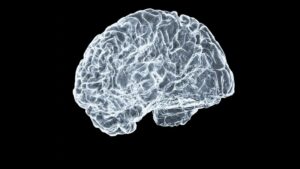
Tag: amygdala


MEDIAL AMYGDALA

Introduction to the Neurobiology of the Medial Amygdala The medial amygdala (MeA) represents a fundamental component of the limbic system, serving as a critical hub for the processing and integration of emotional and social information. Located deep within the temporal lobe of the mammalian brain, the MeA is uniquely positioned to interpret sensory inputs and […]

Read More

LIMBIC LOBE

Introduction to the Limbic Lobe The Limbic Lobe represents one of the most phylogenetically ancient and functionally significant portions of the human brain. Situated primarily within the medial temporal lobe, this region serves as a critical bridge between the higher-order processing of the cerebral cortex and the fundamental regulatory systems of the brainstem. The term […]

Read More

EMOTION (General)

Emotion (General): An Overview Emotions are complex psychological and physiological reactions that occur in response to a thought, event, or another person. They impact our behavior and decisions, and they can be positive or negative. This article provides an overview of emotion, including its biological and psychological components, its development, and its role in our […]

Read More

THREAT APPRAISAL

Threat Appraisal: A Review of its Psychological and Biological Processes Threat appraisal constitutes a fundamental psychological and biological mechanism crucial for individual survival and adaptation. It is defined as the complex, dynamic process by which an individual perceives, evaluates, and ultimately responds to potential dangers or stressors present within their environment. This process dictates the […]

Read More

AMYGDALA (Amygdaloid Complex)

AMYGDALA (Amygdaloid Complex): Definition, Structure, and Function The amygdala, often referred to as the amygdaloid complex due to its heterogeneous structure, is a crucial subcortical brain region primarily located deep within the medial temporal lobe. Recognized as central to the processing and memory of emotional reactions, particularly those related to fear, threat detection, and aggression, […]

Read More

MEDIAL TEMPORAL LOBE

Introduction and Anatomical Location The Medial Temporal Lobe (MTL) is a complex, critical structure situated deep within the temporal lobe, forming a vital component of the cerebral hemispheres in both the left and right sides of the brain. Its strategic location places it at the nexus of sensory processing and higher-order cognitive functions, particularly those […]

Read More

FOREBRAIN

Introduction and Definition of the Forebrain (Prosencephalon) The forebrain, or prosencephalon, represents the most anterior and evolutionarily advanced division of the vertebrate brain. It is the crucial structure responsible for the highest levels of cognitive function, including conscious thought, language, memory formation, motor planning, and complex sensory interpretation. Structurally, the forebrain develops from the anterior […]

Read More

PERIAMYGDALOID CORTEX

Defining the Periamygdaloid Cortex (PAMC) The Periamygdaloid Cortex (PAMC) is recognized within neuroanatomy as an area of the brain encompassing the central and lateral boundaries of the amygdaloid complex. Historically, its precise histological and functional delineation has proven challenging, leading to its frequent description as an ill-defined area. This ambiguity stems partly from its transitional […]

Read More

MACLEAN’S THEORY OF EMOTION

Dr. Paul MacLean and the Genesis of the Triune Brain Model The work of Dr. Paul MacLean represents a seminal contribution to affective neuroscience, fundamentally shifting the paradigm through which researchers understood the biological underpinning of emotion and behavior. MacLean, a highly influential American physician and neuroscientist, formulated the concept of the Triune Brain, a […]

Read More

EPICRITIC SYSTEM

The Epicritic System in Neuroscience and Psychology Defining the Epicritic System: Fine Sensory Discrimination The Epicritic System refers to the specialized set of neural structures and processing pathways responsible for the conscious, fine, and highly localized perception of sensory information, primarily relating to discriminative touch, pressure, vibration, and proprioception. It is the mechanism that grants […]

Read More

SEPTAL AREA

The Septal Area: A Central Hub of Emotion and Reward in the Brain The Core Definition and Anatomical Location The septal area, often referred to as the septal region, represents a critical collection of gray matter structures situated in the medial wall of the cerebral hemisphere. Anatomically, it is located directly beneath the rostrum of […]

Read More

RHINENCEPHALON

The Rhinencephalon: A Deep Dive into Olfaction, Emotion, and Memory Introduction to the Rhinencephalon The rhinencephalon, often referred to as the “smell-brain,” is a complex and evolutionarily ancient region of the brain primarily associated with the processing of olfaction, or the sense of smell. While its name literally translates to “nose-brain,” reflecting its critical role […]

Read More

STRIA TERMINALIS

Stria Terminalis The Core Definition of the Stria Terminalis The stria terminalis (ST) is a complex and highly interconnected subcortical brain structure, integral to the limbic system, primarily involved in regulating emotional and stress-related behaviors. Located deep within the forebrain, specifically in the septal region, the ST serves as a crucial communicative bridge, relaying information […]

Read More

AMYGDALA

AMYGDALA The Amygdala: Core Definition and Function The amygdala is a small, almond-shaped structure located deep within the medial temporal lobe of the brain, a bilateral pair existing in each hemisphere. It serves as a pivotal component of the limbic system, which is widely recognized as the brain’s primary emotional processing center. At its core, […]

Read More