The Forebrain: Your Brain’s Command Center for Thought
Scientifically Reviewed · Dr. Marwa Abd-Alazim · September 4, 2026
Review Criteria & Clinical Standards
This content undergoes rigorous scientific peer-review and medical editorial standards at Arab Psychology Network to ensure clinical accuracy, validity, and compliance with evidence-based guidelines from leading psychological and healthcare authorities (APA / WHO).
Introduction and Definition of the Forebrain (Prosencephalon)
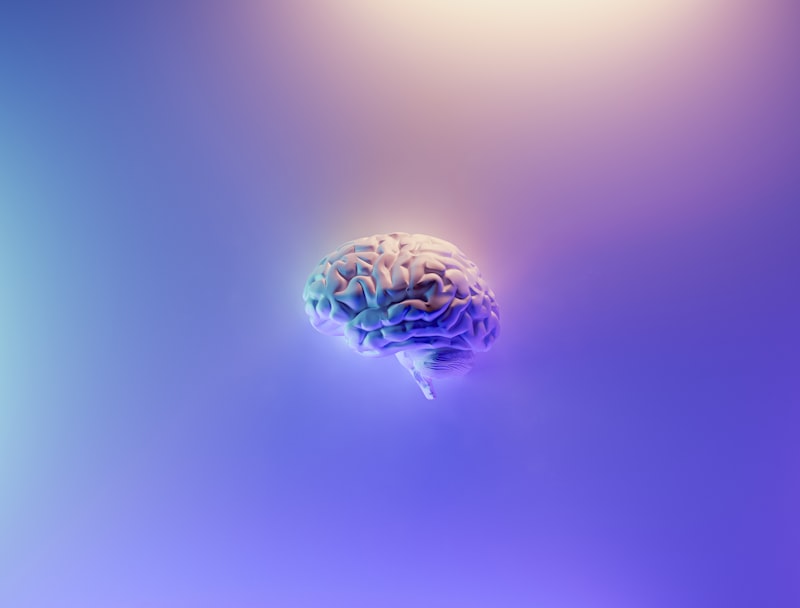
The forebrain, or prosencephalon, represents the most anterior and evolutionarily advanced division of the vertebrate brain. It is the crucial structure responsible for the highest levels of cognitive function, including conscious thought, language, memory formation, motor planning, and complex sensory interpretation. Structurally, the forebrain develops from the anterior section of the neural tube during embryonic development, giving rise to two principal subdivisions: the telencephalon and the diencephalon. This complex anatomical arrangement ensures the integration of external stimuli with internal regulatory processes, making the forebrain the central command system for adaptation and survival. Its vast network of interconnected gray and white matter facilitates the processing capacity that distinguishes mammalian and, particularly, human cognition.
The forebrain encompasses structures traditionally associated with higher psychological processes. The telencephalon, which expands dramatically during development, yields the cerebral hemispheres—the large, convoluted masses that house the cerebral cortex. Crucially, the deeper structures of the telencephalon include the essential components mentioned in the foundational definition: the basal ganglia, the amygdala, and the hippocampus. These subcortical nuclei play fundamental, though often unconscious, roles in regulating movement, emotion, and long-term memory consolidation, respectively. The sheer volume and intricate folding of the cerebral cortex, a feature unique to the telencephalon, reflect the complex computational demands placed upon this region, solidifying its role as the seat of personality and executive function.
Furthermore, while often discussed separately due to its deep central location, the diencephalon forms the structural core of the forebrain and is vital for integrating sensory information and maintaining homeostasis. The primary structures of the diencephalon are the thalamus and the hypothalamus. The thalamus acts as a major relay center for nearly all sensory input destined for the cortex, while the hypothalamus serves as the link between the nervous system and the endocrine system, controlling basic life-sustaining drives. The cooperative functionality between the telencephalon and the diencephalon establishes the foundation for all complex behavior, ranging from simple reflexes mediated through basal regulatory loops to abstract reasoning enabled by cortical networks.
Embryological Development and Organization
The formation of the forebrain is initiated early in gestation, stemming directly from the rostral end of the embryonic neural tube. This anterior portion first differentiates into three primary vesicles: the prosencephalon (forebrain), the mesencephalon (midbrain), and the rhombencephalon (hindbrain). During subsequent development, around the fifth week of gestation, the prosencephalon undergoes further specialization, dividing into the two secondary vesicles that define the adult structure: the telencephalon (meaning “end brain”) and the diencephalon (meaning “between brain”). This process of segmentation is critical, as it dictates the relative positions and functional relationships of the mature brain structures. Failures in this early organizational process can lead to severe congenital neurological defects, underscoring the importance of precise developmental timing.
The telencephalon experiences the most rapid and expansive growth, leading to the formation of the large, paired cerebral hemispheres that eventually envelop the diencephalon and part of the midbrain. This expansive growth is characteristic of encephalization, the evolutionary trend toward increased brain size, particularly of the cerebral cortex, which allows for greater cognitive capacity. The walls of the telencephalon thicken to form the cerebral cortex and the deep nuclei, including the basal ganglia. Simultaneously, the cavity within the telencephalon expands to form the lateral ventricles, which are crucial for cerebrospinal fluid circulation. The rapid proliferation and migration of neurons during this phase establish the six distinct layers of the neocortex, laying the groundwork for complex neuronal circuitry.
In contrast to the expansive growth of the telencephalon, the diencephalon remains centrally located, forming the core structures situated superior to the brainstem. The diencephalon’s walls differentiate into the thalamus (dorsal portion) and the hypothalamus (ventral portion), with the cavity forming the third ventricle. This area maintains critical connections with the developing optic vesicles (which become the retina), reflecting its early association with sensory processing. The synchronized development of the telencephalon and diencephalon ensures that the higher cortical centers (telencephalon) are continuously and efficiently supplied with sensory information and regulated internal states (diencephalon), creating a seamless functional unit essential for maintaining consciousness and reacting appropriately to the environment.
The Telencephalon: Structure and Function (The Cerebral Hemispheres)
The cerebral hemispheres constitute the bulk of the forebrain and are the most visually prominent structures. They are separated by the longitudinal fissure and connected internally by the corpus callosum, a massive bundle of white matter fibers that allows for interhemispheric communication. Each hemisphere is further subdivided into four major lobes—the frontal, parietal, temporal, and occipital lobes—each responsible for distinct, though highly integrated, sets of functions. The surface layer, the cerebral cortex, is characterized by its extensive folding (gyri and sulci), which maximizes surface area and allows for a massive number of neurons to be packed into the skull cavity. This cortical expansion is directly correlated with enhanced cognitive complexity.
The functional specialization within the cerebral cortex is highly complex. The frontal lobe, located anteriorly, is the center for executive functions, including planning, decision-making, working memory, inhibitory control, and personality expression. It contains the primary motor cortex, which controls voluntary movement, and the prefrontal cortex, which is responsible for abstract thought and emotional regulation. Posterior to the frontal lobe lies the parietal lobe, which is primarily dedicated to integrating sensory information from the body, spatial awareness, and navigation. This lobe contains the somatosensory cortex, receiving input concerning touch, temperature, and pain, and plays a vital role in processing non-verbal information.
The remaining lobes manage crucial sensory and interpretive tasks. The temporal lobe, situated inferiorly, is essential for auditory processing, language comprehension (Wernicke’s area), and, due to its close association with the hippocampus and amygdala, is indispensable for memory and emotion processing. Damage to the temporal lobe can result in profound disturbances in hearing, speech comprehension, and the ability to recognize objects or faces. Finally, the most posterior region, the occipital lobe, is almost exclusively dedicated to visual processing. It contains the primary visual cortex, where raw visual data is initially processed, and various secondary visual areas responsible for interpreting features such as color, movement, and depth. The coordinated activity across these lobes allows for the holistic perception and interaction with the external world that characterizes human experience.
The Telencephalon: Key Subcortical Structures
Deep within the cerebral hemispheres of the telencephalon lie several interconnected nuclei that form essential components of the forebrain, playing critical roles outside of conscious cortical processing. The basal ganglia is one such critical group of structures, comprising the striatum (caudate nucleus and putamen), the globus pallidus, the substantia nigra (midbrain structure functionally linked), and the subthalamic nucleus (diencephalon structure functionally linked). Its primary function is the initiation and control of voluntary movement, procedural learning, and habit formation. It operates through complex feedback loops with the cerebral cortex and the thalamus, ensuring that motor actions are smooth, coordinated, and properly scaled. Dysfunction in the basal ganglia is centrally implicated in debilitating movement disorders such as Parkinson’s disease, which involves the degeneration of dopamine-producing neurons projecting into the striatum.
Another pivotal structure embedded in the temporal lobe is the hippocampus, a structure absolutely fundamental to learning and memory. The hippocampus forms part of the limbic system and is crucial for converting short-term memories into long-term, declarative memories—memories related to facts (semantic memory) and events (episodic memory). It is also vital for spatial navigation and memory, helping organisms create cognitive maps of their environment. The high plasticity of hippocampal neurons makes this region particularly vulnerable to stress, oxygen deprivation, and neurodegenerative processes. Damage to the hippocampus, famously illustrated in the case of patient H.M., results in severe anterograde amnesia, rendering the individual unable to form new long-term memories, though older memories often remain intact, highlighting its role in consolidation rather than storage.
The amygdala, another key telencephalic structure, is an almond-shaped cluster of nuclei located deep within the medial temporal lobes, anterior to the hippocampus. This structure is the primary center for processing emotional stimuli, particularly those related to fear, aggression, and pleasure. It plays a critical role in emotional learning, where neutral stimuli become associated with emotional responses (e.g., classical conditioning of fear). The amygdala assesses the emotional significance of sensory information and initiates appropriate autonomic responses, such as the “fight or flight” reaction mediated through connections with the hypothalamus. Its activity is essential for survival, mediating vigilance and the detection of threat, although hyperactivity or dysfunction has been linked to anxiety disorders, phobias, and post-traumatic stress disorder (PTSD), underscoring its powerful influence over emotional behavior.
The Diencephalon: The Thalamus
The thalamus is a large, egg-shaped mass of gray matter situated deep within the cerebral hemispheres, forming the dorsal portion of the diencephalon. It is often described as the great sensory relay station of the brain, as virtually all sensory information (except olfaction) that reaches the cerebral cortex must first pass through one of its many nuclei. The thalamus acts as a sophisticated gate, filtering, modulating, and routing incoming signals to the appropriate cortical areas for further processing. This relay function is critical for perception, ensuring that the cortex receives organized and relevant sensory data. For example, the lateral geniculate nucleus relays visual information from the retina to the occipital cortex, while the medial geniculate nucleus relays auditory information to the temporal cortex.
Beyond its role in sensory transmission, the thalamus is deeply involved in motor control, connecting the basal ganglia and cerebellum to the motor areas of the cortex, thereby participating in the complex loops that refine and execute movement. Furthermore, the thalamus plays a critical role in regulating states of wakefulness, attention, and consciousness. Certain thalamic nuclei have diffuse projections to the cortex and are integral components of the ascending reticular activating system (ARAS). Disruption to these areas can severely impair consciousness, emphasizing that the thalamus is not merely a passive relay center but an active participant in modulating cortical excitability and maintaining awareness.
The extensive connectivity of the thalamus highlights its integrative nature within the forebrain. It acts as a central hub, facilitating communication not only between sensory organs and the cortex but also between different cortical regions and subcortical structures. This intricate network ensures that sensory perception is harmonized with cognitive states and motor output. For instance, in attention tasks, the thalamus works to prioritize specific incoming sensory streams while suppressing irrelevant noise, a selective gating mechanism that is essential for focused cognitive effort. This complex interplay underscores why thalamic damage can lead to widespread sensory deficits, movement disorders, and disturbances in cognitive processing far removed from simple loss of sensation.
The Diencephalon: The Hypothalamus
The hypothalamus forms the floor and lower walls of the third ventricle, positioned immediately below the thalamus. Despite its relatively small size—it constitutes less than 1% of the brain’s total volume—it is arguably one of the most functionally dense and critical structures in the forebrain. The hypothalamus is the principal regulator of the body’s internal environment, or homeostasis, controlling essential physiological processes necessary for survival, including body temperature, thirst, hunger, sleep cycles, and sexual behavior. It accomplishes this through extensive neural connections and, uniquely, its direct control over the endocrine system.
A key function of the hypothalamus is its role as the master regulator of the endocrine system via its interaction with the pituitary gland (hypophysis). It synthesizes and releases neurohormones that either stimulate (releasing hormones) or inhibit (inhibitory hormones) the secretion of hormones from the anterior pituitary. Furthermore, the hypothalamus produces vasopressin (ADH) and oxytocin, which are then transported and released directly from the posterior pituitary gland. This neuroendocrine axis is vital for regulating metabolism, stress response (via the HPA axis), growth, and fluid balance, making the hypothalamus the crucial link between neural activity and hormonal regulation throughout the body.
The hypothalamus also integrates vital drives that motivate complex behavior. Specific nuclei within the hypothalamus monitor blood glucose levels and circulating hormones to regulate feeding behavior; others monitor osmotic pressure to regulate drinking behavior. Additionally, it integrates emotional information from the limbic system (like the amygdala) to generate physical manifestations of emotion, such as changes in heart rate or blood pressure, and to initiate appropriate behavioral responses, such as fleeing or fighting. Its profound influence over autonomic nervous system output further cements its status as the chief orchestrator of the body’s fundamental physiological and behavioral needs within the forebrain.
Functional Integration and Cognitive Processing
The true complexity of the forebrain lies not merely in the individual functions of its components but in the integrated circuits that link the telencephalon and diencephalon. The limbic system exemplifies this integration, encompassing structures such as the hippocampus, amygdala, hypothalamus, and parts of the cortex (e.g., cingulate gyrus). This system is dedicated to integrating emotion, motivation, and memory, ensuring that new experiences are tagged with appropriate emotional valence and consolidated into long-term memory, while simultaneously influencing the hypothalamus to adjust internal physiological states in response to external threats or opportunities. This interconnected loop allows for learned, adaptive behavioral responses based on past experiences.
Furthermore, the forebrain operates through crucial cortico-subcortical loops, particularly those involving the cerebral cortex, the basal ganglia, and the thalamus. These loops are essential for motor and cognitive selection. For instance, in motor planning, the cortex proposes potential movements; the basal ganglia filters and selects the appropriate motor program while inhibiting competing movements; and the thalamus relays the refined output back to the cortex for execution. Similar loops operate for cognitive functions, such as filtering irrelevant thoughts or switching attention between tasks, illustrating how the deep forebrain structures actively refine and modulate the decisions and perceptions generated by the cerebral cortex.
The ultimate output of forebrain integration is executive function, the highest level of human cognition mediated predominantly by the prefrontal cortex and its connections. Executive function includes the ability to hold information in mind (working memory), to flexibly shift between tasks (cognitive flexibility), and to inhibit inappropriate actions (response inhibition). These functions require continuous input and modulation from the diencephalon (thalamic arousal and sensory filtering) and the subcortical telencephalon (basal ganglia habit control and amygdala emotional filtering). The ability to foresee consequences and plan for the future, hallmarks of human intelligence, depends entirely on the robust, integrated circuitry of the entire forebrain structure working in concert.
Clinical Significance and Associated Disorders
Given the forebrain’s central role in movement, memory, emotion, and cognition, damage or pathology within its structures is associated with a vast array of severe neurological and psychiatric disorders. Neurodegenerative diseases frequently target specific forebrain components. For instance, Alzheimer’s disease, the most common form of dementia, involves progressive atrophy, particularly pronounced in the hippocampus and surrounding temporal lobe cortex, leading to the hallmark deficits in episodic memory and spatial orientation. Other diseases, such as Huntington’s disease, primarily affect the basal ganglia (specifically the striatum), resulting in involuntary, jerky movements (chorea) and severe cognitive decline, underscoring the vital role of these subcortical nuclei in motor control and cognitive selection.
Disorders affecting the forebrain’s integrated functional systems also highlight its clinical importance. Psychiatric conditions often involve dysregulation within the limbic system. For example, severe depression and anxiety disorders are frequently linked to abnormal activity and connectivity between the amygdala, responsible for fear processing, and the prefrontal cortex, responsible for emotional regulation. Similarly, schizophrenia is hypothesized to involve profound disruptions in the fronto-thalamic-cerebellar circuitry, affecting executive function, attention, and sensory gating mechanisms mediated by the thalamus. These connections illustrate that psychiatric illness often stems from structural or functional imbalances within the forebrain’s intricate networks rather than localized lesions.
Vascular events, such as strokes, can also lead to catastrophic forebrain damage. Occlusion of major cerebral arteries can result in widespread cortical death, leading to aphasia (language deficits if the damage is in the temporal or frontal lobes), paralysis, and sensory loss. Furthermore, damage to the deeper diencephalic structures, though smaller in scope, can have disproportionately severe effects; hypothalamic damage can destroy homeostatic control, leading to life-threatening imbalances in temperature regulation or fluid balance, while thalamic damage can induce coma or permanent vegetative states by disrupting the essential pathways maintaining consciousness. Thus, the forebrain’s complexity translates directly into the breadth and severity of clinical syndromes associated with its impairment.