Articles

Auditory Recruitment: Decoding How Your Brain Hears Sound
Introduction and Definition of the ABLB Test The Alternate Binaural Loudness-Balance Test, commonly abbreviated as...
Introduction and Definition of the ABLB Test The Alternate Binaural Loudness-Balance Test, commonly abbreviated as...

Introduction to the Acronym SRT The abbreviation SRT stands as a key term within two...

Definition and Fundamental Concept of the Minimal Audible Field The Minimal Audible Field (MAF) represents...
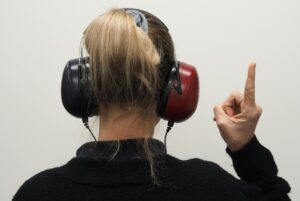
Introduction to the Staggered Spondaic Word Test (SSW) The Staggered Spondaic Word Test, commonly abbreviated...

Introduction to Presbycusis: Definition and Scope Presbycusis, derived from the Greek terms “presbys” (old) and...

Introduction and Definition of Air-Conduction Testing Air-conduction testing represents the foundational diagnostic procedure within the...

Definition and Phenomenological Description The concept of the tonal gap, sometimes referred to clinically as...

Definition and Core Characteristics A temporary threshold shift (TTS) is defined within audiology and psychophysics...
Diplacusis: The Phenomenon of Double Hearing The Core Definition of Diplacusis Diplacusis, commonly referred to...

Masking Level Difference (MLD) Introduction and Core Definition The Masking Level Difference, often abbreviated as...

Speech and Language Pathology: An Encyclopedia Entry The Core Definition of Speech and Language Pathology...

Most Comfortable Loudness (MCL) The Core Definition of MCL The concept of Most Comfortable Loudness...