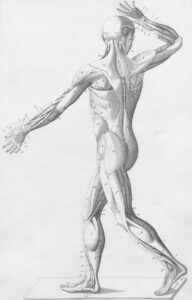
Eumorphic: The Psychology of Ideal Body Proportions
Eumorphic Body Shape in Psychology and Health Core Definition and Psychological Context The term “eumorphic” originates from Greek roots meaning “good form” or “well-shaped,” and within the context of psychology, anatomy, and health sciences, it is employed to describe a body morphology characterized by aesthetically pleasing proportions that are often associated with optimal health and […]
Somatotype: Decoding Your Physique and Personality
Somatotype: An Encyclopedia Entry Introduction to Somatotype The concept of somatotype represents a pioneering attempt to categorize human physical variation and explore its potential connections to temperament, personality, and health. Developed in the mid-20th century, this model posits that an individual’s unique body shape and composition, or physique, can be broadly classified into a combination […]
Bust-to-Waist Ratio: The Psychology Behind Human Attraction
The Bust-to-Waist Ratio in Psychology Introduction to the Bust-to-Waist Ratio The Bust-to-Waist Ratio (BWR) stands as a significant anthropometric measurement within the realms of psychology, health sciences, and aesthetics. At its core, it is a simple yet insightful metric that quantifies the proportional relationship between the circumference of an individual’s bust and their waist. This […]
WAIST-TO-HIPS RATIO
Defining the Anthropometric Parameters of the Waist-to-Hips Ratio The Waist-to-Hips Ratio (WHR) serves as a critical anthropometric tool designed to measure the distribution of body fat across the human frame. Unlike generalized metrics that only account for total weight, the WHR provides a specific window into how adipose tissue is partitioned between the upper and […]
ANABOLIC SYSTEM
Introduction and Definition of the Anabolic System The concept of the Anabolic System describes a specific constitutional body configuration defined primarily by the disproportionate development of the visceral organs relative to the musculoskeletal structure. This classification is rooted in early constitutional psychology, which sought to establish definitive links between physical morphology and psychological temperament. Crucially, […]
ANTHROPOSCOPY
Introduction and Defining Anthroposcopy Anthroposcopy is fundamentally defined as the specialized act of judging, assessing, or characterizing the overall body type, constitution, and physical shape of an individual solely through visual inspection, observation, and subjective assessment. This approach stands in stark contrast to methodologies that rely upon empirical data collection, precise instrumentation, or quantitative measurement. […]
PHTHINOID
Introduction and Definition of the Phthinoid Type The term phthinoid is an adjective utilized within the framework of constitutional psychology, specifically derived from the influential somatic typology proposed by German psychiatrist Ernst Kretschmer in the early 20th century. Fundamentally, the descriptor designates a pronounced sub-category or specific manifestation of the broader asthenic body type. The […]
STEATOPYGIA
Definition and Etymology Steatopygia, derived from the ancient Greek words stéar (meaning fat or tallow) and pygé (meaning rump or buttocks), refers specifically to the pronounced, often extreme, accumulation of localized adipose tissue in the gluteal and femoral regions. This distinctive morphological characteristic results in a marked projection and lateral extension of the buttocks, frequently […]