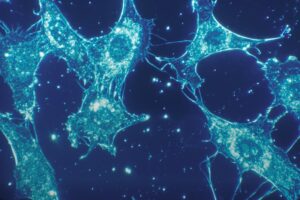
Apoptosis: The Psychology of Letting Go
Programmed Cell Death Introduction to Programmed Cell Death Programmed Cell Death (PCD) represents a fundamental and meticulously regulated biological process that is essential for the development, maintenance, and overall health of multicellular organisms. Unlike accidental cell death, which is typically uncontrolled and results from severe injury, PCD is an active, intrinsic process orchestrated by a […]
EXCITOTOXICITY
Defining Excitotoxicity and Its Clinical Significance Excitotoxicity represents a complex and highly destructive pathological process wherein nerve cells suffer damage or total destruction due to excessive stimulation by neurotransmitters. In the context of the central and peripheral nervous systems, glutamate serves as the primary excitatory neurotransmitter, yet its dysregulation can lead to catastrophic cellular outcomes. […]
NECROSIS
Introduction: Defining Necrosis Necrosis represents a catastrophic and unregulated form of accidental cell death (ACD) occurring within living tissue. Unlike the controlled, programmed cellular dismantling known as apoptosis, necrosis is characterized by the premature death of cells in a localized area, typically as a direct result of overwhelming external or internal cellular injury. This process […]
APOPTOSIS
Introduction and Definition of Apoptosis Apoptosis, derived from the Greek word meaning “falling off” or “dropping off” (as leaves fall from a tree), is a highly regulated and fundamental biological process defined as programmed cell death (PCD). This term is used broadly to describe the highly controlled and energy-dependent cellular suicide mechanism that is essential […]