Tag: Design principles


FIGURE-GROUND PERCEPTION

Conceptual Foundation of Figure-Ground Perception Figure-ground perception serves as a cornerstone of visual cognition, representing the primary mechanism through which the human mind organizes sensory input into a coherent reality. This fundamental principle describes the innate tendency of the visual system to simplify a complex scene into a prominent object of focus, known as the […]

Read More

PRINCIPLE OF PRAGNANZ

Foundations of the Principle of Pragnanz The Principle of Pragnanz, frequently referred to in psychological literature as the Law of Simplicity or the Law of Good Figure, serves as a cornerstone of Gestalt psychology. At its most fundamental level, this principle posits that individuals perceive and interpret ambiguous or complex images in the simplest form […]

Read More

UNIVERSAL DESIGN

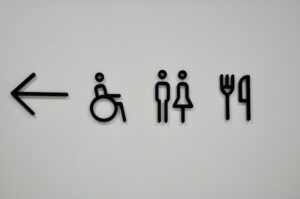
UNIVERSAL DESIGN: Applying Principles for an Inclusive Built Environment The concept of Universal Design (UD) represents a fundamental paradigm shift in how environments, products, and communications are conceived and executed. It mandates that design should be usable by the widest possible range of people, operating in the widest range of situations, without the need for […]

Read More

COLOR CIRCLE

Introduction: The Color Circle The color circle, often interchangeably termed the color wheel or chromatic circle, stands as a foundational and indispensable theoretical tool within the domains of art, graphic design, physics, and psychology. It provides a visual, systematic, and logical organization of hues, illustrating the relationships between various colors based on the way they […]

Read More

PROXIMITY COMPATIBILITY

Introduction and Foundational Definition The concept of Proximity Compatibility stands as a fundamental principle within the fields of human factors engineering and cognitive ergonomics. At its core, Proximity Compatibility advocates for a logical and spatial congruence between operational controls and the corresponding displays or systems they manipulate. Specifically, it is defined as the principle in […]

Read More

FITTS LAW

Introduction to Fitts Law Fitts Law is a foundational principle within the fields of experimental psychology, motor control, and human-computer interaction (HCI). Formally introduced by psychologist Paul Fitts in 1954, this law mathematically models the time required to move rapidly and accurately to a target area, establishing a quantitative relationship between the difficulty of a […]

Read More

CONTRAST POLARITY

Contrast Polarity in Psychological Judgment Introduction to Contrast Polarity Contrast polarity is a fundamental phenomenon in psychology, specifically within the fields of social cognition and judgment and decision-making, describing a process where the evaluation of a stimulus is shifted in the opposite direction of a preceding or simultaneous contextual stimulus. This effect, often categorized as […]

Read More

LAW OF CONTRAST

The Law of Contrast Introduction to the Law of Contrast The concept of contrast is fundamental to how humans perceive the world, playing a critical role in our interpretation of visual information. At its core, the Law of Contrast describes a pervasive phenomenon where the perception of an element is significantly influenced by the characteristics […]

Read More

DESIGN FOR THE AVERAGE

Design for the Average Introduction to Design for the Average The concept of Design for the Average refers to an approach in product and system development where the primary focus is on meeting the needs and capabilities of the statistically “average” user. This methodological orientation often involves gathering data on a broad population, identifying central […]

Read More