Universal Design: Psychology for an Inclusive World
Scientifically Reviewed · Dr. Marwa Abd-Alazim · September 19, 2026
Review Criteria & Clinical Standards
This content undergoes rigorous scientific peer-review and medical editorial standards at Arab Psychology Network to ensure clinical accuracy, validity, and compliance with evidence-based guidelines from leading psychological and healthcare authorities (APA / WHO).
UNIVERSAL DESIGN: Applying Principles for an Inclusive Built Environment
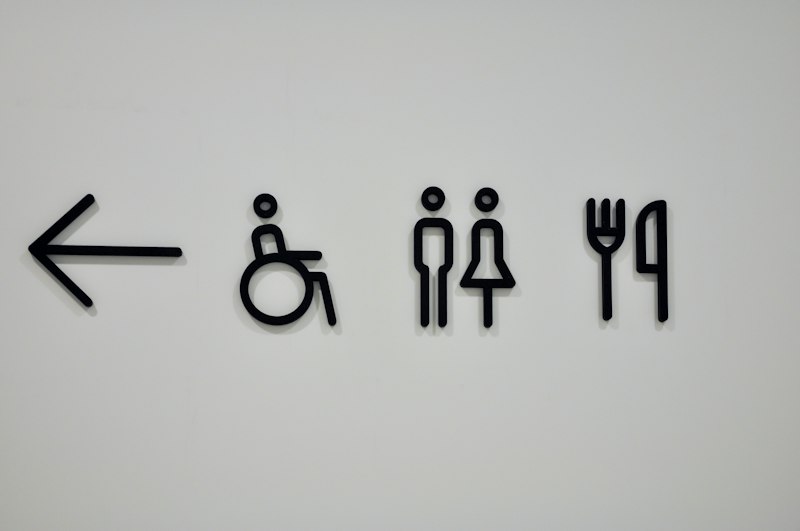
The concept of Universal Design (UD) represents a fundamental paradigm shift in how environments, products, and communications are conceived and executed. It mandates that design should be usable by the widest possible range of people, operating in the widest range of situations, without the need for specialized adaptation or customized solutions. The built environment—encompassing everything from architecture and transportation systems to consumer products and digital interfaces—is a critical factor in determining genuine accessibility and fostering inclusion for all individuals, regardless of age, ability, or status. Universal Design serves as the foundational philosophy guiding the creation of spaces that are inherently equitable, efficient, and welcoming.
Unlike traditional accessibility standards, which often focus on meeting minimum legal compliance thresholds for specific disability groups, Universal Design adopts a holistic and proactive approach. Its goal is to maximize human performance, health, and wellness by anticipating the needs of a diverse user population from the very beginning of the design process. This extensive encyclopedia entry will outline the historical genesis of UD, meticulously detail the seven core principles that guide its application, discuss the profound benefits of embracing this philosophy, and explore the significant implications associated with the failure to fully incorporate these principles into modern society.
The Genesis and Philosophical Foundation of Universal Design
Universal Design is not a recent innovation but rather a concept formally developed in the late 1970s and early 1980s by Ronald L. Mace, a highly influential American architect, product designer, and educator who himself used a wheelchair. Mace, recognizing the inherent limitations and often stigmatizing nature of post-design modifications (retrofitting), sought to establish a design process that was fundamentally accessible to everyone. He championed the idea that good design should inherently incorporate usability for all people, eliminating the need for costly and often aesthetically jarring adaptations that were typically only considered after a building or product was deemed inaccessible.
Mace’s work represents a significant philosophical shift from the traditional “medical model” of disability to the “social model.” The medical model views disability as an individual deficit that must be corrected or accommodated, whereas the social model asserts that disability is created by unaccommodating environments and societal structures. Universal Design operates squarely within the social model, arguing that the barrier lies not with the individual, but with the design itself. By embracing UD, designers proactively address the systemic barriers that exclude vast segments of the population, thereby fostering true societal participation and independence.
The principles that form the cornerstone of Universal Design were later codified and refined by Mace and a dedicated working group of architects, designers, engineers, and environmental researchers at the Center for Universal Design (CUD) at North Carolina State University. These principles were intended to serve as comprehensive guidelines for evaluating existing designs, driving new designs, and informing the curriculum for design education across various disciplines, ensuring the philosophy could be applied consistently across global standards and practices.
The Seven Core Principles of Universal Design
The seven principles established by the CUD provide a powerful framework for evaluating whether a design truly serves a diverse population. These guidelines emphasize the importance of creating a built environment and products that are robustly usable by a wide variety of individuals, including those with permanent or temporary physical, cognitive, and sensory disabilities. They move beyond mere compliance, insisting on optimal usability and user dignity. The seven principles are as follows:
- Equitable Use
- Flexibility in Use
- Simple and Intuitive Use
- Perceptible Information
- Tolerance for Error
- Low Physical Effort
- Size and Space for Approach and Use
The first two principles, Equitable Use and Flexibility in Use, focus intensely on the social and functional aspects of design. Equitable Use demands that the design is useful and marketable to people with diverse abilities, ensuring identical means of use for all users, or providing equivalent means when identical use is not feasible, while avoiding segregation or stigmatization. For instance, a revolving door should always be accompanied by an equally prominent and dignified automatic swing door. Flexibility in Use accommodates a wide range of individual preferences and abilities, providing choice in methods of use, accommodating right- or left-handed access, and facilitating the user’s accuracy and precision, thereby serving different paces and skill sets.
The next pair of principles addresses communication and comprehension. Simple and Intuitive Use requires that the design is easy to understand, regardless of the user’s experience, accumulated knowledge, language skills, or current concentration level. This includes eliminating unnecessary complexity, ensuring consistency with user expectations, and providing effective prompting and feedback during and after the interaction. Complementing this is Perceptible Information, which dictates that the design communicates necessary information effectively to the user, irrespective of ambient conditions or the user’s specific sensory abilities. This involves using different modes (pictorial, verbal, tactile), ensuring sufficient contrast between essential information and its surroundings, and making sure all elements are readable by people using assistive technologies.
The final three principles focus on safety, comfort, and physical interaction with the environment. Tolerance for Error minimizes hazards and the adverse consequences of accidental or unintended actions, incorporating features that provide warnings of potential errors and fail-safe mechanisms. Low Physical Effort ensures that the design can be used efficiently and comfortably, minimizing physical fatigue. This principle suggests that repetitive actions should be avoided and that operating forces should be minimal. Finally, Size and Space for Approach and Use is critical, ensuring appropriate size and space is provided for approach, reach, manipulation, and use, regardless of the user’s body size, posture, or mobility level, guaranteeing clear lines of sight and necessary space for assistive devices.
Comprehensive Benefits of Implementation
The incorporation of Universal Design principles into the built environment and product development yields numerous benefits that extend far beyond simple compliance, generating substantial economic, social, and functional advantages. One of the most compelling arguments for UD is the reduction of long-term costs. When accessibility is an afterthought, retrofitting existing structures to meet standards becomes extremely expensive, often requiring demolition, structural changes, and specialized labor. Proactive integration of UD, however, ensures accessibility is built in from the ground up, minimizing the need for costly future modifications and yielding significant long-term capital savings.
Socially and economically, Universal Design substantially expands the potential user base for products, services, and facilities. By designing for the edge cases—such as individuals with severe disabilities—the design inherently improves usability for the mainstream population. This benefit is particularly acute when considering global demographic trends, especially the rapidly aging population in developed nations. As people age, they frequently experience reduced mobility, decreased vision, and lower dexterity. UD supports “aging in place,” allowing older adults to maintain their independence and remain in their homes and communities longer, which is both a benefit to the individual’s quality of life and a reduction in societal healthcare burdens.
Furthermore, UD improves overall safety and operational functionality for everyone. For example, features designed to aid individuals with visual impairments, such as better lighting, clear contrasts, and consistent tactile warnings, inherently reduce tripping hazards and increase navigational clarity for all users, regardless of ability. This improved safety profile translates directly into reduced liability risks for property owners and operators, decreasing the likelihood of accidents, injuries, and subsequent litigation related to environmental hazards or poor navigability.
Addressing the Aging Population and Temporary Limitations
The relevance of Universal Design is amplified when considering the spectrum of human ability, which is fluid and situational. The design choices made today must accommodate the demographic reality of an increasing number of older adults who desire active participation in society. UD principles ensure that environments remain navigable and useful as physical capacities decline naturally over time. For instance, low-effort handles, clear pathways, and accessible entrances allow a person in their 80s, perhaps relying on a cane or walker, to continue accessing public services and retail spaces without dependence on external assistance, thereby supporting dignity and economic engagement.
It is crucial to understand that UD does not exclusively benefit those with permanent disabilities. A significant portion of the population experiences temporary limitations or situational constraints that mimic aspects of disability. Examples include a parent navigating an airport with a stroller and multiple bags, an employee recovering from a broken leg who requires crutches, or a person temporarily unable to hear due to a loud construction site. Universal Design, by ensuring features like curb cuts, automatic doors, and visual announcements, seamlessly accommodates these temporary conditions, highlighting its broad utility and applicability across the human experience.
By focusing on the principle of Low Physical Effort, for example, designers create products that reduce fatigue for every user, not just those with strength limitations. A handle that requires less torque to operate benefits both someone with severe arthritis and a person carrying a heavy load of groceries. This pervasive utility underscores the core philosophy: designing for maximum accessibility inevitably results in maximum usability for everyone, enhancing the overall quality and efficiency of the environment or product.
Ethical and Legal Implications of Non-Compliance
The failure to incorporate Universal Design principles carries significant ethical, legal, and economic penalties. Ethically, ignoring UD is fundamentally an act of exclusion. When spaces and products are designed without considering a diverse range of users, they implicitly limit the quality of life, educational opportunities, employment access, and social participation for people with disabilities. This leads to profound societal costs, including reduced economic productivity from inaccessible workplaces and increased dependence on support services due to inaccessible housing and infrastructure.
Legally, while Universal Design generally exceeds the minimum requirements set by legislation such as the Americans with Disabilities Act (ADA) in the United States or equivalent international accessibility standards, a lack of adherence to the spirit of UD often results in environments that are technically compliant but practically unusable. For instance, a ramp might meet the minimum slope requirement but be so narrow or poorly positioned that it is intimidating or difficult to use. This gap between technical compliance and functional usability frequently leads to legal challenges, as courts often interpret accessibility statutes based on actual usability rather than merely checklist fulfillment.
The economic penalty for failing to implement UD proactively is substantial. Beyond the operational costs of expensive retrofitting mentioned previously, non-compliant or poorly designed facilities face potential litigation, resulting in hefty fines and mandated, immediate modification costs. Furthermore, businesses operating in non-universally designed spaces risk alienating a large and growing consumer base—including the elderly and families—who simply choose to patronize facilities that are easier to navigate. Thus, neglecting UD results not only in social exclusion but also in demonstrable financial loss and reputational damage.
Conclusion: Shaping an Equitable Future
Universal Design is much more than a set of technical guidelines; it is an overarching philosophy rooted in the core belief that design excellence is synonymous with inclusivity. The principles provide a robust, transferable framework for creating a built environment and products that are accessible to all individuals, irrespective of their ability or life stage. The incorporation of these principles yields numerous, mutually reinforcing benefits, including increased access to services, improved safety and functionality for all users, and a more profoundly inclusive atmosphere that celebrates human diversity.
The choice to embrace Universal Design is an imperative for creating a truly equitable and sustainable future. Recognizing the significant potential implications of failing to incorporate UD—ranging from social exclusion and reduced quality of life to increased legal exposure and financial burdens—underscores its critical role in contemporary planning and development. By integrating the seven principles of UD into every stage of design, stakeholders across architecture, engineering, and product development can move beyond mere accommodation toward truly integrated and user-centric solutions, shaping a world that is inherently better designed for everyone.
References
Mace, R. (2017). Universal Design: Principles and Examples. Retrieved from https://www.ncsu.edu/ncsu/design/cud/about_ud/udprinciplestext.htm
U.S. Access Board. (2017). Benefits of Universal Design. Retrieved from https://www.access-board.gov/guidelines-and-standards/buildings-and-sites/about-the-ada-standards/background/benefits-of-universal-design