Tag: mental representation


PSYCHOLOGICAL DISTANCE

The Conceptual Foundations of Psychological Distance and Construal Level Theory Psychological distance is a fundamental concept in social psychology that describes the subjective experience of how far or near an object, event, or person is from the self in the immediate “here and now.” This concept is the cornerstone of Construal Level Theory (CLT), which […]

Read More

INTERNAL OBJECT

Historical Context and the Freudian Origins of the Internal Object The concept of the internal object occupies a central position within the architecture of psychoanalytic theory, serving as a cornerstone for understanding the human psyche’s internal landscape. While the term has evolved significantly over the last century, its genesis is found in the seminal work […]

Read More

REPRESENTATIVE FACTORS

Definition and Conceptual Foundation Representative factors constitute a critical and often cited hypothetical construct within comparative psychology, primarily utilized to explain complex cognitive behavior observed in higher primates. These factors describe the internal, mental mechanisms that enable an organism to maintain a cognitive trace or representation of an external stimulus even after that stimulus has […]

Read More

MENTAL REPRESENTATION

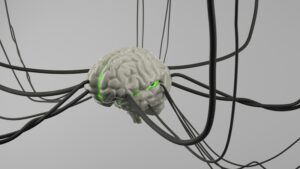
The Conceptual Framework of Mental Representation Mental representation constitutes a foundational concept within cognitive science and philosophy of mind, positing the existence of internal, hypothetical structures or entities that stand for objects, events, concepts, or states of affairs in the external world. Philosophers and cognitive psychologists leverage this concept to explain how the mind manages […]

Read More

FEARED SELF

Conceptualizing the Feared Self in Psychological Theory The concept of the Feared Self constitutes a critical component within the broader framework of self-concept research, particularly concerning how individuals mentally represent their future possibilities. It is not merely a transient worry or a momentary anxiety, but rather a persistent, internally structured mental representation of psychological attributes, […]

Read More

SYMBOLIC PROCESS

The Fundamental Nature of the Symbolic Process The symbolic process represents a cornerstone of advanced human cognition, defining the sophisticated mechanisms by which the mind uses proxies or representations—whether they be ideas, images, or abstract mental constructs—to mediate and execute complex thought. At its core, this process involves the ability to decouple a direct stimulus […]

Read More

REPRESENTATIONAL THOUGHT

REPRESENTATIONAL THOUGHT The Core Definition of Representational Thought Representational thought is a foundational concept in cognitive science and psychology, describing the human capacity to internalize and manipulate the external world through non-physical, symbolic means. At its most basic, it is the ability to think about objects, events, and concepts even when they are not immediately […]

Read More

OBJECT CONSTANCY

Object Constancy The Fundamental Nature of Object Constancy Object constancy is a sophisticated cognitive ability that enables an individual to maintain a stable mental representation of an object or person, even when their outward appearance changes or they are perceived under different conditions. This goes beyond merely recognizing an object; it involves understanding that the […]

Read More