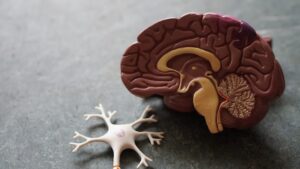
Tag: Neural Circuits


NEURAL CIRCUIT

Definition and Fundamental Architecture of Neural Circuits A neural circuit represents the fundamental functional unit of the nervous system, consisting of a population of neurons interconnected by synapses that, when activated, perform a specific function or set of functions. Unlike the broader anatomical regions of the brain, which are categorized by gross morphology, neural circuits […]

Read More

LOCAL CIRCUIT NEURON

Local Circuit Neurons: An Overview The human brain is one of the most complex and mysterious objects in existence. It is composed of billions of neurons, which are organized into a variety of circuitry to process and transmit information. Among these are local circuit neurons (LCNs), a class of neurons that form local circuits within […]

Read More

FUNCTIONAL PLASTICITY

Functional plasticity is a term used to describe the ability of neural circuits to change their structure and function in response to experience. This phenomenon plays an important role in learning and memory, and has been studied extensively in both animals and humans. The concept of functional plasticity is closely related to the concept of […]

Read More

SPINAL REFLEX

Definition and Fundamental Characteristics of the Spinal Reflex The spinal reflex is defined as an involuntary, rapid, and predictable motor response mediated entirely by neural circuits residing within the spinal cord. It represents the most basic functional unit of the nervous system responsible for immediate motor action, often occurring without the direct involvement or conscious […]

Read More

REVERBERATORY CIRCUIT

Reverberatory Circuit Introduction and Core Definition The reverberatory circuit, frequently referred to as a reverberating circuit, constitutes a fundamental architecture within the central and peripheral nervous systems, designed to sustain neural activity even after the originating stimulus has ceased. Essentially, it is a specific type of neural network where the output signal feeds back into […]

Read More

ENDOGENOUS OSCILLATOR

The Endogenous Oscillator: Biological Rhythms and the Master Clock The Core Definition and Mechanism The Endogenous Oscillator is a fundamental biological mechanism, defined as an internal system—often a neural circuit or a complex molecular feedback loop—that generates regular, repeated, and self-sustained sequences of activity. Put simply, it functions as an organism’s innate biological clock. Unlike […]

Read More

DESCENDING PATHWAY

Descending Pathway The Core Definition: Orchestrating Movement The Descending Pathway represents a fundamental and indispensable component of the central nervous system, specifically critical to the neural circuits responsible for regulating voluntary and involuntary movement. At its essence, it constitutes a complex network of neurons originating in various regions of the brainstem and extending caudally into […]

Read More