Tag: Neurodegeneration


Neurofibrillary Tangles: Decoding the Brain’s Decay

Neurofibrillary Tangles: Decoding the Brain’s Decay

Neurofibrillary Tangles Core Definition of Neurofibrillary Tangles Neurofibrillary tangles (NFTs) represent one of the primary neuropathological hallmarks of Alzheimer’s disease (AD) and a spectrum of other neurodegenerative disorders collectively known as tauopathies. At their most fundamental level, NFTs are insoluble filamentous aggregates found within the cytoplasm of neurons, particularly in the brain regions crucial for […]

Read More

NEUROFIBRIL

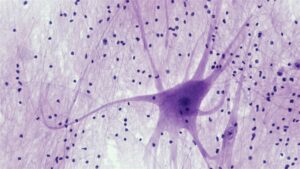
Defining the Neurofibril within the Neuronal Architecture The neurofibril represents a fundamental structural component of the neuron, existing as a microscopic filament found within the cytoplasm of the cell body, axons, and dendrites. Historically, these structures were identified through light microscopy as delicate, thread-like fibers that permeate the neuronal cytoskeleton, providing both mechanical stability and […]

Read More

RETROGRADE DEGENERATION

Understanding the Fundamental Nature of Retrograde Degeneration Retrograde degeneration represents a critical pathological process within the central nervous system (CNS) where the destruction of a neuron occurs following damage to its axon. Unlike other forms of neuronal decay, this specific phenomenon involves the progressive deterioration of the nerve cell body, or soma, moving backward from […]

Read More

FOCAL DEGENERATION

Understanding the Conceptual Framework of Focal Degeneration Focal degeneration represents a significant area of study within the field of clinical neurology and neuropsychology, describing a process wherein the progressive destruction of neurons occurs within specific, localized regions of the brain. Unlike diffuse neurodegeneration, which involves widespread damage across the cerebral cortex or multiple systems, focal […]

Read More

DENDRITIC PATHOLOGY

Dendritic Pathology: Core Principles and Significance Dendrites constitute the complex, arborized receiving antennae of the neuron, serving as the primary site for the reception, integration, and processing of incoming synaptic signals. Their functional efficiency is paramount, as they dictate whether a neuron will fire an action potential, a process central to information transfer and cognitive […]

Read More

NEURONAL CELL DEATH

Introduction to Neuronal Cell Death Neuronal cell death represents a profound and irreversible pathological process characterized by the failure of neurons to maintain essential physiological activities, ultimately leading to their demise. This phenomenon is not merely an accelerated aspect of normal aging but serves as the core pathological driver underlying a vast spectrum of debilitating […]

Read More

PRION

Introduction and Definition of Prions The term prion, an acronym derived from “Proteinaceous Infectious Particle,” represents a unique and revolutionary concept within biology and medicine: a pathogenic agent composed entirely of protein, lacking the traditional nucleic acid genome (DNA or RNA) characteristic of viruses, bacteria, and other infectious organisms. This agent is defined by a […]

Read More

ANTEROGRADE DEGENERATION

the degeneration of a neuron structure after sustaining injury, that spreads away from the nerve cell body. Also known as Wallerian degeneration. ANTEROGRADE DEGENERATION: “Anterograde degeneration involves the degradation of a neuron following injury.”

Read More