Articles
Agnosia: When the Brain Fails to See Reality
Agnosia, derived from the Greek meaning “not knowing,” is a profound neurological disorder characterized by...
Agnosia, derived from the Greek meaning “not knowing,” is a profound neurological disorder characterized by...

Introduction and Definition of Astasia Astasia, derived from the Greek terms meaning “not standing,” is...

Definition and Fundamental Mechanism of Pallidotomy Pallidotomy is defined as a highly specialized neurosurgical procedure...
Introduction to Acute Brain Disorder (ABD) The term Acute Brain Disorder (ABD) refers to a...

Introduction and Definition of Multiple Sclerosis Multiple Sclerosis (MS) is a chronic, inflammatory, and neurodegenerative...
Introduction and Definition of Areflexia Areflexia, derived from the Greek prefix ‘a-‘ meaning absence and...

Definition and Classification of Spastic Paraplegia Spastic paraplegia represents a heterogeneous group of neurological disorders...
Definition and Overview Pelizaeus-Merzbacher Disease (PMD) is a rare, progressively debilitating X-linked leukodystrophy affecting the...

Definition and Nomenclature The Acute Confusional State (ACS), often synonymized in clinical settings with delirium,...

Introduction and Nomenclature: The Legacy of Shaking Palsy The term Shaking Palsy represents a significant...
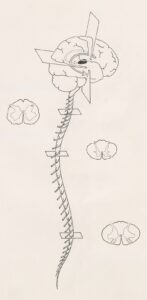
Definition and Clinical Significance Autonomic Dysreflexia (AD), often referred to synonymously as Autonomic Hyperreflexia, represents...

Introduction and Historical Context Tourette’s Disorder, often referred to as Tourette Syndrome (TS), is classified...