Tag: Operational Efficiency


PROCESS LOSS

Process loss, also known as process inefficiency, is a concept in industrial engineering that refers to the amount of waste or energy that is lost during the production process due to inefficiencies. Process loss can occur in many different forms, such as excess energy consumption, lost materials, or inefficient processes. It is important to measure […]

Read More

TERMINAL LINK

Overview and Fundamental Definition of Terminal Link The emergence of Terminal Link represents a significant advancement in the intersection of digital infrastructure and supply chain management. At its core, Terminal Link is a sophisticated technological framework engineered to synchronize the disparate elements of transportation and logistics operations. By establishing a secure, real-time connection between various […]

Read More

PROCEDURE

Procedure: An Overview Procedures are a way of organizing and managing a process in order to achieve a desired outcome. They can be used in many different settings, including industry, healthcare, and education. Procedures can involve a variety of methods, such as protocols, workflows, and processes. This article provides an overview of procedures and their […]

Read More

STANDARDIZATION

Defining Standardization in Psychological Measurement Standardization is a foundational concept within psychometrics and the behavioral sciences, representing the systematic process to establish norms and uniform procedures for administering, scoring, and interpreting psychological assessments. It serves as the bridge between qualitative observation and objective, quantitative measurement. Without standardization, psychological testing would lack scientific rigor, rendering comparisons […]

Read More

WORK-FLOW INTEGRATION

Introduction to Work-Flow Integration Work-flow integration (WFI) constitutes a critical domain within organizational psychology and management science, fundamentally concerning the systematic design and structuring of tasks to optimize the interaction and synchronization of activities among individuals or teams engaged in codependent acts. At its core, WFI addresses the inherent complexity arising when multiple workers must […]

Read More

PREDICTOR DISPLAY

PREDICTOR DISPLAY: Definition and Scope The concept of the predictor display originates fundamentally within the discipline of ergonomics and human factors engineering, specifically addressing the challenges inherent in operating complex, dynamic systems characterized by significant latency or inertia. A predictor display is defined as a specialized form of system visualization designed to furnish the human […]

Read More

FEEDBACK LOOP

Introduction to the Feedback Loop Concept In the realm of cybernetic theory and systems thinking, the feedback loop stands as a fundamental self-regulatory model designed to maintain dynamic stability and achieve specific goals within a system. This mechanism is crucial for determining whether the current operation of a system is acceptable relative to a predefined […]

Read More

SUSTAINED OPERATIONS (SUSOPS)

Introduction to Sustained Operations (SUSOPS) Sustained Operations, frequently abbreviated as SUSOPS, refers to a period of intense organizational activity characterized by a significantly prolonged working timetable, often exceeding standard regulatory or contractual limits, undertaken in response to demanding situations of urgency or crisis. This operational tempo is typically required when the demands of a task […]

Read More

SYSTEM FLOW DIAGRAM

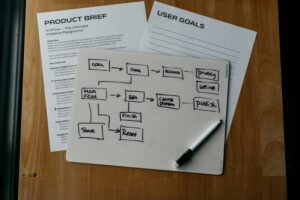
Introduction and Definition of the System Flow Diagram (SFD) The System Flow Diagram (SFD) is a specialized graphic representation employed extensively across various disciplines, most notably in the fields of engineering, industrial psychology, and ergonomics. Fundamentally, the SFD serves as a visual language designed to delineate the sequential steps, decisions, and overall pathways that characterize […]

Read More

PERFORMANCE-OPERATING CHARACTERISTIC POO

Introduction to the Performance-Operating Characteristic (POC) The Performance-Operating Characteristic, commonly abbreviated as the POC, represents a critical analytical tool utilized within experimental psychology, human factors engineering, and cognitive science to quantify the intrinsic limitations of human performance when multiple tasks must be executed simultaneously or in very close temporal proximity. Fundamentally, the POC functions as […]

Read More

TASK STRUCTURE

Task Structure Introduction and Core Definition Task structure, a fundamental concept primarily studied within industrial and organizational psychology, refers to the degree to which the requirements, procedures, and expected outcomes of an assigned task are clear, defined, and predictable. It serves as a crucial situational variable that significantly influences individual performance, team dynamics, and, most […]

Read More

RELATIVE EFFICIENCY

Relative Efficiency in Psychological Decision Making The Psychological Foundation of Relative Efficiency The concept of Relative Efficiency, while frequently employed in fields such as economics and management science, holds profound implications for the psychological study of Decision Making and rational choice. At its core, relative efficiency is defined as the meticulous comparison of anticipated costs […]

Read More

DIVERGENT PRODUCTION

Divergent Production: A Psychological and Organizational Review The Core Psychological Definition Divergent production, often referred to as Divergent Thinking, is a cognitive process used to generate creative ideas by exploring many possible solutions. It stands in contrast to convergent thinking, which focuses on finding a single, correct answer. This process is fundamental to the study […]

Read More

MAINTENANCE FUNCTION

Maintenance Function in Psychology The Core Definition: Sustaining Psychological Equilibrium In the realm of psychology, the concept of maintenance function refers to the dynamic and continuous processes by which individuals actively work to preserve and uphold their psychological well-being, adaptive behaviors, cognitive functions, and emotional stability over time. It encompasses the intricate array of internal […]

Read More

WORK SYSTEM

Work system is a term used to describe the organization and structure of a group or organization. It refers to the policies, procedures, and processes that are used to manage people, tasks, and resources within the organization. It is the foundation of a successful organization and includes the way that tasks are delegated, the tools […]

Read More

PROCESS OBSERVER

Process Observer: A Tool for Understanding and Optimizing Business Processes The Core Definition of Process Observer The Process Observer is fundamentally a sophisticated software-as-a-service (SaaS) solution meticulously engineered to empower organizations with granular insights into their operational workflows. At its heart, it functions as a comprehensive analytics and management platform, providing a real-time lens through […]

Read More