Tag: special needs


FULL INCLUSION

Introduction to Full Inclusion The concept of full inclusion represents a fundamental paradigm shift within modern educational philosophy and practice, advocating for the comprehensive integration of all students, irrespective of their diverse abilities or disabilities, into mainstream educational environments. This progressive model directly challenges traditional, segregated approaches to special education by asserting that every student […]

Read More

DEAF-BLIND

adjective. The absences of seriously faulty vision and hearing simultaneously. DEAF-BLIND: “Most people are able to choose, hypothetically, whether they’d rather be deaf or blind, but the majority would never concede to acceptance of being deaf-blind.”

Read More

EXCEPTIONAL CHILD

Defining the Exceptional Child The term exceptional child refers to any child who deviates significantly from the average population, either above or below the norm, in physical, intellectual, emotional, or social characteristics to the extent that specialized educational or related services are required to maximize their development. This definition moves beyond mere statistical deviation, emphasizing […]

Read More

SPECIAL NEEDS

Introduction and Comprehensive Definition of Special Needs The designation of special needs refers to the specific requirements necessary for an individual afflicted by a physical, mental, emotional, or financial disability to achieve optimal functioning, development, and participation within society. This concept moves beyond standard requirements, recognizing that certain individuals face distinct and substantial barriers that […]

Read More

SITUATIONAL RESTRAINT

Introduction and Core Conceptualization of Situational Restraint Situational Restraint, often examined within the fields of environmental psychology, behavioral economics, and safety engineering, defines a method of limiting or guiding specific behaviors through the structured modification of the immediate environment rather than relying upon direct physical force or verbal coercion. This approach is inherently distinct from […]

Read More

REHABILITATION ENGINEERING

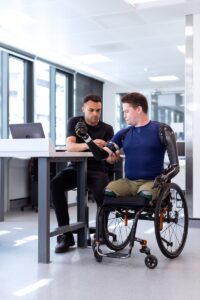
Introduction to Rehabilitation Engineering Rehabilitation Engineering stands as a critical and highly integrated discipline, situated at the nexus of engineering science, technology, and health sciences. Its foundational purpose is the systematic application of engineering principles and design methodologies to develop, test, and implement commodities, environments, and programs specifically tailored to enhance the functional capabilities and […]

Read More

SEVERE MENTAL RETARDATION

Severe Mental Retardation Introduction and Core Definition The term Severe Mental Retardation is an outdated nomenclature, historically used to describe a profound degree of cognitive impairment. Currently, the preferred and clinically appropriate term across major diagnostic manuals, including the DSM-5 (Diagnostic and Statistical Manual of Mental Disorders, Fifth Edition), is Severe Intellectual Disability (ID). This […]

Read More

MENTAL RETARDATION (MR)

Mental Retardation (MR) and Intellectual Disability (ID) The Core Definition and Modern Nomenclature The term Intellectual Disability (ID), formerly known as Mental Retardation (MR), is a neurodevelopmental disorder characterized by significant limitations in both intellectual functioning and in adaptive behavior, which covers conceptual, social, and practical skills. This condition originates before the age of 18, […]

Read More

TACTILE SENSORY AID

Tactile Sensory Aids: An Encyclopedia Entry The Core Definition of Tactile Sensory Aids A Tactile Sensory Aid (TSA) is fundamentally an electromechanical or computational device designed to translate information typically perceived through one sensory modality—such as vision or audition—into a format that can be interpreted effectively by the user’s somatosensory system, specifically the sense of […]

Read More

DEVELOPMENTAL RETARDATION

Developmental Retardation: A Comprehensive Overview Understanding Developmental Retardation Developmental retardation, often referred to in contemporary contexts as a developmental disability or global developmental delay, is a condition characterized by significant and pervasive delays in one or more areas of a child’s development. These delays manifest across various domains, including physical (motor skills), intellectual (cognitive functioning, […]

Read More