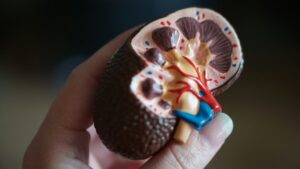
Tag: urinary system


UROGENITAL

An Overview of the Urogenital System The urogenital system, often referred to as the genitourinary system, represents a complex and highly integrated biological network that combines the functions of the urinary system and the reproductive system. Although these two systems perform distinct roles—one focused on the maintenance of internal homeostasis through waste excretion and the […]

Read More

URETHRA

Urethra: Anatomy, Function, and Clinical Significance Abstract The urethra is a tubular structure in the body that transports urine from the bladder to the outside of the body. It is composed of three different layers of tissue, and is lined with both smooth muscle and mucous membranes. This article provides an overview of the anatomy, […]

Read More

URO- (UR-)

Introduction: Etymology and Scope of the Prefix URO- (UR-) The medical prefix Uro-, sometimes abbreviated as Ur-, constitutes a foundational element of terminology across various disciplines, primarily within medicine and biology, serving specifically to denote structures, functions, or pathological processes related to the urinary system. This prefix is derived directly from the ancient Greek word […]

Read More

RENAL SYSTEM

Definition and Scope of the Renal System The renal system, often synonymously referred to as the urinary system, encompasses the specialized structures within the body dedicated to the crucial tasks of filtration, regulation, and excretion. This complex biological apparatus centers around the paired organs, the kidneys, along with their attendant structures designed to collect, transport, […]

Read More

URINATION

Definition, Terminology, and Physiological Purpose The act of releasing urine from the urinary bladder is formally known as micturition, although the more common term in general usage is urination or voiding. This complex physiological process is fundamental to homeostasis, serving as the primary mechanism for the excretion of metabolic waste products—such as urea and creatinine—and […]

Read More

DIABETES INSIPIDUS

Introduction and Definition Diabetes Insipidus (DI) is a complex metabolic disorder characterized primarily by excessive thirst, known as polydipsia, and the production of abnormally large volumes of dilute urine, a condition termed polyuria. Crucially, DI is distinguished from the far more common Diabetes Mellitus (DM) by the absence of elevated blood sugar levels and the […]

Read More

MICTURITION

Introduction and Definition The term Micturition serves as the precise, formal, and scientific designation for the physiological process commonly referred to as Urination. This complex, highly coordinated reflex mechanism is essential for maintaining fluid and electrolyte homeostasis, facilitating the removal of metabolic waste products, notably urea and creatinine, that have been filtered from the bloodstream […]

Read More

SPHINCTER

The Sphincter: Psychophysiology, Development, and Clinical Implications The Core Definition: Anatomy and Psychophysiological Control The sphincter is fundamentally defined as a circular muscle structure found ubiquitously throughout the body, primarily responsible for regulating the passage of substances through various orifices and tracts. Anatomically, these muscles are crucial components of the gastrointestinal, urinary, and reproductive systems, […]

Read More

BLADDER CONTROL

Bladder Control: The Autonomic Nervous System’s Orchestration of a Vital Bodily Function The Core Definition of Bladder Control Bladder control, often referred to as urinary continence, is the physiological ability to voluntarily regulate the storage and elimination of urine from the body. This intricate process is fundamental to human health and quality of life, preventing […]

Read More