Temporal Perceptual Disorder: Why Time Feels Out of Sync
Scientifically Reviewed · Dr. Marwa Abd-Alazim · August 19, 2026
Review Criteria & Clinical Standards
This content undergoes rigorous scientific peer-review and medical editorial standards at Arab Psychology Network to ensure clinical accuracy, validity, and compliance with evidence-based guidelines from leading psychological and healthcare authorities (APA / WHO).

The Core Definition of Temporal Perceptual Disorder
Temporal Perceptual Disorder, often abbreviated as TPD, is a complex neuropsychological condition characterized fundamentally by a profound difficulty in the temporal interpretation of sensory inputs, specifically visual and auditory stimuli. This disorder is not merely an issue of overall processing speed, but rather a specific impairment in correctly sequencing, ordering, and perceiving the timing relationships between successive external events. The crucial defining factor is the inability to determine the “when” of stimuli—whether event A occurred before, simultaneously with, or after event B—when the stimuli are presented in rapid succession. This failure to adequately process temporal contiguity and order fundamentally disrupts how an individual constructs a coherent, time-bound narrative of their immediate environment, impacting everything from language comprehension to motor planning.
The core mechanism underlying TPD involves a disruption in the neural systems responsible for maintaining temporal coherence. Human perception relies heavily on accurately segmenting the continuous stream of sensory data into discrete, timed units. In TPD, this segmentation process is flawed, leading to a phenomenon where distinct sensory events are either blurred together or are perceived as occurring in the wrong order. For example, a rapid series of sounds might be experienced as a continuous drone rather than a sequence of individual tones. This specific deficit is typically observed in patients following particular forms of acquired brain injury, making it a critical area of study within Cognitive Psychology and clinical neuropsychology.
It is essential to distinguish TPD from basic sensory deficits. An individual with TPD can usually hear and see perfectly well; the raw sensory data is transmitted successfully to the brain. The impairment occurs during the higher-order processing stage where the brain attempts to interpret the temporal structure inherent in that data. This difficulty in temporal structure interpretation is often most pronounced when the individual is required to process multiple streams of information concurrently or when the stimuli are presented below a certain critical duration threshold, necessitating rapid analysis of sequential information.
Neuroanatomical Basis and Etiology
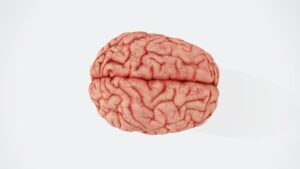
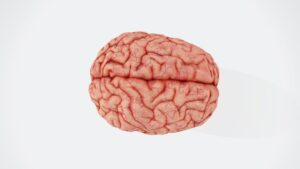
The etiology of Temporal Perceptual Disorder is strongly localized, with research consistently pointing to lesions within the brain’s Left Hemisphere. While brain function is highly interconnected, the left hemisphere, particularly regions within the temporoparietal cortex, is critically involved in sequential processing, analytical thinking, and the rapid decoding of time-sensitive information, such as the phonemes of speech. Damage to these specific cortical areas—often due to stroke (cerebrovascular accident), traumatic brain injury, tumors, or neurodegenerative diseases—disrupts the specialized neural circuits required for temporal resolution.
Specifically, the parietal lobe, which plays a pivotal role in spatial awareness, attention, and integrating sensory information across modalities, is often implicated. When the left parietal regions are compromised, the ability to sequence events, which is essentially temporal mapping, is severely diminished. Furthermore, the connectivity between the temporal lobe (crucial for auditory processing and memory) and the parietal lobe is vital for TPD symptoms. If these white matter tracts or the grey matter centers are damaged, the integration required to perceive the order of rapidly occurring auditory or visual cues fails, resulting in the characteristic symptoms of the disorder.
The hemispheric lateralization is a key feature; while the right hemisphere manages many aspects of global or holistic perception, the left hemisphere is often dominant in the precise, sequential, and analytical breakdown of incoming information. Therefore, lesions specifically targeting the left-sided temporal or parietal association areas are far more likely to produce the classic presentation of TPD than equivalent damage to the right hemisphere, which tends to result in different perceptual deficits, such as spatial neglect or prosopagnosia. The severity of TPD symptoms often correlates directly with the size and precise location of the lesion within the critical left-hemisphere networks dedicated to temporal sequencing.
Historical Context and Early Research
The recognition of specific temporal processing deficits emerged primarily from classical neuropsychology studies conducted in the mid-to-late 20th century. As researchers began systematically studying patients with focal brain injuries—often resulting from wartime trauma or localized strokes—they observed distinct patterns of impairment that could not be fully explained by existing diagnoses like aphasia or general intellectual decline. Researchers were forced to categorize these subtle yet debilitating sequencing difficulties, particularly in tasks involving rapid verbal or non-verbal serial ordering.
Early foundational work focused heavily on the link between temporal sequencing and language. Psychologists noted that patients with left-hemisphere damage, even those whose speech production was relatively intact (non-fluent aphasia), often struggled to discriminate between phonemes that differed only slightly in their timing, or they confused the order of words in complex sentences. This suggested that the brain’s machinery for parsing the rapid stream of speech was intrinsically linked to its general ability to manage temporal perception. The formal definition of TPD crystallized as a distinct perceptual deficit, separate from motor execution or pure language comprehension, providing a framework for understanding why some patients struggled with rhythm, reading, and rapid auditory tracking even when their basic sensory acuity remained high.
The context that led to the formal description of TPD was the growing understanding of cerebral lateralization and functional specialization. As imaging techniques and lesion mapping became more sophisticated, it became possible to correlate specific deficits in sequencing—like those seen in TPD—with damage to precise areas of the left hemisphere, validating the hypothesis that temporal ordering is a highly specialized cognitive function housed within distinct neural architecture. This historical groundwork was crucial for establishing TPD as a genuine perceptual disorder, rather than a symptom secondary to motor or memory loss.
Manifestations in Visual and Auditory Processing
The symptoms of Temporal Perceptual Disorder are diverse, manifesting across both visual and auditory modalities, though they are often most evident in tasks requiring rapid sequential analysis. In the auditory domain, the disorder profoundly affects the perception of music and speech. Sufferers often struggle with auditory fusion and segregation, making it difficult to follow rapid conversation, especially in noisy environments. They may fail to correctly perceive the duration and rhythm of musical notes, or they might struggle to differentiate between phonemes (the smallest units of sound) that are acoustically close and occur quickly, such as the difference between “ba” and “da,” which relies on the precise timing of vocal onset. This specific difficulty severely impedes language development and comprehension, as the correct decoding of rapid acoustic transitions is foundational to understanding spoken language.
In the visual domain, TPD manifests as difficulty interpreting rapidly changing visual stimuli or tracking sequences of visual events. For instance, an individual with TPD may struggle to follow the action in a fast-paced movie or might misinterpret the order of traffic signals if they change too quickly. Reading can be particularly challenging, as the process requires the brain to sequentially process letters into words, and words into sentences, all while maintaining the correct temporal order. If the timing mechanism is faulty, letters within a word might appear jumbled or the reader might lose their place, severely affecting reading fluency and comprehension. Furthermore, complex motor tasks that require precise timing, such as catching a ball or playing a musical instrument, are also frequently impaired because the brain cannot correctly sequence the visual feedback with the required motor responses.
The severity of these manifestations is highly variable but generally correlates with the speed at which the stimuli are presented. When events are separated by a long interval (e.g., several seconds), the individual may perform normally, as this allows sufficient time for non-automatic, compensatory processing strategies to engage. However, when the interval between stimuli drops below a critical threshold—typically milliseconds—the automatic, left-hemisphere-dependent temporal sequencing fails, leading to perceptual errors, misjudgments of simultaneous events, and a general inability to form a temporally stable perception of reality.
A Practical Illustration of TPD
To fully grasp the impact of TPD, consider a common, everyday scenario: driving a car through a complex intersection. This task requires constant, rapid temporal interpretation of auditory and visual cues. Imagine a driver suffering from TPD approaching a four-way stop sign where three other cars arrive nearly simultaneously.
The “How-To” of the Impairment:
- The driver must visually process the arrival of Car A, Car B, and Car C. Because of the TPD, the driver struggles to correctly sequence the visual inputs. While the cars arrived microseconds apart, the TPD sufferer perceives them as arriving simultaneously or in a random, unreliable order. The critical judgment of “who arrived first” (the rule of the road) is fundamentally compromised.
- Simultaneously, the driver must process auditory input: the sound of the engine of a quickly accelerating motorcycle (Stimulus 1) and a car horn (Stimulus 2). A neurotypical driver would instantly perceive the motorcycle sound preceding the horn. The TPD sufferer might hear the horn first, or hear both as an undifferentiated, loud noise, making it impossible to correctly locate the source of the potential danger based on auditory timing cues.
- The resulting confusion and delay in decision-making stem directly from the temporal sequencing error. The driver cannot reliably construct the necessary time-based hierarchy of events (e.g., Car A arrived before Car B, the motorcycle sound started before the horn blast). This inability to rapidly sequence incoming data makes the complex, real-time judgment required for safe driving impossible, illustrating how a deficit in perceiving “when” directly translates into functional disability.
This example highlights that TPD is not simply a cognitive delay; it is a fundamental flaw in the machinery that assigns temporal tags to incoming data. The world, for the individual with TPD, unfolds in a fragmented, often confusing sequence, particularly when events occur quickly, demanding precise temporal resolution for accurate interpretation and response.
Clinical Significance and Diagnostic Challenges
The significance of recognizing and diagnosing Temporal Perceptual Disorder is immense, both for understanding the functional architecture of the brain and for practical patient management. TPD provides crucial evidence for the specialized nature of temporal processing within the neuropsychological domain, confirming that the brain employs dedicated circuitry for sequencing that is dissociable from other functions like memory or attention. Understanding this specialization allows researchers to refine models of human cognition and perception, contributing significantly to the field of neuroscience.
Clinically, TPD often presents a significant diagnostic challenge because its symptoms can overlap with other, more common conditions. Deficits in auditory sequencing might be misdiagnosed as receptive aphasia or auditory processing disorder, while visual sequencing errors might be confused with certain types of visual Agnosia or attentional deficits. The key to accurate diagnosis lies in using specialized temporal discrimination tasks, such as tests that measure the minimum time interval (the just noticeable difference, or JND) required for a patient to accurately perceive two successive stimuli as separate events. If the JND is significantly elevated in the context of otherwise normal sensory function, TPD is strongly indicated.
Accurate diagnosis is vital because it dictates the appropriate rehabilitation strategy. If the problem is misidentified as a general language deficit, the patient may receive inappropriate speech therapy. Recognizing TPD allows clinicians to focus interventions specifically on improving temporal discrimination and developing compensatory strategies to manage sequential information, thereby improving the patient’s prognosis and quality of life, particularly regarding complex tasks like reading, following instructions, and participating in rapid social interactions.
Related Concepts and Broader Psychological Context
Temporal Perceptual Disorder exists within a broader spectrum of perceptual and cognitive disorders, and it is closely related to several key psychological concepts. The most immediate connection is to the general category of agnosias—disorders of recognition that are not due to sensory loss. While TPD is specific to temporal recognition, it shares the feature of involving higher-order interpretive failure. Specifically, it can be seen as a form of “temporal agnosia” or a disorder of serial ordering.
TPD also maintains a strong relationship with disorders of language, particularly certain forms of receptive aphasia. Since the ability to rapidly sequence phonemes is essential for language comprehension, TPD symptoms often manifest as language processing difficulties. However, TPD is theoretically distinct: a patient with pure TPD may understand the meaning of words and grammatical structures if presented slowly, but fail when the temporal demands increase, whereas a classic aphasic patient may struggle with semantic meaning regardless of speed. Furthermore, TPD is related to the concept of Simultagnosia, where the individual struggles to perceive more than one object at a time. While Simultagnosia is primarily spatial, TPD is primarily temporal, but both represent failures in integrating complex perceptual information.
TPD belongs most fundamentally to the subfield of Neuropsychology, as it is defined by a direct link between specific brain lesions and cognitive-perceptual deficits. Within the wider field, it contributes significantly to Cognitive Psychology, particularly the study of attention, working memory, and sensory integration. Understanding TPD helps map the brain’s mechanisms for maintaining temporal continuity, a process essential for nearly every aspect of human experience.
Key related concepts include:
- Auditory Processing Disorder (APD): APD is a broader category, often diagnosed in children, encompassing various difficulties in interpreting auditory information. TPD represents a specific, highly localized, acquired form of temporal processing deficit often seen in adults with focal brain injury.
- Sequencing Deficits: A general term for difficulties in ordering information. TPD is a specific type of sequencing deficit related to the automatic, pre-attentive perception of time in sensory stimuli.
- Dichotic Listening Tasks: Standardized tests used in research that require participants to process different stimuli simultaneously in both ears. Patients with TPD show marked impairment on these tasks due to their difficulty prioritizing and ordering the two nearly simultaneous inputs.