Bipolar Neurons: How Our Senses Decode Reality
Scientifically Reviewed · Dr. Marwa Abd-Alazim · October 12, 2026
Review Criteria & Clinical Standards
This content undergoes rigorous scientific peer-review and medical editorial standards at Arab Psychology Network to ensure clinical accuracy, validity, and compliance with evidence-based guidelines from leading psychological and healthcare authorities (APA / WHO).
Core Definition of Bipolar Neurons
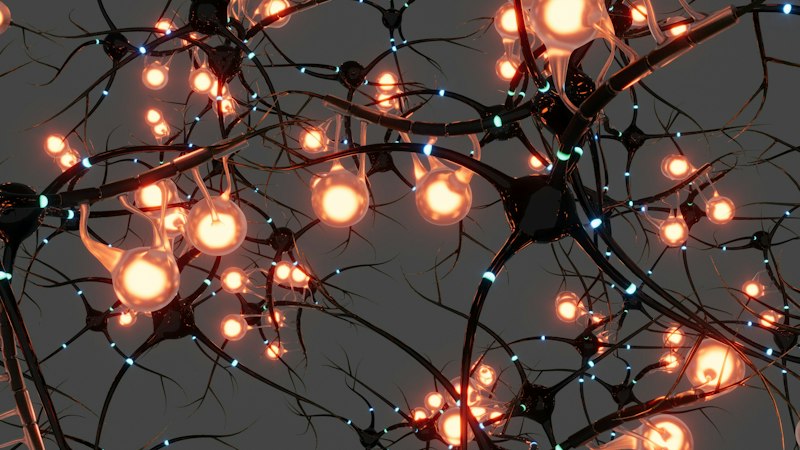
A neuron is the fundamental unit of the nervous system, responsible for transmitting information throughout the body. Among the diverse types of neurons, bipolar neurons represent a specialized class characterized by their unique morphological structure. These cells possess two distinct processes that extend directly from opposite poles of the cell body, giving them their characteristic “bipolar” appearance. This structural arrangement is crucial for their primary role as intermediary cells in various sensory pathways, where they facilitate the relay of information from peripheral sensory receptors to the central nervous system.
Unlike multipolar neurons, which have multiple dendrites emanating from the cell body, or unipolar neurons with a single process, bipolar neurons maintain a simpler, yet highly efficient, design. One of their two processes typically functions as a dendrite, specialized for receiving electrical signals from other neurons or sensory receptor cells. The other process acts as an axon, responsible for transmitting these signals away from the cell body towards subsequent neurons in the neural circuit. This direct input-output architecture makes them ideally suited for straightforward signal transmission in specific sensory contexts, ensuring fidelity and speed in the relay of sensory data.
The fundamental mechanism behind the function of bipolar neurons lies in their ability to act as direct conduits for sensory input. They receive a stimulus, often in the form of neurotransmitter release from a primary sensory receptor cell, and then convert this chemical signal into an electrical impulse. This impulse is subsequently transmitted via their axon to a third-order neuron, which then carries the information closer to the central nervous system for further processing. This direct, two-way communication pathway distinguishes them and underscores their critical importance in the initial stages of sensory perception for senses like vision, olfaction, and balance.
Structural Characteristics
The defining feature of bipolar neurons is the presence of two processes extending from opposing ends of the central cell body, also known as the soma. One of these processes typically serves as the primary dendrite, which is generally shorter and more branched than the axon. Its primary role is to receive incoming synaptic inputs, often from specialized sensory receptor cells. This dendritic process is highly adapted to detect specific stimuli, whether it be photons in the eye or odorant molecules in the nose, and initiate the initial electrical signal within the neuron.
The second process is the axon, a longer projection responsible for transmitting the processed electrical signals away from the cell body to the next neuron in the pathway. While the dendrite’s function is typically receptive, the axon’s function is conductive, propagating action potentials or graded potentials over a distance. In some cases, such as in the retina, the axon of a bipolar cell may not generate true action potentials but rather transmit graded potentials, which nonetheless effectively convey information to the postsynaptic neuron through synaptic transmission. The separation of these two main processes by the cell body ensures a clear functional polarity, facilitating efficient unidirectional signal flow.
Beyond the primary axon and dendrite, the overall morphology of bipolar neurons can vary subtly depending on their specific location and function. For instance, retinal bipolar cells exhibit various subtypes, each with unique dendritic arborizations and axonal terminations, allowing them to respond to different aspects of light stimulation (e.g., ON-bipolar cells responding to light increments, OFF-bipolar cells responding to light decrements). This structural specialization at a micro-level allows for complex processing even within the seemingly simple bipolar architecture, highlighting the intricate design of the nervous system to perform highly specific tasks.
Functional Role in Sensory Processing
Bipolar neurons are indispensable components of several crucial sensory systems, acting as vital intermediaries that bridge the gap between peripheral sensory receptor cells and the higher processing centers of the central nervous system. Their primary function involves the intricate process of sensory transduction, where they convert specific environmental stimuli, initially detected by specialized receptor cells, into coherent electrical signals that the brain can interpret. This transformation is a critical step in how organisms perceive and interact with their surroundings.
In the visual system, particularly within the retina of the eye, bipolar neurons play a pivotal role. They receive inputs directly from photoreceptors (rods and cones), which are the primary cells responsible for detecting light. The bipolar cells then process and transmit these visual signals to retinal ganglion cells, whose axons form the optic nerve that carries visual information to the brain. This direct pathway ensures that visual information is efficiently conveyed and undergoes initial stages of processing, such as contrast detection, before reaching higher cortical areas. Without functional bipolar cells, the visual pathway would be severely disrupted, leading to significant impairments in sight.
Similarly, in the olfactory system, specialized bipolar neurons known as olfactory receptor neurons are responsible for detecting odors. Though technically primary sensory neurons themselves, their structure is fundamentally bipolar. They have a dendritic end that extends into the nasal cavity to bind odorant molecules and an axon that projects directly to the olfactory bulb in the brain. This direct communication allows for rapid and precise transmission of chemical signals, enabling the perception of smell. The vestibular system, responsible for balance and spatial orientation, also contains bipolar neurons within the vestibular ganglia, which relay information from hair cells in the inner ear to the brainstem, further underscoring their diverse and essential sensory functions.
Historical Discovery and Understanding
The understanding of bipolar neurons, like much of neuroanatomy, evolved significantly with advancements in microscopy and staining techniques. The late 19th century marked a revolutionary period in neuroscience, largely spearheaded by the pioneering work of anatomists like Santiago Ramón y Cajal. Before this era, the nervous system was often viewed as a continuous reticulum, a network without individual cellular units. However, Cajal, using Camillo Golgi’s silver nitrate staining method, meticulously illustrated the distinct cellular nature of neurons, laying the foundation for the “neuron doctrine.”
Ramón y Cajal’s detailed drawings and observations revealed the intricate structures of various neuron types, including those with two processes extending from the cell body. His seminal work provided visual evidence of the specialized architecture of cells within the retina and the olfactory bulb, clearly depicting the bipolar morphology that characterized these sensory relay neurons. This morphological clarity was crucial for understanding how sensory information could be efficiently transmitted from peripheral receptors to the central processing areas, challenging the reticular theory and establishing the neuron as the discrete functional unit of the nervous system.
Subsequent research throughout the 20th century further refined the understanding of bipolar neuron function. Physiologists and neuroscientists delved into the electrophysiological properties of these cells, revealing how they generate and transmit electrical signals. Studies on the retina, in particular, elucidated the specific roles of different subtypes of bipolar cells in processing visual information, such as their responses to light increments (ON-bipolar cells) or decrements (OFF-bipolar cells). This historical progression from structural observation to detailed functional analysis highlights the cumulative effort involved in unraveling the complexities of specialized neural components like bipolar neurons.
A Practical Example: Bipolar Cells in the Retina
To truly grasp the function of a bipolar neuron, let us consider a practical, everyday example from the visual system: how light signals are processed in the retina. Imagine you are looking at a vibrant red apple. The light waves reflecting off the apple enter your eye and strike the retina at the back of your eyeball. This initial interaction is where the specialized photoreceptor cells, namely rods and cones, convert the physical light energy into a biochemical signal. Rods are responsible for low-light vision and detecting motion, while cones are crucial for color vision and high acuity in bright light.
The “how-to” of this process begins when photoreceptors absorb light, which triggers a cascade of biochemical events within them, ultimately leading to a change in their membrane potential and a corresponding alteration in the amount of neurotransmitter they release. These neurotransmitters are then released into the synaptic cleft, where they are detected by the dendrites of the bipolar neurons. A key aspect here is that photoreceptors hyperpolarize in response to light, meaning they release less neurotransmitter (glutamate) when light is present. Bipolar cells then interpret this change.
Following the reception of neurotransmitters from the photoreceptors, the bipolar neurons themselves undergo a change in their membrane potential, generating graded electrical signals. There are two main types of bipolar cells: ON-bipolar cells and OFF-bipolar cells. ON-bipolar cells depolarize (become more positive) in response to light, while OFF-bipolar cells hyperpolarize (become more negative). This initial parallel processing allows the visual system to extract information about both light increments and decrements. The axons of these bipolar cells then form synapses with retinal ganglion cells. The ganglion cells are the final output neurons of the retina, and their axons converge to form the optic nerve, which transmits the processed visual information to the brain for conscious perception of the red apple.
Significance and Broader Impact
The significance of bipolar neurons extends far beyond their mere structural classification; they are foundational to our ability to perceive the world around us. In essence, they represent a critical “bottleneck” through which essential sensory information must pass before it can reach the higher cognitive centers of the brain. Without the efficient and accurate relay provided by these specialized neurons, complex senses like vision and olfaction would be profoundly impaired or entirely non-existent. Their role in converting and transmitting sensory data highlights their importance in understanding the entire process of sensory transduction and perception.
In the broader field of psychology and neuroscience, the study of bipolar neurons contributes significantly to our understanding of sensory processing disorders and the development of therapeutic interventions. For instance, research into retinal bipolar cells is crucial for understanding various forms of blindness and visual impairments, such as retinitis pigmentosa, where photoreceptors degenerate, subsequently affecting bipolar cell function. Knowledge of these cells can inform strategies for retinal prosthetics or gene therapies aimed at restoring vision. Similarly, understanding olfactory bipolar neurons can shed light on disorders of smell, which can impact quality of life and even serve as early indicators for neurodegenerative diseases.
Beyond clinical applications, the principles governing bipolar neuron function inform our understanding of neural circuit design and information processing in general. Their relatively simple, direct relay architecture provides a model for how specific sensory inputs are initially filtered and encoded before more complex integration occurs. This contributes to fundamental neurobiological theories about how the brain constructs a coherent representation of the external world from raw sensory data. The study of bipolar neurons thus impacts not only sensory neuroscience but also contributes to the broader fields of cognitive psychology, neurobiology, and even artificial intelligence, particularly in the development of sensory processing algorithms.
Connections to Other Neural Concepts
Bipolar neurons do not function in isolation; they are integral components of intricate neural circuits, deeply interconnected with numerous other psychological and neurobiological concepts. Their existence reinforces the fundamental principle of the Neuron Doctrine, which posits that the nervous system is composed of discrete, individual cells, or neurons, that communicate with each other across specialized junctions called synapses. Bipolar cells exemplify this doctrine by acting as distinct units that receive input via their dendrites and transmit output via their axons to subsequent neurons.
Their function is inextricably linked to the concept of sensory transduction, the process by which physical stimuli from the environment are converted into electrical signals that the nervous system can understand. Bipolar neurons are often the second step in this process, receiving initial input from primary sensory receptor cells (like photoreceptors in the retina) and transforming these graded potentials into a signal suitable for transmission to the central nervous system. This highlights their role in the hierarchical processing of sensory information, where signals undergo successive stages of refinement as they move from the periphery to the brain.
Furthermore, comparing bipolar neurons to other neuron types, such as unipolar, pseudo-unipolar, and multipolar neurons, helps to illustrate the diversity and specialization within the nervous system. While multipolar neurons, with their multiple dendrites and a single axon, are the most common type and are typically involved in motor and interneuronal functions, unipolar and pseudo-unipolar neurons are often found in sensory ganglia, where they carry touch, pain, and temperature information. The distinct bipolar structure is optimally designed for direct, linear transmission in specific sensory pathways, emphasizing how neuronal morphology is finely tuned to its specific functional role within the complex tapestry of the nervous system. These interconnections underscore the comprehensive and integrated nature of neurobiological systems.
Broader Fields of Study
The study of bipolar neurons is not confined to a single subfield but rather spans several disciplines within neuroscience and psychology, reflecting their fundamental importance to various aspects of biological function and perception. Primarily, they are a cornerstone of Neurobiology and Neuroanatomy, where their unique structure and precise location within the nervous system are meticulously examined. Understanding their cellular components, synaptic connections, and overall morphology provides critical insights into the basic building blocks and organizational principles of neural circuits.
Moreover, bipolar neurons are central to Sensory Neuroscience, a specialized field dedicated to how organisms detect, process, and interpret sensory information from the environment. Given their direct involvement in the retina (vision), olfactory bulb (smell), and vestibular system (balance), they are key subjects for research into sensory transduction mechanisms, neural coding of sensory stimuli, and the pathophysiology of sensory disorders. Research in this area often overlaps with Physiology, which investigates the functional aspects of these cells, including their electrophysiological properties and how they generate and transmit electrical signals.
Beyond these core biological sciences, the implications of bipolar neuron research extend into Cognitive Psychology, especially in understanding the initial stages of perception and how sensory input contributes to higher cognitive functions. Insights gained from studying these cells can also inform clinical applications in Neurology and Ophthalmology, particularly in diagnosing and treating conditions that affect vision and smell. Furthermore, the principles of neural signaling and circuit design exemplified by bipolar neurons can inspire developments in Computational Neuroscience and even contribute to the design of artificial sensory systems in Artificial Intelligence, demonstrating their far-reaching influence across scientific and technological domains.