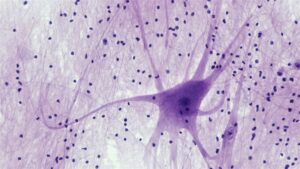
Tag: neuron function


SECOND-ORDER NEURON

The Fundamental Role of Neurons in Human Physiology The nervous system serves as the primary communication network of the human body, facilitating the complex exchange of signals that govern everything from involuntary physiological processes to sophisticated cognitive functions. At the core of this intricate system is the neuron, the basic functional unit responsible for the […]

Read More

MITRAL CELL

Abstract and Significance Mitral cells stand as the undisputed principal neurons of the mammalian olfactory bulb (OB), serving as the critical relay station between the initial detection of odorants and their higher-level processing in the brain. These specialized neurons are indispensable components of the olfactory system, translating the raw chemical signals detected by the olfactory […]

Read More

NEURORECEPTOR

Definition and Core Function Neuroreceptors are highly specialized protein complexes situated primarily within the plasma membrane of neurons and glial cells. They serve as the critical interface between chemical signaling—in the form of neurotransmitters, neuromodulators, or neurohormones—and the resulting electrical or biochemical response within the receiving cell. Their fundamental function is signal transduction, the process […]

Read More

EFFERENT NEURON

Definition and Fundamental Role The efferent neuron, universally known as a motor neuron, represents the crucial outgoing pathway within the peripheral nervous system, specializing in the transmission of neural impulses away from the central nervous system (CNS)—which encompasses the brain and spinal cord. Its primary function is to conduct motor commands to target structures known […]

Read More

AFFERENT SENSORY NEURON

Introduction to the Afferent Sensory Neuron The Afferent Sensory Neuron, often referred to simply as a sensory neuron, represents the foundational element of the peripheral nervous system (PNS) responsible for collecting information from the external and internal environments and transmitting it toward the central nervous system (CNS)—the brain and spinal cord. The term “afferent” is […]

Read More

ADRENERGIC NEURON

Introduction and Definition of Adrenergic Neurons The term adrenergic neuron designates a specialized class of nerve cell characterized primarily by its utilization of catecholamines—specifically norepinephrine (NE) and epinephrine (EPI)—as chemical messengers for intercellular communication. These neurons form a critical component of both the central nervous system (CNS) and the peripheral nervous system (PNS), playing an […]

Read More

ASTROCYTE

Introduction and Definition of the Astrocyte The astrocyte, derived from the Greek word for “star cell,” is the most numerous and morphologically complex type of glial cell found within the central nervous system (CNS), encompassing the brain and spinal cord. As primary components of the neuroglia—the non-neuronal cells of the CNS—astrocytes perform essential functions critical […]

Read More

AXONAL TRANSPORT

Axonal Transport: The Internal Logistics System of the Neuron The Core Definition of Axonal Transport Axonal transport, often referred to synonymously as axoplasmic flow, is the fundamental biological process by which cellular materials are moved along the specialized, elongated processes of a neuron known as axons. This mechanism is absolutely critical for neuronal survival and […]

Read More

BIPOLAR NEURON

Bipolar Neuron: Structure, Function, and Significance Core Definition of Bipolar Neurons A neuron is the fundamental unit of the nervous system, responsible for transmitting information throughout the body. Among the diverse types of neurons, bipolar neurons represent a specialized class characterized by their unique morphological structure. These cells possess two distinct processes that extend directly […]

Read More

OLFACTORY RECEPTOR

Olfactory Receptor: A Comprehensive Overview of the Sense of Smell The Core Definition of Olfactory Receptors An olfactory receptor is a specialized protein located on the surface of olfactory sensory neurons, acting as the primary interface between the external world of scents and the internal nervous system. These receptors are fundamental components of the sense […]

Read More

REFRACTORY PERIOD

Reactivity of Neurons: The Refractory Period Neurons are capable of rapid, precise communication of information throughout the body. This communication is enabled by the ability of neurons to rapidly respond to stimuli from other cells through an electrochemical process. However, this reactivity is not unlimited, and neurons are subject to a refractory period, during which […]

Read More