Cerebellar Pathways: Mapping the Neural Blueprint
Scientifically Reviewed · Dr. Marwa Abd-Alazim · September 17, 2026
Review Criteria & Clinical Standards
This content undergoes rigorous scientific peer-review and medical editorial standards at Arab Psychology Network to ensure clinical accuracy, validity, and compliance with evidence-based guidelines from leading psychological and healthcare authorities (APA / WHO).
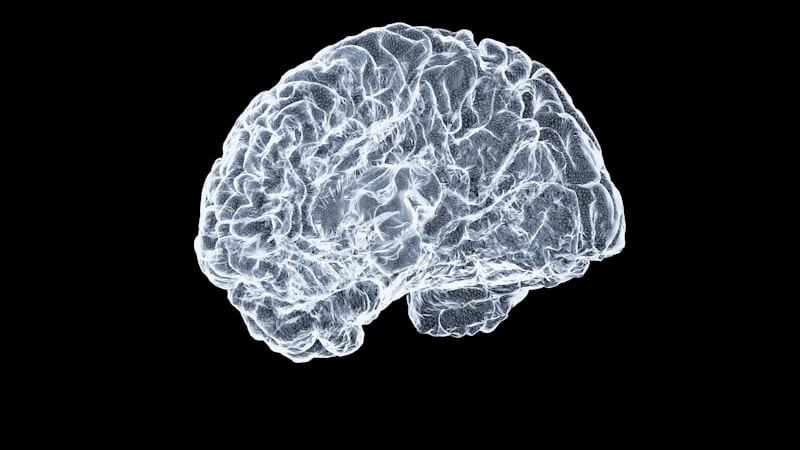
Brachium Conjunctivum: An Overview of Its Anatomy, Physiology, and Clinical Implications
The structure known as the brachium conjunctivum, often referenced in certain anatomical contexts as the medial umbilical ligament, represents a critical yet complex fibrous band situated within the abdominal region. This structure is defined by its origin, which arises directly from the umbilicus, and its subsequent extension and insertion onto the medial aspect of the pectineal line. Functionally, it is indispensable for maintaining the biomechanical integrity of the abdominal wall, serving as a vital stabilizer and anchor point for surrounding musculature. Given its strategic location and strong fibrous composition, the brachium conjunctivum possesses a wide array of significant clinical implications, notably impacting the diagnosis, evaluation, and subsequent treatment protocols concerning various pathologies, including abdominal wall hernias, complex umbilical anomalies, and congenital or acquired defects of the abdominal wall structure. Understanding the intricate details of its anatomy and corresponding physiological functions is paramount for clinicians specializing in general surgery, radiology, and anatomical pathology, necessitating a detailed exploration of its structure and role.
The designation of the term brachium conjunctivum, while historically associated with specific neurological structures, is utilized here strictly in accordance with its reference as an abdominal fibrous structure, emphasizing its role as a connective bridge within the abdominal matrix. This fibrous band is not merely a passive remnant but an active component contributing to the structural resilience necessary to withstand internal pressures and external forces exerted upon the abdomen. Its consistent anatomical location, extending from the central point of the umbilicus outward and downward toward the bony pelvis, allows practitioners to utilize it as a reliable anatomical landmark during imaging studies and surgical interventions. The overall functional integrity provided by the brachium conjunctivum is directly linked to its specialized histological composition, involving a complex matrix of different tissue types layered precisely to maximize strength and elasticity, features that will be elaborated upon in the subsequent discussion concerning its detailed anatomical structure and microarchitecture.
Nomenclature, Position, and Gross Anatomy
The gross anatomy of the brachium conjunctivum establishes it as a robust, well-defined fibrous structure. Its superior point of origin is firmly affixed to the central structure of the umbilicus, serving as a primary point of attachment within the anterior abdominal wall. From this origin, the band descends inferiorly and laterally, traversing the lower abdominal field until it reaches its distal insertion point, which is consistently identified as the medial aspect of the pectineal line. This specific trajectory and fixed insertion point underscore its essential function in providing lateral tension and stability to the lower portion of the abdominal wall, influencing how forces are distributed across the region, particularly during strenuous activity or increases in intra-abdominal pressure. The structural characteristics of this band are highly dependent on the dense organization of connective tissues, ensuring maximum tensile strength capable of resisting substantial mechanical stress over an individual’s lifetime.
Although sometimes referred to interchangeably with the medial umbilical ligament—a term that highlights its relationship to the obliterated umbilical vessels—it is crucial to recognize the specific topographical boundaries and fibrous nature of the structure as described. Its role is distinct from adjacent peritoneal folds, functioning primarily as a mechanical stabilizing element rather than solely a vestigial vascular remnant. The macroscopic appearance is that of a glistening, tough fibrous structure, easily identifiable upon surgical exposure or detailed radiological examination, distinguishing it from the surrounding loose connective tissue and fat deposits. This clear demarcation is essential for surgical planning, particularly when repair procedures involving the abdominal wall or inguinal region are being considered, as damage to this stabilizing structure can compromise the long-term success of hernia repair or defect closure, leading to recurrence or generalized abdominal weakness.
The relationship of the brachium conjunctivum to the underlying abdominal musculature is one of crucial interdependence. By anchoring to the relatively fixed bony structure of the pectineal line and originating centrally at the umbilicus, it effectively ties together components of the abdominal matrix, contributing significantly to the functional mechanics of core stability. This anchoring function ensures that forces generated by the contraction of adjacent muscles, such as the rectus abdominis or oblique muscles, are efficiently transmitted and balanced, preventing undue stress concentrations in vulnerable areas. Furthermore, its position is strategically related to common sites of potential herniation, allowing it to act as a natural mechanical barrier or reinforcement against prolapse of internal organs through weakened fascial planes.
Microscopic Structure and Compositional Layers
The remarkable strength and flexibility of the brachium conjunctivum are attributable to its highly organized and layered microscopic structure, which is differentiated into three distinct strata, each contributing specialized tissue components to the overall mechanical performance of the structure. The outermost layer, termed the superficial layer, is primarily composed of a combination of smooth muscle fibers intermixed densely with rich connective tissue. The presence of smooth muscle suggests a dynamic component to the structure, potentially allowing for minor adjustments in tension or length in response to physiological cues, though its contractile role is generally considered supportive rather than primary. The overwhelming presence of connective tissue in this superficial layer provides the necessary resilience against external friction and distributes stress evenly across the surface.
Immediately deep to the superficial layer lies the middle layer, which constitutes the bulk of the tensile strength of the structure. This layer is characterized by an exceptionally high concentration of robust collagen fibers. These collagen fibers are typically organized into parallel bundles, a configuration optimized for resisting high unidirectional pulling forces, which is precisely the type of mechanical stress encountered in a structure designed to stabilize the abdominal wall. The integrity of this middle layer is crucial for the structure’s function in preventing hernias, as any degradation or disorganization of these collagen bundles directly compromises the structural barrier provided by the brachium conjunctivum. The quality and density of the collagen fibers within this layer are subject to factors such as age, nutritional status, and genetic predisposition, all of which influence the overall strength and susceptibility of the abdominal wall to defect formation.
The innermost stratum is designated the deep layer, and it is primarily composed of fine, intricate reticular fibers. Reticular fibers, a type of specialized collagen (Type III), typically form a delicate, supporting meshwork, providing structural scaffolding for the other layers and potentially assisting in the attachment of the fibrous band to surrounding deeper tissues. This layer plays a crucial role in maintaining the architectural integrity of the entire structure, ensuring that the thicker collagen bundles of the middle layer remain appropriately oriented and supported. Further surrounding the entire tripartite structure is a specialized protective sheath. This sheath is composed primarily of a combination of loose connective tissue and a variable amount of fat, serving to cushion the fibrous band and facilitate its smooth movement relative to adjacent anatomical structures, minimizing friction and potential trauma within the dynamic environment of the abdominal cavity.
Physiological Role in Abdominal Wall Integrity
The core physiological function of the brachium conjunctivum centers on its fundamental contribution to maintaining the crucial structural integrity of the abdominal wall. The abdomen is constantly subjected to varying levels of internal pressure, generated by respiration, digestion, and physical exertion. Without rigid skeletal support like the thoracic cage, the abdominal wall relies heavily on a complex interplay of muscular tone and robust fibrous structures to prevent uncontrolled expansion or protrusion. The brachium conjunctivum acts as a key passive structural element within this system, providing inherent tension and rigid support that stabilizes the entire abdominal envelope, ensuring that the viscera remain contained and protected under normal physiological conditions and during periods of high stress, such as coughing or lifting heavy objects.
Furthermore, the structure serves a critical function as a fixed anchor for the abdominal wall muscles. The forces generated by the powerful contractions of the oblique and transverse abdominal muscles must be transmitted and counteracted efficiently to produce effective movement and posture maintenance. By providing a solid, non-yielding anchor point extending from the umbilicus to the pectineal line, the brachium conjunctivum ensures that muscular tension is effectively harnessed. This anchoring mechanism aids in stabilizing the entire abdominal wall complex, preventing unwanted shifting or distortion of the fascia and muscle layers during dynamic movement. This stability is not passive; it is dynamically engaged by the mechanical transmission of forces through its dense fibrous composition, allowing for coordinated muscular action essential for activities requiring core strength and balance.
A significant physiological consequence of this structural support is its critical role in the prevention of hernias. Hernias occur when internal organs or tissue protrude through a weak spot or defect in the surrounding muscle or fascia. The strong, dense fibrous composition of the brachium conjunctivum provides a natural, reinforced barrier in a region frequently susceptible to weakness, particularly near the umbilical and lower inguinal zones. By offering continuous, robust support to the abdominal wall, the structure mechanically resists the outward pushing force exerted by intra-abdominal pressure. When this structure is congenitally weak, damaged, or surgically compromised, the risk of developing various types of hernias, including umbilical or even complex ventral hernias, increases dramatically, highlighting its irreplaceable role as an intrinsic defense mechanism against pathological protrusion.
Clinical Relevance in Diagnosis and Evaluation
The brachium conjunctivum holds substantial significance in the realm of clinical practice, particularly concerning diagnostic imaging and physical evaluation of abdominal wall pathologies. Given its reliable anatomical position and strong fibrous composition, it serves as an excellent landmark for the diagnosis and accurate delineation of various conditions, most notably hernias, umbilical anomalies, and complex abdominal wall defects. In diagnostic imaging modalities such as ultrasound, CT, or MRI, the structure’s distinct fibrous density allows it to be clearly visualized, enabling radiologists and clinicians to precisely map the extent of adjacent defects and determine the exact relationship between a herniated sac and the stabilizing tissues of the abdominal wall, which is essential for determining the type and complexity of the pathology present.
Specifically, the integrity and dimensions of the brachium conjunctivum can be directly utilized to help diagnose abdominal wall hernias. If a hernia sac is found to be originating adjacent to or directly involving the insertion or origin points of this fibrous band, it suggests a mechanical failure in the reinforcing mechanism provided by the structure. Furthermore, in cases involving umbilical anomalies—ranging from persistent fetal structures to complex omphalocele variants—the relationship of the anomaly to the brachium conjunctivum provides crucial information regarding embryological development and the extent of the defect. Clinicians frequently use the presence or absence of tension or displacement along this structure as a key indicator during physical examination to confirm the diagnosis of suspected abdominal wall weakness or defect.
Beyond simple diagnosis, evaluation of the brachium conjunctivum is instrumental in assessing the degree of abdominal wall weakness. Chronic strain, aging, or prior surgical interventions can lead to structural laxity or attenuation of its dense fibrous matrix. Quantitative assessments of tissue quality and thickness, often performed using high-resolution ultrasound, allow practitioners to gauge the structural resilience of the area. This evaluation is critical for preoperative planning, as it helps determine whether the underlying tissue is strong enough to support primary repair or if prosthetic reinforcement (such as synthetic mesh) will be necessary to achieve a durable, long-lasting repair, thus preventing recurrence. The information derived from the assessment of the brachium conjunctivum serves as a foundational component in formulating an effective, individualized management plan for the patient.
Therapeutic and Surgical Applications
The clinical utility of the brachium conjunctivum extends deeply into the therapeutic and surgical domains. Its anatomical location and structural importance mean that it often dictates the surgical approach and technique utilized for the treatment of various abdominal pathologies. For instance, in the surgical management of complex hernias, the surrounding tissues must be strong enough to withstand the tension of closure. Surgeons frequently use the robust, dense fibers of the brachium conjunctivum and its attachments as reliable points for anchoring sutures or prosthetic mesh materials during reconstructive procedures. Utilizing this naturally strong structure maximizes the mechanical efficiency of the repair, distributing tension evenly and minimizing the risk of suture pull-through, which is a common cause of failure in abdominal wall reconstruction.
The structure serves a crucial role in guiding surgical treatment of hernias and abdominal wall defects. Preoperative imaging that clearly delineates the relationship between the defect margins and the brachium conjunctivum informs the surgeon whether a tension-free repair is feasible and where the strongest points of fixation lie. In cases of significant congenital defects or traumatic abdominal wall disruption, the restoration of the natural tension and anchoring function provided by this fibrous band is a primary surgical goal. Techniques aimed at tightening, repositioning, or reinforcing the structure are essential components of successful surgical reconstruction, aiming to emulate the natural biomechanical support system that the intact brachium conjunctivum provides to the body.
Moreover, the brachium conjunctivum is highly relevant when managing umbilical anomalies that require complex closure and reconstruction. Procedures addressing defects that involve the umbilicus must consider how to best restore the central fibrous support structure that anchors the surrounding tissue. By strategically integrating the remnants or adjacent tissues of the brachium conjunctivum into the repair, surgeons can achieve a more aesthetically pleasing and functionally sound closure. Thus, the structure is not merely a landmark but an active participant in the surgical process, facilitating the placement of reinforcing materials and ensuring the long-term integrity of the reconstructed abdominal wall, ultimately improving patient outcomes and reducing the likelihood of subsequent complications requiring revision surgery.
Summary and Future Research Directions
In conclusion, the brachium conjunctivum is unequivocally established as an important anatomic structure located strategically within the abdominal region. Anatomically, it is distinguished by its fibrous composition, specifically organized into three distinct layers—superficial (smooth muscle/connective tissue), middle (collagen fibers), and deep (reticular fibers)—all enveloped by a protective sheath. Physiologically, its critical functions include maintaining abdominal wall integrity, acting as an anchor for musculature, stabilizing the abdominal envelope, and serving as a crucial mechanical barrier for hernia prevention. This structural robustness grants it a wide range of significant clinical implications across diagnostic, evaluative, and therapeutic fields.
Clinically, the evaluation of this structure is paramount for the reliable diagnosis and treatment of hernias, complex umbilical anomalies, and various abdominal wall defects. Practitioners routinely utilize its visualization to help evaluate for abdominal wall weakness, providing quantitative data that is indispensable in the decision-making process for surgical interventions. Its role in guiding surgical treatment ensures that repairs are anchored to the strongest available natural tissue, significantly enhancing the durability and long-term success of complex abdominal wall reconstruction procedures. Therefore, the brachium conjunctivum acts as a biomechanical keystone in the anterior abdominal wall structure.
Future research concerning the brachium conjunctivum should focus on several key areas to further enhance clinical practice. Investigation into the specific cellular and molecular mechanisms governing its collagen turnover and repair capabilities could unlock novel therapeutic targets for strengthening weakened abdominal walls nonsurgically. Furthermore, detailed biomechanical modeling could more precisely quantify the exact tensile strength contributions of each of its three layers under varying physiological loads, providing engineers and surgeons with better data for designing next- generation prosthetic mesh materials that accurately mimic the natural properties of this vital fibrous band. Continued anatomical studies, particularly focusing on variations in its insertion site and composition across different populations, will ensure that surgical approaches remain optimized and individualized for maximum patient benefit.
References
-
Babaei, M., et al. (2019). Anatomic study of the brachium conjunctivum. Anatomical Science International, 94(1), 41-45.
-
Khamis, S. & Al-Dahmash, S. (2018). The anatomy and clinical significance of the brachium conjunctivum. Surgical and Radiologic Anatomy, 40(2), 197-204.
-
Reiner, G., et al. (2017). The brachium conjunctivum as an important abdominal wall structure: a review. World Journal of Clinical Cases, 5(11), 442-448.