Cartesian Theater: Debunking the Myth of the Inner Self
Scientifically Reviewed · Dr. Marwa Abd-Alazim · September 7, 2026
Review Criteria & Clinical Standards
This content undergoes rigorous scientific peer-review and medical editorial standards at Arab Psychology Network to ensure clinical accuracy, validity, and compliance with evidence-based guidelines from leading psychological and healthcare authorities (APA / WHO).
Introduction and Definition
The concept of the Cartesian Theater is a conceptual metaphor coined by the influential American cognitive scientist and philosopher Daniel Dennett, first prominently discussed in his 1991 work, Consciousness Explained. This metaphor serves as a powerful rhetorical and analytical tool designed to expose the logical inconsistencies and inherent absurdities embedded within traditional notions of mind-body dualism, particularly the substance dualism articulated by René Descartes. Dennett’s central objective in formulating this critique was to demonstrate that any model of consciousness that posits a single, central location—whether physical or non-physical—where all sensory inputs converge and are presented to an inner self inevitably collapses into philosophical regression. The term “Cartesian Theater” derides the dualistic requirement for a privileged, singular viewpoint where raw neural data somehow transforms into unified subjective experience, forcing opponents of materialism to confront the structural demands of their own hypotheses.
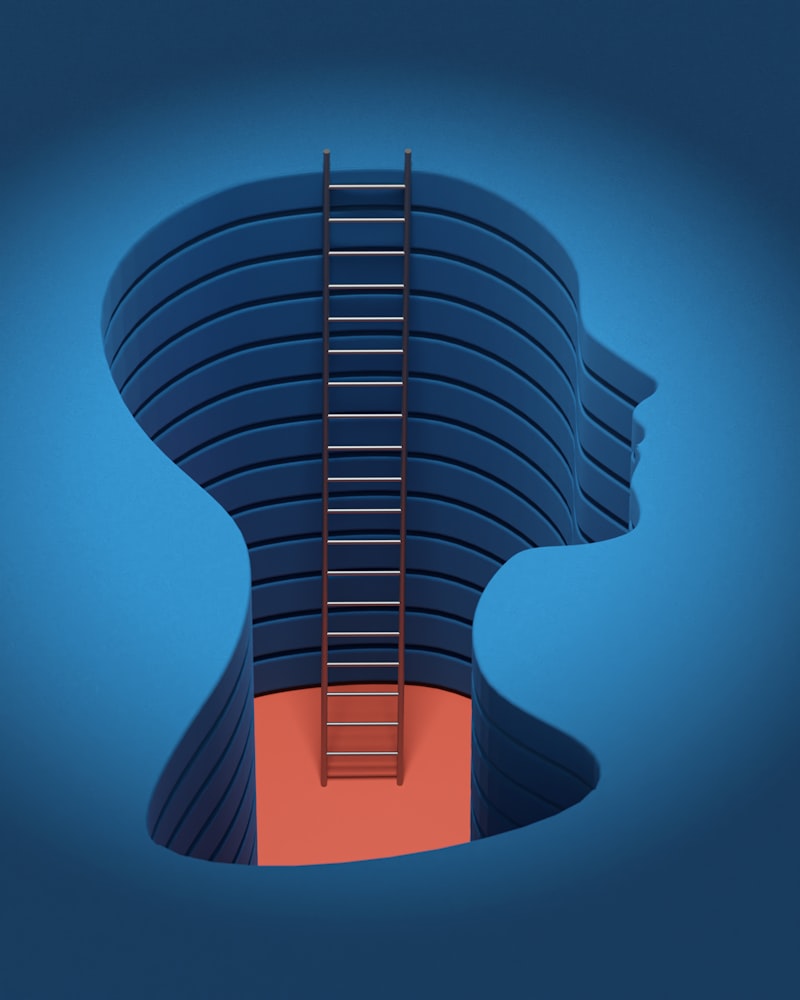
At its core, the Cartesian Theater metaphor visualizes the mind not merely as a brain, but as a specialized, internal viewing chamber. In this imaginary theater, all the complex, distributed processes of perception—visual input, auditory information, tactile sensations, and memory retrieval—are somehow collated, synchronized, and projected onto a screen. This projection is then observed by a miniature, internal agent often referred to as a homunculus, meaning “little man.” This homunculus is the ultimate seat of consciousness; it is the entity that truly experiences the world, makes decisions, and possesses subjective awareness. Dennett argues that while few modern philosophers explicitly defend the exact details of Descartes’ original dualism, many theories of consciousness, even those claiming to be materialistic, implicitly rely on the structural necessity of this theater—a final internal destination for information processing—thereby preserving the fundamental dualistic error.
The immediate and devastating function of the Cartesian Theater critique is to highlight the fallacy of attempting to explain consciousness by merely relocating it. By demanding a centralized point of convergence and observation, dualistic models inadvertently create a scenario where the observer (the homunculus) must already possess the very consciousness that the model is intended to explain. If the homunculus is the ultimate experiencer, how is its experience generated? If we assume its consciousness arises in a smaller theater within its own mental space, viewed by an even smaller homunculus, we are trapped in an inescapable infinite regress. Thus, the Cartesian Theater does not offer an explanation for subjective experience; rather, it highlights the structural trap inherent in any theory that requires a definitive boundary between unconscious neural processing and conscious observation.
The Roots of Cartesian Dualism
To fully appreciate the force of Dennett’s critique, it is essential to understand the philosophical framework he sought to dismantle. The Theater metaphor directly targets the legacy of René Descartes (1596–1650), who established the foundational modern distinction between the physical world and the mental world. Descartes posited substance dualism, dividing reality into two fundamentally distinct entities: res extensa (extended substance, the physical body and all matter, governed by mechanistic laws) and res cogitans (thinking substance, the immaterial mind or soul, characterized by thought and consciousness). This stark separation created the profound philosophical challenge known as the mind-body problem—specifically, how these two radically different substances could possibly interact and influence one another, given their distinct natures.
Descartes famously attempted to solve this interaction problem by nominating the pineal gland, a small structure located deep within the brain, as the primary interface between the non-physical mind and the physical body. In his model, the pineal gland was the single, unique point where sensory inputs, processed mechanically by the body, were somehow transmitted into the realm of the *res cogitans*, and conversely, where conscious decisions originating in the soul could be translated into physical commands for the body’s musculature. This specific anatomical location, therefore, served as the required bottleneck, the sole point of convergence where all physical information was unified and presented to the immaterial self. This configuration is the historical precursor to the Theater; it established the necessity of a single, privileged processing location where the transformation from physical signal to subjective experience occurs.
Dennett argues that even though modern science has utterly rejected the idea of the pineal gland serving as the soul’s seat, the structural need for a “pineal analogy” persists in many contemporary theories. The Cartesian Theater is essentially the pineal gland, stripped of its biological specificity and metaphysical claim, but retaining its core functional requirement: it must be the place where the disparate streams of information finally achieve consciousness. Any theory that speaks of information “entering consciousness,” “being broadcast” to the self, or “appearing” to the subject implicitly relies on the existence of this Theater, a fixed point in time and space relative to the sensory input, where the experience is finalized for the observer, regardless of whether that observer is called a soul or merely an emergent function of the brain.
Daniel Dennett’s Critique
Dennett, a staunch materialist and functionalist, views the Cartesian Theater as the ultimate enemy of a scientifically adequate theory of mind. His critique is fundamentally aimed at replacing intuitive, but flawed, folk psychological notions of consciousness with a rigorously scientific, purely mechanistic explanation. He contends that the persistence of the Theater idea stems from a deep-seated philosophical bias: the human tendency to assume that there must be a singular, unified “I” that is the recipient and author of all experience. Dennett’s work aims to show that the unified self is not a foundational entity, but a constructed narrative—a conclusion that the Theater model vehemently denies.
One of the most powerful aspects of Dennett’s argument is its focus on temporal organization. If there is a Theater, there must be a precise moment in time when a neural event crosses the threshold from being unconscious processing to becoming a conscious experience projected onto the screen. Dennett challenges the scientific possibility of locating this moment, arguing that the brain’s processes are asynchronous, distributed, and continuous. For instance, in complex perceptual phenomena, such as determining the position of a moving object or synchronizing visual and auditory input, the brain often constructs the unified experience retroactively. If there were a Theater, all these sensory inputs would need to arrive at the central observation point perfectly synchronized, an impossibility given the varying processing times of different neural pathways.
Dennett employs this temporal ambiguity to demonstrate the Theater’s incoherence. He asks: When does the decision or perception truly become conscious? Is it when the neural signal reaches the Theater, or when the homunculus observes it, or when the homunculus begins to act upon it? The attempt to locate a definitive “point of entry” into consciousness, what Dennett sometimes calls the Cartesian bottleneck, is scientifically futile. The brain does not operate by funneling everything into one location for final approval; rather, it engages in a competitive, parallel process of interpretation and revision. The metaphor effectively forces philosophers who rely on internal representation or central processing to define their temporal metrics, inevitably revealing their reliance on an undefinable transition point, which is precisely the dualistic relic Dennett aims to eliminate.
The Problem of the Homunculus
The most vivid and often cited aspect of the Cartesian Theater critique centers on the figure of the homunculus. This tiny observer, seated in the privileged viewpoint, is the necessary component that completes the dualistic picture. If the brain is merely a projector, there must be something that watches the film and interprets it as “self” or “experience.” The necessity of this conscious observer inside the head is where the theory logically breaks down, leading to the notorious infinite regress argument.
The fallacy is clear: the homunculus is supposed to explain consciousness, yet it must already be conscious to perform its function of observing and interpreting the unified perceptual stream. If the homunculus is conscious, then its consciousness must itself be explained. If we attempt to explain the homunculus’s consciousness by positing a smaller brain within its head, equipped with its own smaller Theater and a sub-homunculus, the explanation spirals into an infinite series of observers. This vicious regress proves that the model fails to explain consciousness at all; it merely postpones the explanatory requirement by placing a conscious entity inside the system meant to generate consciousness.
Dennett contrasts this flawed methodology with legitimate scientific explanation. In science, complex phenomena are explained by decomposing them into simpler, non-sentient, functional mechanisms. For example, a computer is understood by breaking down its operations into switches, logic gates, and algorithms—none of which are conscious. A successful theory of consciousness must similarly decompose the subjective experience into non-sentsentient, physical processes. The Cartesian Theater, however, attempts to explain a phenomenon (consciousness) by appealing to an entity (the homunculus) that already possesses the very characteristic being studied. This structural requirement for a conscious internal viewer is the definitive hallmark of philosophical bankruptcy in consciousness studies, according to Dennett.
Implications for Consciousness Studies
The Cartesian Theater metaphor has had profound implications for the field of consciousness studies, serving as a critical heuristic used to test the philosophical rigor of new theories. Its primary function is prophylactic: it warns researchers against inadvertently smuggling dualistic assumptions back into otherwise materialistic frameworks. Dennett contends that many purportedly physicalist theories still suffer from “Cartesian materialism,” where they reject the soul but still posit a special area of the brain—perhaps a specific neuronal assembly or region of the cerebral cortex—that functions as the physical equivalent of the Theater, the place where consciousness “magically appears.”
The existence of the Theater critique mandates that any viable, scientifically grounded theory of consciousness must satisfy several key criteria. These criteria emphasize distribution, timing, and functional role over location:
-
Rejection of the Central Locus: The theory must explicitly deny the existence of a single, privileged processing site where all information converges to achieve subjectivity.
-
Emphasis on Distribution: Consciousness must be explained as an emergent property of widely distributed, parallel, and asynchronous neural processing across the entire brain.
-
Functional Decomposition: The explanation must reduce complex subjective phenomena into simpler, non-sentient, mechanistic functions, avoiding the homunculus trap.
-
Temporal Ambiguity: The model must account for the fact that there is no single, fixed moment when experience becomes conscious, allowing for retroactive construction of perception.
By forcing researchers to adhere to these demands, the Cartesian Theater shifts the philosophical investigation away from the fruitless search for the “seat of the soul” or the “consciousness center” and toward understanding the underlying functional architecture that generates the appearance of a unified, centered self. It redefines the problem of consciousness from “Where is the self?” to “How is the narrative of the self constructed?”
Alternative Models: The Multiple Drafts Model
In place of the flawed Cartesian Theater, Daniel Dennett proposes his own positive theory of consciousness, the Multiple Drafts Model (MDM), which is explicitly designed to function without any central viewing location or definitive point of experience. The MDM views the brain as a massive, parallel processing machine where sensory inputs and interpretations are continuously analyzed, edited, and revised in different regions, much like multiple drafts of a text being worked on simultaneously by various editors.
In the Multiple Drafts Model, consciousness is not the result of a single, final projection onto a screen, but rather the ongoing, competitive process of creating these drafts. The subjective experience we report is merely the result of whichever “draft” or narrative is accessed or utilized by other parts of the system at any given time. There is no central monitor and no definitive, official version of the experience that constitutes “the truth” of the conscious moment. Instead, the brain generates various competing narratives, and the subjective sense of unity and continuity—the sense of a singular “I”—is itself just a powerful, useful fiction generated by the dominant narrative structures.
This model fundamentally challenges the Theater’s reliance on instant convergence. MDM accounts for experimental phenomena like perceptual rivalry and subjective timing discrepancies by demonstrating that the brain can retroactively “stamp” a memory or perception as having occurred at a certain time, even if the neural processing required to finalize that perception occurred much later. For example, if a stimulus is presented and then later masked, the brain might construct a narrative where the subject consciously saw the first stimulus, even though the conscious report depended on processing that completed after the mask had appeared. The MDM explains this by saying that the “draft” that ultimately governs the verbal report was finalized retroactively, and there was no central Theater to register a definitive “arrival time” for the experience.
Criticism and Scholarly Debate
While the Cartesian Theater is widely regarded as one of the most effective tools for dismantling simplistic dualism, it has not been immune to criticism. Some philosophers argue that Dennett’s portrayal of dualism, or even of internalized representation theories, is a straw man argument. Critics suggest that few contemporary theorists genuinely believe in a literal homunculus or a non-physical theater, and that Dennett unfairly lumps sophisticated models of internal processing (which may require some form of informational convergence) with the logically absurd infinite regress scenario.
Furthermore, the Theater critique is often accused of failing to adequately address the Hard Problem of Consciousness, a term popularized by philosopher David Chalmers. The Hard Problem refers to the difficulty of explaining subjective, qualitative experience, or *qualia*, through purely physical mechanisms. Critics argue that Dennett’s rejection of the Theater and his promotion of the Multiple Drafts Model are excellent at explaining the *functions* of consciousness (how we report, remember, and react), but they fail to explain *why* these functions feel like anything at all. In this view, even if the brain operates without a central Theater, the qualitative gap between physical information processing and subjective experience remains unbridged.
However, Dennett’s proponents counter that the Cartesian Theater critique is not intended to solve the Hard Problem, but rather to prevent researchers from falling into philosophical traps while attempting to solve it. By eliminating the structural requirement for a central observer, the metaphor forces subsequent theories to be more physically rigorous. Ultimately, the legacy of the Cartesian Theater lies in its effectiveness as a philosophical warning sign. It successfully weaponized the concept of the homunculus, rendering any theory that relies on a privileged, internal observer philosophically suspect, thereby fundamentally changing the landscape of modern cognitive science and the philosophy of mind.