Articles

Second-Order Conditioning: How Associations Shape Behavior
Defining Second-Order Conditioning Second-Order Conditioning (SOC) represents a critical refinement within the field of classical...
Defining Second-Order Conditioning Second-Order Conditioning (SOC) represents a critical refinement within the field of classical...

Definition and Core Psychological Components Security, in the context of psychological study, refers to a...

Introduction to Scientific Jury Selection Scientific Jury Selection (SJS) represents the sophisticated application of social...

Introduction and Definition of Schizophreniform Psychosis Schizophreniform psychosis represents a critical, yet often transitional, diagnostic...

Defining School Readiness: A Multifaceted Construct School readiness constitutes a vital area of psychological and...
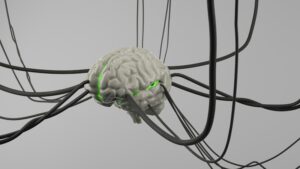
SCHIZENCEPHALIC The term schizencephalic pertains to a profound congenital abnormality of brain development characterized by...

Introduction to Scaled Tests in Psychometrics A scaled test represents a fundamental methodology within the...

Introduction to Scenario-Based Design Scenario-Based Design (SBD) represents a sophisticated and user-centered approach utilized extensively...

Definition and Core Conceptualization The term subtest refers to a distinct, integrated component or segment...
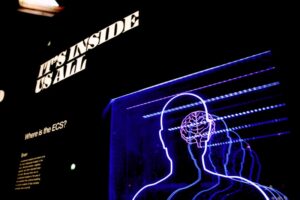
Introduction to Substance P Substance P (SP) is a foundational neurochemical classified as an undecapeptide,...

Introduction and Definition of the Submissive Signal The concept of the submissive signal occupies a...

Definition and Scope of Symbolism Symbolism, at its most fundamental level, refers to the practice...