Converse Accident: When Cognitive Bias Trips You Up
Scientifically Reviewed · Dr. Marwa Abd-Alazim · October 9, 2026
Review Criteria & Clinical Standards
This content undergoes rigorous scientific peer-review and medical editorial standards at Arab Psychology Network to ensure clinical accuracy, validity, and compliance with evidence-based guidelines from leading psychological and healthcare authorities (APA / WHO).
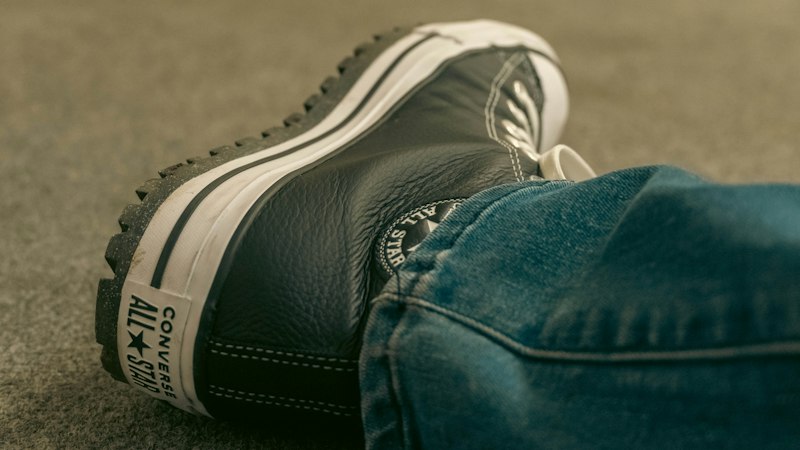
Introduction to Converse Accident
The term Converse accident refers to a specific type of injury characterized by slips, trips, or falls that occur while an individual is wearing Converse brand shoes. This phenomenon, while seemingly straightforward in its definition, encapsulates a complex interplay of human behavior, footwear design, and environmental conditions. It highlights how the interaction between a specific product and its user in various settings can lead to adverse outcomes, prompting a closer examination from perspectives that span beyond mere incident reporting into areas of human factors and safety science. Understanding the underlying mechanisms of these accidents is crucial for both prevention and for informing broader studies on human interaction with manufactured goods in daily life.
Initially brought into focus by exploratory research, the concept of a Converse accident suggests that these incidents may occur at a statistically higher rate compared to general slips and falls, as indicated by early studies. This implies that there might be unique vulnerabilities or contributing factors inherent to the design or typical usage patterns of Converse footwear that elevate risk. The study of such specific accident types moves beyond anecdotal observations to systematic inquiry, aiming to identify preventable causes and develop targeted interventions. This approach aligns with the principles of applied psychology, which seeks to understand and mitigate real-world problems through scientific methods.
While not a traditional psychological construct in the vein of cognitive dissonance or classical conditioning, the study of Converse accidents delves into fundamental psychological principles concerning perception, decision-making, and risk perception. Individuals’ choices regarding footwear, their awareness of environmental hazards, and their walking behaviors all contribute significantly to the likelihood of such incidents. Therefore, an exhaustive exploration necessitates an interdisciplinary lens, drawing insights from fields such as human factors psychology, biomechanics, and behavioral safety, to paint a complete picture of this specific injury phenomenon and its broader implications for public safety and consumer product design.
Defining the Phenomenon: Mechanisms and Contributing Factors
At its core, a Converse accident is characterized by the sudden loss of balance leading to an unintentional fall, occurring specifically when wearing Converse shoes. The fundamental mechanism often involves a disruption in the interaction between the shoe’s sole, the walking surface, and the individual’s gait, resulting in insufficient friction or stability. This can be exacerbated by specific factors that compromise the natural biomechanics of walking and the protective function of footwear. The immediate consequence is typically a slip or trip, which can range from minor inconvenience to severe physical injury, depending on the height of the fall, the landing surface, and the individual’s physical condition.
Exploratory research has meticulously identified several key factors influencing the prevalence of Converse accidents. Foremost among these is the incorrect wearing of shoes, which encompasses issues like untied laces, loose-fitting footwear, or shoes that are too large or too small. Such improper fit or usage can compromise the shoe’s intended support and stability, leading to a diminished connection between the foot and the ground, thereby increasing the propensity for slips. Moreover, the presence of uneven surfaces significantly contributes to the risk, as variations in terrain demand greater adaptability from both the footwear and the wearer’s balance control, which can be particularly challenging if the shoe itself offers limited traction or support.
Beyond these primary drivers, other variables have been found to modulate the risk of Converse accidents. The age of the wearer is a notable factor, with both very young and older individuals potentially facing heightened risks due to developing or declining motor skills and balance. The type of shoe, specifically within the Converse brand, can also play a role, as different models may have varying sole patterns, materials, and overall structural integrity that affect traction and support. Furthermore, environmental elements such as the season (e.g., wet or icy conditions in winter, or debris in autumn) and individual behavioral aspects like the speed of walking, which can amplify the impact of any loss of traction, are critical considerations that contribute to the multifactorial nature of these incidents.
The Emergence of the Concept: Historical Context
Unlike many established psychological theories that trace their origins to foundational thinkers like Freud, Skinner, or Piaget, the concept of a Converse accident does not stem from a long lineage of psychological inquiry. Instead, its formal recognition emerged from a pragmatic concern rooted in observed injury patterns. The term gained prominence primarily through the exploratory work of J. Kilgore in 2018, whose study, “Converse Accident: An Exploratory Study on the Factors Influencing Its Prevalence,” published on ResearchGate, provided the first systematic investigation into this specific phenomenon. This research marked a pivotal point, moving the discussion from anecdotal observations to a preliminary scientific examination of the contributing factors.
Kilgore’s study was not developed within the traditional academic framework of creating a new psychological theory but rather as an applied research effort. It originated from a perceived need to understand a potentially higher incidence of injuries associated with a widely popular brand of footwear. The research adopted a survey methodology, gathering data from individuals who had experienced these accidents and a control group, to pinpoint commonalities and differences. This approach reflects a contemporary trend in applied psychology and safety science, where specific, real-world problems drive empirical investigation, rather than a top-down theoretical derivation.
The context leading to this idea was therefore less about theoretical advancement and more about practical injury prevention. It underscored the importance of examining the often-overlooked interactions between consumer products and human users. While the study itself was exploratory and had a limited sample size, it laid the groundwork for future research into human-product interaction, consumer safety, and the role of individual behavior in accident causation, particularly within the domain of everyday activities. This initial investigation serves as a modern historical marker for the scientific consideration of footwear-related injuries as a distinct area of inquiry.
Illustrative Scenarios: A Practical Application
To truly grasp the concept of a Converse accident, it is beneficial to consider a relatable, everyday scenario that exemplifies its mechanisms. Imagine a young adult, Sarah, who is rushing to catch a bus on a typical autumn day. She is wearing her favorite pair of well-worn Converse sneakers, with the laces loosely tied, a common style choice. The sidewalk she is traversing has some minor cracks and is slightly damp from a recent light drizzle, with a few fallen leaves scattered across the surface. This combination of factors sets the stage for a potential incident, highlighting how common elements can converge to create a hazard.
The “how-to” of a Converse accident in Sarah’s situation can be broken down into several steps, illustrating the interplay of identified risk factors. First, Sarah’s choice of footwear and her manner of wearing it – the loose laces and potentially worn sole of her Converse shoes – immediately compromise her foot’s stability and the shoe’s traction on the ground. Second, her hurried pace, or increased speed of walking, reduces the time she has to react to unexpected changes in the walking surface and amplifies the force if a slip occurs. Third, the environmental conditions, specifically the uneven surface of the cracked sidewalk and the damp leaves, present a low-friction, unstable ground. As Sarah steps onto a damp patch of leaves over a slight crack, her shoe, already providing suboptimal support due to its condition and loose fit, fails to grip adequately.
This sequence culminates in a sudden loss of traction: her foot slides unexpectedly, leading to a swift and uncontrolled loss of balance. Despite her efforts to regain stability, the compromised connection between her foot, shoe, and the ground, combined with her momentum, results in a slip and fall. This practical example clearly demonstrates how factors like incorrect shoe wearing, uneven surfaces, and speed of walking, all identified in the Kilgore study, contribute synergistically to a Converse accident. From a psychological perspective, Sarah’s risk perception might have been low, leading her to overlook the potential hazards of her footwear choice and the environmental conditions, underscoring the behavioral component of accident causation.
Psychological Underpinnings: Risk Perception and Behavior
The study of Converse accidents, while seemingly focused on a specific product, offers valuable insights into fundamental psychological principles, particularly concerning risk perception and human behavior. Individuals often make footwear choices based on comfort, style, or cultural trends rather than solely on safety or functionality for specific environments. This decision-making process is influenced by various cognitive factors, including cognitive biases such as optimism bias, where people tend to underestimate their own likelihood of experiencing negative events. Consequently, the potential hazards associated with certain footwear in conjunction with environmental conditions might be consistently undervalued.
Furthermore, the concept is deeply intertwined with behavioral safety, a field that applies psychological principles to promote safe conduct and prevent accidents. Factors like the “incorrect wearing of shoes” – such as leaving laces untied or wearing ill-fitting footwear – are direct behavioral choices that significantly elevate risk. Understanding why individuals engage in these behaviors, despite potential consequences, involves exploring motivational factors, habits, social norms, and the immediate perceived benefits (e.g., convenience, style) versus the deferred or uncertain risks. This behavioral aspect is critical, as even with optimal shoe design, human actions can introduce vulnerabilities.
From a broader psychological perspective, the phenomenon contributes to the understanding of human factors psychology, which examines the interaction between humans and systems, including products and environments. It highlights how design features (e.g., sole material, tread pattern of Converse shoes) interact with user characteristics (e.g., age, walking style) and environmental variables (e.g., uneven surfaces, weather) to influence safety outcomes. The investigation into Converse accidents therefore serves as a practical case study for how psychological insights can be applied to enhance product safety, inform user education, and ultimately reduce injury rates in everyday life by addressing both product design and user behavior.
Broader Implications and Modern Applications
The significance of studying phenomena like Converse accidents extends far beyond the specific brand of footwear, offering critical insights into public health, consumer product safety, and accident prevention strategies. By identifying the specific factors that contribute to these slips, trips, and falls, researchers and policymakers can develop targeted interventions that have a tangible impact on reducing injury rates. This type of focused research provides a granular understanding that can be generalized to broader categories of footwear-related incidents, contributing to a safer environment for consumers across various product categories.
In contemporary society, the findings related to Converse accidents have several practical applications. Firstly, they can inform consumer education campaigns, raising awareness among users about the potential hazards of certain footwear choices and the importance of correct wearing practices, such as tying laces securely and ensuring a proper fit. Secondly, these insights can be invaluable for footwear manufacturers, guiding design improvements that prioritize safety alongside aesthetics and comfort. This includes developing soles with enhanced traction for diverse surfaces, incorporating more stable designs, and providing clearer instructions or warnings regarding usage.
Furthermore, the principles derived from studying Converse accidents are applicable in broader contexts such as occupational safety and environmental psychology. Understanding how specific shoe types interact with various work surfaces or public spaces can lead to recommendations for safer flooring materials, improved maintenance of public pathways, and better personal protective equipment guidelines in workplaces. The interdisciplinary nature of this study underscores its importance in fostering a holistic approach to safety, integrating knowledge from human behavior, material science, and environmental design to mitigate risks effectively.
Interdisciplinary Connections and Related Concepts
The phenomenon of Converse accidents, despite its specific nomenclature, connects to a rich tapestry of psychological and scientific concepts, illustrating its interdisciplinary nature. Fundamentally, it draws heavily from Human Factors Psychology and ergonomics, a field dedicated to optimizing the interaction between people and products, systems, and environments. This discipline seeks to understand how human capabilities and limitations influence design, and conversely, how design impacts human performance and safety. The specific study of footwear-related injuries fits perfectly within this domain, analyzing the ‘user interface’ of the shoe with the human foot and the ground.
Beyond human factors, Converse accidents are intrinsically linked to Biomechanics, the study of the mechanical laws relating to the movement or structure of living organisms. Understanding the forces involved in walking, the mechanics of slipping, and the role of shoe sole materials in providing friction is crucial. This scientific underpinning helps explain why certain shoe designs or worn soles might increase susceptibility to falls. Moreover, Risk Perception, a key area within cognitive and social psychology, is highly relevant, as it examines how individuals assess and respond to potential hazards. People’s subjective evaluation of the safety of their footwear or the walking surface can profoundly influence their behavior and, consequently, their likelihood of experiencing an accident.
The broader category to which the study of Converse accidents belongs is Applied Psychology, particularly within its subfields of Human Factors and Ergonomics and Health Psychology. It also touches upon Environmental Psychology by considering the influence of physical surroundings (e.g., uneven surfaces, weather conditions) on human behavior and well-being. By integrating insights from these various disciplines, researchers can construct a more comprehensive model of accident causation and prevention, moving beyond the specifics of a single product to inform general principles of safety and human-product interaction. The specific phenomenon serves as a microcosm for exploring complex interactions at the intersection of human behavior, product design, and environmental context.
Future Research Directions and Prevention Strategies
The initial exploratory study into Converse accidents by Kilgore (2018) provided foundational insights, yet it also opened numerous avenues for future research. One critical direction involves conducting larger-scale epidemiological studies to confirm the prevalence rates and definitively establish the statistical significance of the identified risk factors across broader populations. Such research could employ more diverse methodologies, including observational studies of gait and shoe-surface interaction, laboratory experiments on traction performance, and comprehensive surveys with larger, more representative samples. This would allow for a more robust understanding of the exact conditions and individual characteristics that predispose individuals to these specific types of falls.
Further research should also delve deeper into the psychological and behavioral aspects. Investigating consumer behavior regarding footwear choices, the influence of fashion trends versus safety considerations, and the effectiveness of different types of safety warnings could yield valuable data. Studies exploring the cognitive processes involved in risk perception among different age groups, particularly concerning casual footwear, would also be beneficial. Understanding why individuals might consistently wear shoes incorrectly or disregard environmental hazards is crucial for developing effective behavioral interventions and educational campaigns that genuinely resonate with the target audience.
From a prevention standpoint, the insights gained from continued research can be translated into practical strategies. These include advocating for industry standards that address traction and stability in casual footwear, developing targeted public health campaigns to educate consumers on safe footwear practices, and encouraging urban planners to prioritize maintenance of even and non-slip public surfaces. Ultimately, the ongoing study of Converse accidents, framed within a broader context of human factors and safety science, serves as a powerful reminder that even seemingly innocuous everyday products can carry inherent risks that warrant scientific scrutiny and proactive preventative measures to enhance overall public safety and well-being.