Cortical Control: Master Your Brain’s Executive Power
Scientifically Reviewed · Dr. Marwa Abd-Alazim · August 21, 2026
Review Criteria & Clinical Standards
This content undergoes rigorous scientific peer-review and medical editorial standards at Arab Psychology Network to ensure clinical accuracy, validity, and compliance with evidence-based guidelines from leading psychological and healthcare authorities (APA / WHO).
The Core Definition of Cortical Control
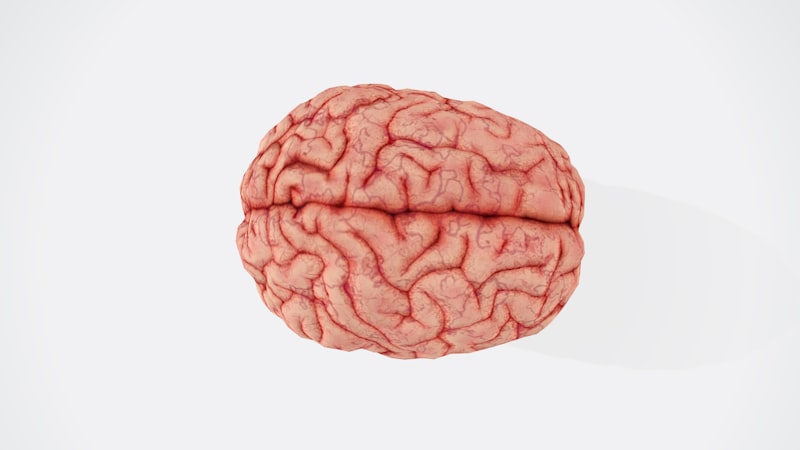
Cortical control refers fundamentally to the comprehensive management, regulation, and initiation of behavior and thought processes originating within the highest structural layer of the brain: the cerebral cortex. In its simplest form, it is the neural process responsible for conscious, goal-directed actions, ranging from complex problem-solving to the fine motor skills required to tie a knot. This sophisticated level of command is what differentiates reflexive behavior, managed by lower brain structures and the spinal cord, from voluntary, adaptable, and context-sensitive human action. The initial understanding of cortical control highlights the cortex not merely as a passive receiver of sensory data, but as the primary executive center for planning, executing, and monitoring all intentional activities.
The core principle underlying cortical control is the functional specialization and integrated communication between various cortical regions. While the term is often employed in the context of physical movement—where the motor cortex dictates muscle activity—it equally applies to cognitive and emotional regulation. For instance, the prefrontal cortex exerts inhibitory control over impulsive behavior, a critical form of cortical management over subcortical emotional drives. Thus, the mechanism involves generating a detailed motor or cognitive plan, issuing the necessary commands to lower neural structures, and continuously receiving and processing feedback to adjust the execution of the action in real-time. An absence of effective cortical control, as often seen following severe neurological damage, can render an individual completely paralyzed or unable to rationally manage their cognitive processes, underscoring its vital role in human function.
Neuroanatomical Basis: The Motor Cortex
The central hub for the physical manifestation of cortical control is located within the frontal lobe, encompassing the primary motor cortex (M1), the premotor area (PMA), and the supplementary motor area (SMA). The M1 is primarily responsible for the execution of movement, housing the famous motor homunculus—a topographical map of the body where specific regions of the cortex correspond to control over specific muscle groups. The density of neural representation in M1 correlates directly with the precision required; for example, areas controlling the hands and face are vastly larger than those controlling the trunk. This precise mapping ensures that the cortical signals are highly specific and efficient in initiating the intended physical action.
However, M1 does not work in isolation; the true planning and preparation phases of cortical control occur anteriorly in the PMA and SMA. The supplementary motor area is heavily involved in internally generated movement sequences and the coordination of bilateral movements, deciding the “when” and “what” of a planned action based on internal goals. Conversely, the premotor area plays a crucial role in externally guided movements, integrating sensory information—particularly visual cues—to shape the motor plan. This hierarchical structure ensures that by the time the signal reaches the M1 for execution, the action is already contextually appropriate, highly detailed, and ready for rapid deployment, illustrating the complex, multi-stage nature of high-level motor control.
Historical Development and Early Research
The understanding of cortical control emerged primarily from 19th and 20th-century neurological research focused on functional localization within the brain. Early pioneers like Paul Broca and Carl Wernicke established the concept that specific behaviors, such as language production and comprehension, were localized to distinct cortical areas. This laid the groundwork for the later, more detailed investigation into motor function. A pivotal moment came with the work of Canadian neurosurgeon Wilder Penfield in the mid-20th century, who, through direct electrical stimulation of the cortex during surgery on conscious patients, meticulously mapped the sensory and motor cortices.
Penfield’s development of the sensory and motor homunculi provided the first definitive visual representation of how the cortex organizes control over the body, confirming that cortical control operates according to a somatotopic organization. This research moved the field beyond simple localization to an understanding of functional topography. Furthermore, subsequent decades of animal research, particularly studies involving primates, detailed the descending pathways of control. Researchers like David Ferrier and later experts in electrophysiology charted the course of the efferent signals, confirming that the primary control signals travel from the cortex down through the brainstem and spinal cord via the pyramidal tracts, forming the essential physical infrastructure for voluntary movement command.
The Mechanism of Voluntary Movement
The process of voluntary movement initiation under cortical control is a highly orchestrated cascade involving multiple feedback loops and hierarchical decision-making stages. It begins with intent and planning, typically localized in the prefrontal cortex and the supplementary motor area, where the goal of the action is defined and a preliminary motor program is developed. This program is then refined through interactions with subcortical structures, notably the basal ganglia and the cerebellum, which modulate the timing, force, and smoothness of the upcoming movement, ensuring that the cortical command is error-free before execution.
Once the motor program is finalized, the primary motor cortex (M1) is activated, generating complex patterns of neural firing. These signals, encoded for muscle group activation and contraction force, descend through the internal capsule and cross over in the medulla (in the case of the corticospinal tract) to control muscles on the opposite side of the body. This direct neural pathway ensures rapid and precise signal transmission, allowing the cortex to exert immediate command over skeletal musculature. The continuous flow of sensory feedback—proprioception and visual data—is simultaneously relayed back to the cortex, allowing for dynamic adjustments to the motor output, a necessity for maintaining balance or adapting to unexpected resistance during an action, thereby completing the control loop initiated by the cortex.
Practical Application: Cortical Control of Prosthetics
One of the most profound practical examples of understanding and leveraging cortical control is in the field of advanced prosthetics and neurotechnology. The control of a prosthetic device by indications documented by the cerebral cortex, which are computed and exaggerated, is now achievable through sophisticated technology known as Brain-Computer Interfaces (BCIs). These systems bypass damaged peripheral nerves or lost limbs entirely, reading the electrical activity (EEG or ECoG) generated by the motor planning areas of the brain and translating those intentions into digital commands that operate a robotic device.
The application works because the neural structures responsible for motor planning remain intact even after amputation or paralysis. The individual merely needs to intend the movement—for example, thinking about grasping an object. The BCI system captures the resulting cortical signals from the relevant motor areas, decodes the specific pattern associated with the intended action (e.g., finger flexion), and sends amplified instructions to the prosthetic limb. This direct linkage from thought to action represents the ultimate expression of cortical control applied therapeutically, providing individuals with severe mobility impairments a means to interact directly with the physical world using only their neural intentions, thereby restoring functionality that was previously considered lost.
Clinical Significance and Disorders
The clinical significance of cortical control cannot be overstated, as virtually all neurological conditions that impair voluntary function stem from disruptions to these cortical pathways. The statement that “An absence of cortical control can render an individual completely paralyzed” is most starkly illustrated by conditions like stroke, particularly those affecting the motor cortex or the descending pyramidal tracts, leading to hemiparesis or hemiplegia. When the cortical input is severely compromised, the ability to initiate or modulate muscle contraction is lost, leaving lower spinal reflexes unopposed.
Furthermore, deficits in cortical control extend beyond motor paralysis into complex cognitive and behavioral domains. Damage to the prefrontal areas results in executive dysfunction, characterized by an inability to plan, organize, or inhibit inappropriate responses, demonstrating that cortical control governs thought processes as robustly as it governs movement. Understanding the precise location and nature of cortical damage is essential for diagnosis and prognosis in conditions ranging from traumatic brain injury and multiple sclerosis to neurodegenerative disorders like Parkinson’s disease, where the cortical processing loops involving the basal ganglia are profoundly disrupted, leading to uncontrolled movements or profound bradykinesia.
Therapeutic and Technological Applications
Beyond advanced prosthetics, the understanding of cortical control drives modern neurological rehabilitation and therapeutic interventions. A key principle leveraged in recovery is neuroplasticity—the brain’s ability to reorganize itself by forming new neural connections throughout life. After damage to a primary motor area, rehabilitation aims to encourage adjacent or homologous cortical areas to assume control over lost functions. This is achieved through intensive, task-specific training, which provides the necessary stimulation for cortical reorganization.
Advanced technological applications include techniques like neurofeedback and transcranial magnetic stimulation (TMS). Neurofeedback allows patients to consciously alter their own brainwave activity by providing real-time feedback on their cortical firing patterns, effectively training them to exert better self-regulation over specific cognitive or motor states. TMS, conversely, is used to modulate cortical excitability, either enhancing the activity of underactive areas to promote recovery or suppressing overactive areas that may be causing spasticity or tremors. These methods rely fundamentally on the brain’s inherent capacity for adaptive cortical control and reorganization in response to targeted stimulation.
Connections to Related Psychological Concepts
Cortical control is a cornerstone concept that bridges the gap between biological psychology and cognitive science. It is intrinsically linked to the broader psychological theory of motor control, which examines how the central nervous system regulates movement. Specifically, cortical control integrates heavily with concepts of executive function, which encompasses working memory, cognitive flexibility, and inhibitory control—all high-level processes managed primarily by the prefrontal cortex. These cognitive components are necessary prerequisites for generating complex, purposeful motor plans.
Furthermore, the mechanisms of cortical control are central to the study of motor learning and skill acquisition. As an individual practices a new skill, the cortical representation of that action changes, shifting from reliance on conscious, effortful control (often mediated by the prefrontal cortex) to automated, efficient control managed primarily by the motor and supplementary areas. This reorganization reflects the brain’s process of optimizing cortical resources. Broadly, the study of cortical control falls squarely within the subfields of Biological Psychology and Cognitive Neuroscience, as it requires analyzing both the physical structures (neuroanatomy) and the resultant functional processes (cognition and behavior) to achieve a complete understanding of how the human brain governs intentional interaction with the environment.